Liquid Filling Machines: Explore Pharma Filling Technology
Liquid filling machines are automated or semi-automated systems designed to dispense measured quantities of liquid into containers. They are widely used in pharmaceutical manufacturing, healthcare products, food processing, cosmetics, chemicals, and other industries where consistent liquid dosing is required.
In pharmaceutical production, liquid filling equipment can handle products such as oral liquids, solutions, suspensions, and other suitable formulations. Depending on the product and manufacturing environment, machines may fill bottles, vials, ampoules, cartridges, or other containers.
How Liquid Filling Works
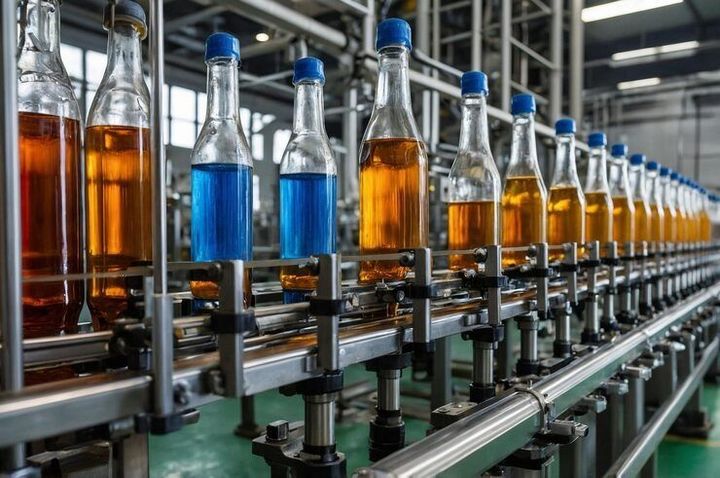
The basic principle is to transfer a controlled quantity of liquid from a product-holding system into individual containers. A filling mechanism determines the quantity delivered, while sensors and controls coordinate container movement and filling operations.
Different technologies are used according to liquid characteristics and the required level of precision. Piston fillers, peristaltic pumps, time-pressure systems, and other dosing mechanisms can be used for different applications.
A typical filling sequence includes:
- Container feeding: Empty containers are positioned for filling.
- Product preparation: The liquid is maintained under appropriate process conditions.
- Dosing: A controlled quantity is delivered into each container.
- Filling: The liquid enters the container through a suitable filling nozzle.
- Inspection: Filled containers may be checked for quantity and visible defects.
- Closure: Caps, stoppers, or other closures are applied.
- Labeling and packaging: Containers proceed to subsequent packaging operations.
The precise sequence depends on the product, container type, machine configuration, and manufacturing requirements.
Importance
Liquid filling technology is important because pharmaceutical liquids require controlled handling and consistent dosing. Variations in fill quantity can affect the amount of product contained in individual packages, while contamination can create significant quality concerns.
The filling system is therefore part of a broader manufacturing process involving formulation preparation, storage, transfer, filling, closing, inspection, and packaging.
Pharmaceutical Applications
Pharmaceutical liquid filling machines are used for appropriate liquid formulations in different container formats. Bottle filling equipment may be used for oral liquids, while specialized systems can handle sterile products in vials or other containers.
The machine must be compatible with the physical and chemical properties of the formulation. Viscosity, foaming behavior, particulate content, temperature sensitivity, and other characteristics can influence filling performance.
Types of Filling Systems
Piston filling systems use a piston mechanism to measure and transfer liquid. They can be appropriate for liquids where controlled volumetric dosing is required.
Peristaltic filling systems move liquid through flexible tubing using rotating rollers. The product can remain within the tubing during transfer, which can be useful in certain sterile or sensitive applications.
Time-pressure systems use controlled pressure and filling time to dispense liquid. Their suitability depends on the product's characteristics and the required process controls.
Other systems can use mass-based or flow-based measurement methods. The appropriate technology depends on the formulation, container, production environment, and required accuracy.
Factors Affecting Filling
Liquid properties strongly influence machine performance. Low-viscosity liquids can behave differently from thicker formulations, while foaming products may require specialized filling approaches.
Container dimensions and neck geometry also influence nozzle positioning and filling behavior. Temperature can affect viscosity, which may consequently influence the quantity delivered by certain filling systems.
Recent Updates
Recent developments in pharmaceutical liquid filling have focused on automation, electronic process monitoring, aseptic processing, improved filling accuracy, container handling, and integration with inspection systems.
Automation and Monitoring
Modern filling lines can coordinate container handling, liquid dosing, stopper or cap placement, inspection, and other packaging stages. Programmable controls allow operating parameters to be configured and monitored during production.
Sensors can detect container presence, machine conditions, filling events, and selected process deviations. Automated rejection systems can remove certain units that do not meet defined inspection criteria.
Aseptic Filling Technology
Sterile pharmaceutical liquids require specialized processing environments designed to control microbial and particulate contamination. Aseptic filling systems can integrate controlled filling equipment with cleanroom processes, sterilized components, environmental monitoring, and container-closure operations.
Aseptic processing requires more than a specialized filling machine. The entire process, including equipment preparation, personnel practices, materials, environmental conditions, and quality controls, needs to be appropriately managed.
Isolators and Restricted Access Systems
Modern sterile manufacturing can use technologies such as isolators and restricted access barrier systems to reduce direct interaction between operators and critical processing areas.
These systems can provide physical separation between personnel and exposed sterile product or components. Their configuration depends on the facility, process, product, and applicable regulatory requirements.
Digital Process Control
Electronic monitoring has also become increasingly relevant. Filling lines may collect information about machine settings, alarms, production counts, rejected containers, and selected process parameters.
When appropriately integrated into a pharmaceutical quality system, process data can support documentation, investigation, and process monitoring.
Filling Technology Comparison
| Technology | Measurement Principle | Typical Application |
|---|---|---|
| Piston filling | Volumetric piston movement | Solutions and viscous liquids |
| Peristaltic filling | Pumped through flexible tubing | Selected sterile and sensitive products |
| Time-pressure filling | Pressure and time control | Suitable low-to-medium viscosity liquids |
| Flow-based filling | Measured liquid flow | Applications requiring flow measurement |
| Mass-based filling | Product mass measurement | Applications requiring weight-based dosing |
Laws or Policies
Pharmaceutical liquid filling in India operates within the country's broader drug manufacturing and quality-control framework. The Drugs and Cosmetics Act and Drugs Rules establish requirements relevant to pharmaceutical manufacturing, packaging, labeling, and quality.
The Central Drugs Standard Control Organization publishes regulatory information, including the Drugs Rules and related regulatory documents. Applicable requirements should be checked against the current official publications because regulatory provisions can change.
Good Manufacturing Practices
Good Manufacturing Practices are particularly important for pharmaceutical filling operations. Manufacturing facilities need appropriate controls covering premises, equipment, sanitation, personnel, documentation, production procedures, quality control, and related activities.
For sterile products, additional requirements apply because contamination control is a central part of the manufacturing process. Equipment design, cleaning, sterilization, environmental monitoring, and aseptic practices need to be considered together.
Equipment Qualification
Pharmaceutical equipment may be subject to documented qualification activities according to the facility's quality system and applicable requirements. Qualification can involve establishing that equipment has been appropriately installed, operates according to defined requirements, and performs as intended.
The exact qualification approach depends on the machine, process, facility, and regulatory framework.
Container and Closure Controls
The filling operation is connected closely with the container-closure system. Containers, caps, stoppers, seals, and other components need to be appropriate for the intended product and manufacturing process.
For sterile pharmaceuticals, container-closure integrity is particularly important because the closure system needs to maintain the required protection after filling.
Tools and Resources
Readers studying pharmaceutical liquid filling can use technical manuals, pharmaceutical engineering references, regulatory publications, equipment qualification documents, and packaging specifications.
Official regulatory resources are particularly useful when studying pharmaceutical manufacturing requirements. The CDSCO website provides access to Indian drug regulations and related regulatory information.
Useful Resources
- Filling machine manuals for understanding specific equipment configurations.
- Pump specifications for comparing different dosing mechanisms.
- Container specifications for reviewing dimensions and compatibility.
- Product viscosity data for understanding filling behavior.
- Fill-weight testing procedures for checking dosage consistency.
- Equipment qualification documents for controlled pharmaceutical operations.
- Environmental monitoring records for sterile manufacturing environments.
- Regulatory publications for current pharmaceutical requirements.
- Container-closure integrity testing resources for suitable sterile products.
Process documentation can also help production teams understand how filling parameters relate to product quality and equipment performance.
FAQs
What is a pharmaceutical liquid filling machine?
A pharmaceutical liquid filling machine is equipment designed to dispense controlled quantities of liquid pharmaceutical formulations into appropriate containers. Depending on the application, the equipment can be configured for bottles, vials, ampoules, or other container types.
How does a liquid filling machine work?
A liquid filling machine positions containers beneath filling nozzles and uses a dosing mechanism to transfer a predetermined quantity of product into each container. The mechanism can use pistons, pumps, pressure, flow measurement, or other approaches.
What is an aseptic liquid filling machine?
An aseptic liquid filling machine is designed for filling sterile products under controlled conditions intended to minimize contamination risks. It operates as part of a wider aseptic manufacturing system involving controlled environments, sterilization, personnel procedures, and monitoring.
What factors affect liquid filling accuracy?
Liquid viscosity, temperature, foaming, container dimensions, pump characteristics, filling speed, nozzle design, and machine settings can influence filling consistency. The relevant factors depend on the specific product and equipment.
What is pharmaceutical equipment validation?
Pharmaceutical equipment validation is a documented process used to establish that equipment and its associated processes are suitable for their intended use under specified conditions. The required qualification and validation activities depend on the equipment, process, facility, and applicable regulatory requirements.
Conclusion
Liquid filling machines provide controlled methods for transferring pharmaceutical liquids into suitable containers. Their technology can range from piston and peristaltic systems to pressure, flow, and mass-based filling approaches. Automation, process monitoring, aseptic technology, and barrier systems have expanded the capabilities of modern pharmaceutical filling lines. In India, pharmaceutical filling operations must also operate within applicable drug regulations, GMP requirements, quality systems, and contamination-control practices.