Mining Machinery & Equipment: Discover How Mining Equipment Works and Facts
What Is Mining Machinery & Equipment? Mining Machinery & Equipment includes the machines, mechanical systems, electrical equipment, and digital technologies used to extract, move, process, and manage minerals and other geological materials. Mining operations can take place in open-pit, underground, quarry, and other specialized environments, each requiring different equipment.
Modern mining equipment can perform tasks that would otherwise require extensive manual labor. Excavators can remove material, haul trucks can transport it, crushers can reduce rock size, and drilling machines can prepare rock for controlled fragmentation.
Mining machinery has also evolved from primarily mechanical equipment into connected systems containing sensors, electronic controls, positioning technologies, cameras, and data-analysis capabilities.
How Mining Equipment Works
A mining operation usually involves several stages, with different machines assigned to specific activities.
A simplified workflow includes:
- Exploration and planning: Geological information is collected and analyzed to understand the deposit and plan extraction.
- Drilling: Drilling equipment creates holes for exploration, production, or controlled blasting activities.
- Fragmentation: Rock can be broken through mechanical methods or regulated blasting procedures.
- Excavation: Excavators, shovels, loaders, or continuous mining machines remove material.
- Hauling: Trucks, conveyors, locomotives, or other transport systems move material.
- Processing: Crushers, screens, mills, separators, and other equipment prepare or separate minerals.
- Stockpiling: Materials are organized in designated areas for subsequent processing or transportation.
- Monitoring: Sensors, cameras, positioning systems, and control platforms can track equipment and operating conditions.
The actual equipment sequence depends on the mineral, geological conditions, mine design, production method, and processing requirements.
Major Types of Mining Equipment
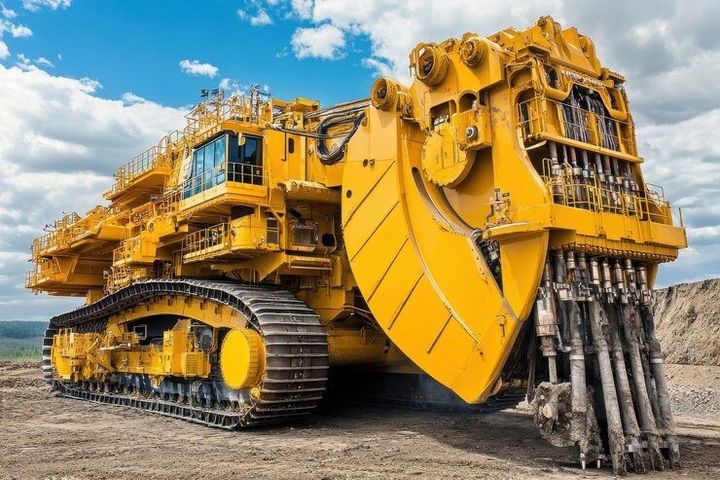
Excavators and hydraulic shovels remove large quantities of earth and rock. Their bucket capacity and digging configuration vary according to the application.
Draglines use a large bucket suspended from a boom and are particularly associated with large-scale surface mining operations.
Drilling rigs create holes for exploration, production drilling, or other controlled mining activities.
Haul trucks transport excavated material between loading areas, processing facilities, stockpiles, and designated disposal areas.
Wheel loaders use front-mounted buckets to load and move materials over relatively short distances.
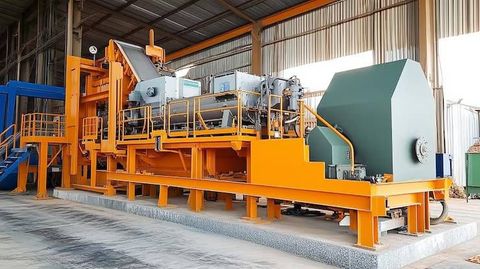
Crushers and screens reduce and classify material into selected size ranges.
Underground mining equipment can include continuous miners, roof-support systems, load-haul-dump machines, shuttle cars, drilling equipment, mine hoists, pumps, and ventilation systems.
Importance
Supporting Mineral Extraction
Mining machinery makes it possible to handle large quantities of geological material in controlled sequences. Equipment selection affects how excavation, transportation, processing, and material handling are organized.
Different minerals can require substantially different approaches. Coal, iron ore, limestone, copper, and other resources may involve different geological conditions and processing requirements.
Improving Operational Control
Modern machines can incorporate electronic controls and sensors that monitor selected operating conditions. Information about engine performance, hydraulic pressure, temperature, fuel or energy consumption, payload, location, and machine status can help operators understand equipment behavior.
Digital monitoring can also connect several machines to a central system, providing a broader view of operations.
Supporting Worker Safety
Mining involves hazards such as moving machinery, unstable ground, dust, vibration, noise, electrical equipment, water, heat, and hazardous atmospheres in certain underground environments.
Modern equipment can incorporate cameras, proximity detection, remote controls, emergency systems, operator-assistance technologies, and other safety features. These technologies complement rather than replace established safety procedures and competent supervision.
Material Handling
Material transportation can represent a significant part of a mining operation. Conveyors, haul trucks, loaders, rail systems, and other transport equipment move material between different locations.
Selecting an appropriate transport system depends on factors such as distance, terrain, material characteristics, mine layout, and production requirements.
Equipment Categories
| Equipment Type | Main Function | Typical Application |
|---|---|---|
| Excavator | Digging and loading | Surface mining |
| Drill Rig | Creating boreholes | Exploration and production |
| Haul Truck | Material transportation | Open-pit operations |
| Crusher | Reducing rock size | Mineral processing |
| Conveyor | Continuous material movement | Surface and processing areas |
| Continuous Miner | Mechanical cutting | Underground coal mining |
| LHD Machine | Loading and hauling | Underground mining |
| Mine Hoist | Vertical transportation | Shaft operations |
Recent Updates
Automation and Remote Operation
Automation is becoming increasingly important in modern mining. Equipment can use sensors, positioning systems, communication networks, and control software to support partially automated or remotely supervised operations.
Remote operation can allow selected equipment to be controlled from a location away from immediate hazards. The level of automation varies according to machine type, mine design, communications infrastructure, and operational requirements.
Artificial Intelligence and Data Analysis
Artificial intelligence and machine learning can analyze information generated by mining equipment and operational systems. Potential applications include equipment condition monitoring, geological interpretation, fleet management, image analysis, and process optimization.
AI systems require appropriate data, validation, cybersecurity controls, and human oversight. Their usefulness depends on the specific mining environment and the quality of available information.
Drones and Digital Mapping
Drones can collect aerial imagery and other measurements for surveying, stockpile assessment, site mapping, and inspection. Combining drone information with geographic information systems can provide updated digital representations of mining areas.
These tools can reduce the need for personnel to enter certain areas for routine visual assessment, although aviation rules, site procedures, and operational conditions still apply.
Electric and Battery Equipment
Electrification is another area of development in mining machinery. Battery-electric equipment is being explored for selected underground and surface applications.
In underground mines, reducing dependence on combustion engines can have implications for ventilation requirements because engine emissions are an important consideration. Battery equipment also introduces requirements involving charging infrastructure, thermal management, battery monitoring, and electrical safety.
Digital Mining Systems
Modern mines increasingly use fleet-management platforms, equipment sensors, satellite positioning, industrial networks, and centralized control systems.
These systems can bring information from drilling, loading, hauling, processing, and maintenance activities into a shared digital environment.
Safety Technology in India
India's Directorate General of Mines Safety continues to focus on machinery-related safety through inspections, technical requirements, training, and equipment approval procedures. DGMS specifically identifies heavy earth-moving machinery and other mining equipment among areas requiring safety controls.
DGMS also maintains technical material covering equipment such as blast-hole drills, shovels, draglines, dumpers, dozers, loaders, bucket-wheel excavators, continuous miners, conveyors, and underground machinery.
Laws or Policies
Directorate General of Mines Safety
The Directorate General of Mines Safety operates under India's Ministry of Labour and Employment and is responsible for occupational safety, health, and welfare in mines. Its functions include mine inspections, accident investigations, approval of specified safety equipment, development of safety legislation and standards, and competency examinations.
This regulatory role is particularly relevant to Mining Machinery & Equipment because machinery must operate within applicable safety requirements.
Mining Safety Regulations
India's mining safety framework includes the Coal Mines Regulations, Metalliferous Mines Regulations, Oil Mines Regulations, Mines Rules, Mine Rescue Rules, and other related legislation and regulations. DGMS maintains these materials as part of its mines-safety framework.
The applicable rules depend on the type of mine, equipment, activity, and operating environment.
Equipment Approval
Certain mining appliances, equipment, machinery, apparatus, and materials require regulatory approval before they can be used in specified mining environments.
DGMS's approval policy explains procedures associated with equipment approval under applicable mining regulations and electrical-safety requirements. The policy considers factors including equipment quality, performance, and suitability for coal and metal mines.
Electrical Safety
Mining equipment can contain motors, cables, control systems, batteries, electrical drives, and other electrical components. Electrical safety is especially important in underground and potentially hazardous environments.
India's mining safety framework references the Central Electricity Authority regulations concerning safety and electricity supply, along with applicable mining regulations.
Machinery Safety and Training
Safe operation depends on both equipment design and human competence. Operators and maintenance personnel may require appropriate training, competency certification, inspection procedures, and knowledge of equipment-specific hazards.
DGMS conducts examinations associated with competency certification and maintains training and examination resources for mining personnel.
Environmental Considerations
Mining equipment can influence dust, noise, fuel or electricity consumption, emissions, water use, and waste generation. Environmental requirements can vary according to the mining activity, location, mineral, and applicable approvals.
Modern mine planning increasingly considers monitoring systems and equipment technologies that can help measure environmental conditions and operating impacts.
Tools and Resources
Fleet Management Systems
Fleet-management platforms can track equipment location, operating hours, movement, payload information, fuel or energy use, and machine status.
These systems can help coordinate mobile equipment and provide historical information for operational analysis.
Condition Monitoring
Sensors can monitor vibration, temperature, pressure, hydraulic conditions, engine parameters, and other equipment characteristics.
Condition-monitoring systems can help identify unusual patterns and support inspection or maintenance decisions.
GPS and Positioning Systems
Satellite-based positioning systems can track mobile equipment and support route management, surveying, machine guidance, and site mapping.
Positioning accuracy requirements vary according to the application.
Drone Mapping
Drone-based mapping can generate aerial imagery and three-dimensional information for selected mining applications. It can be useful for surveying stockpiles, inspecting areas, and updating site maps where regulations and operating procedures permit.
Geological and Mine-Planning Software
Specialized software can represent geological formations, mine layouts, excavation sequences, material movement, and production scenarios.
These tools help engineers and planners evaluate different mine designs and operating conditions before implementation.
Safety and Regulatory Resources
DGMS provides access to mining legislation, technical circulars, approval policies, forms, safety information, and examination materials. These resources are useful for understanding India's regulatory environment for Mining Machinery & Equipment.
FAQs
What is Mining Machinery & Equipment?
Mining Machinery & Equipment includes machines and supporting systems used for drilling, excavation, loading, transportation, crushing, processing, material handling, and other mining activities.
How does mining equipment work?
Mining equipment performs specific physical tasks such as drilling rock, excavating material, transporting loads, crushing minerals, separating materials, or moving products through a processing system.
What technologies are used in modern mining equipment?
Modern equipment can use GPS, sensors, automation, robotics, cameras, artificial intelligence, machine-learning systems, remote controls, digital mapping, and equipment-monitoring platforms.
What equipment is used in underground mining?
Underground mines can use continuous miners, drilling machines, roof-support equipment, load-haul-dump machines, shuttle cars, conveyors, pumps, mine hoists, ventilation systems, and other specialized equipment.
Why is mining equipment safety important?
Mining equipment can involve heavy loads, moving components, electrical systems, pressure, heat, and other hazards. Appropriate equipment design, inspection, training, operating procedures, and regulatory oversight are therefore important for safe mining operations.
Conclusion
Mining Machinery & Equipment supports the major stages of mineral extraction, transportation, processing, and material handling. Modern equipment is increasingly connected with automation, sensors, digital mapping, artificial intelligence, remote operation, and condition monitoring. In India, DGMS provides a regulatory framework covering mine safety, equipment approval, technical requirements, inspections, and worker competency. Understanding the different equipment categories and emerging technologies provides useful context for how mining operations are becoming more digitally connected and technically sophisticated.