Capsule Filling Machines: Explore Their Working Principles
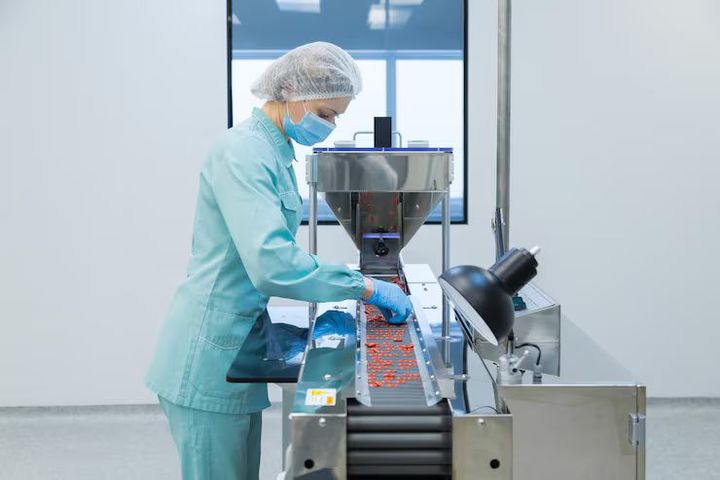
Capsule filling machines are mechanical systems designed to place measured quantities of suitable materials into empty capsules. They are commonly associated with pharmaceutical manufacturing and are also used in nutraceutical, food, and other regulated production environments. Depending on their design, these machines can handle powders, granules, pellets, and certain other formulations.
A typical hard-capsule filling process involves several sequential operations. Empty capsules are oriented, separated into their body and cap portions, filled with a measured formulation, rejoined, and discharged for subsequent processing. Modern automated equipment performs these stages through coordinated mechanical systems and electronic controls.
Basic Purpose
The main purpose of a capsule filling machine is to provide a controlled method for placing a predetermined quantity of formulation into a capsule body. Consistent filling depends on several factors, including formulation properties, capsule characteristics, machine settings, and environmental conditions.
Capsule filling does not simply involve dropping powder into an empty shell. The material must flow appropriately, the dosing mechanism must operate consistently, and the capsule components must be correctly positioned before closing.
Basic Working Sequence
A conventional automated system can be understood through five principal stages: capsule orientation, capsule separation, material dosing, capsule closing, and discharge.
During orientation, empty capsules are positioned so their bodies and caps can enter the appropriate machine stations. Separation then divides the two capsule components. The body proceeds to the filling area, where a dosing mechanism introduces the formulation. After filling, the cap and body are brought together and locked before the finished capsule leaves the machine.
Importance
Capsule filling machines are important because pharmaceutical and nutraceutical production requires controlled handling of formulations and repeatable processing conditions. A variation in filling can affect the amount of material contained in individual capsules, while problems during closing can affect the physical integrity of the finished product.
The equipment also helps organize several repetitive operations into a coordinated process. Automation can reduce manual handling and allow monitoring of operating parameters during production.
Who Uses Capsule Filling Equipment?
Pharmaceutical manufacturers use capsule filling equipment for appropriate solid-dose formulations. Research and development facilities may use smaller systems when studying formulations or preparing development batches.
Nutraceutical facilities can also use encapsulation equipment for suitable powders, granules, and other permitted formulations. The equipment configuration depends on the material, capsule format, required production scale, and applicable quality requirements.
Why Material Properties Matter
The formulation being filled has a major influence on machine performance. Powders with poor flow characteristics may not move consistently through a hopper or dosing mechanism. Differences in particle size, density, moisture, and cohesiveness can also influence filling behavior.
For this reason, a capsule filling machine cannot be considered separately from the material being processed. The dosing method needs to be compatible with the physical properties of the formulation.
Consistency and Quality
Consistent capsule filling involves more than maintaining machine speed. Operators and quality teams may monitor fill-weight variation, capsule closure, rejected units, equipment settings, and other process indicators.
The exact checks depend on the product and manufacturing environment. Pharmaceutical facilities also operate under documented procedures and applicable quality systems.
Recent Updates
Recent developments in capsule filling technology have focused on automation, electronic monitoring, improved process control, and integration with broader pharmaceutical manufacturing systems. Modern automatic capsule fillers can coordinate orientation, separation, dosing, closing, and discharge through synchronized mechanical and electronic controls.
Increased Automation
Automated capsule filling systems can perform multiple operations without requiring separate manual handling at every stage. Sensors and control interfaces can help operators observe machine conditions and identify deviations.
Digital control systems can also make it easier to record selected operating parameters. The specific functions available vary considerably between machine designs.
Flexible Dosing Systems
Different dosing mechanisms are used for different formulations. Tamping systems can compact powder into measured plugs before transferring the material into capsule bodies. Other systems may use dosators or alternative metering arrangements depending on the formulation and equipment configuration.
This flexibility is significant because powders and granules can behave differently during processing. A dosing method that works appropriately for one formulation may not produce the same results with another.
Process Monitoring
Modern pharmaceutical equipment increasingly incorporates monitoring capabilities for parameters associated with production consistency. Depending on the machine, these can include machine speed, dosing settings, alarms, rejection information, and other process indicators.
Data collection can support production records and quality investigations when implemented as part of an appropriate manufacturing system.
General Equipment Comparison
| Feature | Manual System | Semi-Automatic System | Automatic System |
|---|---|---|---|
| Capsule handling | Manual | Partly automated | Automated |
| Dosing | Manual or mechanical | Controlled dosing | Automated dosing |
| Production coordination | Limited | Moderate | Integrated |
| Monitoring | Basic | Moderate | Advanced options |
| Typical application | Small-scale work | Development and smaller production | Industrial production |
Laws or Policies
In India, pharmaceutical manufacturing is governed by a regulatory framework covering medicines, manufacturing practices, quality control, documentation, and facility operations. The Drugs and Cosmetics Act and associated rules form part of this framework.
Pharmaceutical facilities also need to follow applicable Good Manufacturing Practices requirements. These requirements address areas such as sanitation, equipment, documentation, personnel, production controls, quality control, and facility management.
Equipment Controls
Equipment used in regulated pharmaceutical manufacturing generally forms part of a documented quality system. Procedures may cover installation, operation, cleaning, maintenance, inspection, calibration where applicable, and change management.
The precise requirements depend on the type of product, facility, manufacturing process, and applicable regulations. Regulatory requirements can also change, so current government publications and applicable standards should be consulted when establishing a pharmaceutical operation.
Manufacturing Environment
Capsule filling equipment may operate alongside powder handling, material transfer, environmental control, inspection, and packaging systems. Appropriate controls depend on the formulation and manufacturing activity.
Workplace safety requirements may also apply to machinery, electrical systems, dust exposure, moving components, cleaning procedures, and other operational hazards.
Tools and Resources
Readers studying capsule filling technology can use several types of technical resources to understand the process. Manufacturer manuals can explain machine components and operating sequences, while pharmaceutical engineering references can provide background on powder handling and solid-dose manufacturing.
Regulatory publications are useful for understanding applicable manufacturing requirements. Quality-management documents can explain concepts such as standard operating procedures, equipment records, process monitoring, and deviation management.
Useful Resources
- Equipment operating manuals for machine-specific information.
- Capsule specifications for understanding capsule dimensions and compatibility.
- Powder-flow testing resources for studying material behavior.
- Weight-variation testing procedures for evaluating fill consistency.
- Equipment maintenance records for tracking inspections and servicing.
- Pharmaceutical manufacturing references for understanding encapsulation processes.
- Regulatory publications for current manufacturing requirements.
- Quality-system documentation for understanding controlled production procedures.
Digital process-monitoring systems may also help manufacturing teams organize machine information and production records when such systems are integrated into the facility's quality framework.
FAQs
How does a capsule filling machine work?
A capsule filling machine generally orients empty capsules, separates their caps and bodies, introduces a measured formulation into the bodies, rejoins the capsule components, and discharges the completed capsules.
What is a capsule filling machine used for?
Capsule filling machines are used to place suitable powders, granules, pellets, and certain other formulations into capsule shells. Pharmaceutical and nutraceutical production are common application areas.
What is an automatic capsule filling machine?
An automatic capsule filling machine coordinates several encapsulation stages mechanically and electronically. A typical sequence includes capsule orientation, separation, dosing, closing, and discharge.
What affects capsule filling accuracy?
Formulation flow, particle characteristics, density, moisture, dosing mechanism, machine settings, capsule dimensions, and operating conditions can all influence filling consistency.
What is pharmaceutical equipment validation?
Pharmaceutical equipment validation is a documented process used to establish that equipment and associated processes perform appropriately for their intended use under specified conditions. The exact qualification and validation activities depend on the equipment, process, facility, and applicable regulatory requirements.
Conclusion
Capsule filling machines coordinate a series of operations that transform empty capsule shells into filled and closed units. Their working principles involve orientation, separation, dosing, closing, and discharge, with the exact mechanism depending on machine design and formulation characteristics. Automation and electronic monitoring have expanded the ability to coordinate and observe these processes. In pharmaceutical environments, equipment operation must also fit within applicable manufacturing, quality, documentation, and regulatory controls.