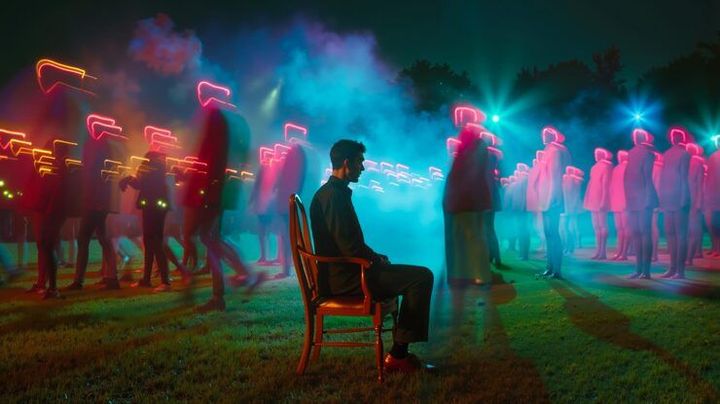
Immersive Concert Experiences: Guide to Virtual Production and Practical Insights
Immersive concert experiences combine live music with visual, spatial, interactive, and digital technologies to create a more surrounding environment for audiences. Instead of relying only on a physical stage, a production may use LED walls, projection, spatial audio, real-time graphics, lighting, camera tracking, augmented reality, virtual reality, or interactive effects.
Virtual production is one important part of this approach. It uses real-time computer-generated environments, LED displays, cameras, tracking systems, and media servers to place performers inside changing digital environments. SMPTE describes virtual production workflows as involving elements such as content creation, processing, LED volumes, cameras, and motion tracking.
How Virtual Production Works
A virtual production concert typically connects several technical systems. A simplified workflow looks like this:
Content creation: Designers create 2D or 3D environments, animations, backgrounds, effects, and other visual elements.
Real-time rendering: A graphics engine generates visual content during the performance instead of relying entirely on pre-rendered video.
LED display: Large LED panels display the digital environment behind or around performers.
Camera tracking: Sensors and tracking systems monitor camera position and movement so virtual scenes can respond correctly.
Media control: Media servers and show-control systems manage video, lighting, effects, cues, and timing.
Audio production: The sound system distributes music and effects through conventional or immersive audio arrangements.
Synchronization: Timecode, network protocols, and other timing systems help different devices operate together.
The result can be a concert stage that visually changes from one song to another without physically rebuilding the entire background.
Main Types of Immersive Concert Experiences
Several formats can be used depending on the venue, artistic concept, and technical setup.
LED virtual production: Large LED walls or curved LED surfaces display real-time environments and animated backgrounds.
Projection-based concerts: High-output projectors display graphics across buildings, scenery, floors, or other surfaces.
Spatial audio concerts: Audio is positioned around the audience rather than being limited to a conventional left-right arrangement.
Augmented reality concerts: Digital elements are combined with live camera feeds or audience-facing displays.
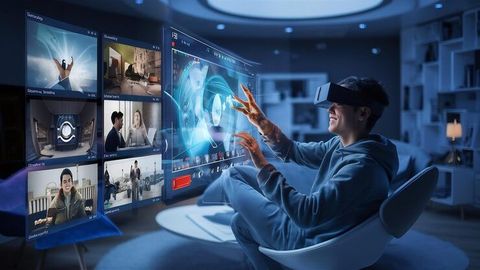
Virtual reality concerts: Audiences use VR equipment to enter a digitally created performance environment.
Interactive concerts: Sensors, cameras, mobile devices, or other input systems allow audience or performer actions to influence visual effects.
Hybrid productions: Multiple methods are combined, such as LED screens, real-time graphics, spatial audio, lighting, and live streaming.
A Simple Example
Imagine a singer performing on a physical stage surrounded by an LED wall. During one song, the screen displays a digital forest. When the performer moves across the stage, a tracked camera changes its perspective so the digital environment appears connected to the performer.
During another song, the background can change into an abstract 3D environment while lighting and audio cues change at the same time. The physical performer remains on stage, while the digital environment changes in real time.
Importance
Why Immersive Concert Experiences Matter
Immersive concert experiences change the relationship between music, visuals, venue design, and audience perception. They can support performances where visual storytelling is closely synchronized with musical structure.
Virtual production also allows artists and creative teams to develop environments that would be difficult or impractical to construct physically. Large LED systems can display different locations, landscapes, abstract scenes, or animated environments within the same venue.
SMPTE has specifically documented the use of large LED walls, real-time rendering, automated camera tracking, and 3D synthesis in live concert applications.
Where the Technology Is Used
These technologies can appear in several types of productions:
Arena concerts: Large venues can combine LED displays, lighting, cameras, and spatial audio across extensive stage layouts.
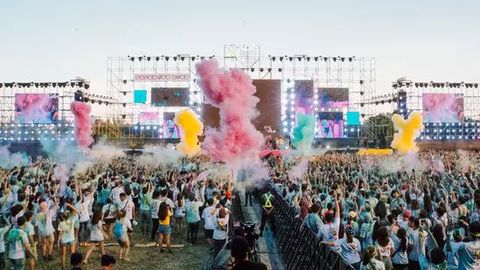
Music festivals: Digital visuals can support multiple performances while adapting to different stage designs.
Broadcast concerts: Virtual production can create visual environments for cameras that are distributed to remote audiences.
Music award events: Real-time graphics can connect different performances through a common visual design.
Themed performances: Digital scenery can support narratives that change between songs or sections.
Virtual concerts: Performers and audiences can interact through digitally constructed environments.
Permanent entertainment venues: Specially designed venues can integrate immersive audio, video, lighting, and interactive systems into the architecture.
Technical Components
The quality of an immersive production depends on how the individual systems work together rather than on a single device.
| Component | Main Function | Common Use |
|---|---|---|
| LED wall | Displays digital imagery | Virtual environments and backgrounds |
| Real-time engine | Generates changing 2D or 3D graphics | Live visual production |
| Camera tracking | Measures camera position and movement | Perspective-based visuals |
| Media server | Manages video playback and processing | Show control and content output |
| Lighting system | Controls stage illumination | Performer and environment integration |
| Spatial audio system | Positions sound around listeners | Immersive sound design |
| Timecode system | Coordinates equipment timing | Audio, video, lighting synchronization |
| Network infrastructure | Connects production equipment | Data and media communication |
Practical Challenges
Immersive concert production can introduce technical complexity. LED panels must be synchronized, color differences between panels may need correction, and camera movement can expose visual inconsistencies.
SMPTE research has identified challenges involving image-tile synchronization, color balancing, camera-angle changes, compression, storage, and bandwidth in virtual production workflows.
Audio also requires careful planning. Large LED structures and stage surfaces can influence acoustic reflections, while spatial audio requires appropriate speaker placement, calibration, mixing, and monitoring.
Another challenge is synchronization. If video, lighting, audio, cameras, and effects do not share accurate timing, audiences may notice delays or mismatched movements.
Recent Updates
Advances in Real-Time Virtual Production
During 2024–2026, virtual production workflows continued developing around real-time rendering, LED displays, camera tracking, color management, media-over-IP systems, and improved content pipelines.
At its 2024 Media Technology Summit, SMPTE highlighted developments involving LED-panel color management, camera tracking, real-time rendering, media-over-IP, and virtual production workflows.
These developments are relevant to concerts because live productions need accurate timing and consistent visual output across many connected systems.
Compression and Media Processing
High-resolution LED displays can require substantial data storage and bandwidth. Research presented through SMPTE in 2024 examined codecs including AV1, H.265, H.264, HAP, and NotchLC for virtual production workflows.
The research investigated whether modern compression approaches could reduce data requirements while maintaining visual quality in LED-based production. It also noted that the industry still faces challenges in developing consistent methods for evaluating compression effects in virtual production.
Immersive Audio Development
Immersive audio is also becoming an important part of concert technology. Systems such as Dolby Atmos can place sound elements within a three-dimensional listening environment rather than restricting them to conventional stereo positioning.
Dolby has documented live music applications involving immersive audio, including live performance environments and production workflows using spatial mixing and rendering tools.
AI and Automated Production
AI and machine learning are being explored across media production for tasks such as content generation, visual processing, tracking assistance, translation, metadata creation, and workflow automation. Their use in live concerts remains dependent on production requirements and reliability.
For live environments, automated systems must still be tested carefully because unexpected visual or timing errors can affect the performance. SMPTE's 2024 virtual production discussions also identified generative AI and machine learning as emerging areas within production workflows.
Laws or Policies
Music Copyright and Performance Rights
Immersive concert experiences involve several intellectual property considerations. Music, recorded material, visual artwork, animations, video footage, software assets, and other creative elements can have separate rights.
The World Intellectual Property Organization explains that copyright and related rights are important in live music and event streaming. Depending on the jurisdiction and the way music is used, permissions may involve authors, publishers, performers, producers, or collective management organizations.
Requirements vary between countries, so production teams need to identify the rights applicable to live performance, recording, broadcasting, streaming, and later distribution.
Equipment and Electrical Safety
Concert systems contain electrical, electronic, audio, video, lighting, networking, and display equipment. IEC 62368-1:2023 provides a product safety framework for audio, video, information, and communication technology equipment, although national or regional rules determine how particular equipment requirements apply.
Local requirements can also cover temporary structures, electrical installations, crowd capacity, emergency exits, fire protection, worker safety, rigging, and public access.
Event Sustainability
ISO 20121:2024 provides an international framework for event sustainability management. It applies to events of different types and sizes and addresses environmental, social, and economic impacts.
For immersive concerts, sustainability planning can include energy use, transportation, temporary structures, material selection, waste management, equipment logistics, and community impacts.
An additional ISO work item, ISO/AWI 26540, is being developed specifically as guidance for applying ISO 20121:2024 within cultural organizations and includes cultural and artistic events, production, touring, and audience participation.
Tools and Resources
Real-Time Graphics Platforms
Real-time graphics engines can create and display interactive 2D and 3D environments. They can connect visual content with camera tracking, lighting cues, stage geometry, and live performance data.
These platforms are useful when a production requires visual changes during a performance rather than simple playback of fixed video.
LED and Display Management Systems
LED processors and media servers handle image distribution across large display surfaces. They can manage resolution, scaling, synchronization, signal routing, color settings, and multiple output feeds.
For large installations, display calibration is important because differences in brightness or color between panels can become visible to cameras and audiences.
Tracking and Sensor Systems
Camera tracking systems use optical markers, inertial sensors, or other measurement methods to determine camera position and movement. The information can then be supplied to a real-time graphics system so digital scenes respond to camera movement.
Other sensors can track performers or objects when interactive visual effects are required.
Audio and Show-Control Software
Digital audio workstations, immersive audio renderers, digital mixing consoles, timecode systems, lighting consoles, and show-control software can coordinate different parts of a performance.
Testing these systems before a live event is important because immersive productions often contain many connected devices and synchronized cues.
Standards and Research Resources
SMPTE provides technical information covering media standards, virtual production, timing, color management, compression, and media workflows.
ISO provides standards related to event sustainability, while IEC publishes standards concerning electrical and electronic equipment safety. WIPO provides educational resources concerning intellectual property and music rights.
FAQs
What are immersive concert experiences?
Immersive concert experiences combine live music with technologies such as LED displays, spatial audio, real-time graphics, projection, tracking, lighting, augmented reality, or interactive systems to create a more surrounding performance environment.
How does virtual production work in immersive concert experiences?
Virtual production in immersive concert experiences can use LED walls, real-time rendering, camera tracking, media servers, and synchronized control systems. These technologies allow digital environments to change during a live performance.
What equipment is used for immersive concert experiences?
Common equipment includes LED walls, media servers, cameras, tracking systems, lighting consoles, audio systems, networking equipment, timecode systems, and real-time graphics computers. The exact configuration depends on the venue and production design.
Can AI be used in immersive concert experiences?
AI can support areas such as visual generation, workflow automation, tracking assistance, translation, and content processing. Its role varies by production, and human testing remains important for live performance reliability.
What standards affect immersive concert experiences?
Relevant frameworks can include music copyright laws, local event and safety regulations, IEC equipment safety standards, and ISO 20121:2024 for event sustainability management. Specific legal requirements vary by country and event location.
Conclusion
Immersive concert experiences combine music, visual design, real-time graphics, spatial audio, lighting, and interactive technologies to create integrated live environments. Virtual production has expanded the use of LED displays, real-time rendering, camera tracking, and synchronized media systems in concert production. Developments in compression, immersive audio, AI-assisted workflows, and event sustainability are continuing to shape the field during 2024–2026. Successful implementation depends on accurate synchronization, technical testing, appropriate safety measures, intellectual property compliance, and careful coordination between creative and technical teams.