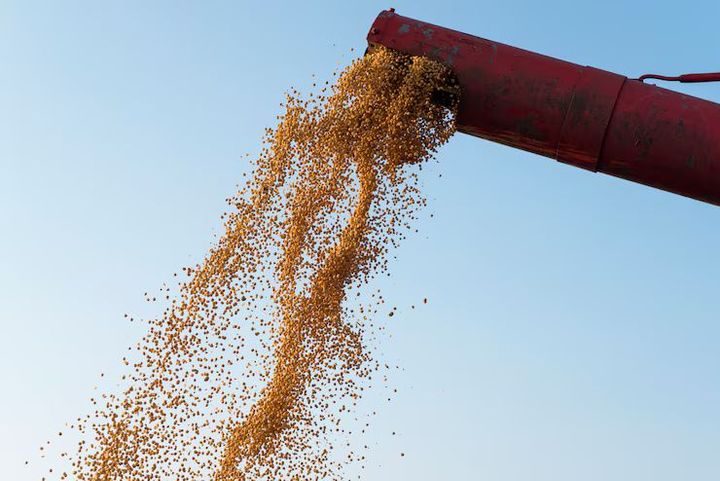
Granulation Machines: Explore Their Processes and Applications
Granulation machines are processing systems used to convert fine powders or other particulate materials into larger, more uniform granules. Granulation is particularly important in pharmaceutical manufacturing, where powders may need improved flow, handling, density, and compression characteristics before further processing.
Granulation can be performed using different approaches depending on the formulation and intended application. Wet granulation introduces a liquid binder or granulating fluid, while dry granulation uses mechanical pressure without adding a liquid. Other processes, including fluid-bed granulation, combine granule formation with controlled drying.
The resulting granules can have more suitable physical characteristics for downstream processes. In tablet manufacturing, for example, granulation can improve the behavior of certain formulations during die filling and compression.
How Granulation Works
The basic objective is to bring smaller particles together and form controlled agglomerates. The process can involve mixing, wetting or compaction, granule formation, drying where applicable, sizing, and final blending.
In wet granulation, powders are mixed and a suitable liquid is introduced. The liquid promotes particle adhesion, after which the wet mass is processed into granules and dried.
Dry granulation relies on mechanical compaction. Powder is compressed into larger compacted material, which is subsequently broken down and screened into granules.
Fluid-bed granulation combines particle movement, spraying, and drying within a controlled air stream. This can allow granulation and drying to take place in a coordinated process.
Main Types
Wet granulation machines are designed for processes involving a liquid binder or granulating fluid. High-shear granulators can rapidly mix powders and form wet agglomerates, while downstream equipment may be used for drying and sizing.
Dry granulation equipment commonly uses roller compaction or slugging principles. Roller compactors compress powder between rotating rollers, producing ribbons or compacted sheets that can later be milled into granules.
Fluid-bed granulators suspend particles in moving air while a liquid is sprayed into the particle stream. Controlled drying then removes the liquid and forms granules with the desired characteristics.
Importance
Granulation is important because the physical properties of powders can influence subsequent manufacturing operations. Very fine powders may have poor flow, generate dust, segregate during handling, or fill processing equipment inconsistently.
Granulation can modify these characteristics by producing larger and more uniform particles. However, granulation is not automatically required for every formulation. The appropriate process depends on material properties, product requirements, and the intended manufacturing method.
Pharmaceutical Applications
Pharmaceutical manufacturing is a major application area for granulation technology. Granules may be prepared before tablet compression or other solid-dose manufacturing steps.
The process can help address formulation characteristics such as flowability and compressibility. It can also support more uniform distribution of ingredients when an appropriate formulation and process are used.
Other Industrial Applications
Granulation technology is also used outside pharmaceutical production. Chemical, agricultural, food, fertilizer, detergent, and other industries can use granulation processes to produce particles with particular size and handling characteristics.
The equipment configuration differs according to the material. Moisture sensitivity, particle size, density, binder characteristics, and thermal behavior can all influence process selection.
Key Process Factors
Several factors can influence the resulting granules. These include powder characteristics, binder concentration, liquid addition rate, mixing intensity, processing time, temperature, drying conditions, and milling or screening parameters.
A process that produces suitable granules for one material may not produce the same result with another. Process development therefore considers both equipment behavior and formulation characteristics.
Recent Updates
Recent developments in granulation technology have emphasized process automation, improved monitoring, continuous manufacturing, process analytical technology, and greater integration between granulation and downstream operations.
Automation and Process Control
Modern granulation equipment can incorporate programmable controls and sensors for monitoring selected operating parameters. Systems may monitor variables such as temperature, pressure, air flow, mixing conditions, liquid addition, and equipment speed.
Automated control can help maintain defined process conditions and reduce manual intervention. The exact capabilities depend on the machine and its control architecture.
Continuous Manufacturing
Continuous manufacturing has become an important area of pharmaceutical process development. Instead of processing a complete batch through one operation before beginning the next, continuous systems move material through interconnected processing stages.
Continuous wet granulation and continuous dry granulation technologies can integrate material feeding, granulation, drying or conditioning, and downstream processing. This approach requires careful process control and monitoring because material continuously moves through the system.
Process Analytical Technology
Process Analytical Technology, commonly called PAT, uses measurements and analytical tools to understand and monitor manufacturing processes. In granulation, relevant measurements can include moisture, particle characteristics, temperature, and other process indicators.
PAT can provide information during processing rather than relying entirely on testing after a batch has been completed. Its implementation depends on the process, facility, analytical technology, and quality system.
General Comparison
| Granulation Method | Main Principle | Liquid Required | Common Equipment |
|---|---|---|---|
| Wet granulation | Particle agglomeration using liquid | Yes | High-shear granulator |
| Dry granulation | Mechanical powder compaction | No | Roller compactor |
| Fluid-bed granulation | Spraying and drying in moving air | Usually | Fluid-bed granulator |
| Direct compression | Powder compression without granulation | No | Tablet press |
Laws or Policies
In India, pharmaceutical granulation processes are part of the broader drug manufacturing framework. The Drugs and Cosmetics Act and Drugs Rules establish requirements relevant to pharmaceutical manufacturing, quality control, premises, equipment, and documentation.
The Central Drugs Standard Control Organization provides official regulatory information and publishes the Drugs Rules and associated documents. Current requirements should be checked against official publications because regulatory provisions can be revised.
Good Manufacturing Practices
Good Manufacturing Practices are relevant to granulation operations conducted within regulated pharmaceutical facilities. Controls can cover premises, equipment, sanitation, raw materials, production procedures, documentation, quality control, and personnel practices.
Granulation equipment can therefore form part of a documented pharmaceutical quality system. Procedures may address equipment cleaning, inspection, maintenance, operation, and process monitoring.
Equipment Qualification
Equipment used in regulated production may undergo documented qualification activities according to the facility's quality system and applicable requirements. These activities can establish that equipment has been installed correctly, operates as specified, and performs appropriately for its intended process.
The required qualification approach varies according to equipment type, process characteristics, facility requirements, and applicable regulations.
Environmental and Safety Controls
Granulation can generate dust, particularly during powder charging, dry processing, milling, and material transfer. Appropriate engineering and workplace controls depend on the material and facility.
Equipment may also contain moving mechanical components, heating systems, compressed air, vacuum systems, or other hazards. Safety controls therefore need to reflect the specific installation and process.
Tools and Resources
Readers studying granulation technology can use pharmaceutical engineering references, equipment manuals, formulation-development resources, regulatory publications, and process-monitoring documentation.
Equipment manuals are useful for understanding machine-specific components and operating principles. Pharmaceutical references can explain powder flow, wetting, granule growth, drying, milling, and compression behavior.
Useful Resources
- Equipment manuals for understanding machine configuration and operating principles.
- Powder-flow testing resources for studying material behavior.
- Particle-size analysis methods for evaluating granule distribution.
- Moisture-analysis equipment for monitoring residual moisture.
- Granule-density testing resources for evaluating physical characteristics.
- Process-monitoring systems for recording selected operating parameters.
- Regulatory publications for current pharmaceutical manufacturing requirements.
- Equipment qualification documents for controlled manufacturing environments.
Particle-size distribution, moisture content, bulk density, tapped density, flow characteristics, and mechanical properties may all be relevant when evaluating granules, depending on the intended application.
FAQs
What is a granulation machine?
A granulation machine is equipment used to combine or compact fine particles into larger granules with controlled physical characteristics. Different machines use wet, dry, fluid-bed, or other granulation principles.
How does a pharmaceutical granulation machine work?
A pharmaceutical granulation machine processes powders through mixing and particle-agglomeration steps. Wet systems use a liquid during granule formation, while dry systems use mechanical compaction. Fluid-bed systems can combine spraying and drying within a controlled airflow.
What is the difference between wet and dry granulation?
Wet granulation uses a liquid, often with a suitable binder, to encourage particle agglomeration. Dry granulation uses mechanical pressure to compact powders without introducing a granulating liquid.
What is a high-shear granulator used for?
A high-shear granulator mixes powders and can rapidly form wet agglomerates when a granulating liquid is introduced. It is commonly associated with pharmaceutical formulation and other controlled powder-processing applications.
Why is granulation used before tablet compression?
Granulation may improve powder flow, handling, density, and compressibility for formulations that do not perform adequately as loose powders. Whether granulation is appropriate depends on the formulation and manufacturing process.
Conclusion
Granulation machines transform fine powders into larger particles through wet, dry, fluid-bed, or related processes. Pharmaceutical applications commonly use granulation to modify powder characteristics before downstream operations such as tablet compression. Automation, continuous processing, and process monitoring are important areas of current granulation technology. Equipment used in regulated pharmaceutical manufacturing also operates within applicable GMP, qualification, documentation, and safety controls.