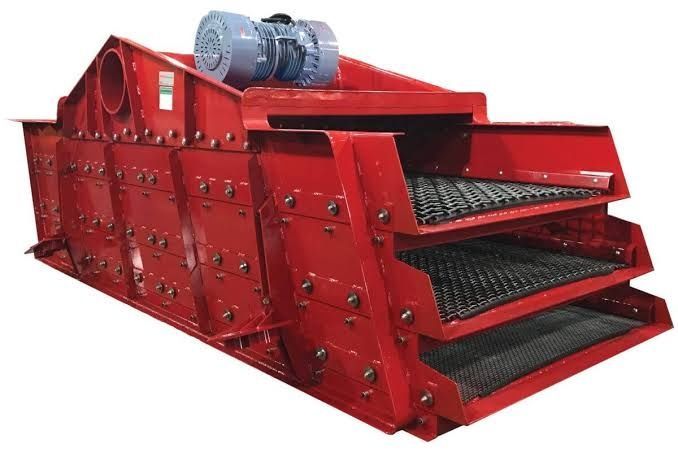
Vibratory Screening Equipment: Key Features for Reliable Separation
Separating materials by particle size is an important step in mining, aggregate processing, recycling, construction, food processing, and many other industries.
Vibratory screening equipment uses controlled mechanical vibration to move material across a screening surface, allowing smaller particles to pass through openings while larger particles continue toward the discharge area.
The equipment is available in different sizes, deck arrangements, screen materials, and vibration configurations. Its performance depends on factors such as particle characteristics, screen opening size, vibration frequency, feed distribution, and equipment condition.
Why Vibratory Screening Equipment Matters
Many industrial processes require materials to be separated into specific size ranges before further processing. Screening can remove oversized particles, classify products, or prepare material for subsequent crushing and processing stages.
Vibratory screening equipment can support:
- Particle-size classification
- Removal of oversized material
- Separation of multiple size fractions
- Continuous material processing
- Integration with conveyors and crushers
- Screening of dry or selected wet materials
- Automated material handling
The appropriate screening configuration depends on the material being processed and the required separation range.
How Vibratory Screening Equipment Works
A vibratory screen uses a vibrating mechanism to generate controlled movement of the screen deck. Material enters the feed area and spreads across the screening surface.
As the screen vibrates, particles move along the deck. Particles smaller than the openings can pass through the screen, while larger particles remain above the surface and move toward the discharge end.
The basic process involves:
- Material enters the screen.
- The vibration mechanism generates controlled movement.
- Material spreads across the screen surface.
- Smaller particles pass through the openings.
- Oversized particles travel toward the discharge.
- Separated material is collected for further processing.
The effectiveness of this process depends on how material interacts with the screen surface.
Key Features of Vibratory Screening Equipment
Vibrating Screen Deck
The screen deck is the primary separation surface. It contains openings of a defined size and shape.
Decks can use wire mesh, perforated plates, polyurethane panels, rubber surfaces, or other materials depending on the application.
Vibration Mechanism
The vibration mechanism generates the movement required to stratify and transport material. Different equipment designs use eccentric shafts, unbalanced motors, or other mechanical arrangements.
Vibration characteristics influence material movement and screening behavior.
Adjustable Frequency and Amplitude
Some vibrating screening equipment allows operating parameters such as vibration frequency or amplitude to be adjusted.
These adjustments can help accommodate different material characteristics and screening requirements.
Multiple Screening Decks
Multi-deck screens contain several screening surfaces positioned vertically. Each deck can have different opening sizes, allowing material to be separated into several fractions during one pass.
Feed Distribution
A uniform feed across the screen width helps use the available screening surface effectively. Uneven feeding can create overloaded areas and reduce separation consistency.
Modular Screen Panels
Some systems use replaceable screen panels. Individual sections can be removed and replaced when worn or damaged without replacing the entire screening surface.
Main Types of Vibratory Screening Equipment
Inclined Vibratory Screens
Inclined screens are positioned at an angle to encourage material movement along the deck. They are commonly used in aggregate and mineral-processing applications.
Horizontal Vibratory Screens
Horizontal screens use a relatively flat screening surface. Their movement pattern can provide controlled material transport and classification.
Circular Motion Screens
Circular-motion screens use an orbital movement that helps move and stratify material across the screening surface.
Linear Motion Screens
Linear-motion screens move material in a primarily linear direction. They are used across various industrial screening and classification applications.
Multi-Deck Screens
Multi-deck systems separate material into multiple size fractions using several screening surfaces with different openings.
Important Components
| Component | Main Function |
|---|---|
| Screen deck | Provides the separation surface |
| Screen panels | Allow particles within a defined size range to pass |
| Vibrating mechanism | Generates screen movement |
| Drive motor | Supplies mechanical power |
| Eccentric shaft | Creates controlled vibration in some designs |
| Springs | Support and isolate the vibrating assembly |
| Side plates | Provide structural support |
| Feed chute | Directs material onto the screen |
| Discharge chute | Directs separated material away |
| Support frame | Holds the screening assembly |
Component configurations vary according to screen design and application.
Factors Affecting Screening Performance
Particle Size
The relationship between particle size and screen opening is central to separation. Particles close to the opening size may require sufficient time and movement to pass through.
Material Shape
Round, flat, elongated, or irregular particles can behave differently on the screen surface. Particle shape can influence whether material passes through an opening.
Moisture Content
Wet or sticky material may adhere to screen surfaces and reduce open screening area. In such applications, specialized screen surfaces or wet-screening configurations may be required.
Feed Rate
Excessive feed can create thick material layers that prevent smaller particles from reaching the screening surface. A controlled feed rate helps maintain effective material stratification.
Screen Opening
The size and shape of screen openings determine which particles can pass through. Different decks may use different opening sizes for multi-stage classification.
Vibration Settings
Frequency and amplitude influence material movement, stratification, and residence time. Settings should be matched to the equipment design and material characteristics.
Vibratory Screening vs Trommel Screening
Both technologies can classify materials, but their operating principles are different.
| Feature | Vibratory Screening | Trommel Screening |
|---|---|---|
| Main movement | Mechanical vibration | Rotating cylindrical drum |
| Screening surface | Flat or inclined deck | Cylindrical screen |
| Material movement | Vibration and deck inclination | Drum rotation |
| Common applications | Aggregates, minerals, industrial materials | Soil, compost, waste, aggregates |
| Multiple fractions | Multiple decks possible | Multiple screen sections possible |
| Space arrangement | Often compact in height | Requires drum length and rotation space |
The appropriate technology depends on material properties, required capacity, particle-size range, moisture, and available plant space.
Applications of Vibratory Screening Equipment
Vibratory screening equipment is used in many material-processing environments, including:
- Aggregate processing
- Mining
- Quarrying
- Mineral processing
- Construction material recycling
- Waste processing
- Sand and gravel classification
- Coal processing
- Industrial material separation
- Food and pharmaceutical processing with suitable sanitary designs
Screen construction and material-contact surfaces should be selected according to the characteristics and requirements of each application.
Best Practices for Operation and Maintenance
Proper operation and regular inspection can help maintain screening consistency.
- Maintain even feed distribution across the screen width.
- Keep feed rates within equipment specifications.
- Inspect screen panels for wear or damage.
- Check springs and support components regularly.
- Monitor vibration characteristics.
- Inspect bearings and drive components.
- Remove material buildup from screening surfaces.
- Check screen deck tension where applicable.
- Replace worn panels before separation performance changes significantly.
- Follow the equipment manufacturer's maintenance schedule.
Maintenance requirements vary according to operating hours, material abrasiveness, moisture, and screen configuration.
Automation and Monitoring
Modern vibratory screening systems can incorporate sensors and control systems to monitor operating conditions.
Potential monitoring parameters include:
- Vibration levels
- Motor load
- Bearing temperature
- Operating hours
- Screen condition
- Feed rate
- Equipment alarms
Integration with feeders, conveyors, crushers, and plant control systems can coordinate the overall material-processing workflow.
Who Uses Vibratory Screening Equipment?
Vibratory screens are relevant to organizations involved in:
- Mining operations
- Quarrying
- Aggregate production
- Recycling
- Mineral processing
- Sand and gravel processing
- Industrial material classification
- Waste processing
- Selected food and chemical applications
The equipment configuration should be selected according to material characteristics, required particle-size ranges, production conditions, and plant layout.
FAQs About Vibratory Screening Equipment
What is vibratory screening equipment used for?
Vibratory screening equipment is used to separate materials according to particle size. It can classify aggregates, minerals, sand, recycled materials, and various industrial products.
How does a vibratory screen work?
A vibratory screen uses controlled mechanical movement to transport material across a screening surface. Smaller particles pass through the openings, while larger particles move toward the discharge area.
What factors affect vibratory screening performance?
Important factors include particle size, shape, moisture, feed rate, screen opening, vibration frequency, amplitude, screen condition, and material distribution.
What types of screen surfaces are used?
Common screen surfaces include wire mesh, perforated metal plates, rubber panels, and polyurethane panels. Selection depends on material characteristics and screening requirements.
How often should vibratory screening equipment be maintained?
Maintenance frequency depends on operating hours, material properties, equipment design, and environmental conditions. Screen panels, bearings, springs, drive components, and structural parts should be inspected according to operating requirements and manufacturer guidance.
Conclusion
Vibratory screening equipment provides a controlled method for separating materials by particle size across mining, aggregate processing, recycling, and other industrial applications. Screen decks, vibration mechanisms, drive systems, adjustable operating parameters, and multi-deck configurations allow the equipment to be adapted to different separation requirements.
Performance depends on proper feed distribution, screen opening, material characteristics, vibration settings, and equipment condition. Regular inspection of screen panels, bearings, springs, drive assemblies, and structural components can help maintain stable screening operations.