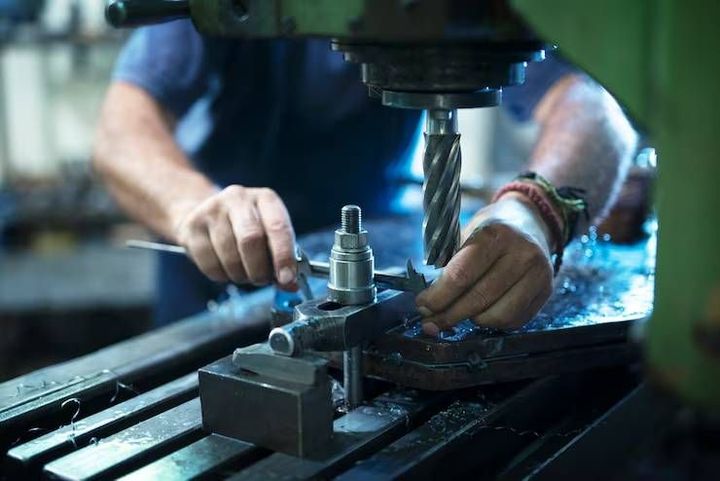
Tapping Machines: Types, Uses, Technology & Safety Guide
A tapping machine is a machine tool used to create internal threads inside a drilled hole.
These threads allow bolts, screws, and other threaded components to fit securely into a workpiece. Tapping machines are commonly used with materials such as steel, stainless steel, aluminum, brass, and various engineering alloys.
The basic process involves positioning a workpiece, aligning a tap with a prepared hole, and rotating or feeding the tap into the material. The cutting edges of the tap gradually form the internal thread.
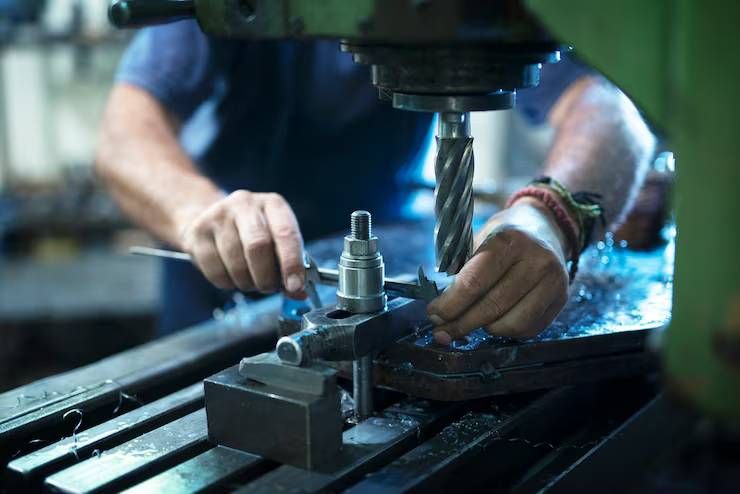
Unlike manual tapping, a dedicated industrial tapping machine can control spindle rotation, feed movement, depth, and alignment more consistently. Depending on the design, the machine may be manually operated, pneumatic, electric, hydraulic, or CNC controlled.
Common types include:
- Bench tapping machines
- Pneumatic tapping machines
- Electric tapping machines
- Hydraulic tapping machines
- Automatic tapping machines
- CNC tapping machines
- Multi-spindle tapping machines
- Radial tapping machines
The choice depends on the material, thread size, production volume, workpiece shape, accuracy requirements, and degree of automation.
| Machine Type | Typical Characteristic | Common Application |
|---|---|---|
| Bench Tapping Machine | Compact and relatively simple | Small components |
| Pneumatic Tapping Machine | Uses compressed air | Repetitive workshop operations |
| Electric Tapping Machine | Electrically driven spindle | General industrial work |
| Hydraulic Tapping Machine | Hydraulic actuation | Heavier-duty applications |
| CNC Tapping Machine | Programmable movements | Precision manufacturing |
| Multi-Spindle Machine | Several taps can operate together | High-volume production |
Why Tapping Machines Matter in Modern Manufacturing
Threaded holes are used in a wide range of products, from automotive components and industrial equipment to electrical enclosures, appliances, machinery frames, and precision engineering parts.
A thread tapping machine helps address several manufacturing challenges. Controlled spindle movement can reduce variation between threaded holes, while programmable machines can repeat the same sequence across multiple components.
For manufacturers, engineers, maintenance personnel, and machine operators, understanding tapping technology is important because incorrect tapping can result in damaged threads, broken taps, misalignment, excessive tool wear, or rejected components.
CNC tapping machines have become particularly relevant where manufacturers need repeatable machining operations. CNC systems can coordinate spindle speed, feed rate, tool movement, coolant application, and programmed sequences.
The main factors normally considered when selecting a tapping machine include:
- Required thread diameter and pitch
- Workpiece material
- Hole depth
- Production volume
- Required positioning accuracy
- Spindle speed and torque
- Tap type and tooling system
- Machine control system
- Operator safety features
- Available floor space
The correct relationship between spindle speed and thread pitch is also important. For a basic tapping operation, the theoretical feed rate can be represented as:
Feed rate = Spindle speed × Thread pitch
For example, at 500 revolutions per minute with a 1.5 mm pitch, the theoretical feed rate is 750 mm/min. Actual machining parameters depend on the machine, tap geometry, material, lubrication, and operating conditions.
Technology Trends and Recent Developments
The machine-tool sector has continued to move toward automation, digital controls, higher precision, and connected manufacturing.
India's machine-tool industry recorded estimated production of ₹14,566 crore and consumption of ₹31,781 crore during FY 2024–25, according to the Indian Machine Tool Manufacturers' Association. The association also reported that India ranked ninth globally in machine-tool production and fourth in consumption during calendar year 2024.
A significant industry event was IMTEX 2025, held from 23–29 January 2025 in Bengaluru. The exhibition highlighted smart and intelligent machines, high-precision equipment, multitasking machines, robotics, collaborative robots, manufacturing software, and Industry 4.0 technologies.
More recently, on 23 February 2026, the Office of the Principal Scientific Adviser and the Ministry of Heavy Industries held a stakeholder consultation on a proposed Advanced Manufacturing Systems Mission. Discussions included CNC machine tools and controllers, advanced machines, robotics, testing and metrology infrastructure, and other advanced manufacturing technologies.
These developments are relevant to tapping technology because modern tapping systems increasingly connect machining operations with broader digital manufacturing systems.
Current technology trends include:
- CNC-based thread production
- Servo-controlled tapping
- Automatic tool monitoring
- Programmable spindle control
- Multi-axis machining
- Tool-life monitoring
- Digital production records
- Robotic loading and unloading
- Integration with factory automation systems
Safety, Regulations and Policies in India
Tapping machines involve rotating spindles, cutting tools, workholding equipment, electrical systems, and sometimes pneumatic or hydraulic components. Proper guarding, emergency controls, machine inspection, operator training, and safe work procedures are therefore important.
India's four Labour Codes, including the Occupational Safety, Health and Working Conditions Code, 2020, became effective from 21 November 2025, according to the Ministry of Labour and Employment. The framework includes workplace health and safety provisions relevant to industrial establishments.
The Occupational Safety, Health and Working Conditions Code also contains provisions concerning machinery safeguarding and safe use of plant, tools, and equipment.
BIS requirements also need careful attention. The Machinery and Electrical Equipment Safety (Omnibus Technical Regulation) Order, 2024 was issued with provisions covering categories of machinery, including specified metal-cutting machines. However, the Government of India rescinded that 2024 order with immediate effect through an order dated 14 January 2026, published on 16 January 2026.
BIS continues to provide machinery-related certification information and specific guidance for categories such as metal-cutting machines. Therefore, the regulatory position for a particular tapping machine should be checked according to its classification, applicable notification, technical characteristics, and current BIS requirements rather than assumed from an older regulation.
For electrical and machine-tool safety, relevant Indian Standards can also be reviewed through the BIS standards database. Examples include standards relating to electrical equipment of machines and machine-tool safety.
Government Manufacturing Programs and Industry Support
Government policy has increasingly emphasized domestic manufacturing, technology development, MSMEs, and advanced production capabilities.
The National Manufacturing Mission was announced in the Union Budget 2025–26 on 1 February 2025. Its focus areas include technology availability, quality products, a future-ready workforce, and a stronger MSME ecosystem.
In January 2025, the Government also approved the Mutual Credit Guarantee Scheme for MSMEs, covering eligible equipment and machinery financing through participating lending institutions. The scheme provides guarantee coverage subject to its stated eligibility conditions.
The Ministry of Heavy Industries also identifies machine tools as an important part of India's capital-goods sector and highlights technology upgrading, skill development, and modern manufacturing capacity as areas of policy attention.
These policies can influence the broader environment in which CNC tapping machines, automated machine tools, and other production equipment are adopted.
Useful Tools and Resources for Tapping Technology
Several technical resources can help engineers, operators, students, and manufacturing planners understand tapping operations.
BIS Know Your Standard: The BIS platform allows users to search standards by IS number or product keyword and review related documents, amendments, notifications, testing information, and other standard-related details.
Tapping Speed Calculator: A basic calculator can determine spindle speed or feed relationships using thread pitch, cutting conditions, and selected machining parameters.
Thread Specification Charts: Thread charts help identify nominal diameter, pitch, tapping-drill dimensions, and related thread information for commonly used metric and inch thread systems.
Machine Manuals: Manufacturer manuals provide information about spindle capacity, tapping range, lubrication, tooling, electrical controls, maintenance intervals, and machine-specific safety procedures.
Tool Selection Guides: Technical tool catalogs and engineering references can help compare tap geometries, coatings, materials, flute designs, and applications for different workpiece materials.
BIS Certification Resources: BIS provides current information about certification schemes, machinery categories, and conformity-assessment procedures. Its certification pages should be checked whenever regulatory compliance is being evaluated.
Frequently Asked Questions
What is a tapping machine used for?
A tapping machine creates internal threads in drilled holes. These threads allow threaded fasteners to be installed into components.
What is a CNC tapping machine?
A CNC tapping machine uses computerized numerical control to manage programmed movements and machining parameters. It is commonly used where repeatability, controlled positioning, and automated machining sequences are important.
What is the difference between drilling and tapping?
Drilling creates a hole, while tapping creates internal threads inside an existing hole. In many manufacturing processes, drilling is performed before tapping.
Which factors affect tapping accuracy?
Tool alignment, spindle control, thread pitch, workpiece material, tap condition, hole diameter, machine rigidity, lubrication, and programmed parameters can all influence tapping accuracy.
Are tapping machines regulated in India?
Potential regulatory requirements depend on the machine's classification and applicable Indian rules or standards. India's machinery-safety framework has undergone changes, including the rescission of the 2024 Machinery and Electrical Equipment Safety Omnibus Technical Regulation in January 2026. Users should verify the latest BIS notifications and applicable workplace-safety requirements before making compliance decisions.
Conclusion
Tapping machines are important machine tools for producing accurate internal threads in metal and other engineering materials. Their applications range from general workshop operations to automated CNC manufacturing.
The technology is increasingly connected with automation, digital controls, robotics, tool monitoring, and advanced manufacturing systems. India's expanding machine-tool sector and recent policy attention toward advanced manufacturing also make tapping technology relevant to the wider industrial landscape.