Surface Grinding Machines: Explore Components, Operations, and Industrial Uses
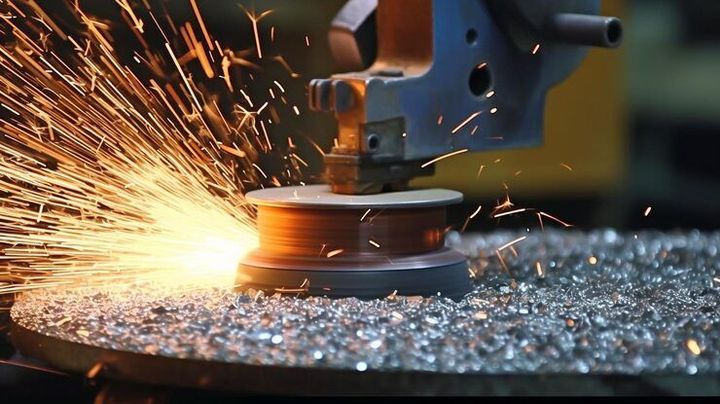
A surface grinding machine is a type of machine tool used to produce a smooth, flat, and accurately finished surface on a workpiece.
It removes a small amount of material through an abrasive grinding wheel rather than through a conventional cutting tool.
Surface grinding is widely associated with metalworking and precision manufacturing. It can be used on materials such as steel, cast iron and certain hardened alloys, depending on the machine, wheel specification and operating conditions.
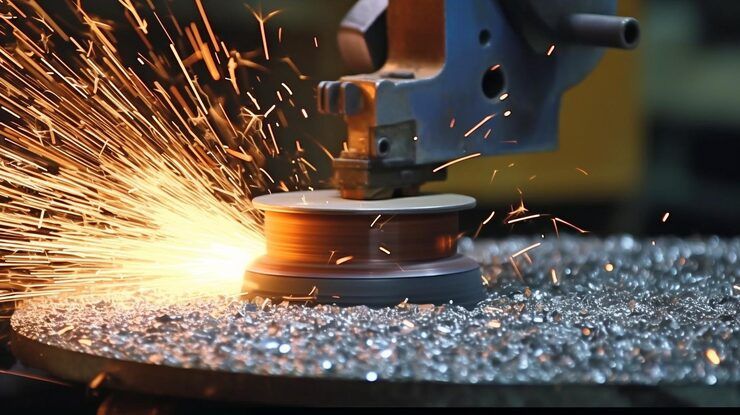
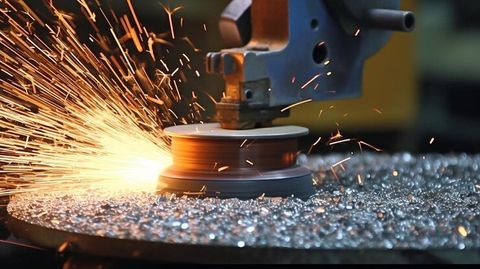
The basic process involves securing a workpiece on a table, bringing a rotating grinding wheel into controlled contact with its surface, and moving the table or wheel according to the machine design.
Common components include:
- Grinding wheel and spindle
- Worktable
- Magnetic or mechanical workholding system
- Wheel head
- Cross-feed and longitudinal-feed mechanisms
- Coolant arrangement
- Control panel
- Safety guards and emergency controls
Surface grinding machines exist in manual, hydraulic, automatic, NC and CNC configurations. Modern CNC grinding machines can coordinate multiple movements and support repeatable production of components with close dimensional requirements.
Common Surface Grinding Machine Types
| Type | Main Characteristic | Typical Application |
|---|---|---|
| Horizontal spindle | Wheel contacts the workpiece peripherally | General flat-surface grinding |
| Vertical spindle | Wheel face contacts the workpiece | Heavy stock removal and larger surfaces |
| Reciprocating table | Table moves back and forth | Precision component production |
| Rotary table | Work rotates beneath the wheel | Circular or batch components |
| CNC surface grinder | Computer-controlled movement | Repeatable precision manufacturing |
The selection of a machine depends on workpiece dimensions, material, required surface finish, production volume, dimensional accuracy and automation requirements.
Why Surface Grinding Matters in Modern Manufacturing
Precision grinding plays an important role where dimensional accuracy and surface quality are important. A component may require grinding after processes such as milling, turning, heat treatment or casting to achieve its final geometry.
Surface grinding can help address several manufacturing requirements:
- Improving surface flatness
- Removing small amounts of excess material
- Producing consistent dimensions
- Correcting minor surface irregularities
- Preparing surfaces for assembly
- Achieving controlled surface roughness
- Supporting precision tooling and component production
Industries using this technology include automotive manufacturing, aerospace, medical equipment production, tool and die manufacturing, general engineering, electronics, energy equipment and precision component production.
The importance of grinding technology has also increased as manufacturers work with hardened materials and tighter dimensional requirements. CNC machine tools, automated inspection and digital manufacturing systems are increasingly connected with precision machining processes.
For general readers, an important distinction is that grinding is normally a finishing or precision operation rather than simply a method for removing large quantities of material. The wheel specification, machine rigidity, workholding method and operating parameters all influence the result.
Key Factors That Affect Grinding Accuracy
Several technical factors influence the performance of a surface grinding operation.
Grinding wheel selection: Wheel abrasive type, grain size, grade, structure and bonding method should correspond to the workpiece and operation.
Wheel speed: The operating speed must remain within the permitted limits of the grinding wheel and machine.
Feed rate: Excessive feed can increase heat generation and influence surface quality.
Depth of cut: A controlled depth of cut helps maintain dimensional consistency and reduces unnecessary thermal loading.
Workholding: Magnetic chucks are common for suitable ferrous workpieces, while other components may require mechanical or specialized holding methods.
Coolant: Appropriate coolant application can help control heat and remove grinding debris where the machine and process are designed for wet grinding.
Recent Developments in Surface Grinding Technology
The Indian machine-tool sector has continued moving toward CNC equipment, automation, digital manufacturing, robotics and connected production systems.
At IMTEX 2025, held from 23–29 January 2025 in Bengaluru, more than 1,100 exhibitors from 23 countries participated. The exhibition highlighted CNC machining, automation, robotics, digital manufacturing, metrology and smart manufacturing technologies. Grinding equipment and advanced grinding solutions were among the technologies presented.
Automation was another important theme during 2025. The Indian Machine Tool Manufacturers' Association conducted its Symposium on Automation & Robotics on 4–5 June 2025 in Pune, bringing attention to automation developments in Indian manufacturing.
Recent technology directions include:
- CNC-controlled grinding cycles
- Automated workpiece loading
- In-process measurement
- Digital machine monitoring
- Robotic material handling
- Automatic wheel dressing
- Improved coolant management
- Integration with manufacturing data systems
- Multi-axis grinding technology
Government data also indicates continuing expansion in India's machine-tool manufacturing sector. The Ministry of Heavy Industries reported machine-tool production of ₹14,286 crore in 2024–25, compared with ₹13,571 crore in 2023–24.
These developments indicate a broader movement toward precision manufacturing, automation and digitally connected industrial machinery.
Indian Laws, Standards and Policies
Surface grinding machines in India can be affected by occupational safety requirements, machinery standards, factory regulations and applicable conformity requirements.
The Occupational Safety, Health and Working Conditions Code, 2020 provides a national framework covering occupational safety, health and working conditions. The Ministry of Labour and Employment has also been developing rules under the Code. In September 2025, the Central Government published draft factory-worker rules under Sections 23 and 24 of the Code.
State-level factory rules remain relevant because industrial safety requirements can depend on the applicable state framework. The Ministry of Labour and Employment notes that rules under the earlier Factories Act framework were framed by respective State Governments.
The Bureau of Indian Standards (BIS) maintains standards relevant to grinding-wheel safety. For example, IS 1991 covers safety requirements for the use, care and protection of abrasive grinding wheels, including requirements concerning guards, general machine requirements, inspection and mounting, and standard speeds.
IS 13552:2019 addresses testing of accuracy for surface grinding machines with vertical grinding-wheel spindles and reciprocating tables. It covers geometric and machining tests and applicable tolerances.
A significant regulatory development occurred during 2025 concerning the Machinery and Electrical Equipment Safety (Omnibus Technical Regulation) Order, 2024. An amendment published in June 2025 had set an application date of 1 September 2026 for listed machines and equipment. However, the Ministry of Heavy Industries subsequently issued a Second Amendment in November 2025 and then listed the withdrawal of the 2024 Order on 16 January 2026. Therefore, readers should check the latest official BIS and Ministry of Heavy Industries notifications rather than relying on earlier OTR implementation dates.
BIS states that certification is generally voluntary unless the Central Government makes compliance compulsory for a particular product through a Quality Control Order or another applicable legal mechanism.
Tools and Resources for Surface Grinding
Several technical resources can help students, engineers, operators and manufacturing planners understand grinding processes.
BIS Standards Portal: Useful for checking current Indian Standards, revisions and technical references related to machine tools, abrasive wheels and machinery safety.
IMTMA Resources: The Indian Machine Tool Manufacturers' Association provides information about machine-tool technologies, industry data, exhibitions and manufacturing developments.
Machine Tool Manuals: Manufacturer documentation can provide specifications for spindle speed, wheel dimensions, workholding, feeds, maintenance and safety procedures.
Surface Speed Calculator: A basic grinding-speed calculation can relate wheel diameter and rotational speed. Users should always compare calculated values with the wheel manufacturer's permitted operating speed.
Surface Roughness Measurement: Surface roughness testers can help evaluate the resulting finish using parameters such as Ra, where applicable.
Metrology Equipment: Micrometers, height gauges, dial indicators, precision straightedges and other inspection equipment can support dimensional verification.
Technical Training Resources: Engineering institutions, industrial training programs and recognized technical organizations can provide structured learning about CNC machine tools, grinding processes and industrial safety.
Basic Safety Practices
Grinding machines involve rotating abrasive wheels, moving tables, electrical systems, workholding equipment and potentially airborne particles. Safety procedures should therefore be treated as an essential part of operation.
Important practices include:
- Inspect grinding wheels before use.
- Follow the wheel manufacturer's speed limits.
- Use the correct wheel guard.
- Ensure the workpiece is securely held.
- Keep hands away from rotating components.
- Use appropriate eye and face protection.
- Control grinding dust where required.
- Follow machine-specific operating instructions.
- Stop the machine before carrying out adjustments.
- Maintain suitable housekeeping around the machine.
- Inspect electrical and emergency-control systems regularly.
Grinding-wheel mounting and inspection require particular attention because an improperly selected, damaged or incorrectly installed wheel can create serious hazards.
Frequently Asked Questions
What is a surface grinding machine used for?
A surface grinding machine is mainly used to produce flat, smooth and accurately dimensioned surfaces. It can also help remove small amounts of material and correct surface irregularities.
What is the difference between surface grinding and cylindrical grinding?
Surface grinding is primarily used to finish flat surfaces. Cylindrical grinding is designed for cylindrical external or internal surfaces, such as shafts, bores and related geometries.
What is a CNC grinding machine?
A CNC grinding machine uses computer numerical control to manage programmed machine movements. This can improve repeatability and support complex or closely controlled grinding operations.
Which industries use surface grinding machines?
Automotive, aerospace, tool and die, general engineering, medical equipment, electronics, energy and precision component manufacturing can use surface grinding processes.
Is surface grinding covered by Indian safety standards?
Yes. Several Indian Standards relate to machine tools, abrasive grinding wheels and machinery safety. Applicable requirements depend on the machine, wheel, workplace and relevant legal framework. Organizations should verify the latest BIS standards and applicable central and state regulations.
Conclusion
Surface grinding machines remain important machine tools for producing accurate, flat and smooth surfaces in modern manufacturing. Their role extends from conventional workshop operations to highly automated CNC grinding systems used in precision production.
Technology developments are increasingly focused on automation, digital monitoring, CNC control, measurement integration and improved process consistency. At the same time, safe operation remains dependent on correct wheel selection, workholding, machine guarding, operating parameters and workplace procedures.