Hydraulic Shearing Machines: Guide to Types, Uses and Safety
Hydraulic shearing machines are industrial sheet metal cutting machines that use hydraulic pressure to move a cutting blade through metal sheets
They are commonly used when manufacturers need straight, repeatable cuts in materials such as mild steel, stainless steel, aluminium, and other sheet metals.
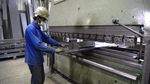
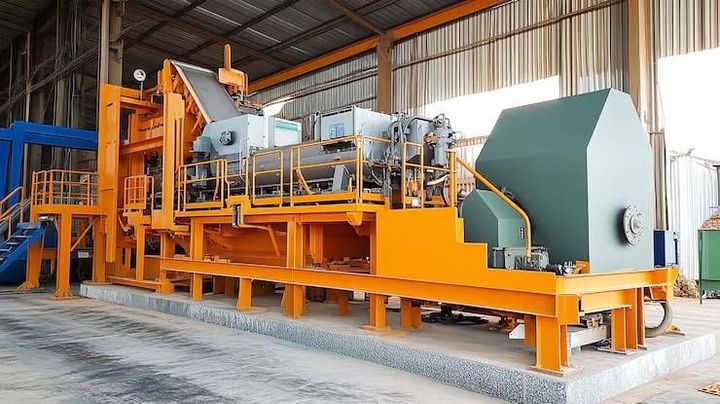
The basic purpose of a hydraulic shear machine is to separate a sheet along a straight cutting line. Instead of removing material through drilling or milling, the machine applies controlled force to cut the sheet between blades.
A typical hydraulic shearing machine includes:
- Hydraulic cylinders that generate cutting force
- Upper and lower blades
- A machine frame and work table
- Hydraulic pumps, valves, and reservoirs
- A back gauge for positioning the sheet
- Control equipment
- Guards and emergency stopping equipment
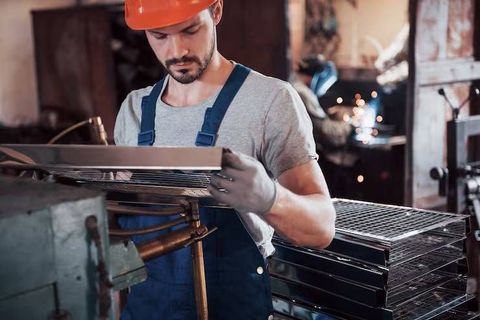
The cutting process normally begins with positioning the sheet on the work table. The back gauge helps establish the required dimension. The hydraulic system then moves the upper blade through its cutting stroke, separating the material.
Hydraulic systems are useful because cutting force can be controlled through hydraulic pressure. Machine capacity depends on factors such as blade length, material type, material thickness, blade geometry, and hydraulic system design.
Why Hydraulic Shearing Machines Matter
Sheet metal is used across construction, transportation, industrial equipment, electrical enclosures, appliances, fabrication, and many other manufacturing activities. These industries require accurately prepared sheets before bending, welding, punching, or forming.
A hydraulic sheet metal cutting machine can simplify the initial preparation stage by producing straight cuts without requiring a separate machining process.
The technology is particularly relevant to:
- Metal fabrication workshops
- Structural and general engineering manufacturers
- Automotive component production
- HVAC and ductwork manufacturing
- Electrical enclosure production
- Appliance manufacturing
- Construction-related metal fabrication
- Industrial machinery production
Hydraulic shearing machines also help address practical production challenges. Manual cutting becomes difficult when sheets are thick, large, or repeatedly processed. A powered machine provides controlled movement and consistent cutting action.
Accuracy depends on the machine's mechanical condition, blade condition, material positioning, operator settings, and control system. A CNC hydraulic shear can further automate positioning through programmable controls.
Common Types and Configurations
Hydraulic shearing machines can be classified according to their cutting mechanism, control system, blade arrangement, and operating configuration.
| Type or feature | General characteristics | Typical application |
|---|---|---|
| Hydraulic guillotine shear | Straight-line blade movement | General sheet cutting |
| Swing-beam hydraulic shear | Blade follows an arc-like movement | Fabrication and production work |
| CNC hydraulic shear | Programmable positioning and controls | Repetitive precision cutting |
| Manual-gauge hydraulic shear | Operator-controlled positioning | Smaller production environments |
| Heavy-duty hydraulic shear | Higher structural and hydraulic capacity | Thicker metal sheets |
The choice between configurations depends on sheet dimensions, material thickness, production volume, required accuracy, and available workspace.
How the Hydraulic Cutting Process Works
The hydraulic cutting cycle involves several coordinated actions.
First, the operator places the sheet against the reference or back-gauge system. The control system determines the required position according to the selected dimensions.
The hydraulic pump generates fluid pressure. Hydraulic valves direct this pressure toward the cylinders that move the cutting beam.
As the upper blade moves downward, the sheet is held against the table and separated by the interaction between the upper and lower blades.
Blade clearance is an important technical factor. If the clearance is inappropriate for the material thickness and type, the cut can develop deformation, burrs, or other quality problems.
After the cutting stroke, the blade returns to its starting position. The sheet can then be repositioned for another cut.
Important Technical Factors
Several specifications influence the performance of a hydraulic shearing machine.
Cutting length: This indicates the approximate maximum width that can be processed in a single cutting operation.
Maximum thickness: This refers to the material thickness that the machine is designed to cut under specified conditions.
Blade material: Cutting blades are manufactured from tool steels and other engineered materials selected for hardness, wear resistance, and cutting performance.
Blade clearance: Proper clearance helps balance cutting force, edge quality, and blade wear.
Back-gauge accuracy: The positioning system influences dimensional consistency between repeated cuts.
Hydraulic pressure: The hydraulic circuit determines how force is generated and transferred to the cutting mechanism.
Control system: Conventional controls provide basic operation, while CNC systems can automate positioning and repeatable cutting sequences.
Safety Considerations
Hydraulic shearing machines contain moving blades and powerful mechanical components, so machine guarding and safe operating procedures are essential.
Important safety practices include:
- Keep hands away from the cutting zone.
- Use appropriate machine guards.
- Check emergency stopping equipment before operation.
- Keep the work area clear of loose materials.
- Follow the machine manufacturer's operating instructions.
- Inspect blades and hydraulic components regularly.
- Use suitable personal protective equipment.
- Isolate electrical and hydraulic energy before maintenance.
- Prevent unauthorized changes to safety controls.
- Train operators to recognize mechanical and hydraulic hazards.
Machine guarding is particularly important because the cutting point can create crushing, cutting, and trapping hazards.
Recent Technology and Industry Updates
Technology surrounding hydraulic shearing machines has continued to develop through greater automation, digital control, and machine monitoring.
During 2025, industry discussions increasingly highlighted CNC control, automated back gauges, energy-efficient hydraulic systems, and connections with digital manufacturing environments. These developments are intended to improve repeatability, monitoring, and integration with broader production workflows.
A notable standards development occurred in 2026. ISO registered a committee draft for a revised edition of ISO 16092-1 covering general safety requirements for presses. The draft process began in May 2026, with consultation during June–August 2026. The existing ISO 16092-1:2017 remains the current published general press standard while the revision progresses.
For hydraulic presses specifically, ISO 16092-3:2017 remains a relevant international safety reference. It addresses technical safety requirements for hydraulic presses used with cold metal and related sheet materials.
These developments demonstrate a broader movement toward integrating machine safety, programmable controls, risk assessment, and digital manufacturing practices.
Laws, Standards, and Policies in India
In India, industrial machinery is affected by workplace safety legislation, applicable Indian Standards, factory requirements, and technical regulations.
The Bureau of Indian Standards lists IS 17277 (Part 3):2021, which adopts ISO 16092-3:2017 for safety requirements concerning hydraulic presses. BIS recorded a review of this standard in 2025. The standard is classified as a safety standard for machine tools.
For general machinery risk assessment, Indian standards based on international frameworks include principles covering hazard identification and risk reduction. Electrical equipment and machine safety standards may also become relevant depending on the machine's configuration.
India's Occupational Safety, Health and Working Conditions framework addresses matters such as fencing of machinery, machinery in motion, cutting-off power, safety of buildings and machinery, pressure plant, and protection against workplace hazards.
The Ministry of Labour and Employment published draft Central Rules for the Occupational Safety, Health and Working Conditions Code in 2025. State-level implementation and applicable factory rules should therefore be checked for the particular workplace.
Manufacturers and users should also determine whether any machinery-specific technical regulation applies to the equipment being placed on the Indian market or operated at a particular facility.
Practical Tools and Resources
Several resources can help engineers, operators, students, and manufacturing managers understand hydraulic shearing machines.
BIS Know Your Standard: The Bureau of Indian Standards provides a searchable platform for finding Indian Standards by standard number or keyword.
Machine manuals: Manufacturer documentation normally contains blade-clearance guidance, hydraulic specifications, operating procedures, maintenance intervals, and safety instructions.
Material thickness charts: These can help compare material type and thickness with the machine's rated cutting capability.
Cutting-force calculations: Engineering calculations can provide an initial estimate of the force required for a particular material and thickness. Actual machine selection should rely on manufacturer-rated specifications and engineering assessment.
Maintenance checklists: A basic checklist can track blade condition, hydraulic fluid condition, leaks, fasteners, guards, emergency stops, lubrication, and gauge operation.
Safety risk assessments: A documented assessment can identify hazards associated with cutting, material handling, maintenance, electrical energy, and hydraulic pressure.
CNC programming references: These are useful when a machine uses programmable back gauges or integrated numerical controls.
Key Factors When Evaluating a Hydraulic Shearing Machine
A structured evaluation can make technical comparisons easier.
| Factor | Why it matters |
|---|---|
| Cutting length | Determines sheet width that can be processed |
| Maximum thickness | Establishes material capacity |
| Material type | Different metals require different cutting conditions |
| Blade clearance | Influences edge quality and blade wear |
| Back gauge | Supports repeatable sheet positioning |
| CNC control | Helps automate repeated dimensions |
| Hydraulic system | Determines force generation and movement |
| Safety equipment | Reduces exposure to machine hazards |
| Maintenance access | Affects inspection and routine upkeep |
| Electrical controls | Supports reliable machine operation |
The phrase hydraulic shearing machine price is often used in commercial research, but price alone does not describe machine suitability. Technical specifications, capacity, safety features, controls, operating requirements, and long-term maintenance considerations provide more useful information for evaluation.
Frequently Asked Questions
What is a hydraulic shearing machine used for?
A hydraulic shearing machine is primarily used for straight-line cutting of sheet metal. It can prepare sheets for later processes such as bending, welding, forming, punching, and assembly.
What materials can hydraulic shears cut?
Depending on the machine design, hydraulic shears can process materials such as mild steel, stainless steel, aluminium, and other sheet metals. The permitted thickness varies by machine and material.
What is the difference between a hydraulic shear and a CNC hydraulic shear?
A conventional hydraulic shear may use manually adjusted controls or gauges. A CNC hydraulic shear adds programmable numerical control, allowing dimensions and positioning sequences to be entered electronically for repeatable operations.
Why is blade clearance important?
Blade clearance is the gap between the cutting blades. Correct clearance helps produce a cleaner cut and can reduce unnecessary blade wear. The appropriate setting depends on material type and thickness.
Which safety standards are relevant in India?
Relevant standards depend on the machine category and configuration. IS 17277 (Part 3):2021 adopts ISO 16092-3:2017 for hydraulic press safety, while broader Indian machinery safety and workplace regulations may also apply.
Conclusion
Hydraulic shearing machines are important pieces of sheet metal fabrication equipment used to produce straight cuts in a wide range of industrial materials. Their operation combines hydraulic force, cutting blades, material positioning, and control systems.
Modern machines increasingly incorporate CNC controls, automated positioning, digital monitoring, and improved safety systems. At the same time, safe operation remains dependent on proper guarding, maintenance, operator training, and appropriate machine settings.