Stick Pack Machines in Packaging: Guide to Types, Functions, and Practical Insights
Stick Pack Machines are automated packaging machines designed to form, fill, and seal narrow, elongated packets known as stick packs. These machines are widely used for products that are distributed in small, controlled portions, including powdered beverages, sugar, salt, instant coffee, nutritional powders, pharmaceutical products, and other dry or liquid formulations.
A stick pack is different from a conventional pouch because it usually has a slim tubular shape. The narrow format can use relatively little packaging material while creating a convenient single portion that is easy to carry, open, and use.
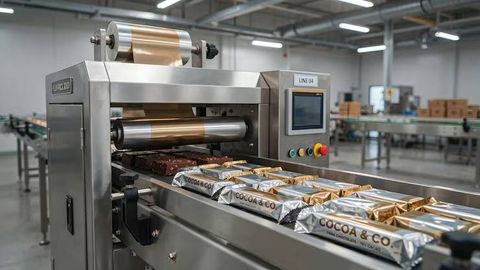
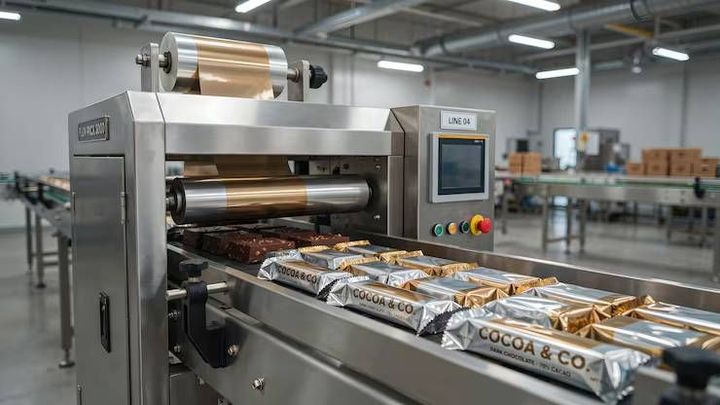
Stick pack production generally combines several operations within one packaging line. Depending on the machine configuration, these operations can include film unwinding, film forming, filling, sealing, cutting, coding, inspection, and discharge.
How Stick Pack Packaging Works
The packaging process begins with a continuous roll of flexible packaging film. The machine guides this material through a forming section, where it is shaped into one or more narrow channels.
The product is then measured and introduced into each channel. After filling, the packaging material is sealed around the product and divided into individual packets.
A simplified process includes:
Film unwinding: Packaging film is supplied from a roll.
Film forming: The film is shaped into a tubular or multi-lane structure.
Product dosing: A measured quantity of product enters the packet.
Longitudinal sealing: The film is sealed along its length.
Cross sealing: Individual packet sections are closed.
Cutting: Connected packets are separated.
Coding: Batch numbers, dates, or other information may be printed.
Inspection: Sensors or vision systems can check selected packaging characteristics.
Discharge: Completed stick packs move toward collection or secondary packaging.
The exact process varies according to the machine design, product properties, film structure, filling method, and required production configuration.
Main Types of Stick Pack Machines
Powder filling machines are designed for products such as instant drink mixes, coffee, spices, powdered supplements, and selected pharmaceutical powders. Auger fillers and other dosing systems can be used according to powder characteristics.
Liquid stick pack machines handle products such as sauces, syrups, concentrates, gels, and other pumpable materials. Pump-based filling systems are commonly used to control liquid quantities.
Granule filling machines can handle products with relatively free-flowing particles, such as sugar, salt, seeds, and certain food ingredients.
Multi-lane stick pack machines produce several packets simultaneously. Multiple lanes can increase output while maintaining a compact machine footprint.
Single-lane machines produce one packet at a time and may be appropriate for smaller production environments, testing, specialized products, or applications with lower throughput requirements.
Importance
Portion Control
One major purpose of stick packaging is controlled portioning. A filling system can be configured to deliver a defined quantity of product into each packet.
Consistent dosing is particularly important for products where the amount in each packet affects preparation, formulation, labeling, or user instructions.
Compact Packaging Format
Stick packs have a narrow form that can make them convenient for individual use. Their shape can also support efficient arrangement in cartons, display containers, shipping cases, and other secondary packaging formats.
The actual material savings and packaging efficiency depend on the product, film design, packet dimensions, sealing requirements, and production method.
Product Protection
Flexible packaging can provide barriers against environmental factors such as moisture, oxygen, light, and contamination when an appropriate film structure is selected.
The required barrier properties vary considerably. A powdered food product may require different packaging characteristics from a pharmaceutical formulation or liquid product.
High-Speed Production
Automated stick pack systems can perform several packaging operations continuously. Multi-lane configurations allow multiple packets to be formed and filled during the same production cycle.
Production speed depends on factors such as the number of lanes, product characteristics, packet dimensions, filling technology, film properties, machine configuration, and operating conditions.
Applications Across Industries
Stick packs are used across several sectors.
Food and beverages: Coffee, sugar, salt, drink powders, sauces, seasonings, and other portioned products.
Nutritional products: Powdered formulations and selected dietary products.
Pharmaceuticals: Certain powders, granules, liquids, and other formulations designed for single-dose packaging.
Personal care: Gels, creams, and liquid formulations in selected applications.
Agricultural products: Certain powdered or granular formulations where appropriate packaging controls are available.
Household products: Selected detergents, concentrates, and other portioned formulations.
Common Machine Components
| Component | Main Function | Typical Role |
|---|---|---|
| Film roll holder | Holds packaging material | Film supply |
| Forming system | Shapes the film | Packet formation |
| Filling system | Measures product | Product dosing |
| Sealing jaws | Close packet sections | Package sealing |
| Cutting system | Separates packets | Individual units |
| Printing unit | Adds identification information | Coding |
| Sensors | Monitor machine conditions | Process control |
| Control panel | Manages machine settings | Operator control |
Recent Updates
Multi-Lane Packaging Technology
Multi-lane designs continue to play an important role in stick pack production. Instead of producing one packet per cycle, a machine can create multiple lanes of packets simultaneously.
This approach can increase production capacity within a relatively compact footprint. However, increasing the number of lanes also creates additional requirements for synchronized filling, film tracking, sealing, inspection, and machine control.
Servo-Based Motion Control
Modern packaging equipment increasingly uses servo motors and electronic motion control for precise movement of film, filling mechanisms, sealing systems, and cutting components.
Servo technology can provide programmable movement profiles and synchronization between different machine sections. This can be particularly useful when packet dimensions or production conditions change.
Digital Monitoring
Packaging machines are increasingly connected to digital monitoring systems. Operators may be able to view production information, machine status, alarms, operating parameters, and selected performance data through modern control interfaces.
Industrial communication systems can also allow packaging equipment to exchange information with wider production-management systems.
Vision Inspection
Machine vision is being used in packaging environments to inspect selected characteristics such as print quality, packet positioning, seal appearance, product presence, and coding.
Vision systems can use cameras and image-processing software to identify differences that may not be practical to inspect manually at high production rates.
Flexible Packaging Materials
Packaging manufacturers continue to investigate material structures that balance product protection, mechanical strength, sealing performance, and environmental considerations.
Material selection is especially important because reducing material thickness does not automatically create a suitable package. Barrier performance, sealing reliability, product shelf life, machine compatibility, and end-of-life considerations must also be evaluated.
Sustainable Packaging Development
Sustainability has become an important consideration in flexible packaging. Packaging development can involve material reduction, recyclable structures, improved production efficiency, and alternative material combinations.
The suitability of a particular material depends on the product and the recycling infrastructure available in the target market. A packaging structure that works in one recycling system may not have the same characteristics in another region.
Automation and Data Integration
Modern packaging lines can connect filling, sealing, coding, inspection, and secondary packaging equipment into integrated production systems.
Data from sensors and control systems can support monitoring of machine performance, production counts, downtime events, and selected process conditions.
Laws or Policies
International Food Packaging Requirements
Stick packs used for food and beverages must comply with the applicable food-contact and labeling requirements of the market where the product is placed.
Different regions use different regulatory frameworks. In the United States, the Food and Drug Administration regulates food-contact substances and packaging materials that come into contact with food. In the European Union, food-contact materials are governed through European legislation, including Regulation (EC) No 1935/2004 and related measures.
Manufacturers therefore need to consider the intended product, packaging material, production environment, and destination market.
Pharmaceutical Packaging
Pharmaceutical stick packs can be subject to additional requirements related to product protection, dose accuracy, traceability, packaging integrity, and manufacturing controls.
Regulatory expectations vary between jurisdictions. Organizations may refer to authorities such as the U.S. FDA, European Medicines Agency, and other national medicines regulators when determining applicable requirements.
Packaging Hygiene
Food and pharmaceutical packaging environments generally require controlled manufacturing conditions. Equipment design can therefore consider cleanability, material compatibility, contamination control, and access for inspection.
The specific hygiene requirements depend on the product and regulatory category.
Packaging Machinery Safety
Machine safety is also an important consideration. International standards such as ISO 12100 provide principles for machinery risk assessment and risk reduction.
Packaging equipment may also be subject to regional machinery legislation and electrical, guarding, emergency-stop, and workplace-safety requirements.
Labeling and Traceability
Stick packs may carry information such as product identification, batch information, manufacturing details, expiration information, or other legally required markings.
Requirements differ between countries and product categories. Printing and coding systems therefore need to be configured according to the relevant market and product regulations.
Tools and Resources
Auger Fillers
Auger filling systems are commonly associated with powders. A rotating screw mechanism moves a controlled quantity of material toward the filling point.
The appropriate configuration depends on powder density, flow characteristics, particle size, moisture, and required dose.
Volumetric Fillers
Volumetric systems measure products according to a defined volume. They can be used for suitable free-flowing products where volume-based dosing provides the required control.
Pump Filling Systems
Pump-based systems are commonly used for liquids and semi-liquid products. Different pump designs can be selected according to viscosity, flow behavior, and product characteristics.
Checkweighers
Checkweighing equipment can measure completed packets or selected production samples to identify variations in product quantity.
This information can support process monitoring and quality-control activities.
Vision Inspection Systems
Camera-based inspection systems can examine printing, packet position, seal areas, product presence, and other visual characteristics.
The inspection criteria depend on the product and packaging specification.
Coding and Marking Equipment
Printers can apply batch codes, dates, identification numbers, barcodes, or other information to packaging film.
Common technologies include thermal transfer, ink-based printing, laser marking, and other specialized systems.
Packaging Testing Equipment
Laboratories and packaging facilities can use equipment to examine seal strength, leak resistance, film characteristics, dimensions, and other package properties.
Testing requirements vary according to the packaging material, product category, and applicable regulations.
FAQs
What are Stick Pack Machines?
Stick Pack Machines are automated packaging systems that form narrow packets from flexible film, fill them with a measured product quantity, seal the packets, and separate them into individual units.
What products can Stick Pack Machines package?
Stick Pack Machines can package powders, granules, liquids, sauces, concentrates, coffee, sugar, drink mixes, selected pharmaceutical formulations, and other suitable products.
How does a Stick Pack Machine work?
The machine feeds packaging film through a forming system, creates packet channels, doses the product, seals the film, cuts individual packets, and may apply printed identification information.
What is a multi-lane stick pack machine?
A multi-lane stick pack machine creates several packets simultaneously. Each lane generally has its own product path while sharing coordinated machine functions.
What factors influence stick pack machine selection?
Important factors include product type, filling quantity, packet dimensions, film material, required production rate, number of lanes, sealing requirements, coding needs, inspection requirements, and applicable regulations.
Conclusion
Stick Pack Machines combine film handling, product dosing, sealing, cutting, coding, and inspection into an automated packaging process. They are used across food, beverage, pharmaceutical, personal care, household, and other industries where compact single-portion packaging is appropriate. Modern systems increasingly incorporate multi-lane production, servo controls, digital monitoring, machine vision, and flexible packaging technologies. Understanding the product, packaging material, filling method, machine configuration, and regulatory environment is important when evaluating stick pack production systems.