Soldering Machines: Guide to Types, Working Principles, Components, and Applications
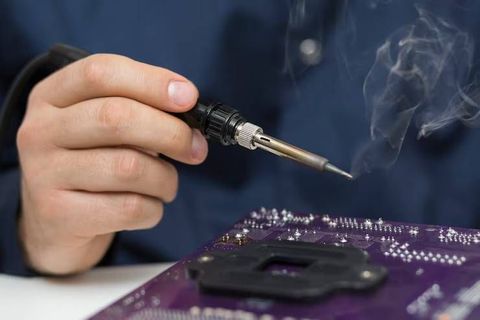
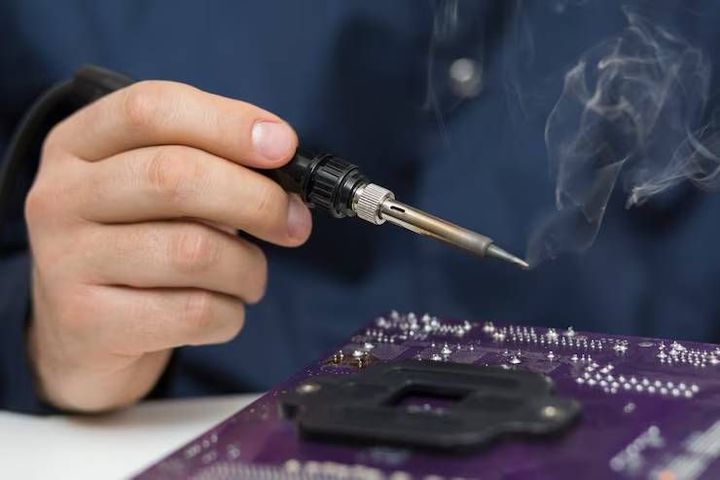
Soldering machines are equipment used to join electronic components, wires, terminals, and other conductive parts by heating a solder material until it flows between the surfaces and forms an electrical and mechanical connection.
Depending on the application, soldering can be performed manually, semi-automatically, or through automated production systems.
Soldering is an important stage in electronics assembly because many products depend on reliable electrical connections. Printed circuit boards (PCBs), consumer electronics, automotive electronics, telecommunications equipment, industrial controllers, medical electronics, and other devices commonly contain numerous soldered connections.
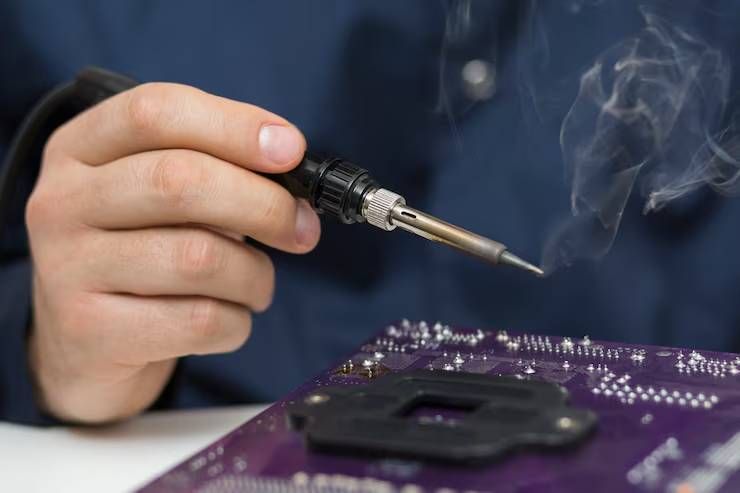
A basic soldering system generally includes a heating element, temperature control, solder delivery mechanism, work-holding arrangement, and operator or machine controls. More advanced systems can integrate sensors, programmable profiles, automated movement, inspection, and production-line controls.
Common categories include:
- Hand and benchtop soldering equipment for small-scale assembly and repair activities.
- Automatic soldering machines for repeatable production processes.
- Wave soldering machines for efficiently processing suitable PCB assemblies.
- Selective soldering machines for applying solder to specific through-hole areas.
- Reflow soldering machines for surface-mount technology (SMT) assemblies.
- Robotic soldering systems for controlled and repeatable joining operations.
The choice of equipment depends on PCB design, component type, production volume, soldering method, temperature requirements, board dimensions, and process-control needs.
Why Soldering Machines Matter Today
Modern electronics contain increasingly compact components and complex PCB layouts. As component spacing becomes smaller, maintaining consistent solder joints becomes more important. Variations in temperature, solder quantity, positioning, and processing time can affect the reliability of an electronic assembly.
For manufacturers and electronics assembly facilities, soldering machines can support greater process consistency by controlling parameters that would otherwise vary during manual operations. Automated equipment can also record process information, helping production teams identify deviations and maintain documented procedures.
Soldering technology affects several industries, including:
- Consumer electronics and appliances
- Automotive electronics
- Industrial automation
- Telecommunications equipment
- Medical electronics
- Aerospace and defense electronics
- Power electronics
- Renewable-energy equipment
- Computer and networking hardware
The growth of India's electronics manufacturing ecosystem is particularly relevant. The Electronics Component Manufacturing Scheme (ECMS), notified in April 2025, includes PCBs, electro-mechanical components, supply-chain components, and capital equipment used in electronics manufacturing among its target areas.
This broader manufacturing activity can increase the importance of production technologies such as PCB soldering machines, inspection equipment, component placement systems, and automated assembly equipment.
| Soldering Technology | Typical Application | Main Process Characteristic |
|---|---|---|
| Hand soldering | Prototyping and small assemblies | Operator-controlled |
| Reflow soldering | Surface-mount PCBs | Controlled heating profile |
| Wave soldering | Through-hole PCB assemblies | Molten solder wave |
| Selective soldering | Mixed-technology PCBs | Targeted solder application |
| Robotic soldering | Repetitive assemblies | Programmable movement |
Recent Developments in Soldering Technology
Electronics manufacturing has continued to receive policy and investment attention in India during 2025 and 2026. The ECMS was notified on 8 April 2025 with a six-year tenure covering FY2025-26 through FY2031-32. Its target segments include supply-chain ecosystems and capital equipment used in electronics manufacturing.
According to MeitY's 2025-26 annual report, by 31 December 2025, 24 ECMS applications had been approved across nine states, with projected investment of ₹12,704 crore and projected production of ₹109,517 crore.
Another significant development came through the Union Budget 2026-27. The government proposed increasing the ECMS outlay from ₹22,919 crore to ₹40,000 crore, while also announcing India Semiconductor Mission 2.0, with a focus on semiconductor equipment, materials, intellectual property, research, and supply-chain capabilities.
These developments are relevant to soldering technology because PCB assembly is one part of the wider electronics manufacturing chain. Increased domestic electronics production can encourage greater attention to automated assembly, process monitoring, thermal profiling, and production traceability.
Another trend is the growing use of automation and data collection. Modern industrial soldering equipment can integrate temperature sensors, programmable controls, machine-vision systems, production monitoring, and factory automation platforms. These features help production teams monitor repeatability rather than relying only on visual inspection.
Laws, Standards, and Policies in India
Soldering machines can be affected by several regulatory areas, depending on their design, application, electrical characteristics, and the products being manufactured.
The Bureau of Indian Standards (BIS) maintains Indian Standards relevant to electrical equipment. IS 959:1994 covers electric soldering irons and includes general, safety, and performance requirements for the specified equipment. BIS records the standard as the third revision and lists it in its standards information.
However, industrial soldering systems are not automatically governed by every household electrical-appliance requirement. Applicable requirements depend on the exact equipment category and whether a particular product falls within a compulsory certification or quality-control framework.
BIS provides its Know Your Standard platform, which allows users to search Indian Standards by IS number or product keyword and review information such as standards, amendments, testing laboratories, and certification details.
Environmental requirements are also relevant. India's E-Waste (Management) Rules, 2022 came into force on 1 April 2023 and apply to specified electrical and electronic equipment and related activities. The rules establish responsibilities for covered manufacturers, producers, refurbishers, dismantlers, and recyclers.
The Ministry of Environment, Forest and Climate Change also lists amendments to the E-Waste Management Rules, including changes issued during 2023 and 2024.
For businesses operating electronics manufacturing facilities, the practical approach is to identify the exact equipment category, applicable Indian Standards, environmental obligations, electrical-safety requirements, and any relevant Quality Control Orders before deployment.
Useful Tools and Resources
Several official and technical resources can help organizations understand soldering equipment and electronics manufacturing requirements.
BIS Know Your Standard: This platform helps users search Indian Standards by product name or standard number and review related certification and testing information.
MeitY Electronics Component Manufacturing Scheme Portal: The ECMS portal provides information about target segments, eligibility conditions, application windows, and scheme updates.
MeitY Electronics Manufacturing Programs: Government resources provide information about electronics manufacturing schemes, semiconductor programs, and industry development initiatives.
Soldering Process Calculators: Thermal profiling, solder-joint calculations, heating-time analysis, and production planning tools can assist engineers in establishing appropriate process parameters.
PCB Design and Simulation Software: Electronic design automation platforms can help evaluate PCB layouts before production. Design reviews can identify thermal, spacing, component-placement, and soldering considerations early in the manufacturing process.
Inspection Systems: Automated optical inspection (AOI), X-ray inspection, and machine-vision systems can be used alongside soldering equipment to examine PCB assemblies and identify potential process defects.
Frequently Asked Questions
What is a soldering machine used for?
A soldering machine is used to create controlled solder joints between electronic components, wires, terminals, or conductive surfaces. The specific process depends on whether the assembly uses through-hole components, surface-mount components, or a combination of technologies.
What is the difference between wave soldering and selective soldering?
Wave soldering passes a suitable PCB assembly over a controlled wave of molten solder, allowing multiple compatible joints to be processed together. Selective soldering applies solder to specific areas, making it useful for assemblies where only particular through-hole joints require soldering.
What is an automatic soldering machine?
An automatic soldering machine performs defined soldering movements and process steps according to programmed parameters. Depending on the system, it may control temperature, solder delivery, positioning, timing, and other production variables.
What factors influence the selection of soldering equipment?
Important factors include PCB design, component technology, board dimensions, joint requirements, production volume, soldering method, temperature profile, automation level, process monitoring, and compatibility with the wider electronics assembly line.
Are soldering machines covered by Indian standards?
Certain soldering equipment is covered by Indian Standards. For example, BIS lists IS 959:1994 for electric soldering irons. The exact requirements for an industrial soldering machine depend on its construction, intended use, electrical characteristics, and applicable regulatory category.
Conclusion
Soldering machines are an important part of modern electronics assembly. From benchtop equipment to automated PCB soldering machines, different technologies address different production requirements. Reflow, wave, selective, and robotic systems provide distinct approaches for surface-mount and through-hole assembly.
The expansion of India's electronics manufacturing ecosystem has increased attention on domestic components, PCBs, semiconductor-related activities, and manufacturing equipment. Recent developments such as the ECMS and India Semiconductor Mission 2.0 demonstrate the continuing policy focus on strengthening electronics production and related supply chains.