Screw Compressor Equipment: Types, Components, and Uses
Screw compressor equipment is used to generate compressed air or gas for industrial and commercial processes.
Unlike reciprocating compressors that use pistons, screw compressors use rotating screw elements to continuously compress the working fluid.
Rotary screw compressors are widely used in manufacturing plants, workshops, processing facilities, pneumatic systems, and other applications that require a steady supply of compressed air. Their configuration can vary according to pressure requirements, air quality, operating conditions, and control needs.
Understanding the types, components, and uses of screw compressor equipment helps explain how these systems operate and how different configurations support various applications.
What Is Screw Compressor Equipment?
Screw compressor equipment uses two intermeshing helical rotors to compress air or gas. As the rotors turn, the available volume between the rotor profiles decreases, increasing the pressure of the trapped air.
The compressed air then moves toward the discharge side of the compressor. Depending on the design, the equipment may use oil within the compression process or operate without oil entering the compression chamber.
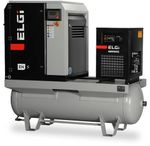
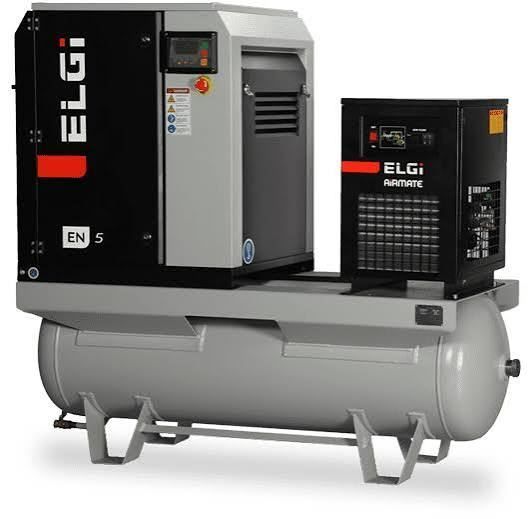
A complete screw compressor installation can include the compressor air end, motor, separator, cooling system, filters, control system, receiver tank, and other compressed-air components.
How Screw Compressors Work
The compression process generally occurs through several stages.
1. Air Intake
Ambient air enters the compressor through an intake filter. The filter removes particles that could otherwise enter the compression system.
2. Air Compression
The air enters the compression chamber containing the rotating screw elements. As the rotors rotate, air becomes trapped between the rotor profiles and the housing.
The volume available to the trapped air gradually decreases, causing its pressure to increase.
3. Oil Injection or Oil-Free Compression
In oil-injected systems, oil can be introduced into the compression chamber for cooling, sealing, and lubrication.
Oil-free systems use a different internal configuration so that oil does not enter the primary compression chamber.
4. Discharge
Compressed air leaves the compression element and moves into the downstream separation and cooling stages.
5. Cooling and Separation
Oil-injected systems separate oil from the compressed air before the air reaches downstream equipment. Cooling components reduce the temperature of the compressed air and help prepare it for further treatment.
6. Air Delivery
The processed compressed air moves through piping toward the point of use. Additional dryers, filters, receivers, and regulators may be installed depending on air-quality requirements.
Main Types of Screw Compressor Equipment
Oil-Injected Screw Compressors
Oil-injected screw compressors introduce oil into the compression chamber. The oil helps reduce friction, remove heat, and improve sealing between the rotating components.
After compression, the oil is separated from the compressed air and circulated back through the system.
Oil-Free Screw Compressors
Oil-free screw compressors are designed so that oil does not enter the main compression chamber. Separate technologies and cooling arrangements are used to control temperature and maintain the required operating conditions.
These systems can be used in applications where compressed-air purity is particularly important.
Fixed-Speed Screw Compressors
Fixed-speed compressors operate the drive motor at a relatively constant rotational speed while the system manages output through control methods such as loading and unloading.
They can be used where compressed-air demand remains relatively stable.
Variable-Speed Screw Compressors
Variable-speed screw compressors use a variable-frequency drive to adjust motor speed according to air demand.
When demand changes, the compressor can modify its operating speed rather than maintaining a constant motor speed.
Single-Stage Screw Compressors
Single-stage designs complete the primary compression process within one compression stage. They are used across a wide range of industrial compressed-air applications.
Two-Stage Screw Compressors
Two-stage systems divide compression between two stages. Intercooling between stages can help manage compression temperatures and support higher-pressure applications.
Comparison of Screw Compressor Types
| Type | Main Characteristic | Typical Application |
|---|---|---|
| Oil-injected | Oil used in compression chamber | General industrial air |
| Oil-free | Oil excluded from compression chamber | Air-purity-sensitive processes |
| Fixed-speed | Relatively constant motor speed | Stable air demand |
| Variable-speed | Adjustable motor speed | Variable air demand |
| Single-stage | One main compression stage | General compressed-air systems |
| Two-stage | Two compression stages | Higher-pressure applications |
Main Components of Screw Compressor Equipment
Air End
The air end contains the screw rotors and housing where compression occurs. Its geometry determines how air is trapped and compressed.
Electric Motor
The motor drives the compressor rotors. Motor type and capacity depend on the compressor design and required output.
Intake Filter
The intake filter removes airborne particles before air enters the compression system.
Oil Separator
In oil-injected compressors, the separator removes most of the oil from compressed air before the air moves into the discharge system.
Oil Filter
The oil filter removes contaminants from circulating compressor oil and helps protect internal components.
Air Cooler
An aftercooler reduces the temperature of compressed air after the compression process.
Oil Cooler
Oil-injected systems may use an oil cooler to remove heat from the circulating lubricant and maintain suitable operating temperatures.
Control System
The controller monitors operating conditions and manages functions such as loading, unloading, motor operation, pressure control, alarms, and shutdown conditions.
Variable-Frequency Drive
Variable-speed equipment can use a variable-frequency drive to regulate motor speed according to compressed-air demand.
Receiver Tank
A receiver tank stores compressed air and can help stabilize system pressure and accommodate short-term changes in demand.
Factors Affecting Compressor Selection
Required Air Flow
The compressor must provide sufficient air volume for connected equipment and peak demand.
Operating Pressure
Required pressure depends on the pneumatic tools, machinery, and processes connected to the compressed-air network.
Air Quality
Applications involving food processing, pharmaceuticals, electronics, or other sensitive processes may have specific air-purity requirements.
Duty Cycle
Continuous industrial operations may require equipment designed for extended operating periods, while intermittent applications may have different requirements.
Ambient Conditions
Temperature, humidity, dust, altitude, and ventilation can affect compressor operation and cooling requirements.
Demand Variation
Facilities with fluctuating air consumption may consider variable-speed equipment or multiple compressors arranged to respond to changing demand.
Applications of Screw Compressor Equipment
Manufacturing
Compressed air is used for pneumatic tools, actuators, automation equipment, material handling, assembly systems, and production machinery.
Food and Beverage Processing
Compressed air can support packaging, conveying, instrumentation, cleaning, and other processes. Air-quality requirements depend on whether compressed air comes into direct or indirect contact with products.
Pharmaceutical Manufacturing
Compressed air can be used for pneumatic equipment, process control, packaging, and instrumentation. Specific air-quality requirements depend on the process.
Automotive Production
Automotive facilities use compressed air for painting systems, assembly tools, robotics, pneumatic equipment, and production processes.
Textile Manufacturing
Compressed air supports pneumatic controls, machinery operation, cleaning, and various production processes in textile facilities.
Construction
Portable screw compressors can provide compressed air for pneumatic tools and equipment used at construction sites.
Energy Efficiency and Control
Compressor efficiency depends on operating pressure, air demand, motor characteristics, cooling conditions, leakage, and control strategy.
Variable-speed compressors can adjust motor speed according to demand. Multi-compressor systems can also use sequencing controls to coordinate several machines.
Reducing unnecessary pressure, repairing compressed-air leaks, maintaining filters, and matching compressor capacity to actual demand can help improve system operation.
Monitoring and Automation
Modern screw compressor equipment can include sensors and digital control systems that monitor pressure, temperature, motor status, operating hours, oil conditions, and other parameters.
Controllers can generate alarms when operating values move outside configured ranges. Network connectivity can also allow compressor status to be integrated into plant monitoring systems.
Data from operating sensors can help maintenance teams identify abnormal temperature, pressure, vibration, or runtime conditions.
Maintenance of Screw Compressor Equipment
Routine maintenance is important for maintaining compressor performance and equipment reliability. Typical activities include checking intake filters, oil filters, separators, belts or couplings, hoses, electrical connections, cooling surfaces, and drain systems.
Oil-injected compressors require appropriate oil inspection and replacement according to equipment requirements. Coolers should be kept clean so heat can be removed effectively.
Air and oil leaks should be identified and corrected, while unusual vibration, noise, temperature changes, or pressure fluctuations should be investigated.
Safety Considerations
Screw compressors combine electrical systems, rotating machinery, compressed air, heat, and pressurized components. Appropriate isolation procedures should be followed before maintenance.
Pressure should be released from relevant sections before opening compressor or downstream components. Guards should remain in place during normal operation, and electrical work should be performed using suitable isolation procedures.
Compressed air should also be handled carefully because uncontrolled discharge can create flying-particle, noise, and pressure-related hazards.
Frequently Asked Questions
What is screw compressor equipment used for?
Screw compressor equipment generates compressed air or gas for pneumatic tools, automation, manufacturing processes, instrumentation, construction equipment, and other industrial applications.
What is the difference between oil-injected and oil-free screw compressors?
Oil-injected compressors introduce oil into the compression chamber for cooling, lubrication, and sealing. Oil-free designs keep oil out of the primary compression chamber.
What are the main components of a screw compressor?
Major components include the air end, motor, intake filter, oil separator, oil filter, coolers, control system, and supporting compressed-air equipment such as receiver tanks.
What is a variable-speed screw compressor?
A variable-speed screw compressor uses a variable-frequency drive to adjust motor speed according to changing compressed-air demand.
How is screw compressor equipment maintained?
Maintenance can include inspection and replacement of filters, oil and separators where applicable, cleaning of coolers, checking connections, inspecting drains, and monitoring operating conditions.
Conclusion
Screw compressor equipment provides a continuous method of generating compressed air for a wide range of industrial and commercial applications. The rotating screw elements compress air continuously, while supporting components manage filtration, cooling, separation, control, and distribution.
Oil-injected, oil-free, fixed-speed, variable-speed, single-stage, and two-stage configurations address different operating requirements. Selecting the appropriate configuration requires consideration of air demand, pressure, air quality, duty cycle, environmental conditions, and control requirements.
Regular maintenance, leak management, condition monitoring, and appropriate safety procedures can help maintain consistent operation throughout the equipment's operating life.