Planetary Mixers: Overview of Mixing Technology, Features, and Details
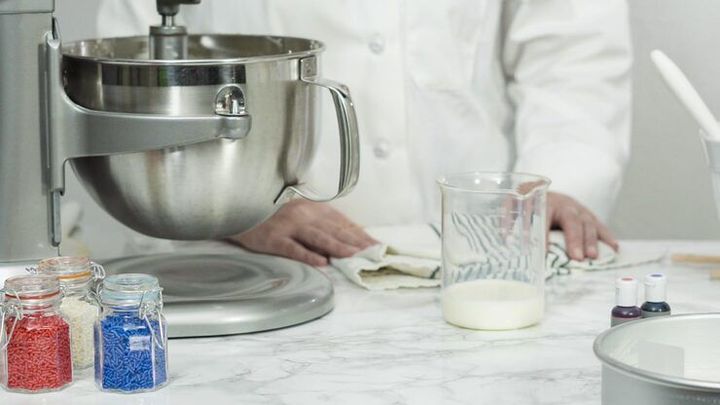
Planetary Mixers are industrial and commercial mixing machines designed to combine, knead, disperse, or blend materials inside a stationary bowl. The mixing tool rotates around its own axis while also moving around the bowl, creating a planetary motion similar to the movement of a planet around the sun.
This combined movement allows the mixing tool to reach different areas of the bowl instead of continuously following one circular path. Planetary mixers are therefore used for materials that require controlled and thorough mixing.
The technology is found across food production, pharmaceuticals, chemicals, cosmetics, construction materials, adhesives, ceramics, and other manufacturing fields. The machine design varies according to the material being processed and the required mixing characteristics.
How Planetary Mixing Works
A typical planetary mixer contains a bowl, drive system, planetary shaft, mixing attachment, control system, and supporting frame.
The bowl generally remains stationary while the mixing attachment performs two simultaneous movements. The first is rotation around its own axis. The second is orbital movement around the center of the bowl.
This movement creates circulation through the material. Depending on the attachment and formulation, the mixer can perform different activities such as blending, kneading, whipping, dispersion, and incorporation of ingredients.
The basic sequence usually includes:
Loading: Ingredients or materials are placed into the mixing bowl.
Tool selection: A suitable attachment is installed according to the material.
Mixing: The tool rotates and moves around the bowl.
Speed control: The operating speed may be adjusted according to the formulation.
Observation: Operators monitor mixing time, temperature, consistency, and other relevant conditions.
Discharge: The finished mixture is removed from the bowl for the next production stage.
Common Mixing Tools
Different tools are used for different materials and processes.
Flat beaters or paddles are commonly associated with general blending and semi-solid materials.
Dough hooks are designed for kneading heavier dough and similar materials.
Whisks introduce air into suitable liquid or semi-liquid formulations and are commonly used in food applications.
Scrapers can help move material from the bowl wall toward the active mixing area.
High-shear tools may be used in specialized systems where dispersion or particle-size reduction is required.
The exact tool configuration depends on the mixer design and material characteristics.
Importance
Consistent Material Distribution
A major purpose of planetary mixing is to distribute ingredients throughout a batch. The simultaneous rotational and orbital movement helps expose material to different parts of the mixing zone.
Uniformity depends on many factors, including ingredient properties, batch size, viscosity, tool geometry, speed, mixing duration, and loading sequence.
Processing Different Materials
Planetary mixers can handle materials ranging from relatively light formulations to heavy and viscous mixtures. This flexibility has made them relevant to several industries.
In food production, applications can include dough, fillings, creams, batters, and other formulations. Pharmaceutical and cosmetic applications can involve creams, pastes, ointments, and selected formulations. Industrial applications can include adhesives, sealants, compounds, and other viscous materials.
Controlled Mixing Conditions
Many planetary mixers provide adjustable operating parameters. Speed, mixing time, temperature, vacuum conditions, and other variables can be controlled in specialized equipment.
This can be important when a formulation is sensitive to heat, air incorporation, moisture, or mechanical energy.
Vacuum Mixing
Some planetary mixers operate under vacuum. Removing or reducing air inside the mixing vessel can help limit air incorporation in selected formulations.
Vacuum mixing can be useful for certain adhesives, sealants, cosmetics, pharmaceutical formulations, and other materials where trapped air affects the finished mixture.
The appropriate vacuum level and process conditions depend on the material and machine design.
Main Features
| Feature | Function | Common Application |
|---|---|---|
| Planetary movement | Combines rotation and orbital movement | General mixing |
| Variable speed | Adjusts mixing intensity | Different formulations |
| Interchangeable tools | Changes the mixing action | Dough, creams, pastes |
| Stationary bowl | Holds the material | Batch processing |
| Scraper system | Moves material from bowl walls | Viscous mixtures |
| Vacuum capability | Reduces air in selected processes | Sensitive formulations |
| Temperature control | Monitors or regulates heat | Temperature-sensitive materials |
| Programmable controls | Stores operating sequences | Repeatable production |
Recent Updates
More Precise Process Control
Modern planetary mixers increasingly use electronic controls for speed, timing, temperature, and operating sequences. Digital interfaces can allow operators to establish repeatable mixing programs for different formulations.
Some systems can record process information for production monitoring and quality documentation.
Automation and Recipe Management
Automated recipe management allows selected mixing parameters to be stored and recalled for recurring production batches.
A programmed sequence may define mixing speed, duration, direction, temperature conditions, and other parameters. This approach can reduce variation caused by manually entering the same settings for every batch.
Automation levels differ substantially between small commercial mixers and large industrial systems.
Improved Scraping Systems
Scraper designs have also evolved for applications involving sticky or viscous materials. A scraper can continuously move material from the bowl wall toward the active mixing area.
This can improve circulation in formulations where material tends to remain attached to the vessel surface.
Vacuum and Temperature Integration
Industrial planetary mixers can combine mixing with vacuum and temperature-control capabilities. Heating or cooling jackets around the bowl can help maintain a selected process temperature.
These functions are relevant when viscosity changes significantly with temperature or when the formulation must remain within a particular processing range.
Data Monitoring
Industrial equipment is increasingly connected to digital monitoring systems. Sensors can track variables such as speed, temperature, torque, pressure, and operating time.
Recorded data can help production teams identify deviations from expected process conditions and investigate batch differences.
Hygienic Equipment Design
Food, pharmaceutical, and cosmetic production places particular attention on materials, cleanability, surface finishes, access to product-contact areas, and equipment geometry.
Equipment designed for hygienic processing may use suitable stainless-steel surfaces and configurations intended to reduce areas where material can accumulate.
Energy and Process Efficiency
Manufacturers are also developing equipment around improved mechanical transmission, motor control, batch utilization, and process monitoring.
The energy required by a planetary mixer depends on factors such as material viscosity, batch size, mixing speed, tool geometry, and operating duration. Therefore, machine efficiency cannot be assessed from motor rating alone.
Laws or Policies
International Machinery Safety
Planetary mixers contain moving mechanical components and therefore fall within broader machinery-safety principles in many jurisdictions. ISO 12100 provides an international framework for machinery risk assessment and risk reduction. The current ISO 12100:2010 edition was reviewed and confirmed in 2022, while a revised edition is under development.
Risk assessment considers hazards associated with machine design, operation, maintenance, foreseeable use, and other stages of the machinery life cycle.
European Union Machinery Regulation
For equipment placed on the European Union market, Regulation (EU) 2023/1230 establishes health and safety requirements for machinery and related products. The regulation is scheduled to apply from 20 January 2027, with several provisions becoming applicable earlier. The current consolidated text includes amendments adopted in 2026.
Manufacturers and users need to determine which requirements apply to the particular machine, application, and market.
United States Workplace Safety
In the United States, OSHA's machine-guarding framework addresses hazards associated with machinery and identifies areas such as points of operation, power transmission components, and operating controls. Safeguarding can involve guards and protective devices appropriate to the machine and hazard.
For a planetary mixer, practical considerations can include access to moving tools, rotating shafts, bowl areas, electrical components, and cleaning operations.
Food Processing Requirements
Food-processing applications introduce additional considerations concerning hygiene, materials that contact food, cleaning procedures, contamination control, and equipment construction.
Requirements vary by jurisdiction and application. A planetary mixer used for food production may therefore have different regulatory considerations from equipment used for chemicals, construction compounds, or industrial adhesives.
Pharmaceutical and Cosmetic Applications
Pharmaceutical and cosmetic production may require controlled manufacturing environments, documented processes, suitable materials, cleaning validation, and traceability according to the applicable regulatory framework.
The mixer itself is only one part of the production system. The surrounding process, formulation, facility, cleaning procedures, and quality controls also influence regulatory requirements.
Tools and Resources
Mixing Parameter Charts
Process engineers can use parameter charts to record batch size, material viscosity, tool type, speed, mixing duration, temperature, and other variables.
Such records can help compare batches and identify changes in process behavior.
Torque Monitoring
Torque measurement can provide information about resistance encountered by the mixing tool. Increasing torque may indicate changes in viscosity, material loading, formulation behavior, or other process conditions.
Torque information should be interpreted together with other process variables rather than treated as a standalone measurement.
Temperature Sensors
Temperature monitoring is useful for formulations that become more fluid or more viscous as temperature changes. Sensors can track the mixture or vessel temperature during processing.
For sensitive materials, temperature control can be integrated into the mixing system through heating or cooling arrangements.
Digital Controls
Programmable controllers and touchscreen interfaces can manage mixing sequences, speed changes, timing, temperature settings, and alarms.
More advanced systems may record operating information for later review.
Simulation and Process Development
Laboratory-scale planetary mixers can be used during formulation development before production-scale equipment is selected. Engineers can study material behavior, mixing time, tool configuration, and process conditions.
Scaling from laboratory equipment to industrial equipment requires careful consideration because mixing behavior does not always increase proportionally with vessel size.
Cleaning and Inspection Resources
Equipment documentation, inspection checklists, maintenance records, and cleaning procedures are useful resources for maintaining consistent operation.
Particular attention may be needed around seals, shafts, scrapers, bowl surfaces, tool connections, and other areas where material can accumulate.
FAQs
What are Planetary Mixers?
Planetary Mixers are machines in which a mixing tool rotates around its own axis while simultaneously moving around a stationary bowl. This creates a combined movement for blending, kneading, dispersion, or related processes.
How do Planetary Mixers work?
Planetary Mixers use a drive system that produces two movements at the same time: tool rotation and orbital movement around the bowl. This allows the tool to interact with material across different areas of the vessel.
What materials can Planetary Mixers process?
Planetary Mixers can process many types of materials, including doughs, creams, pastes, adhesives, sealants, compounds, pharmaceutical formulations, cosmetic preparations, and other viscous or semi-solid mixtures. The appropriate machine and tool depend on the material.
What is vacuum mixing in Planetary Mixers?
Vacuum mixing removes or reduces air from the mixing vessel during processing. It can be used for selected formulations where trapped air could affect texture, appearance, density, or processing characteristics.
What industries use Planetary Mixers?
Planetary Mixers are used across food processing, pharmaceuticals, cosmetics, chemicals, adhesives, sealants, ceramics, construction materials, and other manufacturing fields.
Conclusion
Planetary Mixers use simultaneous rotational and orbital movement to process a wide range of materials in a controlled batch environment. Their configurations can include different mixing tools, variable-speed controls, scraping systems, vacuum capability, temperature management, and digital monitoring. Recent developments are placing greater emphasis on automation, process data, hygienic construction, and precise control. Understanding the mixing mechanism, machine features, material characteristics, and applicable safety framework provides useful context for evaluating planetary mixing technology across global industries.