Ointment Manufacturing Plants: Guide to Production Equipment and Practical Insights
Ointment Manufacturing Plants are specialized pharmaceutical production facilities designed to prepare, process, fill, package, and control semi-solid products intended for application to the skin or other appropriate areas of the body.
Depending on the formulation, an ointment may contain active pharmaceutical ingredients combined with bases such as hydrocarbons, absorption bases, water-removable bases, or water-soluble materials.
The manufacturing environment must control factors such as raw-material quality, temperature, mixing conditions, contamination, equipment cleanliness, and packaging. Pharmaceutical GMP principles apply across the production process, from incoming materials and premises to equipment, personnel, documentation, quality control, and finished products.
Ointment production is generally different from tablet or liquid manufacturing because semi-solid products require controlled heating, mixing, homogenization, cooling, and filling. The exact process depends on the formulation and whether the final product is intended to be sterile or non-sterile.
How Ointment Production Works
A typical ointment manufacturing sequence can include several controlled stages:
Raw-material dispensing: Ingredients are identified, weighed, and prepared according to an approved formulation.
Base preparation: Selected base materials may be heated or otherwise prepared before mixing.
Ingredient addition: Active and inactive ingredients are introduced under controlled conditions.
Mixing: Agitation distributes the ingredients throughout the formulation.
Homogenization: Specialized equipment can reduce differences in particle or droplet distribution and produce a more uniform semi-solid.
Cooling: The batch is cooled under controlled conditions to achieve the intended physical characteristics.
Holding: The prepared bulk may be transferred to an appropriate holding vessel before filling.
Filling: The ointment is transferred into tubes, jars, sachets, or other approved containers.
Inspection and packaging: Filled containers are checked, labeled, packed, and transferred for subsequent quality-release activities.
Not every formulation follows exactly the same sequence. Temperature, mixing speed, addition order, vacuum conditions, and processing time can vary according to formulation requirements.
Main Equipment Used
Ointment Manufacturing Plants can contain a combination of processing, transfer, filling, cleaning, laboratory, and environmental-control equipment.
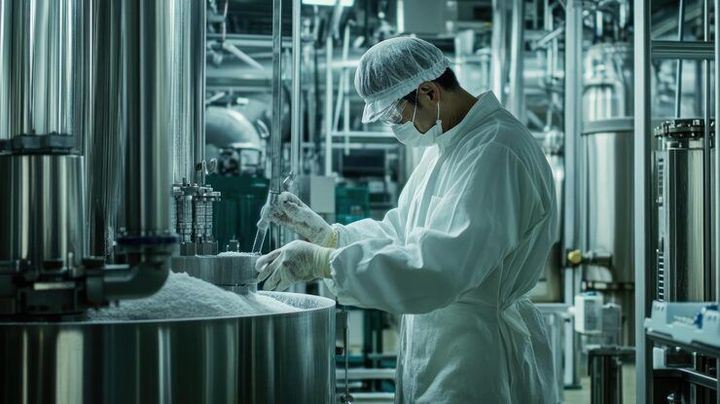
Manufacturing vessels hold ingredients during heating, mixing, and processing. Stainless-steel construction is widely associated with pharmaceutical processing because equipment surfaces need to be compatible with the formulation and suitable for controlled cleaning.
Agitators and mixers create movement within the batch. Different impeller designs can produce different mixing patterns depending on viscosity and formulation characteristics.
Homogenizers are used when a formulation requires enhanced dispersion or uniformity. They can apply high-shear mechanical action to selected materials.
Vacuum systems can remove trapped air from certain formulations. Reduced air incorporation may be important when the product is sensitive to bubbles or when filling consistency needs to be controlled.
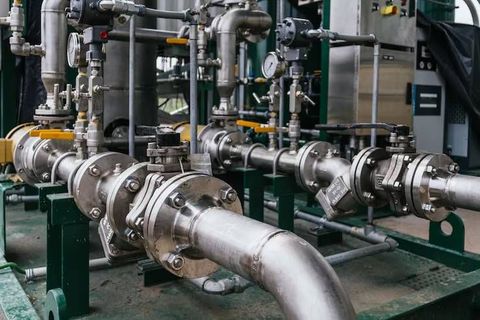
Transfer pumps and pipelines move the prepared bulk between processing and filling equipment. Their design depends on viscosity, temperature, flow characteristics, and hygienic requirements.
Tube or jar filling machines place measured quantities of ointment into primary containers. Filling systems can be configured for different container sizes and packaging formats.
Importance
Maintaining Product Uniformity
A pharmaceutical ointment needs to have consistent composition and physical characteristics throughout the batch. Uneven distribution of an active ingredient or other component can affect the intended product characteristics.
Mixing, homogenization, temperature control, and controlled ingredient addition therefore play important roles in manufacturing.
Controlling Contamination
Pharmaceutical production requires measures that reduce the possibility of contamination and cross-contamination. WHO identifies contamination, mix-ups, and incorrect labeling among important risks addressed by GMP systems.
Facility layout, personnel practices, equipment design, cleaning procedures, material movement, environmental controls, and documentation can all contribute to contamination control.
Managing Temperature
Many ointment formulations require controlled heating during preparation and controlled cooling afterward. Temperature can influence viscosity, melting of ingredients, mixing behavior, and final product characteristics.
Processing vessels may therefore include heating and cooling arrangements with temperature monitoring and control systems.
Supporting Consistent Filling
The filling stage needs to place an appropriate quantity of product into each container while limiting air incorporation, leakage, and contamination.
Filling equipment may use piston-based, auger-based, or other mechanisms depending on formulation properties and container design.
Key Equipment Categories
| Equipment | Main Function | Typical Process Stage |
|---|---|---|
| Manufacturing vessel | Holds and processes ingredients | Preparation |
| Agitator | Mixes materials | Blending |
| Homogenizer | Improves formulation uniformity | Homogenization |
| Vacuum system | Removes selected trapped air | Processing |
| Transfer pump | Moves semi-solid bulk | Transfer |
| Filling machine | Places product into containers | Filling |
| Tube sealing unit | Closes filled tubes | Primary packaging |
| Labeling equipment | Applies product information | Packaging |
| Metal detector or inspection system | Detects selected defects or contaminants | Quality control |
| Cleaning equipment | Supports equipment cleaning | Sanitation |
Recent Updates
Greater Focus on Pharmaceutical Quality Systems
Recent international pharmaceutical guidance continues to place strong emphasis on quality management, documented procedures, equipment qualification, validation, personnel training, and controlled production.
WHO's 10th edition of its pharmaceutical quality-assurance compendium, published in 2024, brings together guidance covering manufacturing, quality control, equipment validation, and other pharmaceutical quality topics.
This broader approach means that equipment selection is considered together with facility design, process control, documentation, and quality systems.
Updated Global GMP Guidance
WHO's Expert Committee continued updating pharmaceutical-quality guidance in 2024 and 2025, with the 59th report published in 2026. The report includes developments related to pharmaceutical quality assurance, regulatory systems, inspections, and manufacturing practices.
For ointment facilities, these developments reinforce the importance of controlled manufacturing processes and documented evidence demonstrating that equipment and processes perform as intended.
Advanced Mixing and Homogenization
Modern semi-solid manufacturing increasingly uses integrated mixing, homogenization, vacuum, heating, and cooling capabilities. Combining several functions within controlled equipment can reduce unnecessary material transfers and provide greater control over processing conditions.
Automated monitoring can record parameters such as temperature, mixing speed, vacuum level, processing time, and batch status.
Improved Environmental Control
Environmental control remains important in pharmaceutical facilities. HVAC systems can influence temperature, humidity, pressure relationships, airflow, and contamination control.
WHO guidance notes that HVAC principles used for pharmaceutical manufacturing can also apply to facilities producing creams and ointments, particularly where contamination control is important.
Greater Use of Automation
Automation can connect processing vessels, sensors, filling systems, inspection equipment, and production records. Automated systems can reduce manual data entry and provide electronic records of selected manufacturing parameters.
However, automated equipment still requires appropriate qualification, maintenance, access controls, data integrity measures, and human oversight.
Digital Monitoring and Data Integrity
Pharmaceutical manufacturers increasingly use electronic batch records, process monitoring systems, laboratory information systems, and equipment data collection.
The purpose is not simply to collect more data. The information needs to be accurate, traceable, protected against unauthorized changes, and available for appropriate review.
Laws or Policies
Global GMP Framework
There is no single worldwide pharmaceutical manufacturing law. Manufacturers generally operate under the requirements of the regulatory authority in the markets where their products are manufactured, registered, or distributed.
WHO GMP principles provide an important international reference. GMP covers premises, equipment, personnel, materials, production procedures, quality control, documentation, and other elements needed to maintain pharmaceutical quality.
United States
In the United States, pharmaceutical manufacturing is regulated by the U.S. Food and Drug Administration. Current Good Manufacturing Practice requirements are established through federal regulations, including requirements concerning production and process controls, equipment, facilities, laboratory controls, records, and quality systems.
Facilities producing ointments for the U.S. market therefore need to consider the applicable FDA requirements for their particular products and manufacturing activities.
European Union
The European Union applies EU GMP requirements to medicinal-product manufacturing. Semi-solid dosage forms such as creams, ointments, and gels are recognized within pharmaceutical manufacturing frameworks and may be subject to specific inspection scopes and controls.
International Standards
International standards and guidance can address areas such as pharmaceutical quality systems, equipment qualification, cleanroom environments, contamination control, risk management, and validation.
The exact requirements vary according to whether the ointment is sterile or non-sterile, its ingredients, manufacturing process, intended market, and regulatory classification.
Sterile Ointments
Some ointment products may require sterile manufacturing conditions. In such cases, the requirements can be substantially more stringent than those for ordinary non-sterile semi-solid products.
WHO guidance on sterile pharmaceutical products emphasizes appropriately designed and qualified premises, equipment and processes, contamination-control measures, personnel training, environmental monitoring, and validated operations. WHO also notes that selected principles may support manufacture of non-sterile creams and ointments when contamination control is important.
Tools and Resources
Process Monitoring Systems
Temperature sensors, pressure gauges, vacuum sensors, flow meters, weighing systems, and automated controllers can monitor important manufacturing parameters.
These instruments should be appropriately calibrated and maintained according to the facility's quality system.
Laboratory Testing Equipment
Quality-control laboratories may use equipment such as:
Viscometers: Measure resistance to flow and help characterize semi-solid consistency.
pH meters: Measure acidity or alkalinity where relevant to the formulation.
Balances: Determine material quantities with appropriate accuracy.
Microscopes: Support selected particle or formulation examinations.
Stability chambers: Maintain controlled environmental conditions for stability studies.
Analytical instruments: Evaluate identity, strength, purity, or other product characteristics according to the approved specification.
The specific laboratory equipment depends on the formulation, analytical methods, regulatory requirements, and product specifications.
Cleaning and Sanitization Systems
Manufacturing equipment requires controlled cleaning procedures to reduce residues and contamination risks. Facilities may use dedicated cleaning equipment, clean-in-place systems, manual cleaning procedures, or combinations of these approaches.
Cleaning procedures need appropriate documentation and verification according to the applicable quality system.
Facility Monitoring
Environmental monitoring systems can track temperature, humidity, pressure differentials, particulate conditions, and other selected parameters.
The monitoring program depends on the facility classification, product requirements, process design, and regulatory expectations.
Documentation Systems
Batch manufacturing records, equipment logs, cleaning records, calibration records, maintenance documentation, deviation records, and laboratory results form an important part of pharmaceutical manufacturing.
WHO GMP principles emphasize written procedures and documented evidence that required processes are followed consistently.
FAQs
What are Ointment Manufacturing Plants?
Ointment Manufacturing Plants are pharmaceutical facilities designed to prepare, process, fill, package, and control semi-solid ointment formulations under defined quality and manufacturing conditions.
What equipment is used in Ointment Manufacturing Plants?
Common equipment includes manufacturing vessels, agitators, homogenizers, vacuum systems, transfer pumps, filling machines, tube-sealing equipment, inspection systems, and cleaning equipment.
How does an ointment manufacturing process work?
A typical process involves dispensing ingredients, preparing the base, mixing components, homogenizing the formulation when required, controlling cooling, transferring the bulk, filling containers, sealing them, and completing quality checks.
What GMP requirements apply to Ointment Manufacturing Plants?
GMP requirements generally address premises, equipment, personnel, materials, production controls, quality control, documentation, cleaning, validation, and contamination prevention. Exact requirements depend on the country and product classification.
Are ointment manufacturing facilities the same worldwide?
The basic manufacturing principles are similar, but regulatory requirements differ between jurisdictions. Facilities supplying the United States, European Union, India, or other markets must follow the requirements applicable to those markets.
Conclusion
Ointment Manufacturing Plants combine specialized processing equipment, controlled environments, quality systems, and packaging technology to produce pharmaceutical semi-solid formulations. Manufacturing vessels, mixers, homogenizers, temperature controls, filling systems, and monitoring equipment each contribute to controlled production. International GMP frameworks emphasize contamination control, equipment suitability, validation, documentation, and consistent quality. As pharmaceutical manufacturing becomes more automated and data-driven, modern ointment facilities are increasingly integrating process monitoring, electronic records, advanced equipment controls, and stronger contamination-control strategies.