Modular Living Room Sets: Discover Designs, Components, Layouts, and Material Options
Modular living room sets are furniture arrangements made from separate units that can be combined, separated, or rearranged according to the layout and needs of a room.
A set may include modular sofas, corner units, ottomans, chairs, tables, storage components, or other matching pieces.
Unlike a fixed sofa arrangement, a modular system allows individual sections to function together in different configurations. For example, three seating units can form a straight sofa, an L-shaped arrangement, or separate chairs depending on the available space.
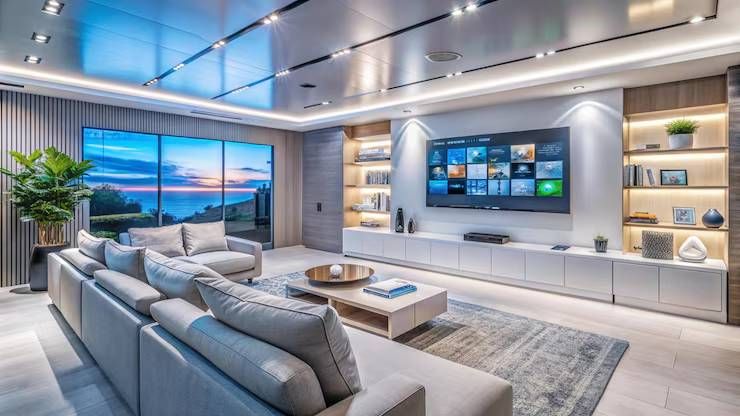
The concept has become increasingly relevant as residential spaces change. Apartments and urban homes often have limited floor areas, while households may use their living rooms for several purposes, including relaxation, family activities, work, entertainment, and social gatherings.
Common components include:
- Modular sofa sections
- Corner seating units
- Armless and armrest modules
- Ottomans and footstools
- Coffee and side tables
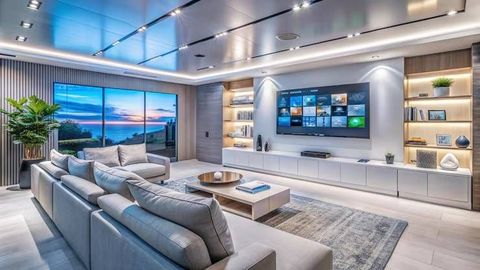
- Media or TV units
- Open and closed storage
- Convertible seating components
The modular approach separates the furniture system into manageable parts rather than treating the living room as one permanent arrangement.
Why Modular Living Room Sets Matter
Flexibility is one of the main characteristics of modular furniture. Individual sections can be repositioned when the room layout changes or when different seating arrangements are needed.
This can be particularly useful for apartments, rental homes, multipurpose rooms, and households that frequently reorganize their interiors.
Modular living room sets can address several practical challenges:
- Space management: Individual units can be arranged around doors, windows, walkways, and other fixed features.
- Layout flexibility: Seating can be changed from linear to corner configurations.
- Room adaptability: Furniture can respond to changes in household activities.
- Transportation: Smaller components can generally be easier to move through staircases, lifts, and narrow entrances than a single large unit.
- Expansion: Additional compatible modules may allow a seating arrangement to be changed as requirements develop.
- Multi-purpose use: The same room can accommodate conversations, entertainment, reading, or occasional work.
The right arrangement depends on room dimensions, circulation space, seating requirements, upholstery, structural construction, and the intended use of the room.
Types of Modular Living Room Sets
Modular systems are available in several configurations. The most suitable format depends on room size and the activities taking place in the space.
| Type | Main characteristic | Suitable consideration |
|---|---|---|
| Straight modular sofa | Units arranged in one line | Narrow or elongated rooms |
| L-shaped sectional | Seating follows two connected sides | Larger corners and open layouts |
| U-shaped arrangement | Seating surrounds a central area | Large living rooms |
| Modular sofa with ottoman | Separate footrest or additional seat | Flexible seating |
| Convertible modular set | Components support different arrangements | Multipurpose rooms |
| Storage-integrated system | Seating or tables incorporate storage | Homes requiring organization |
Measurements should be taken before selecting a configuration. Door openings, lift dimensions, staircases, windows, electrical points, television placement, and walking paths can all affect the practical arrangement.
Materials and Construction
The construction of modular living room furniture generally involves a combination of structural frames, cushioning materials, upholstery, hardware, and supporting components.
Wood, engineered wood, metal, and combinations of these materials can be used in different furniture components. Upholstery may include cotton blends, polyester, leather-like materials, natural leather, or other textiles.
Important construction considerations include:
- Frame strength
- Joint construction
- Cushion density and resilience
- Upholstery durability
- Surface finish
- Module connectors
- Base and leg stability
- Ease of cleaning
- Replacement or maintenance requirements
For households with children or pets, stain resistance and easy-clean upholstery may receive greater attention. In smaller homes, lightweight modules and compact proportions may be more practical.
Recent Furniture Trends in 2025–2026
Furniture preferences in India have increasingly reflected the need for adaptable interiors. A May 2025 report on Indian home décor trends highlighted modular designs, ergonomic furniture, adaptability, and technology integration as notable developments.
During 2025, modular sofas, curved forms, low-profile seating, nested tables, and storage-integrated furniture were also frequently identified in Indian interior discussions.
Several trends are relevant to modular living rooms:
- Flexible seating: Rearrangeable sections are increasingly associated with adaptable interiors.
- Compact proportions: Furniture with a smaller visual and physical footprint can suit urban apartments.
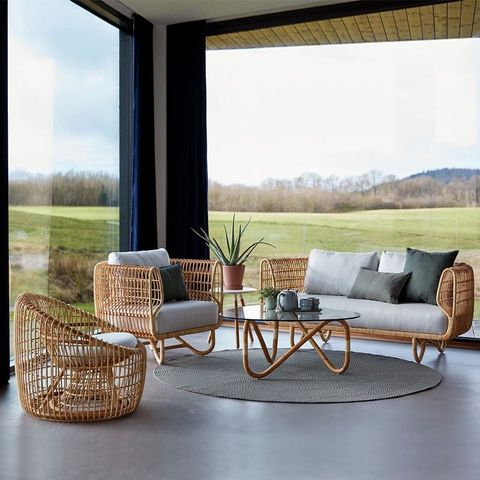
- Curved designs: Rounded edges and softer silhouettes became more visible in contemporary living-room design discussions during 2025.
- Natural appearance: Wood textures, neutral upholstery, and muted tones continue to influence residential interiors.
- Integrated storage: TV units, side tables, and seating with storage functions can help organize multipurpose rooms.
- Minimalist layouts: Less visually crowded arrangements can make smaller rooms feel more open.
- Technology integration: Living rooms increasingly accommodate televisions, speakers, charging points, and connected-home equipment.
These are design trends rather than universal requirements. Furniture selection should still be based on dimensions, comfort, safety, maintenance requirements, and household needs.
Indian Laws, Standards, and Policies
Furniture used in India can be affected by product standards and quality-control requirements. The Bureau of Indian Standards (BIS) lists furniture-related standards under its compulsory certification framework.
The Furniture (Quality Control) Order, 2025, dated 14 February 2025, covers specified furniture categories and references standards including IS 17631 for work chairs, IS 17632 for general-purpose chairs and stools, IS 17633 for tables and desks, IS 17634 for storage units, IS 17635 for beds, and IS 17636 for bunk beds. BIS also records amendments to the Furniture Quality Control framework during 2026.
This is important because not every item in a modular living room set necessarily falls under the same standard. A modular sofa, table, storage unit, or chair may have different applicable requirements depending on its product category and intended use.
BIS explains that compulsory certification can be introduced through Quality Control Orders where the government considers factors such as consumer safety, environmental protection, or prevention of unfair trade practices.
The BIS Know Your Standard portal can also be used to search Indian Standards by product name or IS number and access information such as amendments, testing information, and related documents.
For households and furniture professionals, checking the applicable standard is more reliable than assuming that every modular furniture component is governed by one universal requirement.
Practical Tools and Resources
Several resources can help with planning and evaluating modular living room layouts.
Room measurement tools: A measuring tape or digital measurement application can help record wall lengths, door openings, ceiling height, and available circulation space.
Floor-plan applications: Digital room-planning applications can help users test sofa arrangements, table positions, television placement, and walking paths before finalizing a layout.
Furniture specification sheets: Product dimensions, material descriptions, assembly instructions, and maintenance information can help with technical comparisons.
BIS Know Your Standard: The BIS portal allows users to search Indian Standards by product category or standard number.
BIS standards portal: The official standards database provides access to published standards and related standardization information.
Room planning checklist: A simple checklist can include:
- Room length and width
- Door and window positions
- Walking clearance
- Sofa dimensions
- Table dimensions
- Television location
- Electrical points
- Storage requirements
- Upholstery requirements
- Cleaning and maintenance needs
Frequently Asked Questions
What is a modular living room set?
A modular living room set consists of separate furniture units designed to work together. The units can generally be arranged in different configurations according to room dimensions and household requirements.
Are modular sofas suitable for small living rooms?
They can be suitable when the individual modules have appropriate dimensions. Compact configurations can help use corners and available floor space efficiently, but measurements and circulation should be checked before selecting the arrangement.
What is the difference between modular and sectional furniture?
The terms can overlap. A sectional generally refers to seating made from connected or coordinated sections, while modular furniture emphasizes separate components that can be rearranged or configured in multiple ways.
What should be measured before planning a modular living room?
Measure the room's length and width, door openings, window positions, ceiling height, stairways or lift access, and available walking paths. The dimensions of each furniture module should also be checked.
Do Indian standards apply to all modular living room furniture?
Not necessarily. Indian requirements depend on the specific furniture category and applicable Quality Control Orders or standards. BIS lists several furniture categories under its certification framework, so the relevant product standard should be checked individually.
Conclusion
Modular living room sets provide an adaptable approach to residential furniture planning. Their separate components can support different layouts, making them relevant to apartments, multipurpose rooms, and households whose space requirements change over time.
The most important considerations are not simply appearance but also dimensions, construction, comfort, stability, materials, maintenance, and room circulation. Current Indian furniture trends show continued interest in flexible layouts, compact designs, natural finishes, rounded forms, and integrated functionality.