Space-Saving Recliner Designs: Explore Mechanisms, Materials, and Compact Configurations
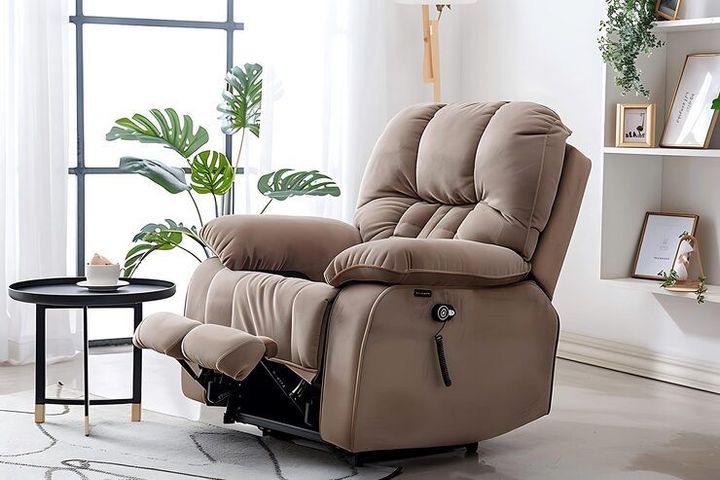
Space-saving recliner designs are seating solutions developed to provide reclining functionality while using less floor area than conventional recliner furniture.
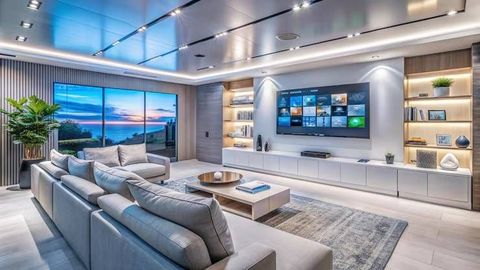
They are particularly relevant to apartments, compact living rooms, bedrooms, home theatres, reading corners, and multipurpose rooms where available floor space needs to be carefully planned.
A traditional recliner generally requires additional clearance behind or in front of the chair when its backrest or footrest moves. Space-saving models address this limitation through mechanisms such as wall-hugging movement, forward-gliding recline systems, compact frames, integrated footrests, and narrower armrests.
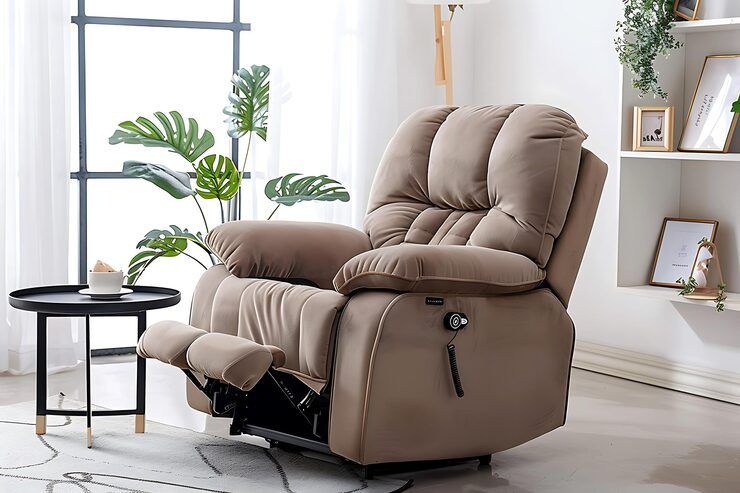
The concept is part of a wider movement toward space-saving furniture, compact furniture, ergonomic furniture, and multifunctional home interiors. Recent Indian interior-design coverage has highlighted the growing importance of furniture that performs multiple functions without making smaller rooms feel crowded.
Common space-saving recliner configurations include:
- Wall-hugger recliners that require relatively little rear clearance.
- Zero-wall-clearance designs that move forward as the backrest reclines.
- Compact single-seat recliners with narrower proportions.
- Recliner chairs with integrated footrests.
- Modular seating arrangements incorporating reclining sections.
- Lift-style seating designs intended for easier movement between sitting and standing.
- Multi-functional furniture that combines seating with storage or other functions.
The correct design depends on the room dimensions, circulation requirements, user comfort, electrical arrangement where applicable, and the amount of clearance required by the reclining mechanism.
Why Space Efficiency Matters in Modern Homes
Urban housing frequently requires several activities to take place within the same room. A living room may function as a sitting area, television room, study space, guest area, or occasional sleeping area. Large furniture can restrict movement and make these spaces difficult to use efficiently.
Space-saving recliner designs can help address this challenge by combining comfortable seating with controlled movement requirements.
They can be particularly relevant for:
- Apartment living rooms.
- Studio and one-bedroom homes.
- Small home theatres.
- Bedrooms with reading areas.
- Senior-friendly residential spaces.
- Compact family rooms.
- Multipurpose rooms.
- Home-office environments requiring occasional relaxation seating.
A useful planning principle is to consider the operating footprint, rather than only the dimensions of the chair when it is closed. A recliner measuring 80 centimetres wide may still require considerably more usable space when fully extended.
| Design consideration | Why it matters |
|---|---|
| Overall width | Determines how much floor space the chair occupies |
| Reclining depth | Indicates the space required during operation |
| Rear clearance | Important for conventional reclining mechanisms |
| Front clearance | Prevents obstruction of the footrest |
| Armrest width | Influences both comfort and total footprint |
| Seat height | Affects posture and ease of sitting down |
| Doorway width | Important when positioning furniture inside a room |
| Electrical access | Relevant for powered reclining mechanisms |
Good interior design therefore considers the entire movement area rather than treating the recliner as a stationary object.
Design Features That Support Compact Layouts
Several engineering and furniture-design approaches can reduce the space required by a reclining chair.
Wall-hugging mechanisms allow the chair to recline while maintaining a relatively small distance from the wall. Instead of moving the backrest directly backward, the mechanism changes the chair's position as it opens.
Forward-gliding mechanisms can move parts of the seat forward during reclining. This can reduce the need for substantial rear clearance.
Integrated footrests remove the need for a separate ottoman. This can simplify room planning, although sufficient forward clearance remains necessary.
Slim-profile frames reduce the visual bulk of furniture. Narrower arms and cleaner external shapes can make a compact room appear less crowded without necessarily reducing the usable seating area.
Modular recliner configurations can be useful where several seats are needed. A sectional arrangement can combine fixed and reclining seats while maintaining a more organized floor plan.
Recent Developments and Design Trends
Space-efficient interiors continued to receive attention in India during 2025 and 2026. A May 2025 report on small-home interiors highlighted multifunctional furniture, including modular seating, sofa beds, and extendable furniture, as part of the broader movement toward adaptable living spaces.
In July 2025, Indian interior-design coverage also emphasized thoughtful furniture selection, multifunctional pieces, and efficient use of small residential spaces.
More recent coverage from March 2026 focused on furniture selection as a way to improve the perceived openness of compact rooms. The guidance emphasized avoiding overcrowding and selecting furniture according to the actual dimensions and function of a room.
Another 2025 trend has been greater interest in multifunctional and locally influenced furniture designs. Indian interior-design discussions have highlighted pieces that combine practical functions with traditional materials and contemporary proportions.
These developments indicate a broader design direction rather than a specific recliner technology. The central trend is toward multifunctional furniture, flexible layouts, and furniture that can adapt to changing residential needs.
A simple comparison of current design priorities is:
| Traditional approach | Space-conscious approach |
|---|---|
| Large fixed footprint | Compact footprint |
| Separate footstool | Integrated footrest |
| Large rear clearance | Wall-hugging mechanism |
| Single-purpose furniture | Multifunctional furniture |
| Furniture planned independently | Furniture planned with room circulation |
| Heavy visual proportions | Slimmer visual profiles |
Indian Laws, Standards, and Regulatory Considerations
Furniture in India is increasingly affected by formal quality-control requirements. The Bureau of Indian Standards (BIS) identifies several furniture categories under the Furniture (Quality Control) Order, 2025, including work chairs, general-purpose chairs and stools, tables and desks, storage units, beds, and bunk beds. The order was notified in February 2025 and subsequently amended during 2026.
However, it is important not to assume that every type of recliner automatically falls under the listed furniture standards. BIS documentation distinguishes different furniture categories, and the general-purpose chair standard specifically excludes specialized seating such as reclining chairs.
The regulatory position can therefore depend on the exact construction, classification, and components of a particular product.
For furniture-related compliance research, the BIS Know Your Standard platform allows users to search standards using an Indian Standard number or product keyword. It can also provide access to amendments, testing information, certification details, and related documentation.
Powered recliners require additional attention because electrical and mechanical components may introduce requirements beyond ordinary fixed seating. BIS maintains separate quality-control and safety frameworks for electrical appliances and related equipment, so the applicable classification should be checked according to the specific electrical design.
The broader regulatory framework is based on the Bureau of Indian Standards Act, 2016, together with associated rules, regulations, and quality-control orders.
Useful Tools and Resources for Planning
Several resources can help homeowners, designers, and furniture planners evaluate space-saving recliner layouts.
Room-measurement tools: Smartphone measuring applications can help record wall lengths, doorway widths, furniture positions, and available circulation areas.
Floor-planning software: Digital room planners allow users to create a basic floor plan and test different furniture arrangements before physically moving furniture.
Furniture dimension sheets: Manufacturer-provided dimension diagrams can be useful for checking closed dimensions, extended dimensions, seat height, and required clearances.
BIS Know Your Standard: This official resource helps users identify relevant Indian Standards and review associated technical information.
BIS certification resources: BIS provides information about certification procedures, applicable standards, testing, and conformity assessment.
A practical room-planning checklist includes:
- Measure the complete room before selecting furniture.
- Record door, window, and passage locations.
- Measure the recliner in both closed and fully reclined positions.
- Check front and rear clearance.
- Keep walkways unobstructed.
- Consider power-socket placement for powered mechanisms.
- Check whether the floor can accommodate the chair without interfering with other furniture.
- Consider cleaning access around and underneath the chair.
Frequently Asked Questions
What is a space-saving recliner?
A space-saving recliner is a reclining chair designed to provide adjustable seating while reducing the amount of floor clearance needed during operation. Wall-hugger and forward-gliding mechanisms are common approaches.
How much space should be left around a recliner?
The required space depends on the mechanism and individual model. The closed dimensions alone are not sufficient. Users should examine the manufacturer's complete dimension diagram and allow enough room for the fully reclined position and safe movement around the chair.
Are wall-hugger recliners suitable for small rooms?
They can be useful in compact rooms because their mechanism is designed to reduce rear clearance. However, the chair still requires adequate space in front for the footrest and occupant movement.
Are electric recliners different from manual recliners?
Yes. Electric recliners use motors and electrical controls to operate one or more moving sections, while manual designs generally use mechanical mechanisms. Powered designs therefore require additional consideration of electrical connections, controls, and applicable safety requirements.
Does BIS certification apply to every recliner in India?
Not necessarily. BIS requirements depend on the applicable product category and quality-control order. The Furniture (Quality Control) Order covers specific furniture categories, while specialized reclining furniture may require separate classification analysis. BIS resources should be checked for the relevant standard and product type.
Conclusion
Space-saving recliner designs reflect the broader shift toward flexible and efficient residential interiors. Their main purpose is to provide reclining functionality while reducing unnecessary use of floor space.
The most important factors are not simply the chair's width or appearance. Room dimensions, reclining movement, rear and front clearance, circulation paths, seat ergonomics, electrical requirements, and applicable standards all influence whether a particular design is appropriate.
In India, furniture regulation has also become more structured, with the Furniture (Quality Control) Order introduced in 2025 and amended during 2026. Because specialized reclining furniture may not fit directly into every listed furniture category, checking the relevant BIS classification is important when evaluating compliance.