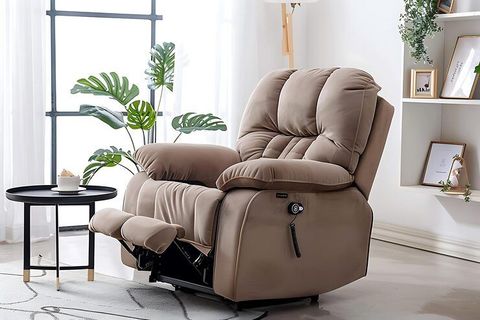
Convertible Sofa Concepts: Explore Styles, Configurations, Functions, and Space Planning
Convertible sofa concepts focus on furniture that can change its configuration to support more than one everyday function.
A sofa may transform into a sleeping surface, a reclined seat, a sectional arrangement, or another practical configuration. The basic idea is to use one piece of furniture for multiple purposes while maintaining reasonable comfort, stability, and usability.
These designs are particularly relevant in homes where available floor area is limited. Apartments, studio homes, guest rooms, home offices, and multipurpose living areas can benefit from furniture that changes according to the activity taking place.

A conventional sofa generally remains in one configuration. A convertible design introduces a mechanism or modular structure that allows the furniture to change position or arrangement.
Common concepts include:
- Sofa-cum-bed designs
- Fold-out sofas
- Click-clack mechanisms
- Pull-out sleeper sofas
- Reclining sofa systems
- Modular sectional sofas
- Storage-integrated convertible sofas
- Adjustable-back sofas
- Floor-space-saving furniture systems
The construction normally combines a frame, cushioning materials, upholstery, hinges or mechanical components, and supporting structures. The quality of these elements affects stability, comfort, durability, and ease of transformation.
Why Convertible Furniture Matters
Convertible furniture has become increasingly relevant as residential spaces become more multifunctional. A living room may also function as a workspace, guest room, reading area, or entertainment space.
For smaller homes, furniture that performs several functions can reduce the need for separate pieces. This can make room planning more flexible and help maintain usable floor space.
The concept also affects interior designers, furniture manufacturers, architects, homeowners, and people planning compact residential interiors.
Important considerations include:
- Space efficiency: Furniture can serve different purposes within the same room.
- Room flexibility: A living area can be adapted for sleeping, sitting, or relaxation.
- Storage integration: Some designs incorporate compartments beneath seats or within frames.
- Accessibility: Simple mechanisms can make transformation easier for different users.
- Structural stability: Moving components require suitable support and construction.
- Maintenance: Hinges, tracks, joints, and moving parts may require periodic inspection.
For furniture manufacturers and designers, convertible products also require careful consideration of ergonomics. A design that works well as a sofa may not automatically provide suitable support when converted into another configuration.
Common Convertible Sofa Configurations
Different mechanisms provide different combinations of functionality. The choice depends on available space, frequency of conversion, room layout, and intended use.
| Configuration | Main Function | Typical Space Requirement |
|---|---|---|
| Sofa-cum-bed | Seating and sleeping | Moderate |
| Click-clack | Seating and flat sleeping surface | Low to moderate |
| Pull-out | Sofa with extended sleeping platform | Moderate to high |
| Reclining sofa | Upright and reclined seating | Moderate |
| Modular sectional | Multiple seating arrangements | Variable |
| Storage sofa | Seating with internal storage | Low to moderate |
Sofa-cum-bed concepts remain one of the most recognizable examples because the furniture can transition between sitting and sleeping positions. Modular furniture takes a different approach by allowing sections to be rearranged rather than mechanically folded.
Design and Material Considerations
A convertible sofa requires more than an attractive external appearance. The internal structure must accommodate repeated movement while supporting users in different positions.
The frame may use engineered wood, hardwood, metal, or combinations of materials. Metal mechanisms can provide moving support, while engineered wood and timber-based components are commonly used for structural sections.
Cushion construction is another important factor. Foam density, spring systems, fiber filling, and layered cushioning can influence how the furniture feels in both configurations.
Upholstery can include fabric, leather, synthetic materials, or blended textiles. The material should be considered according to cleaning requirements, expected usage, ventilation, and household conditions.
Recent Developments and Trends
Furniture design has increasingly incorporated modularity and multifunctionality during 2025 and 2026. Recent industry discussions in India have highlighted modular living, responsible material choices, local manufacturing, and designs intended for urban residential environments. These developments reflect broader interest in furniture that can adapt to changing room requirements.
Digital furniture planning has also become more accessible. Room-planning applications and three-dimensional visualization tools allow users and interior designers to examine furniture arrangements before making physical changes to a room.
Another noticeable direction is the integration of storage into compact furniture. Designers are combining seating, sleeping surfaces, and storage compartments to make better use of limited floor areas.
BIS has also continued updating its standards and certification framework for furniture. In February 2026, amendments related to the Furniture Quality Control Order were recorded, followed by a second amendment in March 2026 and a transition facilitation order in June 2026.
These regulatory developments are relevant to the wider furniture sector, although the specific furniture categories covered by mandatory requirements should be checked individually.
Laws, Standards, and Policies in India
Furniture manufacturers and users in India may encounter requirements established by the Bureau of Indian Standards (BIS). BIS explains that certification is generally voluntary, but certain products become subject to compulsory certification when the Central Government introduces a Quality Control Order.
The Furniture (Quality Control) Order, 2025, issued in February 2025, specified several furniture categories and corresponding Indian Standards. These included work chairs, general-purpose chairs and stools, tables and desks, storage units, beds, and bunk beds.
Importantly, the listed categories do not automatically mean that every convertible sofa is covered by the same compulsory certification requirement. A product should be assessed according to its actual category, construction, intended use, and applicable notification.
BIS records IS 12680:1989 as the Indian Standard for wooden sofa-cum-bed specifications. The standard remains listed in the BIS standards database.
Businesses working with regulated furniture categories should consult the latest BIS notifications and applicable Quality Control Orders rather than relying on older summaries. BIS's “Know Your Standard” portal allows users to search standards by product name or Indian Standard number and access related information.
Useful Tools and Resources
Several resources can help with researching, designing, or evaluating convertible sofa concepts.
- BIS Know Your Standard: Useful for locating Indian Standards by product name or IS number.
- BIS Product Certification: Provides information about certification schemes, testing, surveillance, and conformity procedures.
- Room-planning applications: Useful for checking dimensions, furniture placement, circulation areas, and room configurations.
- 3D design software: Helps interior designers visualize sofa arrangements and room layouts.
- Furniture measurement templates: Useful for recording sofa width, depth, height, clearance, and converted dimensions.
- Material specification sheets: Help compare frame materials, upholstery, cushioning, and mechanism components.
- BIS standards database: Provides access to published and revised Indian Standards relevant to furniture and related materials.
A simple measurement worksheet can include sofa dimensions, fully converted dimensions, walking clearance, door clearance, seat height, sleeping surface dimensions, and storage capacity.
Frequently Asked Questions
What is a convertible sofa?
A convertible sofa is furniture designed to change from one configuration to another. Common examples include sofas that transform into beds, reclined seating, or different modular arrangements.
What is a sofa-cum-bed?
A sofa-cum-bed combines seating and sleeping functions in one furniture unit. Depending on the design, the backrest may fold down, a platform may extend, or another mechanism may create a larger sleeping surface.
Are convertible sofas suitable for small rooms?
They can be useful in smaller rooms because one furniture unit can support multiple functions. However, the fully extended dimensions and required movement clearance should be considered before selecting a design.
What materials are commonly used in convertible sofas?
Common materials include timber-based boards, hardwood, metal, foam, springs, fiber fillings, fabric, synthetic upholstery, and leather. The exact combination depends on the design and construction method.
Does Indian furniture regulation cover every convertible sofa?
Not necessarily. India's Furniture Quality Control Order specifies particular furniture categories and standards. Wooden sofa-cum-bed products also have a relevant Indian Standard, IS 12680:1989. Applicability depends on the specific product and current regulations.
Conclusion
Convertible sofa concepts combine seating with additional functions such as sleeping, reclining, storage, or modular rearrangement. Their main purpose is to make furniture more adaptable to changing room requirements.
Designing or evaluating these products involves more than appearance. Dimensions, frame construction, cushioning, moving mechanisms, stability, upholstery, maintenance, and room clearance all influence practical usability.
In India, the regulatory environment is also evolving. The Furniture Quality Control Order introduced in 2025 and subsequent amendments in 2026 demonstrate the importance of checking current BIS requirements for applicable furniture categories