Label Printing Machines: Explore Their Features and Uses
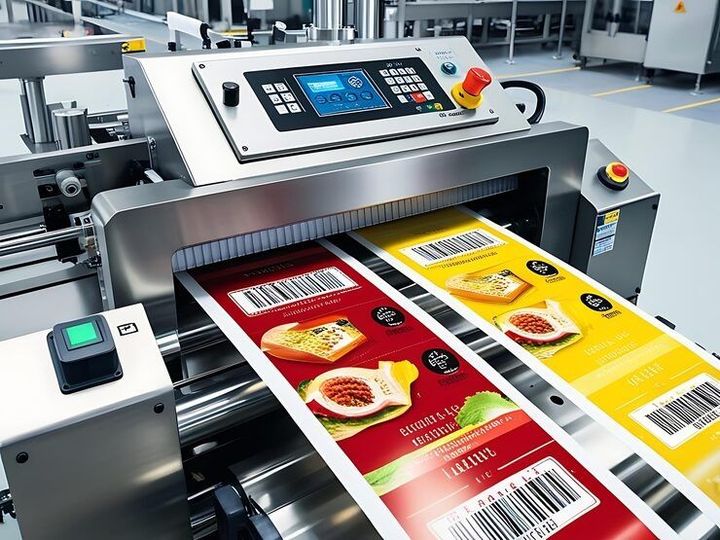
Label printing machines are specialized printing systems used to produce text, graphics, barcodes, QR codes, product information, symbols, and other identification elements on label materials. Labels can be produced on paper, synthetic films, adhesive stocks, transparent materials, and other substrates suited to the printing process.
These machines are used across packaging, food processing, pharmaceuticals, logistics, retail, chemicals, consumer products, and industrial manufacturing. Depending on the application, label printing can involve digital inkjet, electrophotographic, flexographic, thermal-transfer, direct-thermal, or hybrid technologies.
Modern label printing systems combine printing hardware with media handling, colour management, inspection, cutting, rewinding, and digital workflow controls. Some systems are designed for rolls of labels, while others work with sheets or specialized materials.
How Label Printing Machines Work
A typical label printing workflow includes several stages:
- Artwork preparation – Text, images, logos, barcodes, and other information are arranged digitally.
- File processing – Printing software or a RIP prepares the artwork for the selected printing process.
- Material feeding – Label stock is fed from a roll or sheet system.
- Printing – Ink, toner, ribbon, or thermal energy creates the required image.
- Drying or fixing – Depending on the technology, printed material may pass through drying, curing, or fixing stages.
- Inspection – Print quality, registration, barcode readability, and missing elements can be checked.
- Finishing – Labels may be die-cut, slit, laminated, coated, or rewound.
- Final handling – Finished rolls or sheets are prepared for subsequent application.
The exact sequence varies according to the machine type, label material, ink system, and finishing configuration.
Main Types of Label Printing Machines
| Machine Type | Printing Method | Typical Applications |
|---|---|---|
| Digital Label Printer | Inkjet or toner-based digital imaging | Variable labels, packaging, short runs |
| Flexographic Label Printer | Flexible printing plates transfer ink | Packaging and large-volume label production |
| Thermal Transfer Printer | Heated printhead transfers ribbon material | Durable identification and barcode labels |
| Direct Thermal Printer | Heat-sensitive material reacts to heat | Receipts, logistics, temporary labels |
| UV Inkjet Label Printer | UV-curable ink with UV curing | Durable graphics and specialty labels |
| Hybrid Label Printer | Combines two or more processes | Complex label production |
| Sheet-Fed Label Printer | Prints on individual sheets | Specialty and smaller-format labels |
Main Components
A label printing machine can contain:
- Printing heads or imaging units
- Ink, toner, or ribbon system
- Media unwind section
- Web-guiding mechanism
- Print cylinder or transport system
- Sensors
- Control panel
- Digital front-end or RIP software
- Colour-management system
- Drying or curing unit
- Inspection camera
- Slitting system
- Die-cutting section
- Rewinding mechanism
The configuration depends on whether the machine is designed for digital, flexographic, thermal, or hybrid printing.
Importance
Labels provide identification and information throughout the product lifecycle. They can communicate product details to consumers while also supporting tracking, inventory management, transportation, and manufacturing processes.
Product Identification
Labels can contain information such as:
- Product name
- Manufacturer information
- Batch or lot number
- Manufacturing date
- Expiry or best-before information
- Net quantity
- Usage instructions
- Storage information
- Safety information
- Barcodes
- QR codes
The information required depends on the product category and applicable regulations.
Variable Data Printing
Modern label printing machines can process variable information from one label to another. This allows batch numbers, serial numbers, barcodes, QR codes, dates, and other changing information to be printed within the same production workflow.
Variable data capability is particularly useful for traceability and product identification.
Multiple Material Options
Label printing can be performed on different materials according to the intended application. Paper is common for general labels, while synthetic films may be selected when greater resistance to moisture, abrasion, or handling is required.
Transparent films, metallic materials, heat-sensitive stocks, and specialty adhesive materials can also be used where compatible with the printing process.
Packaging Integration
Labels can form part of a wider packaging workflow:
Product Filling → Packaging → Label Printing → Label Application → Inspection → Coding → Distribution
In some production environments, printing and label application are integrated with packaging lines. This can allow printed information to be synchronized with production data.
Barcode and QR Code Printing
Barcode and QR code printing requires accurate positioning and sufficient contrast. Inspection systems can verify whether codes are readable before the finished labels move to the next stage.
This is important in logistics, retail, inventory management, and traceability applications.
Recent Updates
Label printing technology is increasingly moving toward digital workflows, variable information, automated inspection, improved colour control, and integration with packaging systems.
Growth of Digital Label Printing
Digital printing allows label artwork to be changed through software without preparing a new physical printing plate for every design. This makes the process suitable for multiple artwork versions, variable information, product identification, and applications requiring frequent design changes.
Digital label workflows can also connect artwork preparation, colour management, printing, inspection, and finishing into a connected process.
Automation and Inspection
Modern label printing systems increasingly incorporate sensors and camera-based inspection. Automated inspection can examine:
- Missing print
- Registration errors
- Colour variation
- Barcode quality
- QR code readability
- Incorrect artwork
- Print defects
- Die-cut positioning
Such systems can compare printed output with a reference file or predefined inspection criteria.
Improved Colour Management
Colour consistency is important when labels contain brand graphics, product identification elements, warning symbols, or regulatory information.
Modern workflows may use colour profiles, calibration charts, spectrophotometers, and software-based colour management. These tools help control differences caused by ink, substrate, printing conditions, and machine settings.
Hybrid Printing
Hybrid label presses combine technologies such as digital inkjet with flexographic or finishing processes. This arrangement can allow variable digital information to be combined with conventional printing, coating, die-cutting, or other operations.
The approach is particularly useful when a label requires several different process stages within one production line.
Development of Machinery Safety Standards
BIS maintains standards for printing machinery and graphic-technology equipment. IS/ISO 12643 (Part 4):2023 covers safety requirements for graphic-technology converting equipment and systems and is listed under the Printing Machinery technical committee. The standard was reviewed in 2025.
BIS's printing machinery committee covers areas including terminology, dimensions, performance, maintenance, and safety requirements for printing machinery and components.
Current Labelling Regulation Activity
For food-related labels, regulatory requirements continue to change. FSSAI's current website lists five amendments to the Food Safety and Standards (Labelling and Display) Regulations, 2020, with the latest amendment dated 24 March 2026.
FSSAI also announced in January 2025 that amendments to labelling requirements would generally use 1 July as the annual enforcement date, subject to the required notice period. This approach was intended to provide greater predictability when businesses update printed packaging and labels.
Laws or Policies
Label printing machines themselves are influenced by machinery-safety requirements, while the printed label may be subject to product-specific information and packaging regulations.
BIS Standards
BIS provides standards for printing and graphic-technology equipment, including safety requirements. The relevant standard depends on the machine configuration and application.
The BIS Know Your Standard portal allows users to search standards using an IS number or keyword and review associated documents, amendments, testing information, laboratories, and committee details.
BIS states that its certification framework is generally voluntary, although government-issued Quality Control Orders can make compliance compulsory for particular products or machinery categories.
Therefore, the applicable requirement should be checked for the specific machine and its intended use.
Food Product Labels
When labels are used for packaged food, the printed information must comply with applicable FSSAI requirements. The Food Safety and Standards (Labelling and Display) Regulations, 2020 prescribe labelling requirements for pre-packaged foods and display of specified information.
Requirements can include product identity, ingredient information, nutritional information, declarations, date marking, batch information, and other details depending on the food category.
Packaging Considerations
Label material and printing inks can also matter when labels are used with food packaging. The substrate, adhesive, printed surface, and intended contact arrangement should be assessed according to the applicable packaging requirements.
A printing machine therefore needs to be considered as one part of a larger packaging system rather than as an isolated piece of equipment.
Machinery Safety
Label printing systems may include rotating rollers, moving print carriages, cutting units, heating systems, electrical controls, UV curing equipment, and automated web-handling systems.
Safety considerations can include:
- Guards
- Emergency-stop controls
- Interlocks
- Electrical protection
- Safe access
- Moving-part protection
- UV shielding where applicable
- Maintenance isolation
- Ventilation where required
BIS currently lists IS 16812:2026, based on ISO 14119:2024, concerning interlocking devices associated with machinery guards.
Tools and Resources
Several tools support label printing preparation, production, inspection, and quality control.
Label Design Software
Design software is used to arrange text, graphics, barcodes, QR codes, variable fields, and other elements. Correct dimensions, margins, bleed, and colour settings should be established before printing.
RIP and Workflow Software
RIP software processes digital artwork into instructions for the printing system. Depending on the machine, it can control colour conversion, screening, nesting, white ink, variable information, and job sequencing.
Barcode Verification Equipment
Barcode verification systems measure printed codes against defined readability criteria. These systems can identify problems with contrast, positioning, dimensions, or other characteristics.
Vision Inspection Systems
Camera-based inspection can detect missing characters, artwork differences, registration problems, print defects, and other variations during production.
Colour Measurement Tools
Spectrophotometers and colour-measurement devices can compare printed samples against colour targets. They can help monitor consistency across different label materials and production batches.
Web Tension Monitoring
Roll-fed label machines require controlled material movement. Web-tension systems help maintain stable material transport and can reduce registration problems during printing and finishing.
BIS Resources
BIS's Know Your Standard platform is useful for checking current Indian Standards related to printing machinery, safety, and other technical subjects.
FSSAI Resources
For food labels, FSSAI's regulations and amendments should be checked regularly. The FSSAI website currently provides the Labelling and Display regulations together with their amendments, including the March 2026 amendment.
FAQs
What are label printing machines?
Label printing machines are systems used to print text, graphics, barcodes, QR codes, and other information onto label materials such as paper, films, and specialty stocks.
How do label printing machines work?
The machine feeds label material through a printing system, applies ink, toner, ribbon, or thermal energy, and may then perform drying, curing, inspection, cutting, and rewinding.
What are the main types of label printing machines?
Common types include digital label printers, flexographic printers, thermal-transfer printers, direct-thermal printers, UV inkjet systems, hybrid presses, and sheet-fed label printers.
What information can be printed on product labels?
Depending on the product and applicable regulations, labels can contain product names, ingredients, dates, batch information, quantity, instructions, barcodes, QR codes, manufacturer information, and safety information.
What standards apply to label printing machines in India?
The applicable standard depends on the machine and its configuration. BIS maintains printing-machinery and graphic-technology safety standards, while product-specific label requirements may come from regulators such as FSSAI.
Conclusion
Label printing machines connect digital or conventional printing processes with the information requirements of modern packaging, logistics, retail, and manufacturing. Digital, thermal, flexographic, UV, and hybrid technologies provide different approaches to printing on paper, films, and other label materials. Current developments emphasize automation, variable data, inspection, colour management, and integration with packaging workflows. In India, both machinery safety standards and product-specific labelling regulations should be considered when planning a label-printing process.