Industrial Inkjet Printing Machines: Guide to Types, Uses, and Practical Insights
Industrial Inkjet Printing Machines are production systems that create text, images, codes, patterns, or functional layers by depositing very small droplets of ink or another fluid onto a selected surface. Unlike traditional contact printing methods, inkjet printing is generally a non-contact process, allowing printing onto many different substrates and product shapes.
Industrial inkjet technology is used across packaging, labels, textiles, ceramics, glass, product decoration, graphics, electronics, and other manufacturing applications. Industrial printheads can also deposit specialized fluids rather than conventional inks, expanding inkjet technology into areas such as printed electronics and advanced manufacturing.
How Industrial Inkjet Printing Works
A typical system contains several connected components:
Ink or fluid system: Stores, filters, circulates, and delivers the selected fluid.
Printhead: Contains many tiny nozzles that eject controlled droplets.
Controller: Converts digital artwork or production data into printing instructions.
Substrate handling system: Moves paper, film, cartons, textiles, ceramics, or other materials through the printing area.
Drying or curing system: Dries water-based or solvent-based inks or cures suitable UV formulations.
Inspection system: Uses cameras or sensors to monitor print quality and alignment.
Software: Manages artwork, variable data, color information, production parameters, and machine operation.
The printhead is one of the most important components. Its nozzles determine how accurately droplets are positioned and how much fluid can be deposited during each firing cycle.
Main Inkjet Technologies
There are two broad inkjet categories: Continuous Inkjet (CIJ) and Drop-on-Demand (DOD). In CIJ systems, ink droplets are generated continuously, while DOD systems eject droplets when printing requires them.
DOD technology includes several approaches. Thermal inkjet uses heat to create a vapor bubble that pushes an ink droplet through a nozzle. Piezoelectric inkjet uses electrical changes in piezoelectric material to generate mechanical movement and eject droplets.
These technologies can be configured for different production environments, fluid types, substrates, speeds, and image requirements.
Importance
Digital Production
Industrial inkjet printing allows digital information to be transferred directly to a substrate without creating a conventional printing plate for each design.
This can make the technology useful when designs change frequently, when variable information is required, or when different graphics need to be produced within the same production workflow.
Variable Data Printing
Industrial systems can print changing information such as serial numbers, barcodes, QR codes, product identifiers, graphics, and other machine-readable information.
The information can be generated from production databases and transferred to the printer through digital workflows.
Printing on Different Materials
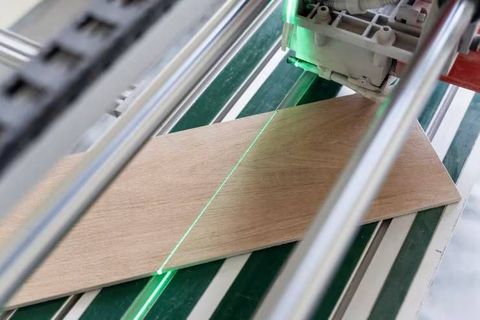
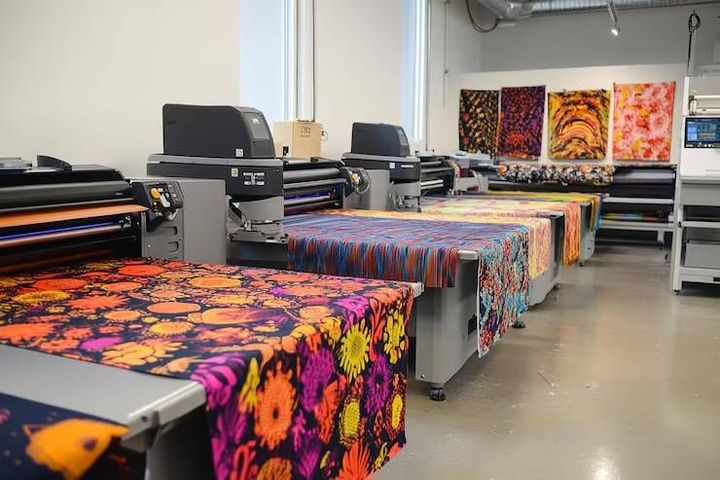
Modern industrial inkjet technology can work with many substrates. Depending on the ink and machine configuration, applications can include paper, cardboard, films, textiles, ceramics, glass, metal, plastics, and specially prepared surfaces.
The relationship between ink chemistry, printhead technology, surface properties, drying, and adhesion is important. A printer designed for one substrate may not automatically produce suitable results on another.
Production Flexibility
Digital inkjet systems can change artwork through software rather than replacing a physical printing plate. This makes them suitable for applications involving multiple designs, shorter production runs, variable information, or customized graphics.
Industrial inkjet applications now include corrugated packaging, labels, textiles, ceramics, industrial decoration, and other manufacturing fields.
Key Machine Characteristics
| Characteristic | Meaning | Why It Matters |
|---|---|---|
| Print resolution | Number of printable positions across an area | Influences image detail |
| Drop size | Volume of each deposited droplet | Affects detail and ink coverage |
| Print width | Width covered during a pass | Influences machine configuration |
| Print speed | Rate at which material moves or images are produced | Influences production capacity |
| Ink type | Chemical and physical characteristics of the fluid | Determines substrate compatibility |
| Drying method | Technique used to dry or cure printed material | Influences handling and durability |
| Printhead type | CIJ or DOD technology and specific architecture | Influences application possibilities |
| Color configuration | Number and arrangement of ink channels | Influences color reproduction |
Recent Updates
High-Speed Inkjet Systems
High-speed inkjet technology continues to expand in production printing. ISO published ISO/TR 19312:2026, which examines methods for predicting print image quality in high-speed inkjet systems by considering combinations of paper properties.
The document describes high-speed inkjet systems as production technologies capable of combining digital flexibility with substantial production speeds. It also emphasizes the importance of matching inks and substrates for reliable print performance.
Water-Based Inkjet Development
Water-based inkjet technology is receiving attention for applications including packaging, corrugated materials, textiles, ceramics, and coding. Modern printhead development is addressing challenges such as fluid circulation, nozzle reliability, pigment handling, viscosity, and print uniformity.
For example, recent industrial printhead technology has been developed specifically for aqueous fluids and can handle demanding formulations with higher viscosity or pigment levels.
Single-Pass Printing
Single-pass systems place printheads across the width of the substrate so that material can pass through the printer while the image is deposited in one main movement.
This differs from multi-pass systems, where the printhead or substrate makes multiple passes to build the final image. Single-pass architectures are particularly relevant to high-throughput packaging and industrial production.
Direct-to-Shape Printing
Inkjet technology is increasingly used for direct-to-shape applications involving bottles, cans, containers, cylinders, and curved surfaces.
Instead of printing a flat label that is later applied to an object, direct-to-shape systems can deposit graphics directly onto selected product surfaces.
Industrial Functional Printing
Industrial inkjet is moving beyond conventional graphics. Specialized printheads can deposit conductive materials, coatings, functional fluids, and other formulations.
Applications include printed electronics, photovoltaics, semiconductor-related processes, smart glass, and other advanced manufacturing areas.
Automation and Digital Workflows
Modern printing systems increasingly connect printers with production-management software, inspection cameras, databases, automated material handling, and factory-control systems.
This allows production data to move directly into the printing workflow. Automated inspection can also identify missing nozzles, registration changes, color differences, or other print defects.
Artificial Intelligence and Data Analysis
AI and machine-learning techniques are being explored for image analysis, print inspection, workflow optimization, predictive monitoring, and automated process control.
These technologies can analyze large amounts of production information, but their usefulness depends on data quality, system integration, validation, and appropriate human oversight.
Laws or Policies
International Machinery Safety
Industrial inkjet printers contain moving mechanisms, electrical systems, heated components, curing equipment, fluid systems, and automated material handling. Safety therefore involves the entire machine rather than only the printhead.
ISO 12100:2010 provides general principles for machinery design, risk assessment, and risk reduction. ISO currently lists a revised draft, ISO/DIS 12100.3, as being under development.
Printing Machinery Safety
The ISO 12643 series addresses safety requirements for printing and paper-converting machinery. A new work item, ISO/AWI 12643-1, is currently under development and is intended to replace the 2023 edition of Part 1. Its scope covers equipment used in printing, converting, binding, finishing, and related production environments.
The exact legal requirements depend on the country where the machine is installed and operated.
Print Quality Standards
International printing standards can help define and communicate production parameters. ISO 12647-1:2013, which was reviewed and confirmed in 2024, establishes general process-control parameters and measurement methods for production printing.
For digital printing workflows, ISO 12647-8:2021 addresses validation print processes that work directly from digital data.
These standards should not be interpreted as a single universal specification for every industrial inkjet application. Different substrates, inks, printing technologies, and end uses can require different technical controls.
Chemical and Environmental Requirements
Ink formulations can contain solvents, pigments, additives, resins, photoinitiators, or other chemical components. Depending on the region and application, manufacturers and operators may need to consider chemical labeling, worker exposure, ventilation, waste handling, emissions, and environmental requirements.
Packaging applications may also have additional requirements when printed materials are intended for food contact or other regulated uses. The applicable rules vary by jurisdiction and substrate.
Energy Measurement
Energy use can also be evaluated through standardized measurement methods. ISO 21632:2018 provides a method for determining electricity consumption of digital printing devices, including transitional and related operating modes. The standard was reviewed and confirmed in 2024.
Tools and Resources
Printhead Technology
The printhead determines how droplets are generated and placed on the substrate. Piezoelectric DOD printheads are widely used in industrial applications because their architecture can support precise deposition of different fluids.
Printhead specifications can include nozzle count, nozzle density, drop volume, firing frequency, print width, and supported fluid characteristics.
Ink Management Systems
Ink-management equipment controls fluid delivery between reservoirs, filters, pumps, circulation systems, and printheads.
Proper fluid management can help maintain consistent printing conditions. Some systems continuously circulate ink to reduce issues associated with sedimentation or air within the fluid path.
Color Management Software
Color-management systems convert digital color information into printing instructions suitable for a particular printer, ink set, substrate, and production condition.
Profiles, calibration procedures, measurement instruments, and standardized color targets can help maintain consistency between digital artwork and printed output.
Machine Vision
Industrial cameras can inspect printed materials during production. Vision systems may detect missing information, registration errors, color variation, surface defects, or incorrect graphics.
Automated inspection becomes particularly useful when large quantities of printed material need continuous monitoring.
Drying and Curing Equipment
Different inks require different drying or curing approaches. Water-based systems may use controlled heat and airflow, solvent-based systems may require evaporation and ventilation, while UV-curable inks can use ultraviolet energy to solidify the printed layer.
The correct method depends on ink chemistry, substrate, line speed, coating thickness, and machine design.
Workflow and Production Software
Production software can manage artwork files, variable data, color information, queues, machine settings, and inspection information.
Digital workflows are particularly useful where many designs or changing data must be transferred to the printer without manually preparing each individual print file.
FAQs
What are Industrial Inkjet Printing Machines?
Industrial Inkjet Printing Machines are automated digital printing systems that deposit tiny droplets of ink or other fluids onto substrates such as paper, packaging materials, textiles, ceramics, glass, plastics, and specialized industrial surfaces.
What are the main types of industrial inkjet printing machines?
The main inkjet technologies include Continuous Inkjet and Drop-on-Demand systems. Drop-on-Demand technology includes thermal and piezoelectric approaches, while machine configurations can also differ through single-pass and multi-pass architectures.
Where are Industrial Inkjet Printing Machines used?
Industrial Inkjet Printing Machines are used for packaging, labels, textiles, ceramic tiles, glass decoration, product decoration, coding, graphics, industrial marking, and selected advanced manufacturing applications.
What inks are used in industrial inkjet printing?
Depending on the machine and substrate, industrial systems can use water-based, solvent-based, oil-based, UV-curable, pigment-based, dye-based, conductive, and other specialized fluids.
What factors matter when selecting an industrial inkjet machine?
Important factors include substrate type, required print width, production speed, image resolution, ink chemistry, drying or curing method, color requirements, variable-data needs, automation level, printhead technology, and integration with the existing production line.
Conclusion
Industrial Inkjet Printing Machines use digitally controlled droplets to place images, text, codes, graphics, and specialized fluids onto a wide range of materials. The technology includes Continuous Inkjet and Drop-on-Demand systems, with applications spanning packaging, textiles, ceramics, labels, direct-to-shape decoration, and advanced manufacturing. Recent developments include high-speed printing, water-based ink technology, single-pass systems, automated inspection, direct-to-shape printing, and functional material deposition. International standards covering print quality, machinery safety, digital printing, and energy measurement provide useful technical references for different industrial environments.