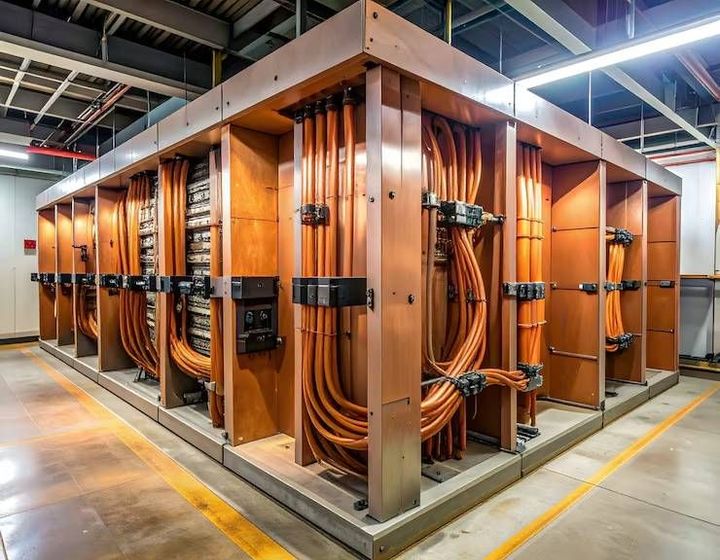
Industrial Heat Battery Systems: Guide to Technology and Practical Insights
Industrial heat battery systems are energy-storage technologies designed to capture thermal energy and release it later when an industrial process needs heat.
Instead of storing electricity directly, these systems store energy as heat using materials such as molten salts, rocks, ceramics, concrete, bricks, or phase-change materials.
They can connect with electric heaters, renewable electricity sources, waste-heat streams, boilers, furnaces, dryers, and other industrial equipment. The stored thermal energy can then be delivered as hot air, steam, hot water, thermal oil, or direct process heat, depending on the system design.
How Industrial Heat Batteries Work
A typical industrial heat battery has several basic stages:
Energy input: Electricity or recovered heat enters the system.
Thermal conversion: An electric heating element or heat exchanger transfers energy into a storage medium.
Heat storage: The storage material retains thermal energy for a defined period.
Heat release: Stored heat is transferred to an industrial process when required.
Control system: Sensors and software manage temperature, charging, discharging, and process demand.
For example, an industrial facility may use electricity during periods when renewable generation is available to heat a solid storage material. Later, the stored heat can support a furnace, dryer, steam generator, or other thermal process.
Main Types of Heat Storage
Industrial heat batteries can use different storage approaches.
| Technology | Storage Medium | Typical Application |
|---|---|---|
| Sensible heat storage | Rocks, bricks, ceramics, molten salts | High-temperature process heat |
| Phase-change storage | Materials that melt and solidify | Controlled temperature delivery |
| Thermochemical storage | Reversible chemical reactions | High-temperature and long-duration storage |
| Packed-bed storage | Solid particles or rocks | Industrial air and gas heating |
| Thermal oil systems | Specialized heat-transfer fluids | Medium-temperature processes |
The appropriate technology depends on temperature requirements, operating hours, available space, process integration, and heat-transfer requirements.
Importance
Industrial Heat Decarbonization
Many industrial processes require continuous or high-temperature heat. Traditionally, this heat has frequently been produced through combustion of fossil fuels.
Heat batteries provide another pathway by allowing electricity or recovered thermal energy to be stored and later converted into useful industrial heat. When paired with low-carbon electricity, they can support reductions in direct fossil-fuel use.
Better Use of Renewable Electricity
Solar and wind generation can vary throughout the day. Industrial heat batteries can absorb electricity when renewable generation is available and retain the resulting thermal energy.
This creates a connection between variable electricity generation and processes that need a more predictable heat supply.
Waste-Heat Recovery
Some industrial operations produce hot exhaust gases, steam, or other forms of unused thermal energy. Heat-storage systems can capture part of this energy and release it later.
This can be particularly useful where heat production and heat demand do not occur at the same time.
Process Heat Applications
Industrial heat batteries can potentially support many processes, including:
Food and beverage processing
Textile drying and finishing
Chemical processing
Paper and pulp production
Ceramic manufacturing
Metal processing
Brick and building-material production
Steam generation
Industrial drying
District and commercial heating
The required temperature is an important factor because different industrial processes need different heat levels.
Recent Updates
Growth of High-Temperature Thermal Storage
Recent industrial energy research has placed greater attention on thermal storage capable of reaching temperatures required by manufacturing processes.
High-temperature storage systems can use refractory materials, ceramic media, bricks, rocks, metal alloys, or other specialized materials that remain stable under repeated heating and cooling.
Electrification of Industrial Heat
Industrial electrification is expanding beyond conventional electric boilers and heat pumps. Thermal batteries provide another approach by separating electricity consumption from the exact time when industrial heat is required.
This can allow a facility to charge a thermal system during selected periods and use stored heat later.
Integration With Renewable Energy
Modern heat-storage projects are increasingly designed around renewable electricity, onsite generation, and grid-connected operation.
A control system can monitor electricity availability, thermal demand, storage temperature, and process requirements. This allows charging and heat delivery to be coordinated with plant operations.
Digital Monitoring and Controls
Sensors and industrial control platforms can track:
Storage temperature
Heat input
Heat output
Charging duration
Discharging duration
Pressure
Flow rate
Equipment condition
Process demand
Data from these systems can help operators identify abnormal temperature patterns and maintain stable process conditions.
Long-Duration Thermal Storage
Some industrial heat batteries are designed to retain thermal energy for many hours or longer. This is particularly relevant when electricity availability and industrial heat demand occur at different times.
Long-duration thermal storage can also complement other energy-storage technologies by storing energy in a form directly usable for heat-intensive processes.
Laws or Policies
Industrial heat battery projects can be influenced by energy, environmental, construction, electrical, and workplace regulations. The specific requirements depend on the country and the type of installation.
Industrial Safety Requirements
High-temperature systems require appropriate controls for thermal exposure, pressure, electrical equipment, fire protection, insulation, and emergency shutdown.
Facilities may need to follow national workplace safety requirements and local industrial codes.
Electrical Regulations
Systems connected to industrial electrical networks may need to comply with applicable electrical installation and equipment standards.
Requirements can include grounding, protection systems, electrical isolation, control panels, and grid-interconnection rules.
Environmental Regulations
If a heat battery replaces or reduces combustion equipment, environmental requirements may change depending on the facility configuration. Existing boilers, furnaces, fuel systems, and exhaust equipment may still be subject to applicable emissions rules.
International Standards
Depending on system design, manufacturers and industrial operators may refer to standards covering thermal equipment, pressure systems, electrical installations, machinery safety, insulation, and industrial controls.
Because requirements vary between jurisdictions, project teams normally need to verify the current rules applicable to the installation location.
Tools and Resources
Thermal Energy Modeling
Thermal modeling tools can estimate storage capacity, charging rates, heat losses, operating temperatures, and discharge performance.
These calculations help engineers determine how much storage material is needed for a particular industrial process.
Temperature and Flow Sensors
Industrial temperature sensors, pressure sensors, and flow meters provide operational data during charging and discharge.
Accurate measurements are important because thermal storage systems may operate across significant temperature ranges.
Heat Exchangers
Heat exchangers transfer thermal energy between the storage medium and the industrial process without necessarily mixing the two streams.
Their design depends on temperature, pressure, fluid type, flow rate, and required heat-transfer capacity.
Industrial Control Systems
Programmable logic controllers and supervisory control systems can coordinate charging, storage, and heat delivery.
Control strategies may respond to production schedules, electricity availability, storage temperature, and process requirements.
Thermal Insulation
Insulation reduces heat loss from tanks, vessels, pipes, storage containers, and high-temperature storage materials.
The insulation system must be selected according to operating temperature, environmental conditions, and equipment design.
Capacity Planning
A basic thermal-storage calculation can be expressed as:
Stored Thermal Energy = Mass × Specific Heat Capacity × Temperature Change
For a phase-change material, the latent heat associated with the material's phase transition also needs to be considered.
Engineers use these principles together with heat losses, efficiency, operating schedules, and process demand to determine practical storage capacity.
FAQs
What Are Industrial Heat Battery Systems Used For?
Industrial heat battery systems are used to store thermal energy and release it later for industrial processes such as drying, steam generation, heating, and high-temperature manufacturing.
How Do Industrial Heat Battery Systems Store Energy?
They generally store energy as sensible heat, latent heat, or thermochemical energy. Common storage materials include rocks, ceramics, bricks, molten salts, and phase-change materials.
Can Industrial Heat Batteries Use Renewable Electricity?
Yes. Electricity from solar, wind, or other low-carbon sources can power an electric heating system that charges the thermal storage medium.
How Long Can a Heat Battery Store Thermal Energy?
Storage duration depends on the technology, insulation, operating temperature, storage material, and system design. Some systems are designed for short-duration operation, while others target many hours of thermal storage.
Are Industrial Heat Batteries Suitable for Every Factory?
Not necessarily. Suitability depends on process temperature, heat demand, operating schedule, available space, electricity infrastructure, heat-transfer requirements, and integration with existing equipment.
Conclusion
Industrial heat battery systems provide a method for storing thermal energy and delivering it when industrial processes require heat. They can use sensible, latent, or thermochemical storage technologies and may connect with renewable electricity, waste-heat recovery systems, boilers, furnaces, and industrial heating equipment.
Their practical value depends on temperature requirements, storage duration, thermal losses, process integration, controls, and local regulations. As industrial facilities examine electrification and thermal-energy management, heat batteries represent one technology within the broader range of industrial energy-storage solutions.