Homogenizers in Industrial Processing: Guide to Types, Functions, and Insights
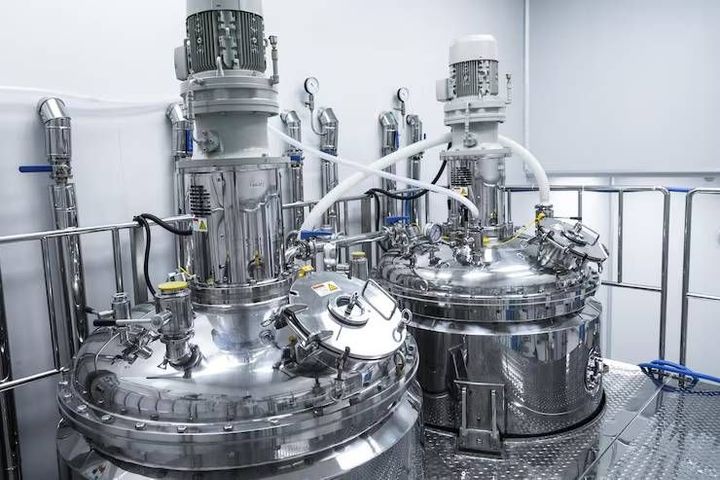
Homogenizers in Industrial Processing are machines used to create a more uniform mixture by reducing particle or droplet size and distributing materials throughout a liquid, suspension, emulsion, or other process mixture. They are widely used in food, dairy, pharmaceuticals, cosmetics, chemicals, biotechnology, and laboratory applications.
A simple example is milk. Before homogenization, fat droplets can separate and rise toward the surface. A homogenizer breaks these droplets into much smaller sizes and distributes them more evenly throughout the liquid.
The exact result depends on the machine design, pressure, rotational speed, material properties, processing temperature, and number of passes through the equipment.
How Homogenization Works
Although different machines use different mechanisms, the basic concept involves applying mechanical energy to a material.
In a high-pressure homogenizer, a pump pushes the product through a specially designed homogenizing valve. Pressure drops rapidly as the material passes through a narrow opening, producing intense turbulence, shear, and other forces that can reduce particle or droplet size.
Rotor-stator homogenizers use a rapidly rotating component inside a stationary component. The material passes through small openings where mechanical shear and turbulence break apart larger particles or droplets.
Ultrasonic homogenizers use high-frequency sound energy. The sound waves can generate microscopic bubbles that rapidly form and collapse, creating localized forces within the material.
Main Industrial Applications
Homogenizers can be found in many processing environments.
Dairy processing uses homogenization for milk, cream, flavored dairy products, and other liquid formulations.
Food processing can use homogenizers for sauces, beverages, dressings, soups, emulsions, and other products where uniform distribution is important.
Pharmaceutical manufacturing can use specialized homogenization equipment for emulsions, suspensions, creams, and other formulations.
Cosmetic production can use homogenizers when producing creams, lotions, gels, and emulsions.
Chemical processing may use homogenization to improve the distribution of components in paints, coatings, adhesives, inks, and specialty formulations.
Biotechnology and laboratory processing can use smaller homogenization systems for sample preparation, cell disruption, and analytical procedures.
Importance
Creating Uniform Mixtures
One of the main purposes of homogenization is to make a mixture more uniform. If particles or droplets are unevenly distributed, a product can separate, settle, or show inconsistent physical characteristics.
Homogenization can reduce these differences by creating smaller dispersed particles or droplets and distributing them throughout the continuous phase.
Controlling Particle and Droplet Size
Particle size is an important processing variable. Smaller particles can change properties such as appearance, texture, stability, suspension behavior, and mouthfeel in suitable formulations.
The required particle size depends on the application. A dairy product, pharmaceutical formulation, cosmetic cream, and industrial coating may require very different processing conditions.
Improving Emulsion Stability
An emulsion contains two liquids that normally do not mix easily, such as oil and water. Homogenization can reduce the size of droplets in one liquid and distribute them through the other.
This does not automatically make every emulsion permanently stable. Formulation chemistry, emulsifiers, temperature, viscosity, and storage conditions also influence stability.
Supporting Consistent Processing
Industrial production requires repeatable process conditions. Homogenizers can be integrated into continuous or batch processing lines so that material passes through a defined processing stage.
Important operating variables can include pressure, flow rate, temperature, rotor speed, processing time, and the number of passes.
Major Homogenizer Categories
| Homogenizer Type | Main Mechanism | Common Applications |
|---|---|---|
| High-pressure | Pressure drop and intense flow forces | Dairy, food, pharmaceuticals |
| Rotor-stator | Mechanical shear and turbulence | Cosmetics, food, chemicals |
| Ultrasonic | High-frequency acoustic energy | Laboratory, biotechnology, emulsions |
| Bead mill | Grinding with small media | Pigments, biotechnology, formulations |
| High-shear mixer | Rapid mechanical mixing | Creams, sauces, emulsions |
| Microfluidizer-type system | High-velocity microchannels | Pharmaceuticals, biotechnology, specialty formulations |
Recent Updates
More Precise Process Control
Modern homogenization systems increasingly incorporate sensors and electronic controls for monitoring pressure, temperature, flow, and other operating conditions.
Digital controls can allow operators to define repeatable process parameters and record operating information. This is particularly relevant where batch consistency and documented processing conditions are important.
Energy-Efficient Processing
Homogenization requires mechanical energy, and industrial operators increasingly examine energy consumption alongside production requirements.
Equipment design can influence energy use through pump efficiency, pressure requirements, processing configuration, and the number of passes needed. Process engineers may evaluate whether a particular particle-size target can be reached without unnecessary processing.
Advanced High-Pressure Systems
High-pressure homogenization continues to be used in applications requiring fine particle or droplet reduction. Modern systems can be configured with different valve designs and process arrangements according to the characteristics of the material.
The appropriate pressure range is not universal. Materials with different viscosities, concentrations, particle sizes, and compositions respond differently to processing conditions.
Automation and Data Monitoring
Industrial homogenizers can increasingly be connected with plant control systems. Digital monitoring can record pressure, temperature, flow rate, alarms, operating cycles, and other process information.
This can support process analysis and equipment monitoring. In regulated industries, electronic records may also form part of broader quality-control systems when appropriately validated.
Growth of Specialized Processing
Homogenization technology is being adapted for increasingly specialized applications. Examples include nanoemulsions, pharmaceutical formulations, plant-based beverages, biotechnology materials, advanced coatings, and specialty chemical mixtures.
These applications may require tighter control of particle size, temperature, contamination risks, and processing energy.
Hygienic Equipment Design
Food, pharmaceutical, and cosmetic manufacturers increasingly emphasize equipment that can be cleaned effectively and integrated into hygienic production environments.
FSSAI guidance for dairy processing identifies homogenizers among processing equipment and emphasizes documented processing procedures, monitoring of critical parameters, and hygienic equipment cleaning.
Laws or Policies
Food Processing Requirements
Food-processing requirements vary between countries and product categories. They commonly address hygiene, contamination prevention, equipment design, process controls, cleaning, and documentation.
In India, FSSAI regulations cover food business licensing, food-product standards, hygiene requirements, and food safety management systems. FSSAI also provides sector-specific guidance for milk and milk products.
United States Food Processing Rules
In the United States, FDA food regulations include Current Good Manufacturing Practices under 21 CFR Part 117. These requirements cover areas such as facility design, equipment, sanitation, and production and process controls.
For equipment used in food processing, sanitary design and maintenance are important because equipment surfaces can become potential contamination points when they are difficult to clean or maintain.
Pharmaceutical Manufacturing
Pharmaceutical homogenization equipment may fall within a broader GMP-controlled manufacturing environment. Equipment must be suitable for its intended application and maintained in a condition that supports appropriate product quality.
FDA pharmaceutical GMP guidance states that manufacturing equipment must be clean, sanitary, and suitable for its intended use, with requirements addressing equipment construction and cleaning.
Cosmetic Manufacturing
Cosmetic manufacturers may use international GMP frameworks when designing production and quality systems. ISO 22716:2007 provides GMP guidelines covering production, control, storage, and shipment of cosmetic products and remains current following its 2022 review.
The precise regulatory requirements depend on the country, product category, ingredients, intended use, and manufacturing activities.
International Considerations
There is no single worldwide regulation governing every homogenizer. Instead, requirements are generally connected to the industry and product being processed.
A machine used for a food product may need different hygienic and documentation controls from equipment used for an industrial coating or a laboratory sample. Manufacturers and processors therefore need to identify the regulations and standards applicable to their particular process.
Tools and Resources
Pressure and Flow Monitoring
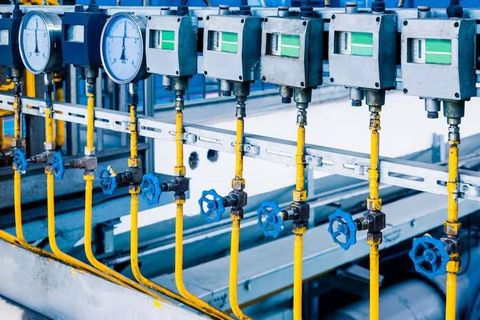
Pressure gauges, pressure transmitters, and flow meters help operators monitor key processing conditions. These measurements can reveal whether a homogenizer is operating within the intended process range.
Particle-Size Analysis
Particle-size analyzers can measure the distribution of particles or droplets before and after homogenization. Techniques may include laser diffraction, dynamic light scattering, microscopy, or other analytical approaches depending on the material.
Viscosity Measurement
Viscometers and rheometers can measure how easily a formulation flows and how its behavior changes under different conditions. These measurements can help engineers evaluate changes associated with homogenization.
Temperature Monitoring
Homogenization can generate heat because mechanical energy is transferred into the material. Temperature sensors and heat-exchange systems can therefore be important when processing temperature-sensitive materials.
Cleaning and Inspection Systems
Processing equipment needs appropriate cleaning procedures, particularly when materials come into contact with food, pharmaceutical, cosmetic, or biological products.
FSSAI's food-safety framework includes inspection checklists for areas such as general manufacturing and milk processing, while international food regulations also emphasize hygienic equipment and sanitation.
Process Simulation and Data Systems
Industrial plants can use process-control software, data historians, digital monitoring systems, and simulation tools to evaluate operating conditions and identify changes in process behavior.
These tools are particularly useful when homogenizers are integrated into larger production lines rather than operating as isolated machines.
FAQs
What are Homogenizers in Industrial Processing?
Homogenizers in Industrial Processing are machines that apply mechanical, hydraulic, or acoustic forces to reduce particle or droplet size and create a more uniform mixture.
How does an industrial homogenizer work?
An industrial homogenizer applies energy to a material through mechanisms such as high-pressure flow, mechanical shear, turbulence, or ultrasonic energy. The mechanism depends on the type of homogenizer.
What industries use homogenizers?
Homogenizers are used in food and dairy processing, pharmaceuticals, cosmetics, chemicals, biotechnology, laboratory work, and other industries that require controlled mixing or particle-size reduction.
What is a high-pressure homogenizer?
A high-pressure homogenizer uses a pump to force material through a specialized valve or narrow processing zone. The resulting pressure drop and intense flow conditions can reduce particle or droplet size.
Why is particle size important in homogenization?
Particle size can influence properties such as appearance, texture, suspension behavior, emulsion stability, and processing characteristics. The required size depends on the specific formulation and application.
Conclusion
Homogenizers in Industrial Processing are important equipment for producing uniform mixtures, reducing particle or droplet size, and controlling the physical characteristics of many formulations. High-pressure, rotor-stator, ultrasonic, and other homogenizer designs use different mechanisms for different processing requirements. Food, pharmaceutical, cosmetic, chemical, and biotechnology applications each have distinct equipment, hygiene, quality, and regulatory considerations. Modern systems increasingly combine precise process controls, sensors, data monitoring, hygienic design, and analytical tools to support consistent industrial processing.