Home Air Quality: Guide to Indoor Air Monitoring and Practical Insights
Home air quality describes the condition of the air inside houses, apartments, and other residential spaces. It can be influenced by particles, gases, humidity, ventilation, cooking, heating, cleaning products, building materials, outdoor pollution, and biological materials such as mold.
Indoor air monitoring uses sensors or measurement equipment to track selected pollutants and environmental conditions. A monitor may measure particulate matter, carbon dioxide, carbon monoxide, volatile organic compounds, temperature, humidity, or other factors, depending on its sensors. The U.S. Environmental Protection Agency (EPA) notes that indoor monitors only measure the pollutants or environmental factors they are designed to detect, so one device cannot represent every aspect of indoor air quality.
How Indoor Air Monitoring Works
An indoor air monitor collects air through a sensor and converts a detected physical or chemical characteristic into a measurement. The device may display the result on a screen, mobile application, dashboard, or connected platform.
For example, a particulate matter sensor can estimate the concentration of tiny airborne particles. A temperature and humidity sensor can show environmental conditions that may influence comfort and sensor performance. Some devices combine several sensors into one monitoring unit.
A useful example is monitoring air during cooking. Particle readings may rise while frying or using high-temperature cooking methods and then decline after the activity ends and ventilation is increased. Observing these changes can help identify activities that influence indoor air conditions.
Common Indoor Air Pollutants and Measurements
Several measurements are commonly associated with home air quality:
PM2.5: Fine particles small enough to penetrate deeply into the respiratory system.
PM10: Larger airborne particles that can come from dust and other sources.
Carbon dioxide: A gas produced by people and combustion; indoor readings can also provide information about ventilation conditions.
Carbon monoxide: A potentially dangerous gas produced by incomplete combustion. Dedicated certified alarms are important because general air-quality monitors are not substitutes for emergency CO alarms.
VOCs: Volatile organic compounds are gases released by some household products, materials, fuels, and other sources.
Radon: A naturally occurring radioactive gas that can enter buildings from the ground.
Temperature and humidity: Environmental measurements that can help explain changes in indoor conditions.
Importance
Why Home Air Quality Matters
People spend substantial amounts of time indoors, making indoor environmental conditions an important part of residential planning and building management. Pollutants can come from both indoor sources and outdoor air entering through windows, doors, ventilation systems, and building openings.
Household fuel use is an important global factor. The World Health Organization reports that billions of people continue to rely on polluting fuels and technologies for cooking, creating household exposure to smoke and fine particles.
Indoor air monitoring does not itself remove pollutants. Its main function is measurement, helping occupants identify patterns and understand how indoor conditions change over time.
Where Indoor Air Monitoring Is Used
Home monitoring can be used in bedrooms, living rooms, kitchens, home offices, basements, and other occupied spaces. Building managers and researchers can also use more advanced monitoring systems in residential buildings, schools, workplaces, and other indoor environments.
Common applications include:
Ventilation assessment: Carbon dioxide measurements can help identify changes associated with occupancy and ventilation.
Particle tracking: PM sensors can show changes associated with cooking, combustion, dust, or outdoor pollution.
Humidity monitoring: Relative humidity measurements can help identify unusually dry or humid indoor conditions.
Source investigation: Measurements can be compared before, during, and after activities to identify patterns.
Building research: Multiple sensors can collect time-based data for studies of indoor environments.
EPA guidance recommends placing monitors in an appropriate breathing-zone location and avoiding positions immediately beside pollutant sources, vents, open windows, or other locations that could distort readings.
Main Advantages and Limitations
Indoor monitoring can make invisible environmental changes easier to observe. Time-based measurements can reveal patterns that may not be apparent from occasional observation.
However, sensor readings require interpretation. EPA notes that low-cost indoor monitors can vary in accuracy and precision, with performance affected by placement, temperature, humidity, operating time, data processing, and the presence of multiple contaminants.
A reading from one sensor should therefore not automatically be treated as a complete assessment of a home's air quality. Some pollutants may remain undetected because the monitor does not contain the appropriate sensor.
Comparing Common Monitoring Types
| Monitoring Type | Main Measurement | Typical Use | Important Limitation |
|---|---|---|---|
| PM monitor | PM2.5 and/or PM10 | Particle trend tracking | Does not identify every pollutant |
| CO2 monitor | Carbon dioxide | Ventilation assessment | Not a complete air-quality measurement |
| CO alarm | Carbon monoxide | Emergency warning | Designed for CO detection rather than broad monitoring |
| VOC monitor | Selected VOC indicators | Tracking changes from indoor sources | Sensor response varies by technology |
| Radon monitor | Radon concentration | Long-term radon assessment | Requires appropriate placement and interpretation |
| Multi-sensor monitor | Several measurements | General indoor monitoring | Different sensors can have different limitations |
| Temperature/humidity monitor | Thermal conditions | Environmental monitoring | Does not directly measure pollutants |
Recent Updates
New Indoor Sensor Capabilities
From 2024 through 2026, indoor monitoring has continued to benefit from smaller sensors, wireless connectivity, cloud dashboards, improved data storage, and multi-sensor devices. These developments make it easier to collect measurements over longer periods rather than relying on individual readings.
Modern systems can also combine environmental data with timestamps, occupancy information, ventilation activity, or building-management data. This can help researchers and building operators examine relationships between indoor conditions and building activities.
Sensor Performance and Data Quality
Sensor evaluation remains an important area of development. EPA updated information about performance testing protocols and targets for several air-sensor measurements in May 2024, reflecting continuing work on understanding the quality and comparability of lower-cost sensor data.
EPA also emphasizes that lower-cost monitors should not automatically be treated as equivalent to regulatory monitoring equipment. Indoor monitoring requires attention to sensor design, placement, calibration, environmental conditions, and data interpretation.
Ventilation and Indoor Air Standards
ASHRAE published ANSI/ASHRAE Standard 62.1-2025 for ventilation and acceptable indoor air quality in nonresidential buildings, while Standard 62.2-2025 addresses residential buildings. The 2025 editions include changes involving ventilation, filtration, controls, humidity, exhaust, and other building-related measures.
These standards are particularly relevant to building design and operation rather than serving as universal household monitoring limits. Their application depends on building type, jurisdiction, and the edition adopted by the relevant authority.
Connected Monitoring and Data Analysis
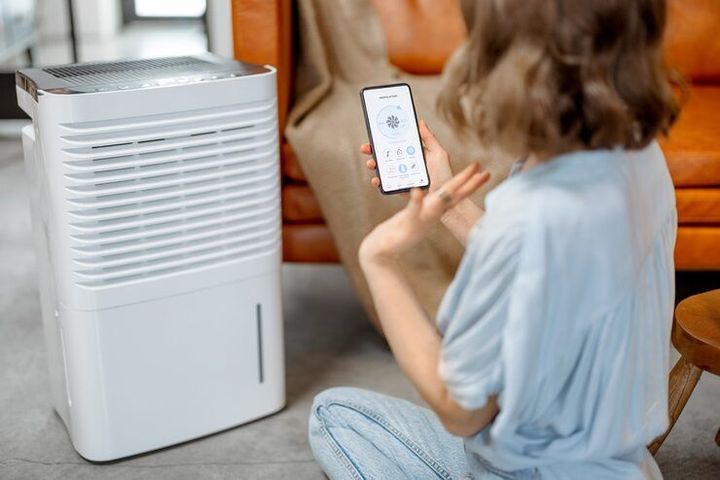
Connected sensors can transmit measurements to mobile applications or online dashboards. Automated alerts can identify changes in selected measurements, while historical graphs can show patterns across hours, days, or weeks.
AI and data-analysis techniques may also be used to identify unusual patterns or combine multiple environmental measurements. These applications are developing, and automated interpretation still requires attention to sensor limitations and the quality of the underlying data.
Laws or Policies
International Frameworks
There is no single worldwide law establishing one indoor air-quality threshold for every home. Requirements can vary according to building type, pollutant, national legislation, local building codes, and the intended use of a monitoring device.
The World Health Organization provides health-based guidance relating to household air pollution and indoor environmental risks. Its household air-pollution guidance addresses fuels, technologies, emissions, and exposure considerations.
United States
In the United States, EPA provides technical information about indoor air pollutants, sensors, and indoor environmental management. EPA also distinguishes consumer-oriented low-cost sensors from regulatory monitoring equipment used for outdoor air-quality programs.
Building requirements can also be influenced by state and local codes. ASHRAE Standards 62.1 and 62.2 provide recognized ventilation and indoor-air-quality frameworks for different building categories, but adoption into regulations varies by jurisdiction.
Europe and Other Regions
European countries apply national and regional building, ventilation, product-safety, and environmental requirements. Similar differences exist across Asia-Pacific, the Middle East, Africa, and the Americas.
A monitor intended for one market may therefore have different regulatory, labeling, electrical, wireless, or measurement requirements in another market. Users should check the rules that apply in their country and the specific purpose of the equipment.
Tools and Resources
Indoor Air Quality Monitors
Multi-sensor monitors can track several environmental measurements from one location. When selecting monitoring equipment, important technical considerations include the pollutants detected, measurement range, sensor technology, data storage, connectivity, power requirements, maintenance, and documented performance.
EPA suggests considering the purpose of monitoring, the pollutants of interest, operating conditions, data storage, power source, and demonstrated real-world performance when evaluating lower-cost air sensors.
Digital Dashboards and Mobile Applications
Connected monitoring platforms can convert sensor measurements into charts and time-series records. These tools can help users compare conditions before and after activities such as cooking, ventilation changes, or use of combustion appliances.
Reference and Standards Resources
Useful information can come from organizations such as the EPA, WHO, ASHRAE, national public-health agencies, building authorities, and recognized standards organizations. These resources can help users understand measurement limitations and distinguish health guidance from equipment specifications.
Home Inspection and Specialized Testing
Some pollutants require specialized testing rather than relying only on a general-purpose monitor. Radon, for example, may require dedicated testing methods, while suspected combustion problems may require appropriate professional assessment and certified safety alarms.
EPA specifically notes that low-cost monitors are not substitutes for certified emergency devices such as carbon monoxide alarms or smoke alarms.
FAQs
What is home air quality monitoring?
Home air quality monitoring is the measurement of selected indoor pollutants and environmental conditions using sensors or specialized equipment. Depending on the device, measurements can include PM2.5, carbon dioxide, VOC indicators, temperature, humidity, radon, or other parameters.
How does home air quality monitoring work?
A sensor detects a particular pollutant or environmental condition and converts it into a numerical reading. Connected devices may store the readings and display them through a screen, mobile application, or digital dashboard.
Which pollutants can home air quality monitors detect?
Home air quality monitors can detect different pollutants depending on their sensor configuration. Common measurements include particulate matter, carbon dioxide, VOC indicators, radon, carbon monoxide, temperature, and humidity, although one device does not necessarily detect all of them.
Are indoor air quality monitor readings always accurate?
No. Sensor accuracy and precision can vary with device design, placement, humidity, temperature, pollutant mixtures, operating conditions, and data-processing methods. EPA recommends understanding these limitations when interpreting indoor sensor data.
What is the role of ventilation in home air quality?
Ventilation introduces outdoor air and removes or dilutes indoor contaminants. Building standards such as ASHRAE 62.2 address residential ventilation and indoor air quality, although specific legal requirements vary by location.
Conclusion
Home air quality monitoring provides measurements that can help people understand changes in selected indoor pollutants and environmental conditions. Sensors can track particles, gases, temperature, humidity, and other parameters, while connected systems can organize the information over time. Recent developments in sensor technology, digital dashboards, data analysis, and ventilation standards are expanding the role of indoor monitoring. The key practical point is that monitoring equipment provides partial measurements, so readings should be interpreted according to the sensor's capabilities, placement, limitations, and applicable guidance.