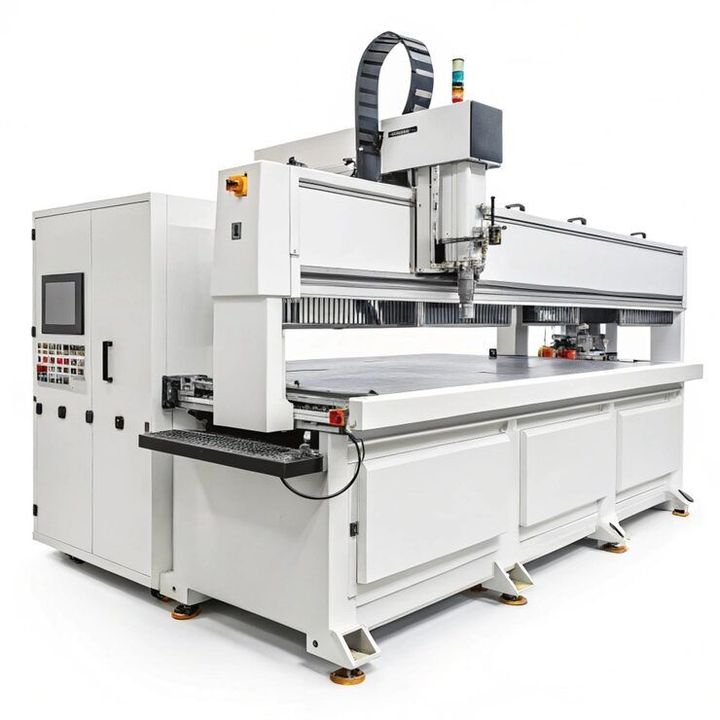
EDM Machines: Explore Types, Processes, and Industrial Applications
EDM Machines, or Electrical Discharge Machining Machines, are manufacturing machines that remove material using controlled electrical sparks rather than a conventional cutting tool. The process is particularly useful for machining electrically conductive materials and creating intricate shapes, small holes, narrow slots, and complex profiles.
In a conventional milling or turning process, a physical cutting tool comes into contact with the workpiece and removes material through mechanical cutting. EDM works differently. A controlled electrical discharge occurs between an electrode and the workpiece, generating intense localized heat that removes a very small amount of material.
A dielectric fluid separates the electrode and workpiece during the process. The fluid acts as an electrical medium, helps control the discharge area, carries away removed particles, and helps cool the machining zone. IIT Bombay describes EDM as a thermo-electrical process in which material is eroded through repeated sparks between the electrode and conductive work material.
How EDM Machines Work
The basic EDM process can be understood through several steps.
Workpiece preparation: The conductive workpiece is positioned and connected to the electrical system.
Electrode positioning: A tool electrode or continuously moving wire is positioned close to the workpiece without normally touching it.
Dielectric filling: The machining area is surrounded or flooded with a suitable dielectric fluid.
Electrical pulse: A controlled voltage creates conditions for an electrical discharge across the small gap.
Material removal: The resulting spark generates localized heat, melting or vaporizing a tiny portion of the workpiece.
Flushing: The dielectric fluid carries away debris from the machining zone.
Repeated discharges: Thousands of controlled electrical pulses can repeat the process until the required shape is produced.
The electrode and workpiece therefore do not need to make direct mechanical contact during material removal.
Main Components of EDM Machines
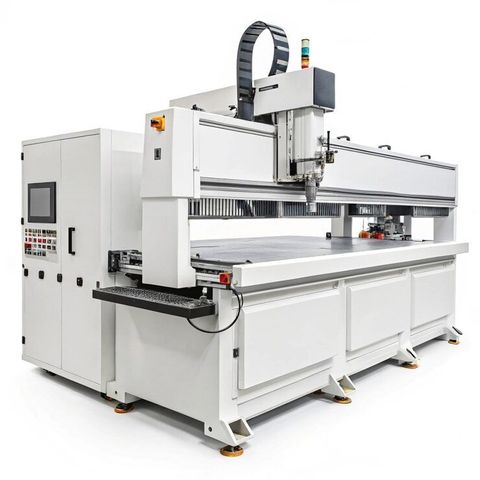
An EDM machine normally contains several coordinated systems.
Power supply generates controlled electrical pulses for the discharge process.
Electrode acts as the tool that creates the electrical discharge. Its form depends on the EDM type.
Worktable holds and positions the workpiece.
Dielectric system stores, filters, circulates, and controls the machining fluid.
Servo control system maintains the appropriate gap between the electrode and workpiece.
CNC controller controls programmed movement and machining parameters in computerized EDM machines.
Flushing system removes machining debris from the working area.
Machine enclosure provides a controlled machining environment and helps contain fluid and electrical equipment.
Importance
Machining Hard Conductive Materials
EDM can machine electrically conductive materials regardless of whether they are difficult to cut using conventional tools. Since material removal occurs through thermal discharges rather than direct cutting, mechanical cutting forces are relatively different from those in conventional machining.
This makes EDM useful for selected hardened steels, tool steels, carbide-based materials, titanium alloys, and other electrically conductive materials.
Producing Complex Shapes
EDM Machines can create shapes that may be difficult to produce with conventional cutting tools. Complex cavities, narrow slots, sharp internal features, and intricate profiles are examples of applications where EDM can be useful.
The electrode shape in a sinker EDM can be transferred into the workpiece, while wire EDM follows a programmed path through the material.
Precision Manufacturing
EDM is widely associated with precision manufacturing because the material removal process can be controlled through electrical pulse parameters, electrode movement, gap conditions, and fluid management.
Wire EDM is particularly useful for producing precise profiles in conductive workpieces. IIT Bombay describes wire EDM as a precision cutting method for conductive materials used across different industrial applications.
Creating Small Holes
EDM can also be used for producing small or deep holes. Specialized EDM drilling machines use a suitable electrode to create holes in electrically conductive materials.
Micro-EDM has also been studied for producing very small features because material removal occurs through localized melting and vaporization rather than conventional shearing.
Major EDM Types
| EDM Type | Main Tool | Typical Application |
|---|---|---|
| Sinker EDM | Shaped electrode | Cavities and molds |
| Wire EDM | Thin moving wire | Profile cutting |
| EDM Drilling | Electrode | Small and deep holes |
| Micro-EDM | Very small electrode | Micro-features |
| CNC EDM | Computer-controlled electrode | Complex precision machining |
Recent Updates
CNC-Controlled EDM
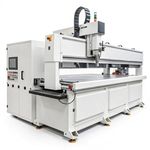
Modern EDM Machines increasingly use CNC systems to control electrode movement, electrical pulses, machining sequences, and other process parameters.
CNC control allows a programmed geometry to be converted into controlled machine movements. This is particularly useful for complex profiles that would be difficult to produce through manual positioning.
An Indian government procurement record from 2025 also illustrates continued institutional demand for CNC wire electrical discharge machining equipment, including a procurement by IIT Madras.
Advanced Wire EDM Research
Wire EDM continues to be an area of research for applications requiring precise cutting and specialized material processing. IIT Bombay has researched customizable wire EDM systems in which parameters such as voltage, current, pulse duration, wire diameter, dielectric type, and feed conditions can be adjusted.
Research has also explored multi-wire EDM concepts for applications such as semiconductor material slicing. These systems involve engineering challenges related to wire tension, vibration, electrical forces, and cutting quality.
Micro-EDM
Micro-EDM is receiving continued research attention for small-scale manufacturing. Its ability to remove very small quantities of material through controlled discharges makes it relevant to micro-components and intricate features.
Research at IIT Bombay has examined the physical behavior of the EDM plasma and the relationship between electrical conditions and material removal.
Improved Process Monitoring
Modern EDM development also involves greater use of sensors, feedback systems, numerical control, and process monitoring.
Electrical signals generated during individual discharges can contain information about machining conditions. Monitoring these signals can help control the discharge process and reduce unstable machining conditions.
EDM and Additive Manufacturing
Wire EDM can also be used as a post-processing technique for selected additively manufactured metal components. NIST documentation describes wire EDM as one method for separating metal parts from build platforms in additive manufacturing.
This connection between additive manufacturing and EDM creates additional applications where a printed metal component needs accurate separation or profile finishing.
Laws or Policies
Indian Machine Safety Standards
Safety requirements for EDM Machines are addressed through Indian Standards. BIS documents identify IS 17259 as the Indian Standard covering machine-tool safety for electrical discharge machines.
A 2025 BIS draft described the first revision of IS 17259 to align the Indian Standard with the updated ISO 28881 framework. The revised standard addresses safety considerations for electrical discharge machines and includes changes concerning areas such as fire safety and maintenance-related operation.
BIS's standards records now identify IS 17259:2025 with ISO 28881:2022 as the corresponding international standard.
General Machinery Safety
Machine safety also involves broader principles covering risk assessment and risk reduction. BIS materials identify IS 16819/ISO 12100 as a general machinery-safety reference used alongside machine-specific standards.
For EDM Machines, the machine-specific safety requirements should therefore be considered together with applicable general machinery principles.
Indian Certification Framework
BIS provides a certification framework for machinery covered by applicable government requirements. Its current information explains that some products become subject to mandatory conformity requirements through government notifications, while other standards may be used within voluntary certification arrangements.
The exact requirement depends on the machine, applicable notification, manufacturing arrangement, and current regulatory framework.
Current Regulatory Changes
India's machinery-safety regulatory framework has undergone changes in recent years. The Ministry of Heavy Industries records amendments to the Machinery and Electrical Equipment Safety framework and also records the withdrawal of the 2024 Omnibus Technical Regulation in January 2026.
Manufacturers and users should therefore check the current BIS and Ministry of Heavy Industries information rather than relying on older regulatory schedules.
BIS Standards Resources
BIS's Know Your Standard platform allows users to search Indian Standards by IS number or keyword. It also provides access to information such as amendments, related notifications, testing information, and committee details.
This can be useful when identifying the applicable safety standard for an EDM machine.
Tools and Resources
CNC Programming Software
CNC programming systems allow operators and engineers to create machining instructions for wire and sinker EDM applications. Programs can define movement paths, coordinates, cutting sequences, and selected process parameters.
CAD and CAM Systems
CAD software can create the geometry of a component, while CAM software can convert that geometry into machine instructions.
For wire EDM, the software can define the cutting profile and movement path. For sinker EDM, it can assist with electrode and cavity planning.
Dielectric Filtration Systems
The dielectric system needs appropriate filtration because machining generates small particles. Filters help remove debris from the circulating fluid.
Clean dielectric conditions can contribute to stable machining and consistent process control.
Wire Management Systems
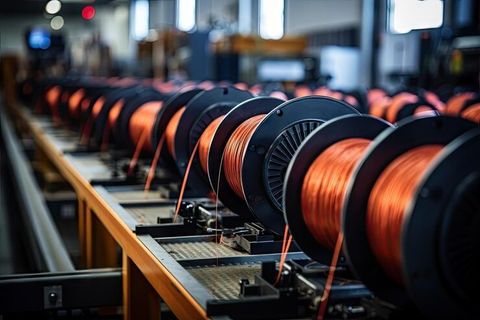
Wire EDM machines continuously feed a thin electrode wire through the cutting zone. Wire tension, feed, alignment, and electrical conditions must be controlled during machining.
Modern systems monitor wire movement and can include mechanisms intended to detect or respond to wire-break conditions.
Measurement Equipment
Coordinate measuring machines, optical measurement systems, microscopes, gauges, and other metrology equipment can be used to verify machined components.
Measurement is particularly important when EDM is used for intricate profiles, small holes, molds, dies, or components with tight dimensional requirements.
Simulation and Process Monitoring
Digital simulation and process-monitoring tools can help engineers examine tool paths, machining sequences, and selected process conditions before physical production.
Such tools are increasingly connected with computer-controlled manufacturing environments and broader digital manufacturing systems.
FAQs
What are EDM Machines?
EDM Machines are machine tools that remove electrically conductive material through controlled electrical discharges between an electrode and a workpiece. The process uses a dielectric medium around the machining area.
How do EDM Machines work?
EDM Machines create controlled electrical sparks across a small gap between an electrode and the workpiece. Each discharge removes a very small amount of material, and repeated discharges gradually produce the required shape.
What are the main types of EDM Machines?
The main types include sinker EDM, wire EDM, EDM drilling machines, micro-EDM systems, and CNC-controlled EDM Machines. Each type uses a different electrode arrangement and is suited to particular manufacturing tasks.
What materials can EDM Machines process?
EDM generally requires electrically conductive work materials. Examples include many steels, carbide-based materials, titanium alloys, and other conductive metals and alloys.
Where are EDM Machines used?
EDM Machines are used in mold and die production, aerospace components, automotive parts, precision tooling, medical components, semiconductor-related manufacturing, small-hole production, and other precision manufacturing applications.
Conclusion
EDM Machines remove electrically conductive material through controlled electrical discharges rather than conventional mechanical cutting. Sinker EDM, wire EDM, EDM drilling, and micro-EDM each use different electrode arrangements for specialized manufacturing tasks. Modern developments include CNC control, advanced process monitoring, micro-EDM research, specialized wire systems, and connections with additive manufacturing. In India, BIS standards such as IS 17259 provide an important reference for the safety of electrical discharge machine tools.