Crushing and Screening Equipment: Explore Material Processing Technology and Plant Operations
Crushing and screening equipment plays an important role in processing rocks, minerals, aggregates, and recycled materials. Crushing machines reduce large feed materials into smaller sizes, while screening systems separate particles according to size. Modern plants combine crushers, screens, conveyors, sensors, control systems, and monitoring technologies to support consistent material processing and efficient plant operations.
Crushing and Screening Equipment: Explore Material Processing Technology and Plant Operations
Context
Crushing and screening equipment is widely used to process rocks, minerals, aggregates, construction materials, and recycled materials. These systems reduce large pieces of material into manageable sizes and separate the resulting particles into different size ranges.
A crushing and screening plant may operate as a single integrated system or as a series of connected processing stages. Material can pass through primary crushing, secondary or tertiary crushing, screening, conveying, and stockpiling depending on the required final product.
The main equipment used in a typical plant includes:
Jaw crushers
Cone crushers
Impact crushers
Gyratory crushers
Vibrating screens
Feeders
Conveyors
Hoppers
Magnetic separators
Dust-control systems
Control and monitoring equipment
The processing sequence depends on the characteristics of the feed material and the required output. Large rocks may first enter a primary crusher, where they are reduced to a smaller size. The material can then move through secondary crushing and screening stages.
Crushing Equipment
Crushers apply mechanical force to break large materials into smaller pieces. Different crusher designs use different methods of compression, impact, or other mechanical action.
Jaw crushers commonly use a fixed jaw and a moving jaw to compress material. They are often positioned at the beginning of a crushing circuit.
Cone crushers use a rotating crushing element within a chamber to reduce material through compression. They are frequently used for secondary or tertiary processing.
Impact crushers use impact forces to break material. Depending on the design, they can be used for different aggregate and recycling applications.
Gyratory crushers are large machines designed for high-volume primary crushing. Their configuration makes them suitable for substantial material-processing operations.
Screening Equipment
Screening equipment separates processed material into different size ranges. Vibrating screens are widely used because their motion helps move material across the screening surface.
Screens can have multiple decks, allowing several particle sizes to be separated during one processing stage. Screen openings, deck arrangement, vibration characteristics, and feed conditions influence separation performance.
Plant Layout
A processing plant normally requires careful arrangement of equipment so that material can move through each stage in a controlled sequence. Feeders regulate the flow of material into crushers, while conveyors transfer processed material between machines.
Stockpiles provide temporary storage for different material fractions. The overall layout can vary significantly depending on available space, material characteristics, production requirements, and whether the plant is stationary, semi-mobile, or mobile.
Importance
Crushing and screening equipment is important because it converts large and variable feed materials into controlled particle sizes suitable for construction, mineral processing, road development, concrete production, asphalt applications, and recycling.
Material Size Reduction
Crushing is the first major processing stage in many aggregate and mineral operations. Reducing material size makes it easier to handle, transport, screen, and use in subsequent processes.
The required reduction ratio depends on the feed material and the desired output. Multiple crushing stages may be used when a substantial size reduction is required.
Particle Separation
Screening separates crushed material into defined size categories. This allows different fractions to be directed toward specific applications or returned to the crushing circuit for additional processing.
A well-organized screening stage can help maintain consistent particle-size distribution. Screen selection should consider material characteristics, moisture, feed rate, and required separation.
Material Flow
Feeders and conveyors help maintain continuous movement through the plant. Controlled feeding is important because excessive or irregular feed can affect crusher performance and screen operation.
Conveyors can also reduce the need for repeated handling by moving material directly between processing stages and stockpile locations.
Product Consistency
Consistent crushing and screening conditions can support predictable material characteristics. Crusher settings, screen configuration, feed conditions, and operating parameters all influence the final output.
Operators and technical teams can monitor these factors and make adjustments according to the processing requirements.
Recycling Applications
Crushing and screening systems are increasingly used for construction and demolition materials. Concrete, asphalt, masonry, and other recovered materials can be processed into different particle sizes for subsequent applications.
Recycling plants may incorporate additional equipment such as magnetic separators, air classification systems, or specialized sorting technologies.
Recent Updates
Crushing and screening technology continues to develop through automation, digital monitoring, remote diagnostics, improved machine controls, mobile plant configurations, and energy-management systems.
Digital Plant Controls
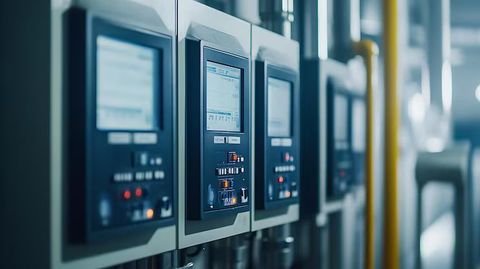
Modern plants can integrate multiple machines through centralized control systems. Operators can monitor crushers, screens, feeders, conveyors, and other equipment from a common interface.
Digital controls can provide information about operating conditions, alarms, feed rates, motor loads, temperatures, and other parameters.
Automated Regulation
Automated systems can adjust selected operating parameters according to measured conditions. For example, a feeder can regulate material flow into a crusher, while other controls can help maintain stable processing conditions.
Automation can reduce unnecessary manual adjustments and support consistent plant operation, particularly in larger processing facilities.
Remote Monitoring
Connected equipment can transmit selected operating information to authorized monitoring platforms. This can provide visibility into equipment status and operating conditions without requiring personnel to remain beside every machine.
Remote diagnostic capabilities can also support maintenance planning when unusual operating patterns or system alerts are detected.
Mobile Crushing and Screening
Mobile plants combine processing equipment with transportable chassis or tracked platforms. They can be repositioned within a worksite according to changing material locations.
Mobile crushing and screening systems are used in quarrying, construction, road development, mining, and recycling applications where flexible site arrangements are important.
Improved Energy Management
Manufacturers and plant operators continue to examine ways to reduce unnecessary energy use through improved drives, hydraulic systems, electric motors, variable-speed controls, and optimized operating sequences.
Energy-management approaches vary according to plant configuration and material characteristics. Proper equipment selection and controlled feed conditions can also influence overall energy requirements.
Dust and Noise Control
Modern plants may incorporate enclosed transfer points, water-suppression systems, dust extraction, improved equipment enclosures, and other environmental-control measures.
Noise-management features can include equipment placement, barriers, enclosure systems, and operating controls where required by the site and applicable regulations.
Laws or Policies
Crushing and screening plants may be subject to workplace safety, environmental, electrical, noise, dust, and material-handling requirements. Specific regulations differ between countries, industries, and operating locations.
Machine Safety
Crusher and screen operators need to follow applicable safety procedures and equipment documentation. Guarding, emergency-stop systems, access platforms, warning systems, and isolation procedures are important considerations.
Maintenance activities generally require appropriate shutdown and energy-isolation procedures before personnel access hazardous machine areas.
Dust Management
Crushing and screening can generate airborne particles, particularly when dry materials are processed. Plants may use water sprays, enclosed transfer points, extraction systems, and other controls to manage dust.
The appropriate approach depends on material characteristics, plant design, environmental conditions, and applicable requirements.
Noise Management
Crushers, screens, conveyors, and other machinery can generate significant noise. Site planning, equipment placement, barriers, enclosures, and hearing-protection procedures may be used according to applicable workplace and environmental requirements.
Electrical Safety
Modern plants often contain substantial electrical infrastructure for motors, control systems, sensors, and auxiliary equipment. Electrical installations should be designed, inspected, and maintained according to applicable regulations and technical requirements.
Tools and Resources
Crushing and screening plants use a combination of mechanical equipment, measurement systems, maintenance tools, and digital resources.
| Tool or Resource | Main Function |
|---|---|
| Jaw crusher | Primary size reduction |
| Cone crusher | Secondary or tertiary crushing |
| Impact crusher | Impact-based material reduction |
| Vibrating screen | Particle-size separation |
| Feeder | Controls material flow |
| Conveyor | Transfers processed material |
| Magnetic separator | Removes selected metallic material |
| Control system | Monitors and coordinates plant equipment |
Crusher wear components require regular inspection because they are exposed to continuous mechanical forces. Jaw plates, liners, mantles, blow bars, and related components should be examined according to equipment documentation.
Screening surfaces can also experience wear and blockage. Screen panels, decks, springs, bearings, and vibration systems should be inspected as part of routine maintenance activities.
Conveyors require attention to belts, rollers, pulleys, drives, guards, and alignment. Material buildup can affect movement and should be managed according to plant procedures.
Sensors and monitoring devices provide information about operating conditions. Temperature, vibration, motor load, belt movement, and other measurements can help technical teams identify unusual conditions.
Plant documentation should include operating procedures, maintenance instructions, inspection schedules, safety procedures, equipment specifications, and relevant environmental controls.
FAQs
What is Crushing and Screening Equipment used for?
Crushing and Screening Equipment is used to reduce large rocks, minerals, aggregates, and recycled materials into smaller particles and separate them into different size ranges.
How does Crushing and Screening Equipment work?
Material is normally fed into a crusher for size reduction and then transferred to screening equipment. Screens separate particles according to size, while selected material may return to the crusher for additional processing.
What are the main types of Crushing and Screening Equipment?
Common equipment includes jaw crushers, cone crushers, impact crushers, gyratory crushers, vibrating screens, feeders, and conveyors. Additional equipment can be added according to the material and processing requirements.
What factors affect Crushing and Screening Equipment performance?
Feed material, moisture, particle size, crusher settings, screen configuration, feed rate, equipment condition, and plant layout can all influence processing performance.
How is technology changing Crushing and Screening Equipment?
Modern Crushing and Screening Equipment increasingly uses automation, digital controls, remote monitoring, sensors, machine diagnostics, mobile plant configurations, and improved energy-management systems to support controlled plant operations.
Conclusion
Crushing and screening equipment forms an important part of aggregate, mining, construction, quarrying, and recycling operations. Crushers reduce material size, while screens separate processed particles into defined fractions for further use or processing. Advances in automation, monitoring, mobile equipment, digital controls, and energy management are expanding the capabilities of modern processing plants. Appropriate equipment configuration, regular inspection, safe operating procedures, and compliance with applicable requirements remain important for reliable plant operations.