Conveyor Systems: Explore Types, Components, and Industrial Applications
Conveyor Systems are mechanical material-handling arrangements designed to move products, packages, raw materials, or bulk materials from one location to another. Instead of requiring people or vehicles to repeatedly carry materials between work areas, a conveyor creates a defined movement path.
Conveyors are used across manufacturing plants, warehouses, mines, food-processing facilities, airports, distribution centers, agricultural operations, and many other industrial environments. Their design depends on the material being moved, distance, direction, speed, load, environment, and production process.
A conveyor system can be simple, such as a short belt carrying cartons between two workstations, or highly complex, with multiple conveyors, sensors, transfer points, controls, and sorting equipment operating together.
How Conveyor Systems Work
Most conveyor arrangements contain a moving element and a drive mechanism. The drive creates movement, while supporting components guide the material along a planned route.
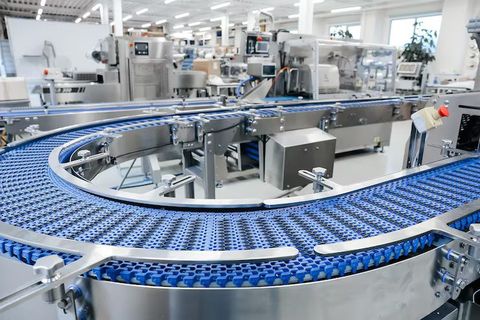
For example, a belt conveyor generally uses a continuous belt stretched between pulleys. One pulley is connected to a motor-driven drive arrangement. As the pulley rotates, friction between the pulley and belt causes the belt to move.
Different conveyor technologies use different principles. Roller conveyors use rotating rollers, screw conveyors use a rotating screw, chain conveyors use linked chains, and pneumatic conveying systems use moving air to transport suitable materials through enclosed pipelines.
Common Types of Conveyors
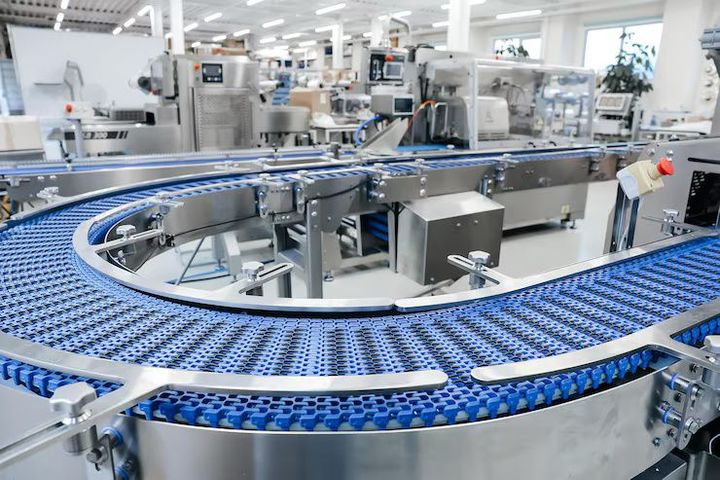
Belt conveyors use a continuous belt to transport packages, boxes, bulk materials, and many other products. They are among the most widely used conveyor arrangements.
Roller conveyors use a series of rollers. Gravity roller conveyors can move suitable loads down a slight slope, while powered roller systems use motors to drive the rollers.
Chain conveyors use chains to move heavier products or loads that may not travel effectively on a conventional belt.
Screw conveyors use a rotating helical screw inside a trough or tube to move bulk materials such as powders, granules, and other particulate materials. India has IS 5563:2024, covering screw conveyors for industrial use.
Slat conveyors use connected plates or slats attached to chains. They can handle rigid products and are used in selected manufacturing and packaging applications.
Bucket elevators move bulk material vertically using buckets attached to a belt or chain.
Pneumatic conveying systems use air movement to transport suitable powders, particles, or granular materials through enclosed pipelines. BIS identifies IS 8647:2023 as a design standard for pneumatic conveying systems.
Importance
Moving Materials Through Production
Conveyor Systems can connect different stages of a production process. A component may travel from an assembly area to inspection, then to packaging, and finally to storage.
This creates a predictable movement path and can reduce unnecessary handling between workstations.
Supporting Continuous Material Flow
Many industrial processes require materials to move continuously or at controlled intervals. Conveyor systems can maintain a steady flow between machines or work areas.
The required speed depends on the process. A food-processing line, for example, may need controlled movement for inspection or processing, while a mining conveyor may be designed to transport large quantities of bulk material over substantial distances.
Reducing Manual Material Movement
Conveyors can handle repetitive transportation activities that might otherwise require repeated carrying, pushing, or vehicle movement.
The appropriate system depends on the material and workplace. Conveyors do not eliminate the need for operators, inspection, maintenance, or supervision.
Supporting Different Industries
Conveyor technology is adaptable to many materials and operating environments.
| Industry | Typical Material | Common Conveyor Type |
|---|---|---|
| Manufacturing | Components and parts | Belt or roller |
| Warehousing | Cartons and packages | Roller or belt |
| Mining | Ore and bulk rock | Heavy-duty belt |
| Food processing | Packaged or processed food | Hygienic belt |
| Agriculture | Grains and produce | Belt or screw |
| Packaging | Boxes and containers | Belt or roller |
| Pharmaceuticals | Containers and packages | Belt or specialized conveyor |
| Airports | Passenger baggage | Belt and roller |
Improving Workspace Organization
A conveyor can establish a defined route between locations. This can help separate material movement from pedestrian areas and other workplace activities when the overall facility is appropriately planned.
Good layout design also considers transfer points, access areas, maintenance zones, emergency controls, and inspection locations.
Recent Updates
Development of Conveyor Belt Standards
Indian conveyor standards continue to evolve. BIS documentation lists IS 1891 (Part 2):2025 for heat-resistant rubber conveyor and elevator textile belting and IS 1891 (Part 4):2024 for hygienic belting. These developments reflect different operating requirements for conveyor belts used in particular environments.
BIS also identifies several standards covering belt dimensions, markings, flexibility, strength, testing conditions, and other characteristics.
Safety Practices
Conveyor safety has received continued attention through Indian Standards. BIS lists IS 7155:2023 Part 1 for general conveyor safety information, Part 2:2022 for general safety requirements, Part 4:2023 for vibrating conveyor feeders, Part 6:2023 for selection, training, and supervision of operators, and Part 8:2023 for flight and scraper conveyors.
These standards illustrate that conveyor safety involves more than the belt or mechanical structure. Operator practices, guarding, training, and system design are also important.
Sensor-Based Monitoring
Modern conveyor systems can incorporate sensors that monitor belt movement, speed, temperature, vibration, motor conditions, alignment, and other operating parameters.
Such monitoring can help identify unusual conditions before they interrupt material movement. The specific sensors and monitoring approach depend on the conveyor's design and operating environment.
Automation and Digital Controls
Programmable controllers, variable-speed drives, sensors, cameras, and industrial communication networks can connect conveyors with other production equipment.
For example, a warehouse system can use sensors to detect packages and coordinate conveyor movement with sorting equipment. Manufacturing lines can similarly coordinate conveyor speed with upstream and downstream machines.
New Belt Materials
Belt technology is becoming increasingly specialized for different operating conditions. BIS documentation includes standards covering general-purpose, heat-resistant, oil-resistant, hygienic, and fire-resistant conveyor belting.
BIS also lists IS 19498:2026, concerning treated synthetic fabrics for conveyor belts, indicating continuing standardization activity in conveyor-belt materials.
Laws or Policies
Indian Standards
The Bureau of Indian Standards provides technical standards relevant to conveyor belts, conveyor equipment, and safety practices.
Examples include:
- IS 1891: Conveyor and elevator textile belting specifications.
- IS 7155: Conveyor safety codes of practice.
- IS 5563:2024: Screw conveyors for industrial use.
- IS 8647:2023: Design criteria for pneumatic conveying systems.
- IS 17071:2024: Conveyor belt adhesion test methods.
The exact standard applicable to a conveyor depends on its design, belt type, application, and operating conditions.
Workplace Safety
Conveyor installations contain moving belts, rollers, chains, pulleys, gears, and other mechanical components. Contact with moving parts can create hazards if equipment is poorly guarded or incorrectly operated.
Workplace planning can therefore include guarding, emergency-stop arrangements, appropriate access controls, warning systems, inspection procedures, and operator training.
Equipment-Specific Requirements
Mining conveyors, food-processing conveyors, pharmaceutical equipment, warehouse systems, and other specialized installations may have different technical and regulatory considerations.
For example, conveyor belts intended for particular environments can require specific material characteristics. BIS documentation identifies fire-resistant belting standards for selected hazardous applications and specialized belt standards for hygienic or heat-resistant conditions.
Standards Research
BIS's Know Your Standard portal allows users to search Indian Standards by IS number or keyword. The portal also provides information about related documents, amendments, testing arrangements, and other standard-related details.
This can help engineers, facility planners, manufacturers, and other users identify standards relevant to a particular conveyor application.
Tools and Resources
Conveyor Design Software
Engineering software can help represent conveyor layouts, calculate selected design parameters, examine material movement, and evaluate equipment arrangements.
For complex systems, simulation can also help examine how conveyors interact with machines, storage areas, sorting equipment, and transfer points.
Sensors and Monitoring Devices
Sensors can monitor:
- Belt speed
- Motor temperature
- Bearing temperature
- Vibration
- Belt alignment
- Material presence
- Pulley rotation
- Equipment status
Collected information can be displayed through industrial control systems or monitoring platforms.
Variable-Speed Drives
Variable-frequency drives can adjust motor speed according to process requirements. This can allow conveyor movement to be coordinated with other equipment rather than operating continuously at one fixed speed.
Belt Inspection Tools
Visual inspection, alignment checks, tension measurements, thermal monitoring, and other techniques can help identify wear or abnormal operating conditions.
The inspection method should correspond to the belt construction, conveyor design, material being transported, and operating environment.
BIS Standards Portal
The BIS standards database is a useful reference when researching conveyor equipment and belt specifications. Users can search by product name, keyword, or standard number and examine available documentation.
FAQs
What are Conveyor Systems?
Conveyor Systems are mechanical arrangements used to move materials, products, packages, or bulk goods between locations through a controlled route.
What are the main types of Conveyor Systems?
Common types include belt, roller, chain, screw, slat, bucket, vibrating, and pneumatic conveyors. The appropriate type depends on the material, distance, direction, load, and operating environment.
What are the main components of a belt conveyor?
A typical belt conveyor can include a belt, drive pulley, tail pulley, idlers, frame, motor, gearbox, tensioning arrangement, control system, and safety equipment.
Where are Conveyor Systems used?
Conveyor Systems are used in manufacturing, mining, warehouses, packaging, food processing, agriculture, airports, pharmaceuticals, and many other industrial environments.
Why are Conveyor Systems important in industry?
Conveyor Systems provide controlled material movement between different areas. They can support continuous production, organized material flow, and reduced repetitive manual handling.
Conclusion
Conveyor Systems provide controlled movement of materials across manufacturing, mining, logistics, food processing, agriculture, and other industrial environments. Belt, roller, chain, screw, pneumatic, and specialized conveyor designs serve different material-handling requirements. Recent developments include specialized belt materials, sensor-based monitoring, digital controls, and updated Indian Standards covering conveyor equipment and safety. Understanding conveyor types, components, applications, and applicable standards provides a useful foundation for evaluating how material movement is organized in modern industrial facilities.