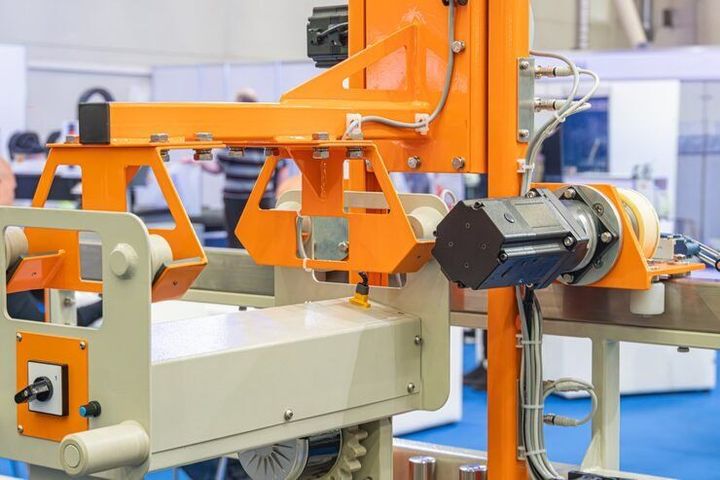
Composite Pultrusion Machines: Explore Types, Processes, and Industrial Applications
Composite Pultrusion Machines are industrial systems used to manufacture continuous fiber-reinforced composite profiles with a controlled cross-sectional shape. The word “pultrusion” comes from “pull” and “extrusion.” Unlike extrusion, where material is pushed through a die, pultrusion pulls reinforcing fibers through a resin system and a heated forming die.
The process is commonly used for producing long composite profiles such as rods, tubes, channels, beams, ladders, structural sections, electrical components, and reinforcement products. Glass fiber, carbon fiber, and aramid fiber can be combined with polymer resin systems according to the required characteristics.
The basic process is continuous. Reinforcement materials are drawn from supply racks, guided into resin, shaped and consolidated, cured inside a heated die, pulled through the production line, and then cut into specified lengths. Composites One describes pultrusion as a highly automated process capable of producing consistent cross-sections and high-fiber-content profiles.
Main Components of a Pultrusion Machine
A typical Composite Pultrusion Machine contains several connected sections.
Creel system: Holds spools or packages of continuous reinforcing fibers and allows controlled fiber delivery.
Guiding system: Arranges fibers into the required pattern before they enter the resin and forming stages.
Resin impregnation unit: Introduces resin into the reinforcement. Depending on the machine design, impregnation can use a resin bath or another controlled wet-out arrangement.
Preforming section: Gradually brings the resin-coated reinforcement toward the required profile shape.
Heated die: Forms the composite and applies heat to cure the resin while the material passes continuously through the die.
Pulling unit: Uses mechanical pulling equipment to move the composite through the production line at a controlled speed.
Cutting system: Cuts the cured continuous profile into predetermined lengths.
The exact arrangement varies according to profile geometry, resin system, reinforcement, production speed, and product requirements.
Materials Used in Pultrusion
Composite Pultrusion Machines can process different combinations of reinforcement and resin.
Glass fiber is widely used because it provides a combination of mechanical strength, stiffness, and corrosion resistance for many applications.
Carbon fiber can be selected when higher stiffness or lower weight is important.
Aramid fiber can be used in applications where specific mechanical and impact characteristics are required.
Common resin families include polyester, vinyl ester, and epoxy systems. The resin influences curing behavior, chemical resistance, temperature performance, and other characteristics of the finished profile.
Importance
Continuous Manufacturing
One major characteristic of pultrusion is continuous production. Long profiles can be produced without repeatedly forming individual pieces.
This makes the process particularly suitable for products with a constant cross-sectional shape, including rods, channels, tubes, beams, strips, and structural sections.
Consistent Profile Geometry
The heated die controls the external shape of the composite as the reinforcement passes through it. Controlled pulling speed, resin impregnation, temperature, and fiber arrangement contribute to dimensional consistency.
For applications involving structural components, dimensional control can be important because profiles may need to connect with other components or fit within predefined designs.
Strength-to-Weight Characteristics
Fiber-reinforced composites can provide substantial mechanical performance relative to their mass. Pultruded profiles can therefore be used where designers want a combination of structural performance, corrosion resistance, and reduced weight.
The actual characteristics depend on fiber type, fiber orientation, resin system, profile geometry, manufacturing conditions, and testing.
Corrosion Resistance
Many polymer-based composite profiles resist corrosion differently from conventional metallic materials. This can make pultruded components relevant to environments involving moisture, chemicals, salt exposure, or outdoor conditions.
However, resistance depends on the resin, reinforcement, temperature, chemicals involved, and duration of exposure. Material selection must therefore consider the intended environment.
Main Machine Types
| Machine Type | Main Characteristic | Typical Products |
|---|---|---|
| Standard profile pultrusion line | Continuous forming | Rods, channels, beams |
| High-speed pultrusion line | Higher production speed | Long structural profiles |
| Pull-push pultrusion system | Controlled material movement | Selected complex profiles |
| Thermoset pultrusion line | Uses curing resin systems | FRP structural products |
| Thermoplastic pultrusion system | Uses thermoplastic matrices | Reprocessable composite profiles |
| Custom pultrusion line | Application-specific configuration | Specialized sections |
Recent Updates
Greater Automation
Modern Composite Pultrusion Machines increasingly use automated controls for pulling speed, die temperature, resin conditions, line operation, and cutting.
Automation can help maintain repeatable production conditions and provide operators with information about the manufacturing process.
Digital Process Monitoring
Sensors and digital control systems can monitor variables such as temperature, pulling speed, tension, pressure, and other machine conditions.
Data from these systems can be recorded and analyzed to identify process changes or deviations. This supports more controlled manufacturing and can help production teams investigate variations in finished profiles.
Advanced Fiber Combinations
Pultrusion technology is expanding beyond traditional glass-fiber products. Carbon fiber, aramid fiber, hybrid reinforcements, fabrics, veils, and other reinforcement arrangements can be incorporated into selected processes.
Composites One notes that pultrusion can incorporate glass, carbon, and aramid fibers along with reinforcement forms such as knitted fabrics, continuous filament mats, and veils.
Thermoplastic Pultrusion
Thermoplastic composite processing is receiving increased attention because thermoplastic matrices can provide characteristics such as rapid processing, weldability in selected systems, and potential opportunities for reshaping or recycling.
Thermoplastic pultrusion can require different heating, impregnation, consolidation, and cooling arrangements from conventional thermoset pultrusion.
Improved Testing and Characterization
Composite standards continue to develop around mechanical testing, environmental conditioning, dimensional properties, and material characterization.
ASTM currently lists standards covering pultruded products, including dimensional tolerances, visual defects, tensile and shear properties, environmental conditioning, and testing procedures.
ASTM D7745-19 specifically provides a practice for selecting test protocols and specimen locations for reinforced pultruded composites.
Environmental Performance
Manufacturers and researchers are also examining material selection, resin chemistry, recycling, energy consumption, and methods for extending composite product life.
Environmental performance is not determined by the machine alone. It depends on the complete material system, production process, operating environment, product lifetime, and end-of-life pathway.
Laws or Policies
International Machinery Safety
There is no single global law governing every Composite Pultrusion Machine. Requirements vary according to the country where the machine is manufactured, installed, operated, or imported.
Manufacturers and industrial operators generally need to consider machinery safety, electrical requirements, chemical exposure, guarding, emergency controls, workplace training, and applicable conformity requirements.
United States
In the United States, OSHA's general machine-guarding requirements under 29 CFR 1910.212 require appropriate guarding against hazards such as points of operation, ingoing nip points, rotating components, and flying particles.
Composite manufacturing can also involve chemical exposure. OSHA notes that polymer-matrix composite manufacturing may involve chemical hazards and that applicable exposure requirements can fall under 29 CFR 1910 Subpart Z.
European Union
European manufacturers and users need to consider applicable European machinery and chemical legislation. The EU regulatory framework covers machinery safety, chemical substances, workplace protection, and product conformity.
REACH applies broadly to chemical substances used in industrial processes and places responsibilities on companies concerning chemical risks and safe use. This can be relevant to resins, additives, hardeners, and other substances used during composite production.
International Testing Standards
ASTM standards provide internationally recognized testing methods and practices for many composite materials. Relevant documents cover tensile properties, flexural performance, environmental conditioning, dimensional tolerance, visual defects, and other characteristics.
ASTM D7992/D7992M-23, for example, establishes controlled procedures for evaluating the effects of elevated temperature and moisture on pultruded FRP composites used in structural design.
Applicable standards should be selected according to the material, product design, industry, destination market, and intended application.
Tools and Resources
Fiber Tension Monitoring
Fiber tension systems help maintain controlled movement of reinforcement from the creels toward the resin and die. Stable fiber tension can contribute to consistent reinforcement placement.
Resin Mixing and Metering Systems
Automated resin systems can control the mixing and delivery of resin components. Accurate ratios and controlled flow are important for consistent impregnation and curing.
Temperature Controllers
Heating zones around the die can be monitored and adjusted to maintain curing conditions. Temperature monitoring is particularly important because resin curing behavior depends on the selected material system.
Pulling and Speed Control
Pulling systems determine how the composite moves through the production line. Controlled speed must be coordinated with resin chemistry, die temperature, profile dimensions, and curing behavior.
Dimensional Inspection
Measurement equipment can check profile dimensions, straightness, surface characteristics, and other specified properties. Digital measurement systems can help record production data for quality analysis.
Composite Testing
Testing laboratories can evaluate properties such as tensile strength, flexural behavior, shear performance, moisture conditioning effects, and other characteristics.
ASTM's composite standards provide a broad reference framework for evaluating polymer-matrix composites and pultruded products.
FAQs
What are Composite Pultrusion Machines?
Composite Pultrusion Machines are production systems that continuously pull fiber reinforcement through resin and a heated forming die to manufacture long composite profiles with controlled cross-sections.
How does a pultrusion machine work?
The machine draws continuous fibers from creels, guides them into a resin system, forms the impregnated reinforcement, cures it inside a heated die, pulls the finished profile forward, and cuts it into selected lengths.
What materials are used in composite pultrusion?
Common reinforcement materials include glass fiber, carbon fiber, and aramid fiber. Resin systems can include polyester, vinyl ester, epoxy, and selected thermoplastic matrices.
Where are pultruded composites used?
Pultruded composites can be used for structural beams, channels, rods, tubes, ladders, railings, gratings, electrical components, utility structures, transportation components, construction products, and industrial profiles.
What standards apply to pultruded composite products?
Applicable standards depend on the product and market. ASTM documents include testing and classification standards covering pultruded composites, dimensional properties, mechanical performance, environmental conditioning, and other characteristics.
Conclusion
Composite Pultrusion Machines provide a continuous manufacturing method for producing long fiber-reinforced composite profiles with controlled shapes and properties. Their systems combine fiber handling, resin impregnation, preforming, heated curing, pulling, and cutting into one coordinated production process. Current developments include greater automation, digital monitoring, advanced fiber combinations, thermoplastic processing, and expanded composite testing standards. These technologies support applications across construction, infrastructure, electrical equipment, transportation, industrial structures, and other sectors worldwide.