Carbon Capture Technology: Overview of Methods, Applications, and Useful Details
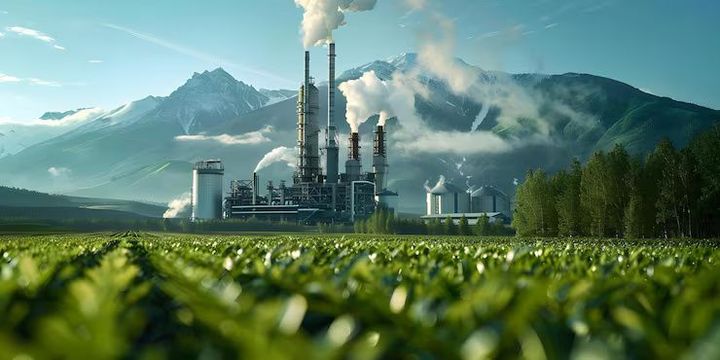
What Is Carbon Capture Technology? Carbon Capture Technology refers to methods that separate carbon dioxide (CO₂) from industrial exhaust gases, energy processes, or, in some cases, the atmosphere. The captured CO₂ can then be compressed, transported, used in selected applications, or placed into geological formations for long-term storage.
Carbon capture is commonly discussed as part of carbon capture, utilisation and storage (CCUS). The International Energy Agency describes CCUS as a group of technologies covering CO₂ capture, transportation, utilisation, and permanent storage.
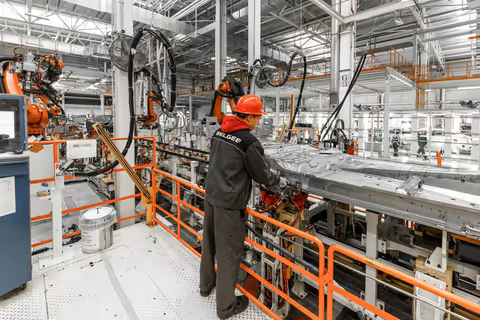
The technology is particularly relevant to industries where reducing emissions through electrification or alternative production methods can be difficult. Examples include cement, steel, chemicals, fertilisers, refining, and some forms of power generation.
How Carbon Capture Works
A typical carbon capture process has several stages. First, a gas stream containing CO₂ is treated so that carbon dioxide can be separated from other gases. The captured CO₂ is then conditioned and compressed for its next destination.
Depending on the project, the CO₂ may be transported through pipelines, ships, rail, or road vehicles. It can subsequently be used as an industrial feedstock or injected into suitable geological formations for long-term storage.
Main Capture Approaches
Carbon capture can be classified according to where CO₂ is separated from the process.
Post-combustion capture removes CO₂ from exhaust gases after fuel has been burned. It can potentially be integrated with existing industrial facilities.
Pre-combustion capture separates carbon-containing compounds before combustion or conversion. It is relevant to processes such as hydrogen production and gasification.
Oxy-fuel combustion uses oxygen-rich combustion conditions so that the resulting exhaust contains a higher concentration of CO₂, simplifying subsequent separation in certain applications.
Direct Air Capture (DAC) removes CO₂ directly from ambient air rather than from a concentrated industrial exhaust stream. Because atmospheric CO₂ is relatively dilute, DAC has different technical requirements from point-source capture.
Importance
Addressing Industrial Emissions
Carbon Capture Technology can be relevant to industries where CO₂ is produced as an inherent part of the manufacturing process. Cement production is an example because carbon dioxide can be released not only from fuel use but also from the chemical transformation of limestone.
Steel, chemicals, fertilisers, refining, and some hydrogen-production pathways can also produce concentrated CO₂ streams that may be suitable for capture.
India's NITI Aayog has identified sectors such as steel, cement, oil and gas, petrochemicals, chemicals, and fertilisers among areas where CCUS could contribute to emissions reduction.
Supporting Carbon Removal
Some carbon capture systems can contribute to carbon removal when the captured CO₂ originates from biomass or is removed directly from the atmosphere and then permanently stored.
Bioenergy with carbon capture and storage (BECCS) combines biomass-based energy processes with CO₂ capture. DAC with permanent geological storage is another technology-based carbon-removal pathway.
These approaches are different from simply capturing CO₂ from a fossil-fuel facility because their climate effects depend on the source of the carbon and whether the captured CO₂ remains permanently removed.
Enabling CO₂ Utilisation
Captured CO₂ can sometimes become a feedstock for other processes. Potential applications include certain fuels, chemicals, mineral products, construction materials, and industrial processes.
However, utilisation does not automatically mean permanent carbon removal. The climate benefit depends on how the CO₂ is used, where the carbon originates, how much energy is required, and how long the carbon remains contained.
Building a Wider Carbon Management System
Carbon capture is only one part of a larger system. A complete CCUS chain requires capture equipment, compression, transportation, suitable storage or utilisation facilities, monitoring, measurement, and regulatory oversight.
The IEA notes that the development of CO₂ storage infrastructure needs to progress alongside capture facilities if CCUS is to expand at large scale.
| Stage | Main Purpose | Examples |
|---|---|---|
| Capture | Separate CO₂ | Solvents, adsorbents, membranes |
| Conditioning | Prepare captured gas | Drying, purification, compression |
| Transport | Move CO₂ | Pipelines, ships, trucks |
| Utilisation | Use captured carbon | Materials, chemicals, fuels |
| Storage | Retain CO₂ underground | Saline formations, depleted reservoirs |
| Monitoring | Verify containment | Sensors, geological monitoring |
Recent Updates
Growth in CCUS Projects
Recent years have seen renewed interest in CCUS projects across industrial and energy sectors. The IEA reported in 2025 that projects around the world were reaching new milestones, reflecting increased activity across capture, transportation, storage, and utilisation.
The development is not limited to one capture method. Projects are testing different combinations of capture technologies, CO₂ transport systems, storage locations, and utilisation pathways.
Greater Attention to Storage
Carbon capture cannot achieve its intended purpose if there is no suitable destination for the captured CO₂. Geological storage therefore remains a major part of current research and project planning.
Potential storage formations include deep saline formations and depleted oil and gas reservoirs. Site assessment considers geology, pressure, containment, monitoring requirements, and long-term storage integrity.
New Research in India
India launched its first R&D Roadmap for CCUS and national net-zero objectives in December 2025. The roadmap is intended to guide coordinated research, collaboration, and technology development in carbon capture, utilisation, and storage.
In 2026, the Government of India also announced an integrated CCUS field laboratory at IIT Bombay. The facility brings together carbon capture, utilisation, and geological sequestration research in an integrated setting.
Carbon Markets and Industrial Decarbonisation
India's carbon-market framework is developing alongside industrial emissions policies. In 2026, the government announced expanded greenhouse-gas emission-intensity targets covering additional sectors and stated that CCUS is part of the broader industrial decarbonisation landscape.
These developments indicate a growing connection between carbon management technologies, emissions measurement, industrial policy, and climate-related investment frameworks.
Improving Capture Methods
Research continues into solvents, solid adsorbents, membranes, advanced separation processes, and other approaches designed to improve capture performance.
India's earlier CCUS policy framework identified solvent-based absorption, adsorption, and cryogenic separation among mature capture approaches, while membrane, microbial, and algae-based methods were described as areas at earlier stages of development.
Laws or Policies
India's CCUS Policy Direction
India's National Strategy and related policy work have recognized CCUS as an area for research, technology development, and industrial deployment. NITI Aayog's CCUS policy framework examined the complete value chain, including capture, utilisation, transportation, and storage.
The Department of Science and Technology also supports CCUS research and capacity development, including work addressing technological, environmental, safety, and infrastructure considerations.
R&D and Technology Development
India's 2025 CCUS R&D Roadmap provides a more recent research-oriented framework for coordinated development. It focuses on technology advancement and collaboration connected with the country's longer-term climate objectives.
Environmental and Geological Considerations
CCUS projects may involve industrial emissions, transportation infrastructure, underground injection, land use, water requirements, and long-term monitoring. The exact permissions depend on the project location, technology, industrial activity, and storage approach.
Environmental assessments and other applicable approvals may therefore be relevant before a project can be developed or operated.
Carbon Market Framework
India's Carbon Credit Trading Scheme provides a framework for emissions-intensity compliance and offset mechanisms. The government has also expanded greenhouse-gas emission-intensity targets to additional industrial sectors.
Carbon capture may interact with such frameworks when emissions reductions can be measured and verified according to applicable rules. The treatment of captured and stored CO₂ depends on the specific regulatory methodology and project conditions.
Monitoring and Verification
Long-term storage requires monitoring to determine whether injected CO₂ remains within the intended geological formation. Measurement and verification are important because a carbon-management project needs reliable evidence about how much CO₂ has been captured, transported, utilised, or stored.
For this reason, technical standards, geological assessments, monitoring systems, and documented operating procedures are important components of CCUS development.
Tools and Resources
Carbon Capture Process Models
Engineering models can simulate gas compositions, capture rates, energy requirements, equipment performance, and process conditions. These tools help researchers and engineers examine how different capture configurations could perform.
Emissions Calculators
Carbon accounting tools can estimate greenhouse-gas emissions from industrial processes, energy use, transportation, and other activities. Such calculations can help establish an emissions baseline before evaluating carbon-management options.
Geological Storage Models
Subsurface modelling tools can examine geological formations, fluid movement, pressure changes, and potential storage behavior. Geological data is particularly important when assessing a location for long-term CO₂ storage.
Monitoring Technologies
Sensors, gas analysers, pressure measurements, seismic techniques, satellite observations, and other monitoring methods can contribute to tracking carbon-management operations.
Standards and Research Databases
International organizations such as the IEA provide CCUS reports, technology information, project databases, and analysis. India's DST and NITI Aayog provide policy and research information relevant to the Indian context.
These resources can help students, researchers, policymakers, engineers, and industry professionals understand the technical and policy aspects of carbon management.
FAQs
What is Carbon Capture Technology?
Carbon Capture Technology includes methods that separate CO₂ from industrial gases or, in some cases, directly from the atmosphere. The captured gas can then be used or stored.
How does Carbon Capture Technology work?
Carbon Capture Technology generally separates CO₂ from a gas stream using methods such as chemical absorption, physical separation, adsorption, membranes, or other processes. The separated CO₂ is then compressed and transported for utilisation or storage.
What are the main types of carbon capture?
The main approaches include post-combustion capture, pre-combustion capture, oxy-fuel combustion, and direct air capture. Each approach has different technical requirements and potential applications.
Where can captured CO₂ be stored?
Captured CO₂ can potentially be injected into suitable deep geological formations, including saline formations and some depleted oil and gas reservoirs. Storage locations require detailed geological assessment and monitoring.
What industries use Carbon Capture Technology?
Potential applications include cement, steel, chemicals, fertilisers, refining, hydrogen production, power generation, and other industries with significant CO₂ emissions. The suitability depends on the concentration and source of CO₂ and the characteristics of the industrial process.
Conclusion
Carbon Capture Technology includes a range of methods for separating carbon dioxide from industrial processes and, in some cases, the atmosphere. Capture can be combined with transportation, utilisation, and geological storage to form a broader CCUS system. Recent developments have increased attention toward industrial applications, storage infrastructure, monitoring, research, and carbon-management policy. In India, national research programs, the CCUS R&D roadmap, and emerging carbon-market mechanisms are shaping the country's approach to this technology.