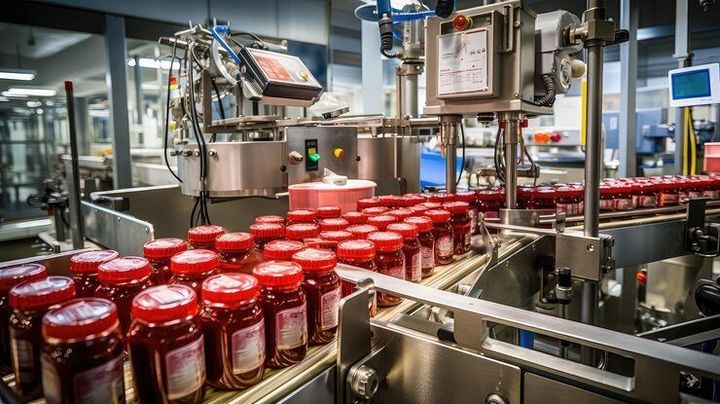
Automatic Labeling Machines: Guide to Packaging Automation and Production
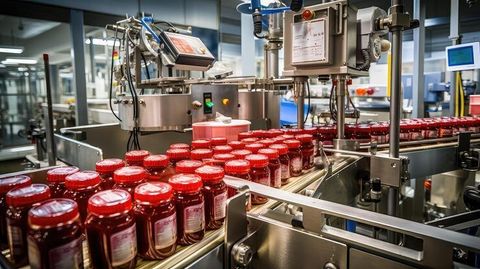
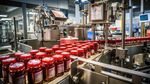
Automatic Labeling Machines are packaging machines that apply labels to products or containers with limited manual handling. They are commonly integrated into production lines where bottles, jars, cartons, boxes, pouches, containers, or other packages move continuously through a defined process.
A labeling machine detects the position of a product, feeds a label from a roll or another label supply, and places the label onto a selected surface. Depending on the machine design, labels can be applied to the front, back, top, bottom, side, neck, or around the complete circumference of a container.
These machines are used across industries such as food and beverages, pharmaceuticals, cosmetics, chemicals, household products, and consumer goods.
How Automatic Labeling Works
A typical labeling process follows several stages:
Product feeding: Containers or packages enter the machine through a conveyor or feeding mechanism.
Product detection: Sensors identify the presence and position of the product.
Label feeding: A label roll or label material moves through the dispensing mechanism.
Position control: The machine coordinates product movement with label placement.
Label application: A roller, pad, brush, air system, or another mechanism presses the label onto the package.
Verification: Cameras or sensors can check whether the label is present and positioned correctly.
Product discharge: The labeled item moves toward the next production stage.
The exact sequence depends on the container shape, label material, production speed, and labeling method.
Main Types of Automatic Labeling Machines
Pressure-sensitive labeling machines apply labels with an adhesive backing. They are widely used for bottles, jars, cartons, and other packages.
Wrap-around labeling machines place labels around cylindrical containers such as bottles and cans.
Front-and-back labeling machines apply separate labels to two sides of a container.
Top labeling machines place labels on the upper surface of products, cartons, trays, or containers.
Top-and-bottom labeling machines apply labels to both upper and lower surfaces.
Side labeling machines apply labels to a selected side of a product or package.
Sleeve labeling machines place a flexible sleeve around a container. Heat or another controlled process can then shrink the sleeve to match the container shape.
Print-and-apply systems combine label printing with automatic application. They can be used when variable information such as batch numbers, barcodes, or product identifiers must be generated during production.
Importance
Consistent Label Placement
Manual labeling can result in variations in label position, angle, or alignment. Automatic Labeling Machines can use sensors, guides, rollers, and programmed controls to maintain more consistent placement.
The achievable accuracy depends on the machine, container dimensions, label material, conveyor movement, and production conditions.
Supporting Production Lines
Labeling is often one stage within a larger packaging line. A typical sequence may include filling, capping, labeling, inspection, coding, packing, and palletizing.
Automatic labeling equipment can be synchronized with upstream and downstream machinery so that containers move through these stages in a coordinated sequence.
Handling Different Products
Modern machines can often be adjusted for different container sizes and label dimensions. Changeover mechanisms may include adjustable guides, product recipes, tool-free components, or digitally controlled settings.
The amount of adjustment required depends on the machine configuration and the differences between products.
Product Identification
Labels can contain important information such as product names, ingredient information, batch references, manufacturing details, barcodes, regulatory declarations, and handling instructions.
Automatic application helps position this information consistently on the package.
Packaging Line Data
Connected labeling machines can exchange information with line-control systems. Production counters, machine status, fault notifications, label-roll information, and other operating data may be monitored through digital interfaces.
This can help operators understand machine performance and coordinate production activities.
Common Applications
| Industry | Typical Products | Labeling Application |
|---|---|---|
| Food | Jars, bottles, containers | Front, back, wrap-around |
| Beverages | Bottles, cans | Wrap-around or pressure-sensitive |
| Pharmaceuticals | Bottles, cartons | Product and regulatory labels |
| Cosmetics | Bottles, tubes, jars | Front, back, top |
| Chemicals | Containers, drums | Product and hazard information |
| Household products | Bottles, containers | Front and back labeling |
| Logistics | Cartons and packages | Barcode and identification labels |
Recent Updates
Vision-Based Label Inspection
Machine vision is increasingly used to verify labels after application. Cameras can inspect the presence, position, orientation, print quality, barcode area, or other visible characteristics of a label.
Vision systems can also be connected to automatic rejection mechanisms that remove packages when a defined inspection condition is not met.
Smart Sensors
Modern labeling equipment can use photoelectric sensors, encoders, proximity sensors, and other detection technologies.
These components help coordinate product movement and label dispensing. Encoder feedback can allow the labeling system to adjust label placement according to conveyor or container movement.
Servo-Controlled Labeling
Servo motors provide precise control of movement in many automated packaging systems. They can control label-feed rollers, conveyors, applicators, or container-handling mechanisms.
Electronic motion control can make it easier to coordinate multiple machine functions and adjust operating parameters for different products.
Digital Machine Controls
Touchscreen interfaces and programmable controllers are common in modern labeling equipment. Operators can select stored product settings, change operating parameters, monitor machine status, and respond to fault messages.
Digital controls can also support recipe management for production lines handling several product formats.
Integration With Packaging Lines
Automatic labeling machines are increasingly designed as part of connected packaging systems rather than isolated equipment.
A line may connect:
Filling equipment
Capping machines
Automatic Labeling Machines
Inspection systems
Coding and marking equipment
Cartoning systems
Case packing equipment
Palletizing systems
Communication between these machines can help coordinate line speed, product flow, and machine status.
Flexible Label Formats
Packaging operations increasingly handle different container shapes, label dimensions, and product versions. Equipment manufacturers have therefore developed machines with adjustable guides, modular applicators, multiple label heads, and electronic controls.
This flexibility can reduce mechanical changes when switching between selected products, although changeover requirements remain application-specific.
Laws or Policies
Legal Metrology Requirements in India
India's packaged-product labeling framework includes requirements under the Legal Metrology Act, 2009 and the Legal Metrology (Packaged Commodities) Rules, 2011, subject to applicable amendments and product categories.
Packaged commodities may need declarations such as the manufacturer's or packer's details, product identity, net quantity, and other prescribed information. The exact requirements depend on the product and packaging situation.
Automatic labeling equipment does not determine whether a label is legally compliant. The information printed or applied to the package must meet the applicable regulatory requirements.
Food Packaging
Food products are subject to requirements administered by the Food Safety and Standards Authority of India (FSSAI). Food labels can contain information relating to product identity, ingredients, nutrition, declarations, dates, and other prescribed details.
Labeling machinery is therefore often integrated with coding, printing, inspection, and verification systems when used in food production.
Pharmaceutical Packaging
Pharmaceutical products are subject to additional regulatory requirements concerning labeling and packaging. Depending on the product, packaging may need information such as product identity, batch information, manufacturing details, expiry information, and other prescribed declarations.
Labeling systems used in pharmaceutical production therefore often incorporate controlled production settings and inspection mechanisms.
Packaging Material and Waste Rules
India's environmental framework also includes requirements concerning plastic packaging and packaging waste. The Plastic Waste Management Rules and related amendments establish requirements for covered plastic packaging and extended producer responsibility.
These environmental rules concern packaging materials and waste management rather than simply the operation of a labeling machine.
Workplace Safety
Automatic labeling machines contain moving belts, rollers, rotating parts, electrical components, and pneumatic systems in some configurations.
Machine guarding, emergency-stop arrangements, electrical safety, maintenance procedures, and operator training should therefore be considered during installation and operation according to applicable workplace requirements.
Tools and Resources
Photoelectric Sensors
Photoelectric sensors detect products as they pass through the labeling station. They can trigger label dispensing at the appropriate point.
Encoders
Encoders measure rotational or linear movement. In labeling systems, they can provide feedback about conveyor or product movement so the label-feed system can coordinate its operation.
Machine Vision Cameras
Vision cameras can inspect label presence, position, orientation, printed information, and selected barcode characteristics.
Programmable Logic Controllers
A PLC coordinates machine functions according to programmed logic. It can receive information from sensors and control motors, actuators, conveyors, and labeling mechanisms.
Human-Machine Interfaces
An HMI is the screen through which an operator interacts with the machine. It may display production information, operating parameters, alarms, recipes, and maintenance messages.
Label Design Software
Label-design software is used to create layouts containing text, barcodes, graphics, regulatory information, and variable fields.
Barcode Verification
Barcode scanners and verification systems can check whether a printed code can be detected and read correctly. This is particularly relevant where product identification depends on machine-readable information.
FAQs
What are Automatic Labeling Machines?
Automatic Labeling Machines are packaging machines that automatically apply labels to products or containers as they move through a production process.
How do Automatic Labeling Machines work?
They detect a product, feed a label from its supply, position the label according to programmed settings, and apply it using a suitable mechanism such as a roller, pad, brush, or air-based applicator.
Where are Automatic Labeling Machines used?
They are used in food and beverage packaging, pharmaceuticals, cosmetics, chemicals, household products, logistics, and other manufacturing environments.
What types of labels can automatic machines apply?
Depending on the machine configuration, equipment can apply pressure-sensitive labels, wrap-around labels, top labels, front-and-back labels, side labels, sleeves, and printed labels.
Can Automatic Labeling Machines inspect labels?
Yes. When connected with machine vision or other inspection equipment, a labeling line can check factors such as label presence, position, orientation, and selected printed information.
Conclusion
Automatic Labeling Machines automate the process of placing labels onto containers, cartons, bottles, and other packages. Their main components can include conveyors, sensors, label dispensers, applicators, motors, controllers, and inspection systems. Recent developments include machine vision, servo motion control, digital interfaces, connected packaging lines, and flexible product changeovers. In India, labeling applications can also be influenced by Legal Metrology, food, pharmaceutical, environmental, and workplace requirements.