Air Handling Units: Insights Into Air Handling Technology
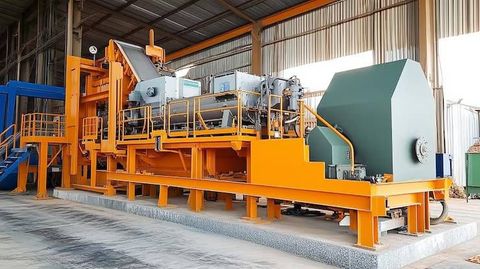
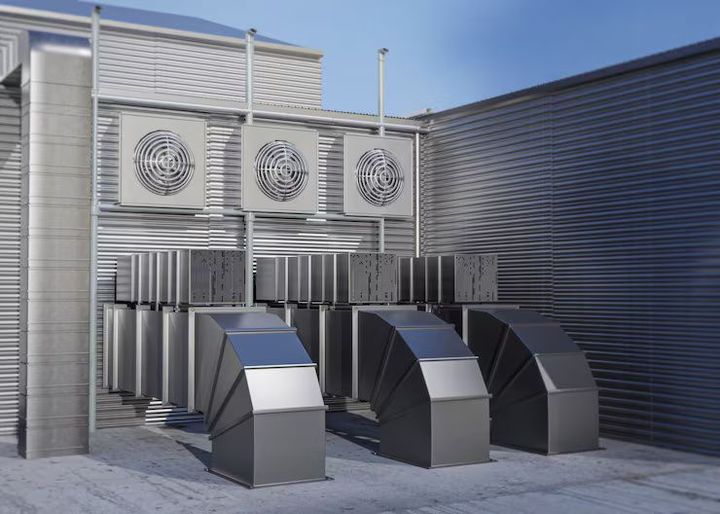
Air Handling Units (AHUs) are mechanical systems used to condition and distribute air throughout buildings and industrial facilities. An AHU can control air temperature, humidity, filtration, ventilation, and airflow before conditioned air enters occupied or process areas.
An AHU normally contains a fan, filters, heating or cooling coils, dampers, sensors, and control components. Depending on the application, it may also include humidifiers, dehumidification arrangements, heat-recovery equipment, sound attenuation, and air-quality monitoring.
AHUs are commonly connected to chilled-water systems, heating systems, ventilation networks, ductwork, and building-management systems. Their configuration depends on building type, climate, indoor-air requirements, occupancy, and process conditions.
Main Components of an Air Handling Unit
| Component | Main Function |
|---|---|
| Supply Fan | Moves conditioned air through the duct network |
| Return Fan | Moves return air toward the AHU |
| Air Filters | Remove particles and contaminants from the airflow |
| Cooling Coil | Removes heat from the air |
| Heating Coil | Raises air temperature when heating is required |
| Humidifier | Adds controlled moisture to the air |
| Dampers | Regulate fresh, return, and exhaust airflow |
| Mixing Box | Combines outdoor and return air |
| Heat-Recovery Unit | Transfers thermal energy between air streams |
| Sensors | Measure temperature, humidity, pressure, and airflow |
| Control Panel | Coordinates AHU operation |
| Variable-Speed Drive | Adjusts fan speed according to airflow requirements |
| Casing | Encloses and protects internal components |
| Drain Pan | Collects condensate from cooling operations |
How an Air Handling Unit Works
The AHU receives a combination of outdoor air and return air according to the ventilation design. Dampers regulate the proportion of each air stream entering the unit.
The air first passes through filtration stages. Depending on the application, several filter stages may be used to address different particle sizes.
The filtered air then passes through heating or cooling coils. A cooling coil can reduce air temperature and remove moisture when the coil surface is below the air dew point.
A supply fan moves the conditioned air into the building's duct network. Sensors continuously measure selected operating conditions, while the control system adjusts fans, dampers, valves, and other components.
Return air travels back through the building and may either be recirculated, exhausted, or combined with outdoor air according to the system design.
Common AHU Configurations
AHUs can be configured for different applications.
Single-zone AHUs are designed to condition air for a defined area with relatively similar requirements.
Multi-zone AHUs distribute conditioned air to multiple areas where different airflow or temperature conditions may be required.
Fresh-air AHUs are primarily designed to condition outdoor ventilation air before distribution.
Make-up air units provide replacement air for air exhausted from a building or process area.
Packaged AHUs integrate multiple components into a factory-assembled enclosure.
Custom AHUs are configured around the airflow, filtration, thermal, hygiene, and space requirements of a particular project.
Importance
AHUs play an important role in indoor environmental control because they combine air movement, filtration, ventilation, and thermal conditioning in a coordinated system.
Indoor Air Quality
Air filtration is one of the primary AHU functions. Filter selection depends on the required level of particle removal, airflow volume, pressure drop, indoor environment, and application.
Healthcare, laboratory, pharmaceutical, electronics, and other controlled environments may require specialized filtration and airflow arrangements.
Temperature and Humidity Control
Cooling coils can reduce air temperature and, under suitable conditions, remove moisture from the air. Heating coils can raise supply-air temperature.
Humidity control becomes particularly important in applications where moisture levels can affect comfort, materials, production processes, or environmental conditions.
Ventilation
AHUs can introduce outdoor air to replace exhausted air and maintain required ventilation levels.
Fresh-air quantities are influenced by building occupancy, use, ventilation design, indoor-air requirements, and applicable building standards.
Energy Management
Fans and air-conditioning equipment consume significant electrical energy in many buildings. Variable-speed drives can adjust fan speed according to airflow demand.
Air-side pressure control, damper positioning, filter condition, coil cleanliness, and duct-system design can all influence AHU energy performance.
Industrial Applications
AHUs are used in environments where controlled air conditions are important, including:
- Pharmaceutical facilities
- Hospitals
- Laboratories
- Data centres
- Food-processing facilities
- Electronics manufacturing
- Textile facilities
- Commercial buildings
- Hotels
- Shopping complexes
- Industrial plants
Recent Updates
Modern AHU technology is increasingly focused on energy efficiency, air-quality monitoring, heat recovery, variable-speed operation, automation, and digital control.
Variable-Speed Fan Systems
Variable-speed drives allow supply and return fans to adjust speed according to system requirements.
For variable-air-volume systems, fan speed can respond to changes in duct pressure or airflow demand. This can reduce unnecessary fan operation when the building requires less airflow.
Advanced Filtration
AHUs are increasingly configured with multiple filtration stages. Filter monitoring can use differential-pressure sensors to identify increasing resistance as filters become loaded.
Digital monitoring can provide alerts when filter pressure reaches a defined threshold.
Heat Recovery
Heat-recovery systems can transfer thermal energy between exhaust air and incoming outdoor air.
Depending on the equipment design, heat recovery may use a rotary heat exchanger, plate heat exchanger, heat pipe, or another recovery arrangement.
The objective is to reduce the thermal load associated with conditioning outdoor air.
Smart AHU Controls
Modern AHUs can integrate sensors and controllers for:
- Supply-air temperature
- Return-air temperature
- Outdoor-air temperature
- Relative humidity
- Differential pressure
- Airflow
- Filter pressure drop
- Fan speed
- Damper position
- Valve position
- Carbon-dioxide concentration
These parameters can be connected to building-management systems for centralized monitoring.
Demand-Controlled Ventilation
Where appropriate, ventilation systems can use indoor-air measurements such as carbon-dioxide concentration as one input for adjusting outdoor-air quantity.
The control strategy depends on building type, occupancy patterns, ventilation requirements, and applicable standards.
Digital Commissioning and Monitoring
Modern building controls can record AHU operating data and alarms. Trend records can help engineers compare supply-air temperature, fan speed, pressure, valve position, and other parameters over time.
This supports system assessment and can identify abnormal operating patterns.
Laws or Policies
AHU installations in India can be influenced by building-energy codes, ventilation requirements, air-conditioning standards, electrical provisions, fire-safety requirements, and application-specific regulations.
BIS Standards
BIS maintains standards covering components and systems used in refrigeration and air-conditioning applications.
For example, IS 655:2006 specifies requirements for air ducts. BIS lists the standard as reviewed in 2022, with amendments issued in 2012 and 2015. (bis.gov.in
The BIS refrigeration and air-conditioning standards compendium also lists related standards covering refrigeration components, heat exchangers, expansion valves, and other HVAC equipment. (services.bis.gov.in)
Building Energy Requirements
Building-energy requirements can influence AHU selection, fan power, ventilation, controls, thermal conditioning, and overall HVAC design.
BEE's commercial-building programme describes energy-performance requirements for building components while considering climatic conditions. (beeindia.gov.in)
BEE's current resources also include the Energy Conservation and Sustainable Building Code 2024, alongside other building-energy guidance. (beeindia.gov.in)
Variable-Airflow and Pumping Controls
Building-energy guidance has increasingly emphasized variable-flow approaches for HVAC systems. Earlier ECBC provisions, for example, specify variable fluid-flow arrangements for certain HVAC pumping systems and variable-speed drives for applicable pump motors. (beeindia.gov.in)
Similar design principles can be applied to AHU fan systems through appropriate variable-air-volume control and fan-speed modulation.
Energy Efficiency
BEE's energy-efficiency programmes continue to focus on reducing energy intensity across buildings and industry. Its current building-energy resources include ECSBC 2024 and other energy-efficiency publications. (beeindia.gov.in)
AHU energy performance should therefore be evaluated as part of the complete HVAC system rather than as an isolated component.
Standards Verification
BIS's Know Your Standard platform allows users to search Indian Standards using an IS number or product keyword. The platform provides access to standard documents, amendments, notifications, testing information, laboratories, and related details. It was updated in May 2026. (bis.gov.in)
Tools and Resources
AHU design, commissioning, and operation require airflow, thermal, electrical, and control measurements.
Airflow Measurement
Common instruments include:
- Anemometers
- Airflow hoods
- Differential-pressure meters
- Pitot-tube systems
- Static-pressure gauges
These instruments can help verify airflow distribution and duct-system performance.
Temperature and Humidity Measurement
Digital temperature and humidity sensors can be used to monitor:
- Outdoor-air temperature
- Return-air temperature
- Supply-air temperature
- Relative humidity
- Coil entering-air temperature
- Coil leaving-air temperature
These measurements help evaluate AHU operating conditions.
Filter Monitoring
Differential-pressure sensors can measure pressure across filters. Increasing pressure difference can indicate increasing airflow resistance.
Filter monitoring can therefore be integrated into the AHU control system.
Building Management Systems
A building-management system can connect AHUs with chillers, pumps, cooling towers, sensors, variable-speed drives, and other HVAC equipment.
Centralized controls can display equipment status, alarms, temperatures, pressures, schedules, and selected energy data.
Energy Analysis
AHU energy analysis can consider:
- Fan electrical demand
- Airflow
- Static pressure
- Fan speed
- Cooling output
- Heating output
- Operating hours
- Filter pressure drop
- Temperature difference
Comparing these measurements over time can help identify changes in system performance.
FAQs
1. What are Air Handling Units?
Air Handling Units are HVAC systems that condition and distribute air. They can provide filtration, cooling, heating, ventilation, humidity control, and airflow management.
2. How does an AHU work?
An AHU receives outdoor and return air, filters it, conditions it through heating or cooling components, and moves the conditioned air through ductwork using a fan.
3. What are the main components of an AHU?
Common components include fans, filters, cooling coils, heating coils, dampers, mixing sections, sensors, control panels, variable-speed drives, and drain pans.
4. What is the role of an AHU in HVAC systems?
An AHU manages air movement and conditioning within an HVAC system. It can regulate temperature, filtration, ventilation, humidity, and airflow before distributing air to different areas.
5. How does an AHU improve energy management?
AHUs can use variable-speed fans, automated dampers, heat recovery, sensors, and control algorithms to adjust operation according to airflow and environmental requirements.
Conclusion
Air Handling Units combine air movement, filtration, ventilation, heating, cooling, and control functions within a coordinated HVAC system. Modern AHUs increasingly use variable-speed fans, heat recovery, digital sensors, automated controls, and building-management integration. Proper airflow design, filtration, thermal control, and monitoring are important for maintaining suitable indoor and process environments. In India, AHU projects should be evaluated alongside applicable BIS standards and current building-energy requirements.