AI Data Centers: Guide to Infrastructure, Technology, and Practical Insights
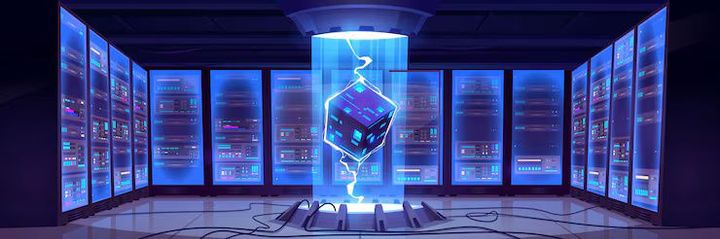
What Are AI Data Centers? AI Data Centers are specialized computing facilities designed to support artificial intelligence workloads such as model training, inference, data processing, simulation, and machine learning research. They combine high-performance computing hardware with powerful electrical systems, advanced cooling, high-speed networking, storage, security, and monitoring.
Traditional data centers have long supported websites, databases, enterprise applications, and cloud computing. AI workloads introduce additional infrastructure requirements because modern AI models can involve large numbers of processors working together for extended periods.
How AI Data Centers Work
An AI Data Center operates as an integrated system rather than simply a collection of computers. Data enters through networks or storage systems, is processed by computing hardware, and produces outputs that can be delivered to applications or users.
A typical workflow includes:
- Data storage: Datasets, models, logs, and application information are stored on high-capacity systems.
- Compute processing: GPUs, CPUs, AI accelerators, or other processors perform mathematical operations.
- Networking: High-speed connections allow processors and storage systems to exchange large volumes of data.
- Cooling: Heat produced by computing hardware is removed through air, liquid, or hybrid cooling systems.
- Power management: Electrical infrastructure distributes stable power to computing equipment and critical systems.
- Monitoring: Software and sensors track temperature, energy use, hardware condition, network performance, and workloads.
The interaction between these components determines how effectively a facility can support demanding AI workloads.
AI Training and Inference
AI training involves processing large datasets repeatedly to develop or refine a model. Training workloads can run across many processors simultaneously and may require substantial computing capacity.
Inference occurs when a trained model processes new information and produces an output. Examples include generating text, analyzing images, recognizing speech, or producing predictions.
Training and inference can have different infrastructure requirements. Training may emphasize large-scale parallel computing and high-speed communication between accelerators, while inference may emphasize responsiveness, workload management, and efficient processor utilization.
Importance
Supporting Modern AI Applications
AI Data Centers provide the physical infrastructure behind many artificial intelligence applications. Large language models, image-generation systems, recommendation engines, scientific simulations, autonomous systems, and enterprise AI applications all depend on computing infrastructure.
As AI models become more capable, the underlying infrastructure must handle increasing volumes of data and computational operations.
High-Performance Computing
AI workloads frequently use accelerators designed to perform many mathematical calculations simultaneously. GPUs are widely used because their architecture is suitable for parallel processing.
Other accelerator types, including application-specific processors and tensor-focused hardware, can also be deployed depending on the workload.
Power and Cooling
Power and cooling have become central considerations in AI infrastructure. High-performance processors generate substantial heat, while large computing clusters require reliable electricity.
The International Energy Agency reported that data-center electricity consumption increased significantly in 2025 and identified AI as an important driver of growing electricity demand.
Cooling approaches can include:
- Air cooling: Fans and conditioned air move heat away from equipment.
- Direct liquid cooling: Liquid circulates close to heat-producing components.
- Immersion cooling: Computing hardware is placed in a specialized cooling liquid.
- Hybrid cooling: Different methods are combined according to equipment and operating conditions.
The appropriate approach depends on processor density, facility design, climate, water considerations, and operational requirements.
Networking and Data Movement
AI computing depends heavily on communication between processors. During distributed model training, multiple accelerator systems may need to exchange information continuously.
High-bandwidth networking, low-latency connections, specialized interconnects, and efficient data-transfer architectures can therefore influence overall AI workload performance.
Infrastructure Components
| Component | Main Function | AI Data Center Role |
|---|---|---|
| GPUs or AI accelerators | Parallel computation | Training and inference |
| CPUs | General processing | System and application workloads |
| Storage | Data retention | Datasets and model files |
| Network fabric | Data communication | Accelerator-to-accelerator transfers |
| UPS systems | Power continuity | Protection from interruptions |
| Cooling systems | Heat removal | Thermal management |
| Monitoring systems | Operational visibility | Performance and condition tracking |
| Backup generation | Power resilience | Continuity during grid disruptions |
Recent Updates
Rising Electricity Demand
The relationship between AI and electricity infrastructure has become an important technology and policy issue. The IEA's 2026 analysis states that data-center electricity consumption is rising rapidly alongside AI adoption and expanding computing capacity.
AI workloads can also create rapid changes in electricity demand. According to the IEA, increasing AI server power density is placing additional pressure on electrical equipment, including transformers and power electronics.
Increasing Compute Density
Modern AI systems are encouraging data-center operators to place more computing capability into individual racks. Higher rack density changes requirements for power distribution, cooling, floor design, cabling, and monitoring.
This means that infrastructure designed for conventional computing may require substantial changes before it can efficiently accommodate dense AI clusters.
Growth of AI Compute Infrastructure in India
India has been developing national AI computing capacity through the IndiaAI Mission. MeitY's 2025–26 annual report states that the initiative had established high-end AI computing infrastructure with more than 38,000 GPUs and 14 cloud partners.
The IndiaAI Compute Portal provides access pathways for eligible researchers, academic users, startups, students, government entities, and other approved participants.
More Efficient Cooling
As processor density increases, cooling technology is evolving from conventional room-level air conditioning toward direct liquid and other high-density thermal management approaches.
India's Bureau of Energy Efficiency currently provides resources covering cooling, energy efficiency, building performance, and data-related energy management. Its published resources include the Energy Conservation & Sustainable Building Code 2024 and cooling-related guidance.
Infrastructure Planning
New AI facilities increasingly require coordination between computing architecture and physical infrastructure from the planning stage. Electricity availability, grid connections, cooling capacity, network connectivity, physical security, and future expansion can all influence facility design.
This integrated approach is important because upgrading one component without considering the others can create bottlenecks.
Laws or Policies
IndiaAI Mission
The IndiaAI Mission is a major Indian government initiative supporting AI infrastructure and ecosystem development. Its seven pillars include compute capacity, foundation models, datasets, application development, future skills, startup financing, and safe and trusted AI.
The compute pillar is particularly relevant to AI Data Centers because it focuses on expanding access to high-performance computing infrastructure.
Data Protection
AI Data Centers can process large amounts of personal, business, research, and government information. Data handling therefore needs to consider applicable privacy and security requirements.
India's Digital Personal Data Protection framework establishes requirements concerning the processing of digital personal data. Organizations operating AI infrastructure should assess which legal obligations apply to their specific data, purpose, and processing arrangement.
Energy Efficiency
Data centers are significant electricity consumers, making energy efficiency an important part of infrastructure planning. India's Bureau of Energy Efficiency provides guidance and technical resources covering energy-efficient buildings, cooling, and data-center practices.
Energy management can involve efficient electrical equipment, appropriate cooling controls, workload optimization, monitoring, and building design.
Cybersecurity
AI Data Centers contain valuable computing resources and potentially sensitive datasets. Security measures can include network segmentation, identity controls, encryption, physical access controls, continuous monitoring, vulnerability management, and incident response procedures.
The specific controls required depend on the organization, information being processed, and applicable regulations.
Infrastructure and Environmental Planning
Large facilities may also need to comply with applicable building, electrical, environmental, land-use, water, telecommunications, and local regulatory requirements.
The exact approvals vary according to location, facility design, energy infrastructure, and operational characteristics.
Tools and Resources
GPU Monitoring Tools
Monitoring platforms can track accelerator utilization, memory usage, temperature, power consumption, and workload activity. These measurements help technical teams identify underused resources and hardware bottlenecks.
Data Center Infrastructure Management
Data Center Infrastructure Management tools provide a centralized view of physical and computing infrastructure. Depending on the platform, they can monitor racks, power distribution, cooling equipment, environmental conditions, and capacity.
AI Frameworks
Popular AI development frameworks provide tools for model training, inference, distributed computing, and hardware acceleration. Examples include PyTorch, TensorFlow, JAX, and related ecosystem tools.
Energy Monitoring
Energy meters, power-management platforms, and facility monitoring systems can measure electricity consumption at different levels. Comparing computing activity with energy measurements can help organizations understand infrastructure efficiency.
IndiaAI Compute Resources
The IndiaAI Compute Portal provides information about available AI compute infrastructure, eligibility, GPU configurations, storage, and computing allocation. Its current platform includes a range of accelerator options and infrastructure configurations.
Data Center Standards and Guidance
Organizations can also consult technical guidance from institutions such as the Bureau of Energy Efficiency, international standards bodies, and engineering organizations. These resources can help with energy management, facility planning, environmental considerations, and operational procedures.
FAQs
What are AI Data Centers?
AI Data Centers are specialized computing facilities designed to handle artificial intelligence workloads. They combine accelerators, storage, networking, power systems, cooling equipment, and monitoring infrastructure.
Why do AI Data Centers need advanced cooling?
AI processors can generate substantial heat when operating at high utilization. Advanced cooling systems remove this heat and help maintain appropriate operating conditions for dense computing equipment.
What hardware is used in AI Data Centers?
AI Data Centers commonly use GPUs, CPUs, AI accelerators, high-speed networking equipment, storage systems, power infrastructure, and specialized cooling equipment. The hardware combination depends on the workload.
How much electricity do AI Data Centers use?
Electricity consumption varies considerably according to facility size, processor type, workload, cooling architecture, utilization, and operating conditions. Global data-center electricity demand is increasing as AI computing expands.
Why are AI Data Centers important for India?
AI Data Centers can provide the computing infrastructure required for AI research, model development, digital applications, and advanced computing. India's IndiaAI Mission is expanding national access to AI compute infrastructure and related capabilities.
Conclusion
AI Data Centers combine high-performance computing, networking, storage, power distribution, cooling, security, and monitoring into a coordinated infrastructure system. The rapid growth of artificial intelligence is increasing demand for higher computing density, reliable electricity, efficient thermal management, and scalable networks. Recent developments in India, including the IndiaAI Mission and national compute initiatives, demonstrate the growing focus on domestic AI infrastructure. Understanding these technologies and their operational requirements provides useful context for the continued development of modern AI systems.