Wire Processing Machines: Explore Types, Functions, and Industrial Applications
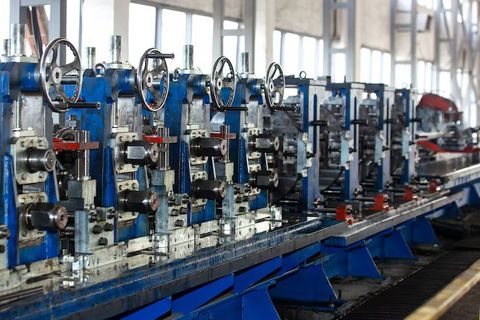
Wire Processing Machines are industrial machines designed to change wire from its original form into a specified size, shape, length, surface condition, or finished configuration. Depending on the material and application, processing can include drawing, straightening, cutting, bending, forming, stripping, twisting, winding, or coating.
Wire can be made from materials such as steel, stainless steel, copper, aluminum, and specialized alloys. Different industries require different wire dimensions and characteristics, so manufacturers use specialized equipment for particular stages of production.
For example, a thick metal rod may first pass through a wire drawing machine to reduce its diameter. The resulting wire can then pass through straightening and cutting equipment before being formed into a component.
How Wire Processing Works
A typical wire-processing sequence begins with raw wire rod, wire coil, or another feed material. The material is guided into the machine and processed according to the required specifications.
A simplified workflow can include:
Feeding: Wire is supplied from a coil, spool, or payoff system.
Drawing: The wire passes through dies to reduce its diameter.
Straightening: Rollers or other mechanisms remove unwanted bends.
Cutting: The wire is cut into predetermined lengths.
Bending: Controlled movement creates angles or curved shapes.
Forming: Specialized tooling produces hooks, loops, springs, clips, or other shapes.
Stripping: Insulation can be removed from selected electrical wires.
Twisting: Multiple wires can be combined into a controlled twisted arrangement.
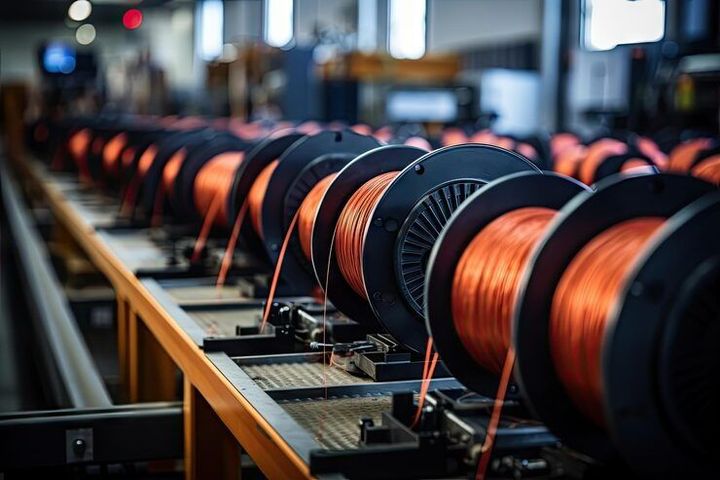
Winding: Finished wire is collected onto a spool, coil, or reel.
Inspection: Dimensions, surface condition, electrical characteristics, or mechanical properties can be checked.
Not every wire product goes through every stage. The sequence depends on the material, diameter, final shape, and intended application.
Main Types of Wire Processing Machines
Wire drawing machines reduce the diameter of wire by pulling it through a drawing die. Multiple drawing stages may be used when a large reduction is required.
Wire straightening and cutting machines remove bends from wire and cut it into specified lengths. They are commonly used when individual straight pieces are required.
Wire bending machines use programmed movements and tooling to create two-dimensional or three-dimensional shapes.
Wire forming machines produce complex components such as clips, hooks, springs, brackets, and other formed parts.
Wire stripping machines remove insulation from electrical wires at selected locations without unnecessarily damaging the conductor.
Wire twisting machines combine two or more wires into a controlled twisted arrangement.
Wire winding machines organize wire onto reels, spools, coils, or other winding structures.
Wire mesh machines combine wire feeding, bending, welding, or weaving operations to produce mesh products.
Importance
Producing Consistent Dimensions
Wire products often require precise diameter, length, shape, and surface characteristics. Processing machines provide controlled movements that help maintain repeatability between production cycles.
For example, a straightening and cutting machine can repeatedly produce pieces of a specified length instead of relying on manual measurement and cutting for every piece.
Supporting Different Industrial Products
Wire is used in many products, including electrical conductors, springs, fasteners, wire ropes, reinforcement products, fencing, mesh, automotive components, medical devices, and industrial assemblies.
The required processing method changes according to the final product. A spring requires forming and coiling, while an electrical conductor may require drawing, stranding, insulation processing, and controlled winding.
Improving Production Control
Modern machines can automatically control feeding speed, cutting length, forming movements, tension, and other parameters.
Digital controls can allow operators to store production settings and repeat established programs. Sensors can also detect selected conditions such as wire presence, position, tension, or machine status.
Reducing Material Handling
Automated wire-processing systems can connect several stages of production. A coil can be fed into one machine and transferred through subsequent operations with limited manual repositioning.
This arrangement can simplify material flow and reduce unnecessary handling.
Supporting Quality Inspection
Wire quality can involve dimensions, tensile properties, surface condition, straightness, electrical characteristics, and other factors.
Processing equipment may incorporate measurement systems or operate alongside separate testing equipment. The appropriate inspection method depends on the wire material and final application.
Common Machine Categories
| Machine Type | Main Function | Typical Output |
|---|---|---|
| Wire Drawing Machine | Reduces wire diameter | Fine or reduced-diameter wire |
| Straightening Machine | Removes bends | Straight wire |
| Cutting Machine | Produces specified lengths | Wire pieces |
| Bending Machine | Creates controlled bends | Shaped wire |
| Forming Machine | Produces complex profiles | Clips, hooks, brackets |
| Stripping Machine | Removes insulation | Prepared electrical wire |
| Twisting Machine | Combines multiple wires | Twisted wire |
| Winding Machine | Collects wire | Coils or spools |
| Mesh Machine | Forms interconnected wire | Wire mesh |
Recent Updates
Greater Use of Automation
Wire-processing equipment increasingly uses programmable controllers, servo drives, sensors, and digital interfaces. These technologies allow machines to coordinate feeding, movement, cutting, forming, and monitoring operations.
Automation can be particularly useful for repetitive production where consistent movement and timing are important.
Servo-Based Motion Control
Servo motors provide precise control over speed, position, and movement. In wire bending and forming applications, coordinated servo axes can control several movements during the same production cycle.
This can allow machines to produce more complex shapes while maintaining programmed motion sequences.
Digital Machine Monitoring
Modern machines can record information such as production counts, operating time, machine status, alarms, and selected process parameters.
Connecting this information to manufacturing-management systems can provide a broader view of production activities.
Machine Vision
Cameras and machine-vision software can inspect selected wire products for shape, position, dimensions, surface conditions, or missing features.
For formed wire components, vision systems can compare the produced shape against defined inspection criteria.
Advanced Wire Materials
The range of wire materials used in manufacturing continues to include specialized stainless steels, copper alloys, aluminum materials, high-strength steels, and other engineered materials.
BIS records show ongoing standards activity around wire products. For example, IS 6528:2024 covers stainless steel wire, while BIS laboratory records show testing coverage for stainless steel wire and several other wire products during 2026.
Developments in Wire-Rope Standards
Wire processing also supports the production of wire ropes and strands used in lifting, transportation, mining, and other applications.
BIS records show standards activity in this area, including the 2026 review of IS 2265:2026 for steel wire ropes with fibre main cores and finalized revisions concerning steel wire ropes for general engineering purposes.
Electrical Wire Applications
Copper and aluminum wire remain important materials for electrical applications. BIS lists IS 12444:2020 for copper wire rods used in electrical applications, with laboratory testing coverage continuing in 2026.
This creates demand for processing equipment capable of maintaining controlled dimensions, tension, surface quality, and winding during electrical-wire production.
Laws or Policies
Indian Standards
The Bureau of Indian Standards maintains Indian Standards covering numerous wire, wire-rod, wire-rope, and related products.
The BIS “Know Your Standard” platform allows users to search standards using an Indian Standard number or product-related keyword. It also provides access to related documents, amendments, testing information, and other standard details.
Wire and Wire-Rope Quality Requirements
Different wire products are covered by different standards. For example, BIS lists IS 280 for mild steel wire for general engineering purposes and IS 6528:2024 for stainless steel wire.
Steel wire ropes for general engineering purposes are covered by IS 2266, while other standards address specialized wire-rope applications such as lifts, mining, and ropeways.
Therefore, the applicable requirements depend on the material and final product rather than on the processing machine alone.
Quality Control Orders
Some wire and wire-related products fall under Indian quality-control requirements. BIS lists a 2023 Quality Control Order and a 2024 amendment concerning steel wires or strands, nylon or wire ropes, and wire mesh products.
Manufacturers should identify the exact product standard and applicable regulatory notification before production or conformity assessment.
Machine Safety
Wire-processing machines contain moving rollers, rotating components, cutting tools, dies, forming mechanisms, electrical systems, and sometimes high-tension material paths.
Workplace safety planning should therefore consider guarding, emergency stopping, electrical protection, operator access, maintenance procedures, and appropriate training.
Product Testing
Wire products can require different tests depending on their intended application. Common assessments may include dimensional checks, tensile testing, bending tests, torsion tests, surface inspection, chemical analysis, and other specified measurements.
BIS laboratory records demonstrate that different wire standards have distinct testing requirements, including dimensional and mechanical assessments.
Tools and Resources
Wire Diameter Measuring Tools
Micrometers, calipers, laser measurement systems, and other dimensional instruments can be used to check wire diameter.
For high-speed production, automated measurement systems can monitor dimensions continuously and identify deviations according to configured limits.
Tensile Testing Machines
A tensile testing machine applies controlled pulling force to a wire sample until the specified test endpoint is reached. It can provide information about properties such as tensile strength and elongation.
Such measurements are important for applications where mechanical performance is a major requirement.
Wire Tension Controllers
Tension-control systems regulate the pulling or winding force applied to wire during processing. Controlled tension can help reduce problems such as uneven winding, deformation, or inconsistent feeding.
CNC Wire Forming Controls
Computer-controlled wire forming equipment can coordinate multiple axes to produce complex shapes. Programs can define bending sequences, angles, feed lengths, and other movement parameters.
Machine Vision Systems
Camera-based inspection systems can examine wire components after forming or cutting. They can identify selected dimensional or shape differences without requiring every component to be manually inspected.
BIS Standards Database
The BIS standards database is useful for identifying the Indian Standard associated with a particular wire product. Users can search by product name or standard number and examine relevant documentation.
Production Monitoring Systems
Digital monitoring systems can record production quantities, machine states, alarms, operating periods, and selected process parameters. This information can support production analysis and equipment planning.
FAQs
What are Wire Processing Machines?
Wire Processing Machines are industrial machines used to draw, straighten, cut, bend, form, strip, twist, wind, or otherwise process wire into a required configuration.
What is a wire drawing machine?
A wire drawing machine pulls wire through one or more dies to reduce its diameter. Multiple drawing stages can be used to gradually reach the required size.
What does a wire straightening and cutting machine do?
It removes bends from incoming wire and cuts the material into predetermined lengths. The finished pieces can then be used in construction, manufacturing, fabrication, and other applications.
Where are Wire Processing Machines used?
Wire Processing Machines are used in electrical manufacturing, automotive production, construction, fencing, spring production, fastener manufacturing, wire-rope production, mesh manufacturing, and many other industrial applications.
What factors influence wire machine selection?
Important factors include wire material, diameter, tensile properties, required shape, production volume, finished length, accuracy requirements, surface condition, and the type of processing required.
Conclusion
Wire Processing Machines transform raw or semi-finished wire into controlled dimensions, lengths, shapes, and configurations for many industrial applications. Drawing, straightening, cutting, bending, forming, stripping, twisting, and winding machines each perform different stages of wire processing. Modern equipment increasingly combines servo motion, sensors, digital controls, machine vision, and production monitoring. Indian standards from BIS provide product-specific references for many wire, wire-rod, and wire-rope categories, making it important to identify the relevant material and finished-product requirements when planning a wire-processing operation.