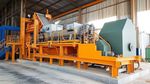
Tyre Retreading Machine: Insights Into Retreading Technology
A Tyre Retreading Machine is equipment used to restore a worn tyre casing by removing the remaining tread and applying a new tread layer. The process allows a suitable casing to undergo inspection, preparation, bonding, curing, and final inspection before being returned to use.
Retreading is generally performed on tyres whose casings remain suitable for further processing. The condition of the casing is therefore an important part of the process, and inspection takes place before the new tread is applied.
Tyre retreading is used across commercial vehicles, buses, trucks, agricultural applications, and other suitable vehicle categories. Indian standards cover several aspects of the process, including casing selection, retreading methods, materials, curing equipment, and finished retreaded tyres.
How Tyre Retreading Works
A typical retreading workflow involves several controlled stages:
- Initial inspection: The used tyre casing is examined for damage, wear patterns, and other conditions that may affect suitability.
- Buffing: The remaining tread is removed to expose a prepared casing surface.
- Casing preparation: Damaged areas that can be appropriately repaired are prepared according to the applicable process.
- Rubber application: New tread rubber or a precured tread is positioned on the prepared casing.
- Building: The tread material is assembled and bonded with suitable components.
- Curing: Heat and pressure are applied according to the selected retreading process.
- Final inspection: The completed tyre is checked for dimensions, appearance, bonding, and applicable performance requirements.
The precise sequence varies between hot-mould and precured processes.
Hot and Precured Retreading
Two major approaches are used in tyre retreading.
Hot-process retreading involves applying suitable uncured tread rubber to the prepared casing and then curing the assembly in a mould. Heat and pressure allow the rubber to form and bond to the casing.
Precured retreading uses a previously cured tread pattern. The prepared casing is coated with bonding material, the precured tread is positioned, and the assembly is cured to establish the required bond.
BIS identifies IS 15724:2006 for hot-process tyre retreading and IS 15524:2018 for the precured process.
Main Equipment Used
A complete retreading operation can involve several machines rather than one standalone unit.
| Equipment | Main Function |
|---|---|
| Tyre Inspection Machine | Examines casing condition |
| Tyre Buffing Machine | Removes remaining tread |
| Shearography or Inspection Equipment | Identifies selected internal conditions |
| Tyre Building Machine | Positions new tread material |
| Cementing Equipment | Applies bonding material |
| Tyre Curing Chamber | Cures precured assemblies |
| Curing Press | Moulds and cures hot-process tyres |
| Tyre Spreader | Provides access during inspection and preparation |
| Final Inspection Equipment | Checks the completed retread |
Machine selection depends on tyre category, retreading process, production arrangement, and applicable standards.
Importance
Extending Casing Utilization
A suitable tyre casing can potentially undergo retreading after its original tread has worn. Retreading therefore provides a way to make additional use of an existing casing instead of immediately treating it as a waste tyre.
However, not every worn tyre is suitable for retreading. Proper casing inspection and selection are essential.
Resource Efficiency
Retreading can contribute to a circular approach to tyre use by retaining a substantial portion of the existing casing. NITI Aayog's 2026 report on India's waste-tyre circular economy identifies retreading as a resource-efficient approach and discusses the potential environmental and economic significance of expanding the formal retreading sector.
Commercial Vehicle Applications
Retreading has particular relevance to commercial vehicle tyres because these vehicles can accumulate substantial tyre usage. Trucks, buses, and other heavy vehicles can therefore represent an important application area for structured retreading operations.
Indian Standard IS 15704:2018 covers retreaded pneumatic tyres for specified commercial vehicle categories.
Quality Control
A modern retreading operation depends on inspection at multiple stages. Casing inspection helps identify unsuitable tyres before processing, while final inspection checks the completed retread.
Testing and inspection requirements help create a more controlled process. BIS laboratory information for IS 15704, for example, includes tyre dimensions, endurance, load/speed performance, and marking among the listed testing areas.
Waste-Tyre Management
Retreading can be connected with broader waste-tyre management because it keeps suitable casings in productive use for longer. NITI Aayog's 2026 assessment notes that India's retreading sector remains substantially informal and identifies policy support and formalisation as areas for improvement.
Recent Updates
Increased Attention to Circular Economy
During 2025–2026, tyre retreading has received greater attention within discussions around resource efficiency and circular economy systems.
NITI Aayog's report on waste tyres examines retreading as part of India's wider approach to tyre-resource management. It notes that current regulations contain standards for retreaded tyres alongside a limited EPR provision and discusses opportunities to strengthen the role of retreading.
Digital Inspection
Modern retreading operations increasingly use inspection technologies to improve casing assessment. Depending on the equipment, operators can use visual inspection, pressure testing, shearography, electronic measurement, and other techniques to identify conditions requiring further examination.
Digital records can also help organize casing identification, processing stages, inspection results, and quality-control information.
Automated Buffing
Buffing is one of the key preparation stages in retreading. Modern buffing systems can use controlled machine movement and programmed parameters to maintain more consistent casing preparation.
Automatic measurement and machine controls can help operators manage casing dimensions and reduce variation between processing cycles.
Improved Building Systems
Modern tyre-building equipment can assist with positioning tread material accurately around the casing. Controlled rotation and pneumatic or mechanical mechanisms can support repeatable building operations.
For precured retreading, accurate tread positioning is particularly important because the prepared tread must follow the casing circumference correctly.
Advanced Curing Control
Curing systems increasingly use digital temperature, pressure, and cycle controls. Monitoring these variables helps operators follow defined processing conditions for the selected tyre and retreading method.
Proper curing is important because inadequate or excessive processing conditions can affect bonding and finished-tyre performance.
Standards Review and Testing
Indian tyre standards continue to be reviewed and maintained. BIS records show that several retreading-related standards were reviewed in 2023, including standards for commercial retreaded tyres, passenger-car retreaded tyres, casing selection, curing envelopes, and tyre repair.
BIS laboratory information also shows active testing capability for retreaded tyre standards, including IS 15704:2018.
Laws or Policies
Indian Standards for Retreading
India has a defined group of Indian Standards addressing tyre retreading.
Important examples include:
- IS 13531:2005 — Retreading materials for the mould-cure process.
- IS 15523:2018 — Precured patches for tyre and inner-tube repair.
- IS 15524:2018 — Retreading by the precured process.
- IS 15704:2018 — Retreaded pneumatic tyres for commercial vehicles.
- IS 15709:2018 — Retreaded pneumatic tyres for passenger cars.
- IS 15724:2006 — Hot-process retreading.
- IS 15725:2006 — Tyre curing envelopes for cold process.
- IS 15731:2018 — Selection and inspection of retreadable tyre casings.
- IS 15780:2007 — Repair of tyres and tubes used on motor vehicles.
These standards address different stages and categories rather than creating one single specification for every retreading operation.
Retreaded Tyre Specifications
IS 15704:2018 addresses retreaded pneumatic tyres for specified commercial vehicle categories, while IS 15709:2018 covers retreaded pneumatic tyres intended for passenger cars and their trailers used on roads.
The applicable standard should therefore be selected according to the tyre and vehicle category.
Waste-Tyre EPR
Waste-tyre management in India is also connected with Extended Producer Responsibility requirements. NITI Aayog's 2026 report notes that the existing EPR framework contains a provision relating to retreading, including a one-year deferment of EPR obligations intended to encourage retreading.
The same report identifies limited retreader registration and low formal-sector participation as ongoing issues. This indicates that policy development around retreading remains an active area.
BIS Certification and Standards Verification
BIS maintains its Know Your Standard platform for searching Indian Standards by product name or IS number. The platform provides access to standard documents, amendments, notifications, laboratory information, and other related data. It was updated in May 2026.
Organizations should verify the latest applicable standard and regulatory requirements for their particular retreading equipment and tyre category rather than relying on an older specification.
Tools and Resources
Several tools support tyre-retreading operations.
- Tyre inspection equipment: Used to examine casings before processing.
- Buffing machines: Remove worn tread and prepare the casing surface.
- Casing measurement systems: Check dimensions during preparation.
- Repair tools: Support appropriate preparation of repairable casing areas.
- Cementing systems: Apply bonding material where required.
- Tyre building machines: Position tread material around the casing.
- Curing chambers: Provide controlled heat and pressure for suitable processes.
- Curing presses: Used in mould-cure retreading.
- Pressure testing equipment: Helps assess tyre integrity during inspection.
- Final inspection equipment: Checks finished retread characteristics.
- Digital production records: Track casing identification and processing stages.
- BIS Know Your Standard: Provides access to current Indian Standards and related documentation.
Maintenance of buffing tools, building components, curing systems, pressure controls, inspection equipment, and safety mechanisms is important for consistent operation.
FAQs
What are Tyre Retreading Machines used for?
Tyre Retreading Machines and related equipment are used to prepare suitable worn tyre casings, apply new tread material, cure the assembly, and inspect the finished retreaded tyre.
How does a Tyre Retreading Machine work?
A typical retreading workflow involves casing inspection, buffing, preparation, tread application, building, curing, and final inspection. The exact sequence depends on whether hot-process or precured retreading is used.
What is the difference between hot and precured tyre retreading?
Hot-process retreading applies suitable uncured rubber and cures it in a mould. Precured retreading uses an already-cured tread that is bonded to the prepared casing and cured using a suitable process.
Which Indian Standards apply to tyre retreading?
Several standards apply to different parts of retreading. Examples include IS 15524:2018 for the precured process, IS 15724:2006 for hot-process retreading, IS 15731:2018 for casing selection and inspection, and IS 15704:2018 for specified commercial vehicle retreaded tyres.
Why is casing inspection important in tyre retreading?
Casing inspection helps determine whether a used tyre is suitable for further processing. It is an important quality-control stage because the condition of the underlying casing affects the suitability and performance of the completed retread.
Conclusion
Tyre Retreading Machines support a structured process for preparing suitable used casings and applying new tread material. Modern retreading operations combine inspection, buffing, building, curing, testing, and increasingly digital process controls. Indian Standards cover casing selection, retreading procedures, materials, curing equipment, and specifications for finished retreaded tyres. Recent circular-economy discussions are also increasing attention on formalising and strengthening tyre retreading within India's waste-tyre management system.