Tyre Curing Presses: Insights Into Modern Curing Technology
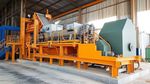
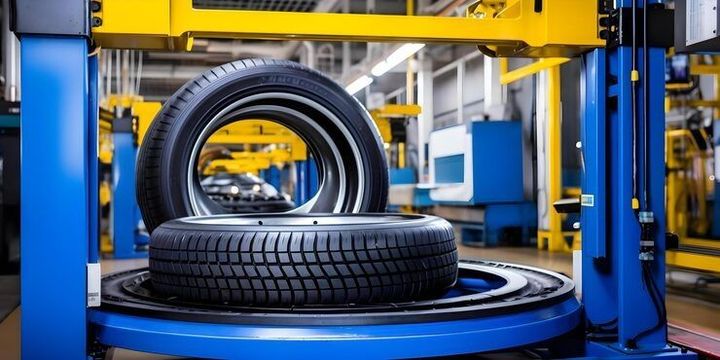
Tyre Curing Presses are industrial machines used to shape and cure tyres under controlled temperature and pressure. Curing transforms an assembled rubber tyre into a finished product by applying heat and pressure for a defined processing cycle.
During curing, the tyre assembly is placed inside a mould. The mould determines the tread pattern, sidewall details, dimensions, and other external features. Heat and pressure are then applied to promote the required rubber properties and establish the final tyre shape.
Tyre curing presses are used in new tyre manufacturing as well as certain retreading processes. Their configuration varies according to tyre size, production requirements, curing method, mould design, and automation level.
How Tyre Curing Presses Work
A typical curing cycle begins with loading an uncured tyre assembly into the press. The mould closes around the tyre while an internal bladder or another suitable mechanism helps apply pressure from inside.
Heat is transferred through the mould and internal components according to the selected curing process. Temperature, pressure, and curing time are controlled within specified process parameters.
After the curing cycle is completed, the mould opens and the finished tyre is removed. Inspection may then be performed to identify surface irregularities, dimensional issues, or other processing defects.
Main Types of Tyre Curing Presses
Tyre curing presses can be categorized according to their mechanical configuration and operating method.
| Press Type | Typical Characteristics |
|---|---|
| Hydraulic Curing Press | Uses hydraulic systems for controlled mould movement |
| Mechanical Curing Press | Uses mechanical drive arrangements |
| Two-Station Press | Supports sequential operation at two stations |
| Single-Station Press | Processes one tyre at a time |
| Automatic Curing Press | Uses automated loading and process controls |
| Retreading Curing Press | Used for selected retreading processes |
| Multi-Cavity System | Supports multiple curing operations depending on design |
The appropriate configuration depends on tyre dimensions, production requirements, mould arrangement, and process controls.
Main Components
Important components can include the hydraulic system, mould, heating system, bladder assembly, pressure controls, electrical control system, frame, loading mechanism, sensors, and safety devices.
Modern presses may also incorporate programmable controllers, touch-screen interfaces, temperature sensors, pressure monitoring, automatic mould handling, and production-data systems.
Importance
Tyre Shape and Tread Formation
The curing press is responsible for forming the external geometry of the tyre during the curing cycle. The mould contains the tread pattern and other required surface features.
Controlled mould closure and internal pressure help maintain the required relationship between the tyre assembly and mould surfaces.
Controlled Heat and Pressure
Curing requires controlled thermal and pressure conditions. Variations in these parameters can influence the processing result, so modern presses use dedicated control systems to monitor the cycle.
Sensors and programmable controls can help maintain defined process conditions across repeated cycles.
Production Consistency
Automated curing presses can repeat programmed mould-closing, heating, pressure, and timing sequences. This supports greater consistency across successive production cycles.
Data monitoring can also provide information about individual cycles and machine conditions.
Application in Tyre Retreading
Curing technology is also important in tyre retreading. Indian Standard IS 15724:2006 covers the hot-process retreading procedure, while IS 15524:2018 addresses retreading through the precured tread process and specifies equipment among other requirements.
For retreading operations, curing conditions must be matched to the selected process, tread material, casing, and equipment.
Integration With Production Systems
Modern tyre plants can integrate curing presses with material handling, mould management, production tracking, inspection, and plant-level information systems.
This allows curing to become part of a connected manufacturing sequence rather than functioning as an isolated machine.
Recent Updates
Greater Automation
Modern tyre curing technology is increasingly focused on automated loading, mould handling, cycle control, and process monitoring. Automated systems can reduce repetitive manual intervention while maintaining defined curing sequences.
Programmable controls can store different process parameters for different tyre specifications and production requirements.
Digital Process Monitoring
Digital control systems allow operators to monitor variables such as temperature, pressure, curing time, mould position, and machine status.
Historical process information can also support quality analysis and maintenance planning. Where production systems are digitally connected, curing information can be associated with specific production batches or tyre identifiers.
Improved Temperature Control
Temperature control remains a major area of development in tyre curing technology. Modern systems can use multiple sensors and controlled heating arrangements to monitor conditions at different points in the curing process.
More precise monitoring can help maintain repeatable thermal conditions and identify abnormal process behaviour.
Energy Management
Curing presses require significant thermal energy, so modern systems increasingly focus on reducing unnecessary heat loss and improving heating-system efficiency.
Insulation, controlled steam or other heating arrangements, optimized cycle parameters, and heat-management systems can contribute to more structured energy use.
Advanced Hydraulic Systems
Hydraulic presses continue to use electronically controlled hydraulic systems for mould movement and pressure management. Modern hydraulic controls can coordinate movement more precisely and provide diagnostic information when abnormal operating conditions occur.
This is particularly relevant for automated production environments where consistent press operation is required.
Improved Safety Systems
Tyre curing presses combine high temperatures, pressure, hydraulic systems, moving moulds, and electrical equipment. Modern machines therefore incorporate protective measures such as interlocks, emergency stopping systems, guarded access areas, pressure monitoring, and control-system safeguards.
Safety requirements should be evaluated according to the complete machine design and applicable standards.
Retreading and Circular Economy
Retreading has received increased policy attention in India as part of waste-tyre circularity. A January 2026 NITI Aayog report identifies retreading as an established circular pathway and discusses measures for strengthening formalisation, quality assurance, and integration into the waste-tyre management ecosystem.
This broader focus may increase attention on curing equipment used in formal tyre-retreading operations.
Laws or Policies
Indian Retreading Standards
India has several standards covering tyre retreading and associated equipment. The BIS compendium identifies IS 15724:2006 for the hot-process retreading procedure and IS 15524:2018 for retreading through the precured process.
Other related standards cover retreaded tyres, casing inspection, curing envelopes, and repair materials.
For example, IS 15725:2006 addresses tyre curing envelopes for the cold process, while IS 15731:2018 addresses the selection and inspection of retreadable tyre casings.
Retreaded Tyre Requirements
IS 15704:2018 covers retreaded pneumatic tyres for specified commercial vehicle categories, while IS 15709:2018 covers retreaded pneumatic tyres for passenger cars and their trailers used on roads.
These standards relate to finished retreaded tyres rather than creating a single specification for every curing press.
Waste-Tyre EPR
India's waste-tyre Extended Producer Responsibility framework is also relevant to the wider retreading ecosystem. NITI Aayog's 2026 report notes that retreading certificates can defer the corresponding EPR obligation by one year under the existing framework.
The report also highlights limited formal registration of retreaders and recommends stronger auditing, quality assurance, and integration of retreaders into a regulated ecosystem. These are policy recommendations rather than changes that automatically establish new legal obligations.
Standards Review
BIS records show that IS 15724:2006 was reviewed in September 2024, while related curing and casing standards have also been reviewed during recent years.
This makes current standards verification important when selecting equipment or developing a retreading process.
BIS Standards Verification
The BIS Know Your Standard platform allows users to search standards by IS number or product keyword. It provides access to standard documents, amendments, notifications, testing laboratories, licensing information, and committee details. The platform was updated in May 2026.
Organizations should verify the current edition and applicability of each relevant standard for their specific equipment and tyre category.
Tools and Resources
Several systems and resources support tyre curing operations.
- Curing moulds: Provide the required external tyre geometry and tread pattern.
- Bladder systems: Apply controlled internal pressure during suitable curing processes.
- Hydraulic systems: Control mould movement and pressing operations.
- Heating systems: Provide the thermal energy required for curing.
- Temperature sensors: Monitor process temperatures.
- Pressure sensors: Monitor internal or system pressure.
- Programmable controllers: Coordinate curing sequences and machine functions.
- Touch-screen HMI: Provides operator access to machine settings and status information.
- Mould handling systems: Assist with mould installation and movement.
- Data-logging systems: Record selected process variables and cycle information.
- Safety interlocks: Help prevent access to hazardous machine areas during operation.
- BIS Know Your Standard: Provides access to current Indian Standards and associated documentation.
Regular inspection of hydraulic components, heating systems, moulds, bladders, sensors, electrical systems, safety devices, and pressure-control components is important for structured operation.
FAQs
What are Tyre Curing Presses used for?
Tyre Curing Presses are used to shape and cure tyre assemblies under controlled heat and pressure. They are used in tyre manufacturing and, for appropriate processes, in tyre retreading.
How do Tyre Curing Presses work?
A tyre assembly is placed inside a mould, the press closes, and controlled heat and pressure are applied for a defined cycle. After curing, the mould opens and the finished tyre is removed for subsequent inspection.
What is the role of a bladder in tyre curing?
A curing bladder is an internal flexible component used in suitable curing systems to apply pressure against the inside of the tyre during the curing cycle. It helps the tyre conform to the mould surface.
Are Tyre Curing Presses used for retreading?
Yes. Curing equipment is used in applicable tyre-retreading processes. Indian Standard IS 15724:2006 covers hot-process tyre retreading, while IS 15524:2018 covers the precured retreading process and related equipment requirements.
Which Indian Standards are relevant to tyre curing and retreading?
Relevant standards include IS 15724:2006 for hot-process retreading, IS 15524:2018 for the precured process, IS 15725:2006 for curing envelopes used in the cold process, and IS 15731:2018 for selection and inspection of retreadable casings.
Conclusion
Tyre Curing Presses are important industrial systems for shaping and curing tyre assemblies under controlled heat, pressure, and time conditions. Modern presses increasingly combine automated mould handling, digital process monitoring, temperature and pressure controls, hydraulic systems, and machine-safety features. Curing technology also plays an important role in suitable tyre-retreading processes, which are receiving increased attention within India's circular-economy discussions. Understanding press configuration, curing parameters, equipment components, maintenance, and applicable Indian Standards helps support structured tyre-processing operations.