Solitaire Engagement Rings: Discover Classic Styles, Diamond Shapes, and Settings
Solitaire engagement rings place a single center diamond at the focus of the design. Explore classic styles, diamond shapes, settings, metals, proportions, and modern bridal trends.
Context
Understanding Solitaire Engagement Rings
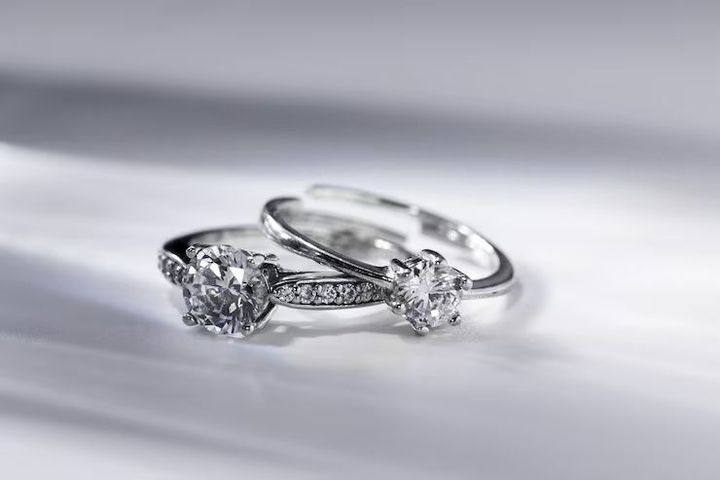
Solitaire engagement rings are designed around a single prominent center stone. Unlike halo or multi-stone designs, the solitaire structure places most of the visual attention on one diamond, allowing its shape, proportions, cut characteristics, and setting to define the overall appearance.
The simplicity of the design makes solitaire rings adaptable to different bridal styles. A round diamond with a traditional prong setting can create a classic appearance, while an emerald-cut diamond in a bezel setting can produce a more contemporary look.
Solitaire rings can also be made using different metals, including platinum, white gold, yellow gold, and rose gold. Band width, setting height, prong arrangement, and diamond proportions further influence the final appearance.
Main Characteristics
A typical solitaire engagement ring includes:
One primary center diamond
A ring band or shank
A setting that holds the diamond
A selected precious-metal construction
A specific diamond shape and cut
A defined ring profile and height
The design can remain extremely simple or incorporate decorative details into the band. The defining characteristic is that one center stone remains the primary visual element.
Solitaire vs Multi-Stone Rings
Solitaire rings differ from halo, three-stone, and cluster designs because they do not rely on surrounding diamonds to create the primary visual arrangement.
| Ring Style | Main Stone Arrangement | General Design Character |
|---|---|---|
| Solitaire | One center stone | Simple and focused |
| Halo | Center stone with surrounding stones | Detailed |
| Three-stone | Three principal stones | Balanced |
| Cluster | Multiple stones grouped together | Decorative |
| Pavé | Center stone with smaller stones on band | Sparkling band |
| Toi et Moi | Two prominent stones | Two-stone design |
Importance
Focus on the Center Diamond
The solitaire structure draws attention directly toward the center diamond.
Because there are fewer surrounding stones competing for attention, characteristics such as diamond shape, cut quality, symmetry, proportions, and setting become particularly important to the visual result.
The same solitaire setting can therefore look substantially different when paired with different diamond shapes.
Diamond Shapes
Diamond shape is one of the most noticeable elements of a solitaire engagement ring.
Round brilliant diamonds have a symmetrical circular outline and are strongly associated with traditional engagement-ring designs. Oval diamonds provide an elongated appearance, while pear and marquise shapes create more distinctive silhouettes.
Emerald and Asscher cuts use step-cut facets and geometric outlines. Cushion cuts combine rounded corners with a softer rectangular or square shape, while radiant cuts combine a rectangular or square outline with brilliant-style faceting.
Popular Solitaire Diamond Shapes
| Diamond Shape | General Appearance | Design Character |
|---|---|---|
| Round | Circular | Classic |
| Oval | Elongated | Contemporary |
| Emerald | Rectangular step-cut | Geometric |
| Cushion | Rounded square or rectangle | Soft vintage |
| Radiant | Rectangular or square | Modern |
| Pear | Teardrop outline | Distinctive |
| Marquise | Elongated pointed ends | Dramatic |
| Asscher | Square step-cut | Art Deco-inspired |
Prong Settings
Prong settings use small metal supports to secure the center diamond.
Four-prong settings can create a relatively open appearance, while six-prong arrangements provide additional points of support and create a more traditional visual profile.
The number, placement, and shape of prongs can influence how much of the diamond is visible and how the ring looks from different angles.
Bezel Settings
A bezel setting surrounds the outer edge of the diamond with metal.
This produces a clean outline and can create a more contemporary appearance. Bezel settings can also work particularly well with geometric and elongated diamond shapes.
Because the metal surrounds the stone's perimeter, the visual relationship between the diamond and band can differ considerably from an open-prong solitaire.
Cathedral Settings
A cathedral solitaire uses raised metal arches that support the center setting.
The structure can give the diamond a more elevated appearance and create space underneath the stone. This can also influence how a wedding band sits alongside the engagement ring.
Metal Selection
The ring metal contributes to both appearance and construction.
Platinum has a naturally white appearance and is widely used in fine jewelry. White gold provides a similar visual direction, while yellow gold creates a stronger warm contrast with the center diamond.
Rose gold introduces a pink or warm-toned appearance and can create a different visual relationship between the stone and band.
The appropriate metal depends on design preferences, ring construction, durability considerations, and compatibility with other jewelry.
Recent Updates
Elongated Diamond Shapes
Recent bridal jewelry trends continue to highlight elongated diamond shapes.
Oval, marquise, pear, and elongated cushion diamonds can create a longer visual line across the finger. These shapes can be particularly effective in solitaire designs because the single center stone remains the dominant feature.
Current 2026 engagement-ring coverage also identifies marquise and elongated cushion shapes among the styles receiving renewed attention. (forbes.com)
Geometric Solitaires
Geometric diamond shapes are influencing contemporary solitaire designs.
Emerald and Asscher cuts emphasize straight lines and step-cut patterns. These can be paired with simple bands for a structured appearance without requiring surrounding accent stones.
The trend also connects with renewed interest in Art Deco-inspired geometry and architectural jewelry details. (forbes.com)
Yellow-Gold Solitaires
Yellow gold continues to appear prominently in contemporary bridal jewelry.
The warm tone of yellow gold creates a noticeable contrast against a bright diamond and can give a traditional solitaire a more contemporary visual identity.
This approach can be particularly effective when the band is kept relatively simple so the contrast between metal and diamond remains clear.
Bezel Solitaire Designs
Bezel settings are receiving increased attention as part of a broader movement toward streamlined engagement-ring designs.
A bezel can create a continuous metal outline around the diamond and works with both modern and vintage-inspired silhouettes.
The setting also allows designers to emphasize the geometric outline of shapes such as emerald, oval, marquise, and radiant cuts.
Vintage Influences
Modern solitaire rings can incorporate details inspired by historical jewelry.
Milgrain edges, engraved shoulders, tapered bands, antique-style proportions, and geometric motifs can add visual character without changing the basic solitaire structure.
This allows a single-stone ring to combine a traditional center-stone arrangement with more decorative band details.
Low-Profile Designs
Low-profile settings position the diamond closer to the finger.
This can create a more streamlined appearance and may make the ring easier to combine with certain wedding-band designs. The exact height depends on the diamond shape, setting structure, band design, and required clearance.
Personalized Solitaires
Although the solitaire format is simple, personalization can significantly change its appearance.
A ring can be customized through diamond shape, metal color, band width, prong style, engraving, setting height, and subtle structural details.
This makes the solitaire format adaptable to both traditional and contemporary bridal preferences.
Laws or Policies
Diamond Disclosure
Jewelry descriptions should accurately identify the type and origin of a diamond.
The U.S. Federal Trade Commission's Jewelry Guides state that laboratory-grown diamonds should be clearly identified as laboratory-grown or laboratory-created rather than being presented in a way that could imply they are mined diamonds. The disclosure should be clear and close to the relevant diamond description. (ftc.gov)
The FTC also requires jewelry marketing to accurately represent material characteristics such as type, grade, quality, size, weight, cut, color, treatment, origin, and other relevant attributes. (ftc.gov)
Diamond Documentation
A diamond grading report can document characteristics such as carat weight, color, clarity, measurements, proportions, and cut-related information.
The FTC recommends that jewelry documentation include material information provided about a diamond, including origin, weight or size, treatments, and special care requirements where applicable. (consumer.ftc.gov)
Gold Hallmarking in India
For solitaire engagement rings made with gold in India, applicable hallmarking requirements are relevant to the metal component.
BIS states that gold and silver are currently covered by India's hallmarking framework. Hallmarked gold jewelry includes information related to purity and a unique HUID number that can be verified through the BIS Care application. (bis.gov.in)
BIS's mandatory hallmarking framework has also received amendments during 2026, so current requirements should be checked for the applicable location and jewelry category. (bis.gov.in)
Metal Purity
BIS identifies permitted gold hallmarking grades including 14K, 18K, 20K, 22K, 23K, and 24KS under the applicable Indian standard. (bis.gov.in)
The purity marking is separate from the diamond's grading characteristics. A ring can therefore have documentation for both its metal and center diamond.
Tools and Resources
Diamond Grading Reports
A grading report can help organize the characteristics of the center stone.
Key information may include:
Carat weight
Color
Clarity
Cut information
Measurements
Symmetry
Polish
Fluorescence
Diamond origin
Identification information
Diamond Shape Charts
Shape charts can help compare the outlines of different solitaire diamonds.
A round diamond creates a circular outline, while oval, pear, and marquise stones create elongated silhouettes. Emerald and Asscher shapes emphasize geometric step-cut patterns.
Ring Size Measurement
Accurate ring sizing is important for solitaire engagement rings because band width and setting structure can influence how a ring fits.
Professional sizing can provide a more reliable measurement than estimating from an existing ring, particularly when the existing ring has a different band profile.
Setting Comparison
| Setting | Center Stone Exposure | General Appearance |
|---|---|---|
| Four-prong | High | Open and simple |
| Six-prong | Moderate to high | Traditional |
| Bezel | Lower perimeter exposure | Clean and modern |
| Cathedral | Elevated | Structured |
| Tension-style | Highly open | Contemporary |
| Low-profile prong | Moderate | Streamlined |
Wedding-Band Compatibility
The relationship between an engagement ring and wedding band should be considered during design planning.
A high-set solitaire may allow a straight wedding band to sit closely underneath it. A low-profile or unusually shaped setting may require a contoured or curved band.
The actual compatibility depends on the ring's measurements and setting geometry.
Care and Inspection
Regular inspection can help identify loose prongs, damaged settings, worn metal, or other physical issues.
The appropriate cleaning method depends on the diamond, metal, treatments, and setting. Jewelry documentation should be reviewed for any specific care instructions.
Solitaire Design Planning
A practical planning sequence can include:
Select the preferred diamond shape.
Decide between natural and laboratory-grown diamond origin.
Review grading documentation.
Select the metal.
Compare prong, bezel, or cathedral settings.
Choose the band profile.
Confirm ring size.
Check wedding-band compatibility.
Consider engraving or other personalization.
Review documentation and care requirements.
FAQs
What are solitaire engagement rings?
Solitaire engagement rings feature one primary center diamond as the main visual element. The design can use different diamond shapes, metals, band profiles, and settings.
Which diamond shapes work well for solitaire engagement rings?
Round, oval, emerald, cushion, radiant, pear, marquise, and Asscher diamonds can all be used in solitaire designs. The choice depends on the desired silhouette and overall ring style.
What is the difference between four-prong and six-prong solitaire settings?
Four-prong settings use four metal supports around the center diamond, while six-prong settings use six. The difference can affect the appearance of the diamond, the amount of metal visible, and the structure of the setting.
Are bezel settings suitable for solitaire engagement rings?
Yes. A bezel setting can be used with a solitaire center diamond and creates a defined metal outline around the stone. It can complement modern and geometric ring designs.
What should I check when choosing a solitaire engagement ring?
Consider the diamond shape, grading documentation, carat weight, color, clarity, setting, metal, band width, ring size, wedding-band compatibility, and care requirements.
Conclusion
Solitaire engagement rings place a single center diamond at the heart of the design, making diamond shape, proportions, setting, and metal especially important. Round, oval, emerald, cushion, marquise, pear, radiant, and Asscher shapes can each create a different visual character within the same solitaire format. Current bridal trends include elongated stones, geometric designs, yellow-gold settings, bezel profiles, vintage influences, and personalized details. Accurate diamond documentation, clear origin disclosure, and applicable gold hallmarking requirements can also help provide reliable information about the finished ring.