Gemstone Studs: Explore Gemstone Shapes, Cuts, Settings, and Style Options
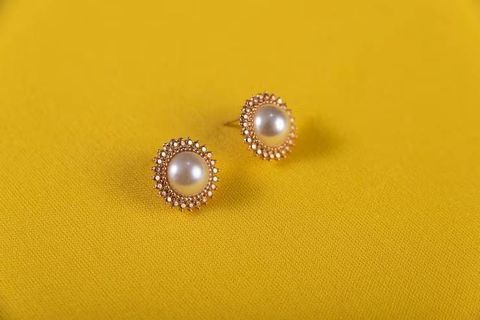
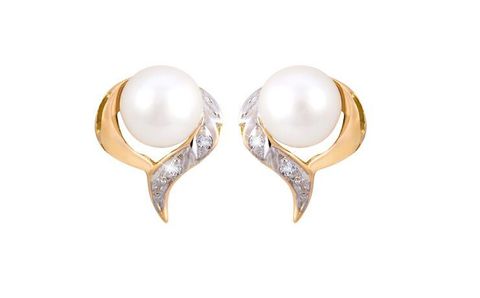
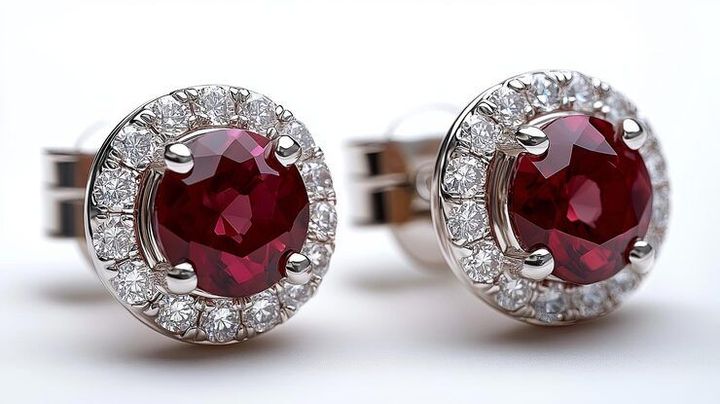
Gemstone studs are small earrings featuring colored or transparent gemstones set into metal.
They are among the most recognizable forms of gemstone jewelry because their compact design allows the stone to remain the main visual feature. Common examples include sapphire studs, ruby studs, emerald studs, amethyst studs, opal studs, and gemstone earrings featuring other varieties.
The term “stud” generally describes an earring that sits close to the earlobe rather than hanging below it. A typical design consists of a gemstone, a metal setting, a post, and a backing. The gemstone may be natural, laboratory-grown, or treated, depending on the material and its manufacturing process.
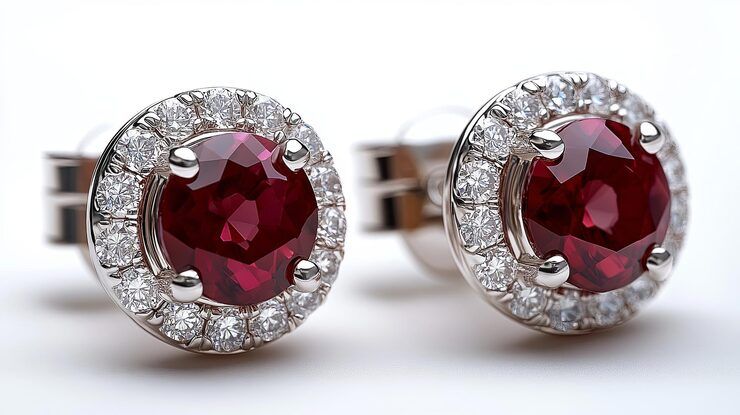
Gemstone studs can differ considerably in color, hardness, transparency, cut, origin, treatment, and setting. Understanding these characteristics helps people interpret jewelry descriptions, gemstone certification reports, and care recommendations more accurately.
Why Gemstone Studs Matter
Gemstone studs combine decorative design with practical considerations involving gemology, metallurgy, durability, and responsible jewelry identification. Their small size can make them suitable for everyday styles, while different gemstones provide a wide range of colors and optical effects.
Colored gemstones have also become an important part of modern fine jewelry. Beyond the traditional ruby, sapphire, and emerald categories, consumers increasingly encounter stones such as tourmaline, garnet, spinel, peridot, opal, and other gem materials.
Several characteristics are particularly relevant when evaluating gemstone studs:
- Gemstone identity: Determines what mineral or gem variety is being used.
- Natural or laboratory-grown status: Indicates how the gemstone originated.
- Treatment: Shows whether heat, irradiation, filling, dyeing, coating, or another process has been used.
- Color: Often has a major influence on the appearance of colored gemstones.
- Cut: Affects how light interacts with the gemstone.
- Clarity: Describes internal and external characteristics.
- Durability: Indicates how well a gemstone can withstand normal wear.
- Metal: Gold, silver, platinum, and other metals may be used for the setting.
Gemstone treatments are particularly important because some treatments can affect care requirements. GIA notes that certain treatments may be sensitive to heat, solvents, steam, or ultrasonic cleaning. Treatment information can therefore be important when maintaining gemstone jewelry.
Common Gemstones Used in Stud Earrings
| Gemstone | Typical Characteristics | Care Consideration |
|---|---|---|
| Sapphire | Strong durability and many color varieties | Generally suitable for regular wear |
| Ruby | Durable corundum with strong red coloration | Treatment information can matter |
| Emerald | Green beryl with characteristic inclusions | Often requires gentler cleaning |
| Amethyst | Purple quartz variety | Avoid harsh cleaning methods |
| Topaz | Available in several colors | Some treatments require special care |
| Opal | Distinctive play-of-color in many varieties | Protect from impact and unsuitable conditions |
| Garnet | Available in multiple colors | Care depends on the specific variety |
| Tourmaline | Broad color range and varied optical properties | Avoid unnecessary impact or harsh chemicals |
The table provides general guidance rather than a complete durability classification. Individual stones can differ depending on their variety, treatment, inclusions, and setting.
Understanding Gemstone Quality
Gemstone quality is not determined by a single characteristic. Color, clarity, cut, size, transparency, origin, treatment, and rarity can all contribute to how a gemstone is described.
For colored stones, color can be especially significant. A gemstone with attractive hue, saturation, and tone may have a very different appearance from another stone of the same species.
Cut is also important. A well-designed cut can influence brightness, color distribution, and the way light travels through the stone. Poor proportions or uneven faceting may reduce the visual effect of an otherwise attractive gemstone.
Natural inclusions are not automatically evidence of poor quality. In some gemstones, inclusions are expected and may help gemologists identify the material or investigate whether it has undergone treatment.
Recent Developments in Gemstone Identification
Gemstone identification has become increasingly dependent on specialized gemological testing. In September 2025, GIA published an explanation of its colored-stone examination process, describing the use of tools such as refractometers, polariscopes, spectroscopes, microscopes, and advanced analytical instruments.
Modern laboratories can investigate gemstone identity, natural or laboratory-grown status, detectable treatments, and, for certain stones, geographic origin. This is particularly relevant when a gemstone's characteristics cannot be reliably determined through visual inspection alone.
The broader colored-stone field has also expanded beyond the traditional “big three” of ruby, sapphire, and emerald. Gemological research organizations now cover a much wider range of colored gemstones, reflecting the diversity of materials used in contemporary jewelry.
Laws and Policies in India
India's gemstone studs may involve different regulatory considerations depending on the metal and the characteristics of the jewelry.
BIS hallmarking currently applies to gold and silver precious-metal articles. Hallmarking establishes the fineness of the precious metal rather than certifying the gemstone itself.
For hallmarked gold jewelry, BIS identifies the hallmark as consisting of the BIS logo, the purity/fineness mark, and a six-digit alphanumeric Hallmark Unique Identification number, commonly called HUID. The HUID can be checked using the BIS CARE application.
For gold, BIS lists permitted hallmarking grades including 14K (585), 18K (750), 20K (833), 22K (916), 23K (958), and 24KS (995).
BIS has continued expanding mandatory hallmarking coverage. On March 2, 2026, an amendment order added seven districts in the sixth phase of mandatory hallmarking coverage. The BIS regulations page also records a 2026 amendment to the BIS Hallmarking Regulations. These developments show that the regulatory framework continues to evolve.
Certain exemptions apply under the mandatory hallmarking framework. BIS information includes exemptions involving articles below specified weights, exports, certain special categories, and some other circumstances. Consumers should check the latest BIS requirements because applicability can depend on the article, location, and transaction.
It is also important to distinguish metal hallmarking from gemstone certification. A gold hallmark indicates information about the precious-metal fineness; it does not independently establish that a ruby, sapphire, emerald, or other gemstone is natural.
Tools and Resources for Gemstone Studs
Several resources can help people understand gemstone jewelry more accurately.
- BIS CARE App: Includes the “Verify HUID” function for checking HUID information associated with hallmarked gold jewelry.
- BIS Hallmarking Resources: The Bureau of Indian Standards provides information about hallmarking, registered jewellers, recognized Assaying and Hallmarking Centres, and applicable regulations.
- Gemological Laboratory Reports: Laboratory reports can identify gemstones, document detectable treatments, and, for certain stones, provide origin information.
- Gemstone Identification Guides: Educational resources from established gemological organizations explain gemstone properties, treatments, durability, and identification.
- Jewelry Care Guides: Care references can help determine whether a particular gemstone should be exposed to heat, chemicals, steam, or ultrasonic cleaning.
- Digital Magnification Tools: A basic loupe or magnification device can help examine settings and visible features, although it cannot replace professional laboratory testing.
GIA colored-stone reports, for example, can identify the gemstone type, indicate whether it is natural or laboratory-grown, and list detectable treatments. Origin information may also be available for certain qualifying gemstones.
Caring for Gemstone Studs
Proper care depends on the gemstone, treatment, metal, and setting. General precautions include:
- Keep gemstone studs away from harsh household chemicals.
- Store earrings separately to reduce scratching.
- Avoid exposing delicate gemstones to unnecessary heat.
- Check the setting periodically for looseness or damage.
- Use a soft cloth for routine surface cleaning when appropriate.
- Follow gemstone-specific instructions for treated stones.
- Avoid assuming that every gemstone can safely be cleaned with an ultrasonic device.
GIA notes that some treated gemstones may be negatively affected by heat, solvents, steam, or ultrasonic cleaning. The correct cleaning method therefore depends on the specific stone and any treatments it has received.
Frequently Asked Questions
What are gemstone studs?
Gemstone studs are earrings designed to sit close to the earlobe and feature one or more gemstones as their main decorative element. They can use natural, laboratory-grown, or treated gemstones and may be mounted in gold, silver, platinum, or other metals.
Which gemstones are commonly used in stud earrings?
Sapphire, ruby, emerald, amethyst, topaz, garnet, tourmaline, and opal are among the gemstones commonly used in earrings. Their suitability for regular wear differs according to hardness, toughness, treatment, and setting.
Does a gold hallmark certify the gemstone?
No. A gold hallmark primarily identifies the precious-metal fineness under the applicable hallmarking system. It does not by itself confirm whether the gemstone is natural, laboratory-grown, treated, or from a particular geographic origin.
How can a gemstone be identified?
Basic visual examination can provide clues, but professional gemological testing is more reliable. Laboratories may use microscopy, spectroscopy, refractive-index testing, and other analytical methods to identify gemstones and investigate treatments.
Do gemstone studs require special care?
Some do. Care requirements depend on the gemstone and any treatments it has received. Softer, porous, fractured, or treated gemstones may require more careful handling and cleaning than durable materials such as corundum varieties.
Conclusion
Gemstone studs are compact pieces of jewelry that combine gemstone properties, metalwork, design, and gemological considerations. Understanding the difference between gemstone identity, treatment, natural or laboratory-grown status, metal purity, and certification can make jewelry information easier to interpret.
In India, gold and silver hallmarking provides an established framework for precious-metal purity, while gemstone identification requires separate gemological evaluation. The continued development of HUID verification, hallmarking coverage, and laboratory testing is making documentation and identification increasingly important.