Eternity Bands: Guide to Diamonds, Gold, Platinum & Hallmarking
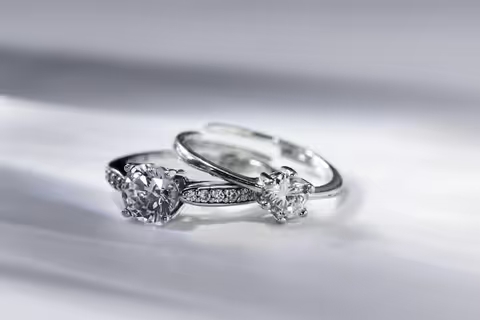
An eternity band is a ring designed with gemstones arranged continuously or almost continuously around the band.
Diamonds are commonly used, although sapphires, rubies, and other gemstones can also appear in eternity-style designs.
The defining feature is the repeated stone pattern. Depending on the design, stones may extend around the entire circumference or cover only the upper portion of the ring. A full eternity band has stones surrounding the complete ring, while a half or partial eternity design places stone
s across part of the band.
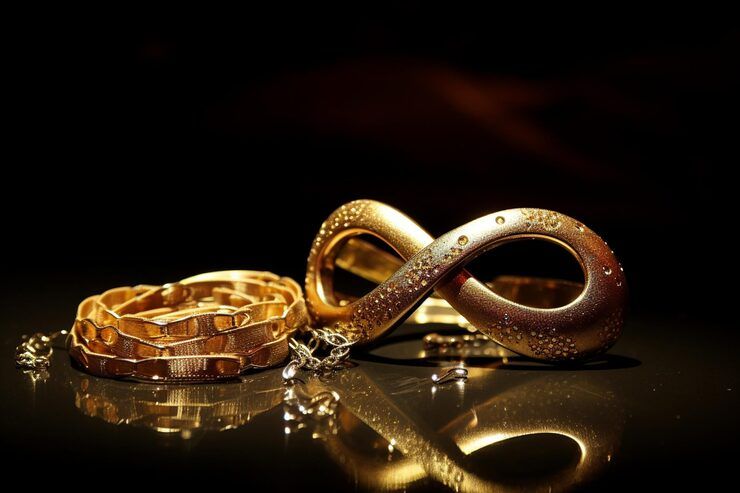
Eternity bands are associated with milestones such as anniversaries, weddings, and other personal occasions. They may also be worn as everyday jewellery or combined with engagement rings and wedding bands.
Several design elements influence the appearance and practical use of an eternity band:
- Metal: Gold, platinum, and other jewellery metals can be used.
- Gemstones: Diamonds are common, while coloured gemstones create a different visual effect.
- Setting: Common settings include prong, channel, bezel, and shared-prong arrangements.
- Band profile: Slim, medium, and wider profiles provide different proportions on the finger.
- Stone shape: Round, princess, oval, emerald, and other cuts can create different patterns.
The choice of an eternity band therefore involves more than the appearance of the gemstones. Metal purity, stone characteristics, ring size, setting construction, and intended use all influence the overall design.
Why Eternity Bands Matter Today
Eternity bands occupy an important place in modern jewellery because they combine a relatively simple ring structure with repeated gemstone detailing. This makes them relevant to people researching diamond jewellery, wedding rings, engagement rings, and anniversary jewellery.
For couples, an eternity band can complement an engagement ring or function as a separate wedding ring. Some people also prefer minimalist jewellery that can be worn without being restricted to formal occasions.
The design can address several practical preferences:
- A continuous gemstone pattern creates visual consistency.
- Different metal colours can complement different skin tones and existing jewellery.
- Half-eternity designs can provide greater flexibility around the lower portion of the finger.
- Platinum rings can provide a naturally white metal appearance.
- Gold eternity bands are available in yellow, white, and rose-gold colours.
- Coloured gemstones provide alternatives to traditional diamond patterns.
Ring comfort is another important consideration. A full eternity band can have gemstones and settings around the entire circumference, which may make resizing more complicated than with a plain band. For this reason, accurate finger measurement is particularly important.
Comparing Common Eternity Band Materials
| Material | Typical Characteristics | Common Consideration |
|---|---|---|
| Yellow gold | Warm traditional appearance | Available in different purity levels |
| White gold | Neutral white appearance | May have additional surface finishing |
| Rose gold | Pink or warm appearance | Often selected for a distinctive colour |
| Platinum | Naturally white metal | Dense and commonly used in fine jewellery |
| Silver | Bright white appearance | Generally less common for diamond eternity designs |
The metal should be considered together with the gemstone setting. A durable metal and secure setting are particularly relevant for rings intended for frequent wear.
Diamonds and Gemstone Selection
Diamond eternity rings can contain stones with different grades of cut, colour, clarity, and carat characteristics. These factors influence appearance and should be considered individually rather than relying on a single specification.
The 4Cs of diamonds are:
- Cut: Describes how effectively a diamond interacts with light.
- Colour: Refers to the degree of colour visible in a diamond.
- Clarity: Describes internal and external characteristics.
- Carat: Measures diamond weight.
In an eternity band, many small diamonds are often used rather than one large centre stone. Consistency between individual stones can therefore be important for creating a uniform appearance.
Laboratory-grown diamonds are another category found in contemporary diamond jewellery. They have essentially the same chemical composition and crystal structure as natural diamonds, but their origin differs. A grading report can help identify the characteristics and origin information associated with a particular diamond.
Coloured gemstones such as sapphire, ruby, or emerald can also be arranged in an eternity pattern. Their hardness, durability, colour, and treatment history should be considered when evaluating their suitability for regular ring wear.
Ring Size and Design Considerations
A ring size guide can help provide an initial measurement, but professional measurement is generally more reliable because finger size can change during the day and with temperature.
Important points include:
- Measure the finger on which the ring will be worn.
- Consider whether the ring will be worn beside another ring.
- Avoid relying only on measurements from a different finger.
- Check the internal profile and band width.
- Remember that full eternity rings may be difficult to resize.
- Consider comfort when choosing a wider band.
Stacking is also an important design consideration. An eternity band may be worn beside an engagement ring, another wedding band, or a simple metal ring. The width and profile of each ring can affect how comfortably the pieces sit together.
Recent Jewellery Trends and Updates
Jewellery preferences in India have continued to evolve during 2025 and 2026. A November 2025 report on Indian wedding jewellery highlighted growing interest in minimalist designs, layered jewellery, colourful gemstones, and vintage-inspired pieces.
Another December 2025 review noted a broader movement toward individual jewellery pieces, versatility, craftsmanship, and personal expression rather than relying only on matching jewellery sets.
Diamond jewellery also received attention during 2025. An Economic Times report from February 2025 described increased interest in diamond-studded jewellery during the Valentine's period, while a May 2025 report discussed stronger interest in smaller solitaire diamonds amid higher gold prices.
By July 2026, an Economic Times report noted that global streaming shows were influencing jewellery preferences among younger Indian consumers, with lighter and more wearable diamond jewellery gaining attention.
These developments do not mean that every consumer prefers minimalist or diamond-focused designs. Instead, they show that jewellery choices are becoming more varied, with traditional gold, contemporary diamond designs, gemstones, and personal styling existing alongside one another.
Indian Hallmarking Laws and Policies
For gold jewellery in India, hallmarking is regulated through the Bureau of Indian Standards (BIS). The system identifies the purity or fineness of precious-metal articles and provides a framework for consumer protection.
For hallmarked gold jewellery, the hallmark includes the BIS Standard Mark, the purity indication, and a six-digit alphanumeric Hallmark Unique Identification (HUID) number. Consumers can verify HUID information through the BIS CARE App.
The mandatory hallmarking system has expanded in phases. On 2 March 2026, the sixth phase added seven districts—Rupnagar, Banda, Beed, Gomati, Katihar, Beawar, and Neemuch—bringing the total coverage to 380 districts.
The BIS mandatory hallmarking framework covers specified gold jewellery grades, including 14K, 18K, 20K, 22K, 23K, and 24KS.
A separate development occurred for silver jewellery. From 1 September 2025, HUID-based hallmarking for silver jewellery and articles was introduced under the revised IS 2112:2025 standard.
For anyone researching gold eternity bands in India, checking the applicable hallmark and HUID information is therefore an important part of understanding the jewellery's stated metal purity.
Useful Tools and Resources
Several official and educational resources can help readers research eternity bands and related jewellery topics:
- BIS CARE App: Useful for checking HUID information associated with hallmarked jewellery.
- BIS Hallmarking Portal: Provides information about hallmarking rules, standards, registered jewellers, and recognised Assaying and Hallmarking Centres.
- BIS Hallmarking FAQs: Explains gold purity, HUID, hallmark components, and consumer protections.
- GIA Diamond Education: Provides educational information about diamond cut, colour, clarity, and carat.
- Diamond grading reports: Help document characteristics associated with an individual diamond or group of diamonds.
- Ring size guides: Useful for initial measurements before professional sizing.
- Jewellery care guides: Provide information about cleaning, storage, gemstone handling, and routine inspection.
For an eternity band, it is useful to keep documentation related to metal purity, gemstone grading, and ring measurements together. This can make future identification and maintenance easier.
Frequently Asked Questions
What is an eternity band?
An eternity band is a ring featuring a repeated arrangement of gemstones around all or part of the band. Diamonds are common, but coloured gemstones can also be used.
What is the difference between a full and half eternity band?
A full eternity band has gemstones arranged around the complete circumference of the ring. A half eternity band generally places gemstones across the upper portion, leaving part of the lower band without stones.
Are eternity bands suitable for everyday wear?
They can be, but suitability depends on the metal, gemstone type, setting, band design, and lifestyle. Rings worn frequently should be inspected periodically for loose stones or damaged settings.
Can an eternity band be resized?
Resizing can be more complicated for full eternity bands because gemstones may extend around the entire circumference. The available resizing method depends on the ring's construction and materials.
How can gold jewellery purity be checked in India?
For hallmarked gold jewellery, consumers can examine the BIS hallmark and six-digit HUID. The HUID can be checked through the BIS CARE App, which provides relevant identification information.
Conclusion
Eternity bands combine repeated gemstone patterns with a variety of metals, settings, and design styles. They can be used as wedding bands, anniversary rings, stacking rings, or independent jewellery pieces.
Understanding diamond characteristics, metal purity, ring sizing, setting construction, and maintenance can help readers make informed decisions about this type of jewellery. In India, BIS hallmarking and HUID verification provide an additional framework for checking stated precious-metal purity.
Recent jewellery trends also show increasing variety, from minimalist and lightweight designs to coloured gemstones, vintage influences, and contemporary diamond jewellery. As preferences continue to change, the basic principles remain useful: understand the materials, verify relevant documentation, consider comfort and durability, and choose a design appropriate for its intended use.