Self-Driving Laboratory Equipment: Guide to Automation and Practical Insights
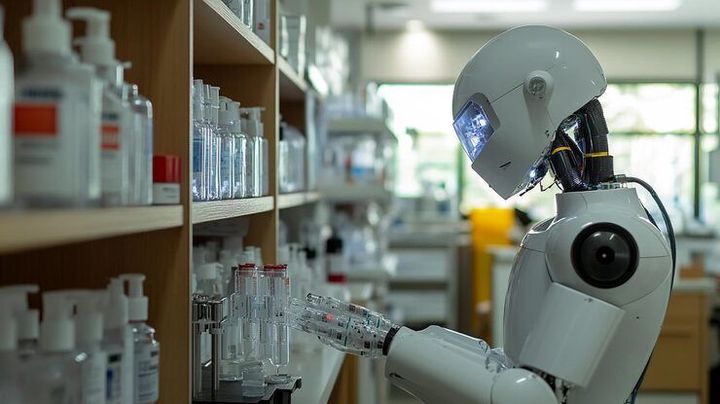
Self-driving laboratory equipment refers to automated laboratory systems that can perform experiments, collect data, analyze results, and adjust experimental conditions with limited human intervention. These systems combine laboratory instruments, robotics, software, sensors, data systems, and computational methods into a connected workflow.
The term “self-driving” does not mean that a laboratory operates without people. Instead, it describes an environment where software and automated equipment can coordinate repeated experimental tasks and use collected results to determine subsequent experimental steps.
For example, a traditional laboratory experiment may require a researcher to prepare samples, place them into instruments, record measurements, and decide what to test next. A self-driving laboratory can automate several of these steps and connect the results to a software system that helps determine the next experiment.
Main Components
A self-driving laboratory generally contains several connected technologies:
Robotic systems: Move samples, containers, tools, and laboratory materials.
Automated instruments: Perform measurements, analysis, synthesis, testing, or characterization.
Sensors: Monitor temperature, pressure, concentration, humidity, and other experimental conditions.
Laboratory software: Coordinates instruments and experimental workflows.
Data platforms: Store and organize experimental measurements.
Computational models: Analyze results and help select subsequent experiments.
Safety systems: Monitor operating conditions and provide protective controls.
The exact configuration depends on the research field. Chemistry laboratories may focus on liquid handling and reaction systems, while materials laboratories may require furnaces, deposition systems, microscopes, and characterization instruments.
Importance
Faster Experimental Workflows
Automation can allow equipment to perform repetitive experimental steps continuously according to predefined procedures. This can reduce the amount of manual intervention required for routine laboratory operations.
A connected workflow can also reduce delays between experimental stages. For example, after a reaction is completed, an automated handling system can transfer the sample to an analytical instrument without requiring a researcher to manually move it.
Consistent Experimental Conditions
Manual laboratory work can introduce variation through differences in timing, measurement, sample handling, and equipment operation.
Automated systems can execute predefined procedures with controlled parameters. This can help researchers maintain greater consistency across repeated experiments, provided the equipment is properly calibrated and maintained.
Data-Driven Experiment Selection
One important characteristic of a self-driving laboratory is the connection between experimentation and data analysis.
A system may evaluate previous experimental results and identify another combination of variables to test. Depending on the application, this process can involve optimization algorithms, statistical models, machine learning, or other computational techniques.
Reduced Repetitive Work
Laboratory personnel can spend substantial time on activities such as pipetting, sample preparation, instrument setup, data transfer, and routine measurements.
Automation can handle many of these repetitive operations, allowing researchers to focus more attention on experimental design, interpretation, validation, and scientific decision-making.
Recent Updates
Greater Integration Between Laboratory Hardware and Software
Recent laboratory automation developments have increasingly focused on connecting different instruments through software platforms and standardized interfaces.
Instead of operating every instrument separately, integrated systems can coordinate sample handling, experimentation, measurement, and data collection through a common workflow.
Automated Experiment Planning
Modern self-driving laboratories can combine automated equipment with computational experiment-selection methods.
A typical cycle may follow this sequence:
Define an experimental objective.
Select initial experimental conditions.
Run experiments automatically.
Collect measurements.
Analyze the results.
Select another experimental condition.
Repeat the cycle.
Stop when the defined objective or experimental boundary is reached.
This approach is particularly useful when researchers need to investigate many possible combinations of materials, chemical conditions, process parameters, or formulations.
Improved Laboratory Robotics
Laboratory robots have become more capable of handling liquids, containers, microplates, samples, and laboratory instruments.
Robotic arms, automated pipetting systems, mobile laboratory platforms, and specialized sample-handling equipment can be combined into larger workflows.
Better Data Connectivity
Data integration has become increasingly important as laboratories use more automated instruments.
A modern workflow may connect instrument data with laboratory information management systems, electronic laboratory notebooks, databases, and analytical software. Structured data can make it easier to compare experimental results and reproduce workflows.
Expansion Into Multiple Research Areas
Self-driving laboratory concepts are being explored across fields such as:
Pharmaceutical research
Chemical synthesis
Materials science
Battery research
Catalysis
Biotechnology
Polymer research
Semiconductor materials
Energy research
Food and formulation research
The equipment required varies considerably between these applications.
Laws or Policies
Laboratory Safety Requirements
Self-driving laboratory equipment must operate within the safety requirements applicable to the laboratory and research activity.
Safety considerations may include electrical protection, chemical handling, pressure systems, radiation controls, biological containment, ventilation, emergency shutdown systems, and equipment-specific safeguards.
Equipment Standards
Laboratories may use international or regional standards for electrical equipment, machinery safety, laboratory equipment, data management, and measurement systems.
Relevant standards depend on the equipment and application. Organizations may consider frameworks from bodies such as ISO, IEC, ASTM International, and national regulatory authorities.
Chemical and Biological Research
Laboratories handling chemicals or biological materials may be subject to additional requirements concerning storage, transportation, containment, waste handling, exposure control, and documentation.
Automation does not remove these responsibilities. In fact, automated workflows require careful assessment of what happens when equipment encounters an unexpected condition.
Data and Record Management
Automated laboratories generate large quantities of experimental data. Research organizations therefore need appropriate systems for data integrity, access control, version tracking, backups, and experimental records.
For regulated research, additional requirements may apply to electronic records, audit trails, validation, and data integrity.
Tools and Resources
Automated Liquid Handling Systems
Liquid handlers are commonly used for dispensing, mixing, dilution, and sample preparation.
They can work with microplates, tubes, reservoirs, and other laboratory containers. Their use is particularly common in chemistry, biotechnology, pharmaceutical research, and analytical workflows.
Robotic Arms
Robotic arms can move samples and laboratory containers between different pieces of equipment.
A robotic system may pick up a sample from a storage location, place it into an instrument, retrieve it after measurement, and move it to another stage of the workflow.
Analytical Instruments
Self-driving laboratories may integrate analytical equipment such as:
Spectrometers
Chromatographs
Microscopes
Particle analyzers
Mass spectrometers
Thermal analysis instruments
Electrochemical analyzers
Imaging systems
The analytical instrument provides measurements that become part of the automated experimental cycle.
Laboratory Information Management Systems
A laboratory information management system can help organize samples, experimental records, instrument data, and workflow information.
When connected with automated equipment, it can provide a structured environment for tracking experiments and associated data.
Electronic Laboratory Notebooks
Electronic laboratory notebooks provide digital records of experimental procedures, observations, results, and related information.
Integration with automated equipment can reduce manual data entry and create a more connected experimental record.
Computational Experiment Planning
Computational tools can analyze experimental results and identify possible subsequent conditions.
Depending on the research objective, researchers may use statistical optimization, Bayesian optimization, machine learning, simulation, or other computational approaches.
Self-Driving Laboratory Equipment Comparison
| Equipment or System | Main Function | Typical Role |
|---|---|---|
| Liquid Handler | Transfers and mixes liquids | Sample preparation |
| Robotic Arm | Moves samples and containers | Workflow automation |
| Automated Reactor | Controls experimental reactions | Chemical research |
| Analytical Instrument | Measures experimental results | Characterization |
| Sensors | Monitor experimental conditions | Process monitoring |
| LIMS | Organizes laboratory information | Data management |
| Electronic Lab Notebook | Records experiments | Documentation |
| Computational Platform | Analyzes data and selects conditions | Experiment planning |
Building a Self-Driving Laboratory
Creating an automated laboratory usually begins with identifying the experimental workflow rather than purchasing individual machines.
Researchers first determine which tasks require repeated manual intervention. These tasks can then be evaluated for automation.
A practical development process may include:
Mapping the complete experimental workflow.
Identifying repetitive laboratory operations.
Selecting compatible instruments.
Establishing communication between equipment.
Defining data formats and storage methods.
Creating safety controls.
Testing individual automated operations.
Connecting the complete workflow.
Validating measurements and repeatability.
Monitoring system performance.
Compatibility is particularly important. Two laboratory instruments may perform their individual functions correctly but still require additional hardware or software to communicate effectively.
FAQs
What Is Self-Driving Laboratory Equipment?
Self-driving laboratory equipment refers to connected laboratory hardware and software that can automate experimental operations, collect data, analyze results, and support the selection of subsequent experimental conditions.
How Does a Self-Driving Laboratory Work?
A typical system combines robotic equipment, laboratory instruments, sensors, software, and data analysis. The system performs an experiment, records the results, evaluates the data, and may select another experimental condition according to predefined objectives.
What Equipment Is Used in a Self-Driving Laboratory?
Equipment can include liquid handlers, robotic arms, automated reactors, analytical instruments, sensors, sample storage systems, laboratory computers, and data-management platforms.
Can Self-Driving Laboratories Replace Researchers?
Self-driving laboratories are designed to automate parts of experimental workflows rather than eliminate scientific oversight. Researchers normally define objectives, establish experimental boundaries, validate results, interpret findings, and monitor safety.
Where Are Self-Driving Laboratories Used?
They are being explored in chemistry, materials science, pharmaceutical research, biotechnology, battery development, catalysis, polymers, energy research, and other experimental fields where repeated testing and data analysis are important.
Conclusion
Self-driving laboratory equipment combines laboratory automation, robotics, analytical instruments, software, sensors, and computational methods into connected experimental workflows. The technology can automate repetitive operations while creating structured links between experimentation and data analysis.
Its practical value depends on reliable equipment integration, accurate measurements, appropriate safety controls, high-quality data, and effective human oversight. As laboratory hardware and software become more interoperable, self-driving laboratory systems can support increasingly complex experimental workflows across multiple scientific fields.