Sculptural Jewelry: Guide to Artistic Forms, Styles, and Design Insights
Sculptural jewelry is jewelry designed with an artistic, three-dimensional approach. Instead of focusing only on traditional decorative patterns, sculptural jewelry treats rings, necklaces, earrings, bracelets, and other pieces as small wearable forms of sculpture.
These designs can feature unusual curves, asymmetrical shapes, architectural structures, organic surfaces, geometric volumes, or abstract forms. The jewelry may be created from metals, gemstones, ceramics, resin, glass, wood, textiles, or combinations of several materials.
How Sculptural Jewelry Developed
Jewelry has long included three-dimensional artistic elements. Ancient civilizations used molded metals, carved stones, shells, beads, and other materials to create decorative objects with symbolic and cultural meanings.
Modern sculptural jewelry developed further through artistic movements that explored abstraction, geometry, organic forms, and experimental materials. Contemporary designers often combine traditional craftsmanship with digital design and modern manufacturing techniques.
Main Forms of Sculptural Jewelry
Sculptural jewelry can be classified by its visual structure and design approach.
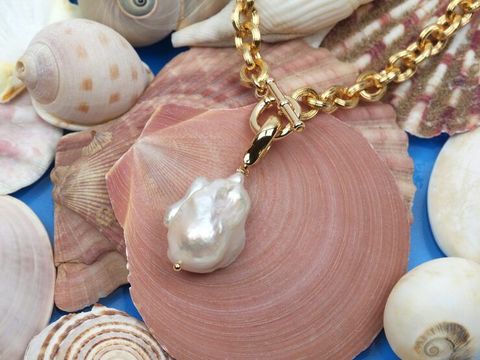
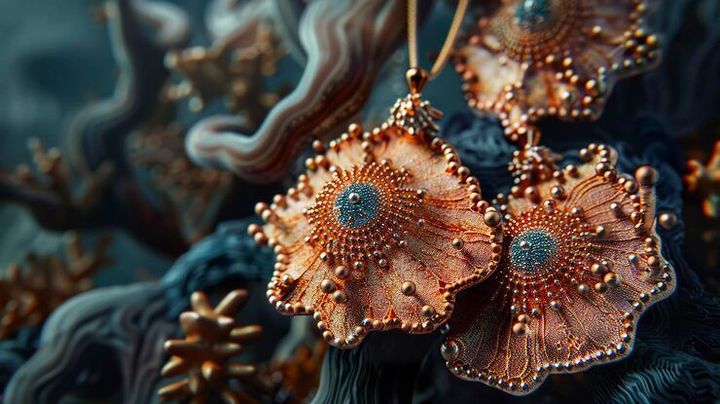
Organic forms: These use shapes inspired by leaves, shells, waves, branches, flowers, stones, or other natural structures.
Geometric forms: Circles, cubes, spirals, planes, arches, and repeated patterns create an architectural appearance.
Abstract forms: These pieces use shapes that may not represent a recognizable object.
Architectural jewelry: Structures can resemble buildings, bridges, columns, or engineered frameworks.
Textured forms: Hammering, carving, engraving, casting, and surface treatments create visual depth.
Modular designs: Several components can be arranged or connected to form a larger wearable structure.
Mixed-material designs: Metal can be combined with wood, ceramic, resin, glass, textiles, or gemstones.
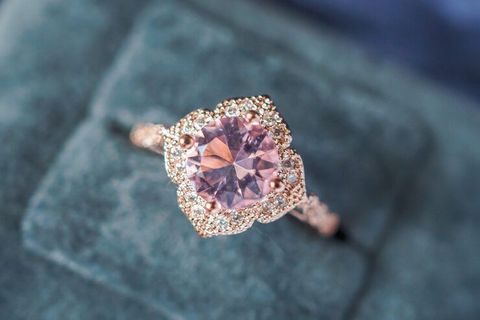
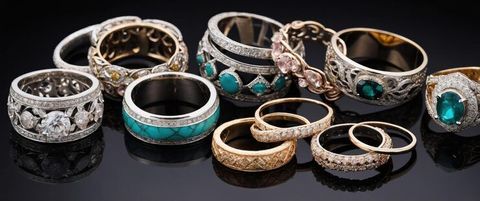
A simple example is a sculptural ring formed from several curved metal surfaces that intersect above the finger. The structure becomes part of the visual identity of the piece rather than functioning only as a setting for a gemstone.
Importance
Why Sculptural Jewelry Matters
Sculptural jewelry demonstrates how jewelry can function as both an accessory and an artistic object. Its three-dimensional forms can introduce volume, movement, texture, and unusual proportions that are less common in conventional jewelry designs.
The approach also gives designers greater flexibility when exploring shape. A piece can be influenced by architecture, nature, mathematics, industrial structures, cultural objects, or purely abstract concepts.
Materials Used
Material selection affects the weight, appearance, durability, texture, and manufacturing process of sculptural jewelry.
Gold: Gold can be shaped, cast, textured, and combined with gemstones. Different alloys can create different colors and physical properties.
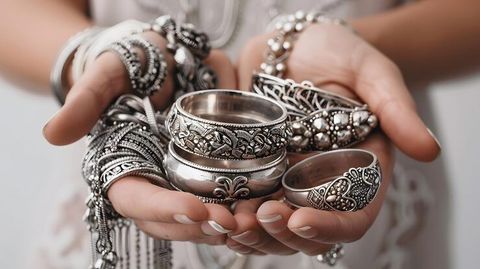
Silver: Silver is widely used for detailed sculptural work because it can support intricate forms and surface treatments.
Platinum: Platinum is a dense precious metal used for selected jewelry applications where its physical properties are appropriate.
Titanium: Titanium provides a lightweight option for some large or structurally complex designs.
Stainless steel: Stainless steel can provide strength and a modern metallic appearance.
Ceramic: Jewelry ceramics can produce matte, polished, textured, or sculptural surfaces.
Resin: Resin can be molded into complex forms and combined with pigments, inclusions, or other materials.
Wood: Wood introduces natural grain and organic texture.
Gemstones: Stones can become structural focal points or decorative elements within a larger form.
Design Techniques
Sculptural jewelry can involve several traditional and modern techniques.
Casting allows molten material to be poured into a prepared mold, producing complex three-dimensional forms. Fabrication involves cutting, bending, joining, and shaping individual components.
Carving removes material to create a desired shape, while forging changes the form of metal through controlled force. Engraving and texturing can add surface details after the primary structure has been created.
Digital techniques such as computer-aided design can also be used to develop complex forms before physical production.
Design Applications
Sculptural jewelry can be used across rings, earrings, pendants, necklaces, brooches, bracelets, cuffs, and other wearable forms. The same artistic concept can sometimes be adapted across several jewelry categories.
Large earrings may emphasize volume around the face, while sculptural rings can create architectural shapes around the finger. Necklaces can use interconnected forms to create movement across the neckline.
Comparing Sculptural Jewelry Styles
| Style | Main Form | Common Materials | Visual Character |
|---|---|---|---|
| Organic | Nature-inspired curves | Gold, silver, wood, resin | Fluid and natural |
| Geometric | Precise shapes and angles | Metals, ceramic, titanium | Structured and architectural |
| Abstract | Non-representational forms | Mixed materials | Artistic and experimental |
| Architectural | Structural frameworks | Metal, ceramic, glass | Built and dimensional |
| Textured | Detailed surfaces | Gold, silver, steel | Tactile and layered |
| Modular | Multiple connected parts | Metals, resin, mixed materials | Flexible and constructed |
Common Challenges
Large or complex jewelry forms can introduce practical challenges. Weight, balance, comfort, durability, and movement need to be considered alongside appearance.
Complex surfaces can also be more difficult to polish, clean, repair, or reproduce consistently. Some materials may require specialized handling because of their hardness, fragility, chemical characteristics, or sensitivity to heat.
Recent Updates
Digital Design and 3D Modeling
From 2024 through 2026, digital design continues to influence jewelry development. Computer-aided design allows artists and manufacturers to create three-dimensional models, examine proportions, modify surfaces, and prepare designs for selected manufacturing processes.
Digital modeling is particularly useful for sculptural forms because complex curves and interconnected structures can be developed virtually before physical production.
3D Printing
3D printing is increasingly used for jewelry prototypes and selected production applications. It can create intricate shapes that may be difficult to produce directly through conventional fabrication.
A designer can print a physical prototype to examine size, balance, surface shape, and wearability before producing a final piece in another material.
Generative Design and AI-Assisted Workflows
AI-assisted and computational design tools can generate or modify complex geometric patterns based on defined parameters. These systems may help designers explore multiple shapes and variations during the early design stage.
However, generated forms still require human evaluation for structural strength, comfort, manufacturability, originality, and aesthetic suitability. AI-generated concepts do not automatically translate into practical wearable objects.
Digital Fabrication
Computer-controlled milling, laser cutting, laser engraving, and other digital manufacturing techniques can support precise surface detailing and structural components.
These processes can be combined with traditional hand finishing, allowing digitally developed forms to receive polishing, texturing, setting, or other manual treatments.
Material and Sustainability Considerations
Jewelry designers are increasingly examining recycled metals, material efficiency, production waste, traceability, and responsible sourcing. The environmental impact of a piece depends on material origin, manufacturing methods, energy use, transportation, durability, and end-of-life considerations.
Recycled metals can be incorporated into some jewelry production systems, while digital manufacturing can help reduce unnecessary material during certain design and prototyping stages.
Laws or Policies
Jewelry Material Regulations
There is no single worldwide regulation governing every piece of sculptural jewelry. Requirements vary according to the material, country, intended market, and manufacturing process.
Regulations can cover metal composition, chemical substances, product labeling, consumer protection, gemstone trade, and restrictions on specific materials.
European Requirements
The European Union regulates chemical substances through the REACH framework. Certain restrictions can affect materials used in jewelry, including requirements concerning substances that may come into prolonged contact with skin.
Nickel release is one area of relevance for jewelry designed for prolonged skin contact. The applicable requirements depend on the product and circumstances.
Precious-Metal Marking
Precious-metal marking systems differ across countries. Some jurisdictions use hallmarking systems to communicate metal fineness, while other markets have different labeling requirements.
Manufacturers and importers need to check the rules applicable to the specific destination market rather than assuming that one country's requirements apply internationally.
Gemstone and Diamond Trade
International rules can also apply to certain gemstones and precious materials. The Kimberley Process is an international certification framework designed to reduce the international trade of rough diamonds associated with armed conflict.
Other gemstones and minerals can have separate sourcing, import, export, or documentation requirements depending on their origin and destination.
Tools and Resources
Computer-Aided Design Software
CAD software allows designers to create detailed three-dimensional jewelry models. Measurements, curves, thicknesses, intersections, and stone settings can be adjusted digitally.
For sculptural jewelry, CAD can be particularly useful for examining complex forms before a physical prototype is created.
3D Printers and Prototyping Systems
3D printers can produce prototypes in suitable materials. These prototypes help evaluate dimensions, weight distribution, movement, and general wearability.
Some jewelry production workflows use printed patterns or models that later support casting processes.
3D Scanners
3D scanners can capture the shape of physical objects and convert their geometry into digital models. This can support restoration, modification, documentation, or further design development.
Digital Rendering Tools
Rendering software can simulate materials, reflections, lighting, gemstones, and surface finishes. Designers can use these visualizations to study how a sculptural piece may appear before physical production.
Measurement and Testing Equipment
Calipers, microscopes, hardness-testing equipment, polishing tools, and material-analysis systems can support quality evaluation. The appropriate equipment depends on the material and production technique.
Standards and Regulatory Resources
International and national standards organizations provide information relevant to jewelry materials, testing, manufacturing, and product requirements. Regulatory agencies in individual markets can provide additional information concerning chemical restrictions, labeling, consumer protection, and imports.
FAQs
What is sculptural jewelry?
Sculptural jewelry is wearable jewelry designed around three-dimensional artistic forms. It can use organic, geometric, architectural, abstract, or experimental shapes.
How is sculptural jewelry made?
Sculptural jewelry can be made through casting, forging, fabrication, carving, engraving, machining, 3D printing, laser processing, and hand-finishing techniques.
What materials are used in sculptural jewelry?
Common materials include gold, silver, platinum, titanium, stainless steel, ceramic, resin, wood, glass, and gemstones. Designers may combine several materials within one piece.
Is sculptural jewelry made with 3D printing?
Yes. 3D printing can be used for prototypes, patterns, and selected finished jewelry applications. It is particularly useful for testing or producing complex three-dimensional forms.
How does sculptural jewelry differ from traditional jewelry?
Sculptural jewelry places greater emphasis on three-dimensional shape, volume, structure, and artistic form. Traditional jewelry can also contain sculptural elements, but sculptural approaches often make the physical form the primary design feature.
Conclusion
Sculptural jewelry combines wearable design with three-dimensional artistic expression through organic, geometric, architectural, abstract, and mixed-material forms. Modern tools such as CAD, 3D printing, digital rendering, laser processing, and computational design have expanded the ways complex jewelry structures can be developed. Material selection, comfort, durability, manufacturing methods, sourcing, and regional regulations remain important considerations. Understanding these elements provides a foundation for exploring sculptural jewelry as both a design discipline and a form of wearable art.