Sand Filter Machine Guide to Water Filtration and Treatment Systems
A sand filter machine is a water treatment device that uses layers of granular media to remove suspended particles and other impurities from water.
Sand filtration is an established physical treatment method and is used in municipal, commercial, industrial, and wastewater applications. A sand filtration system generally works by directing water through a bed of sand or similar media, where particles become trapped as water passes through.
The basic principle behind sand filtration is relatively simple. Water enters a filter vessel, moves through the filtration media, and exits after suspended material has been retained within the media bed. Depending on the design, the system may use gravity, pressure, pumps, valves, and automated controls.
An industrial sand filter is designed for applications where water volumes, operating conditions, or treatment requirements are different from those found in small household systems. Industrial sand filtration systems can be configured for water pretreatment, process water, cooling water, swimming pools, irrigation, and selected wastewater applications.
How Sand Filtration Works
A typical filter contains a layer of graded sand supported by additional material at the bottom. As water moves through the media, suspended solids are captured through several physical mechanisms, including straining and attachment to media surfaces.
The filtration process does not mean that every dissolved substance is removed. Sand filtration mainly targets suspended particles and turbidity. Additional treatment stages may be necessary when water contains dissolved chemicals, microorganisms, salts, or other contaminants that cannot be adequately removed through physical filtration alone.
Common Sand Filter Designs
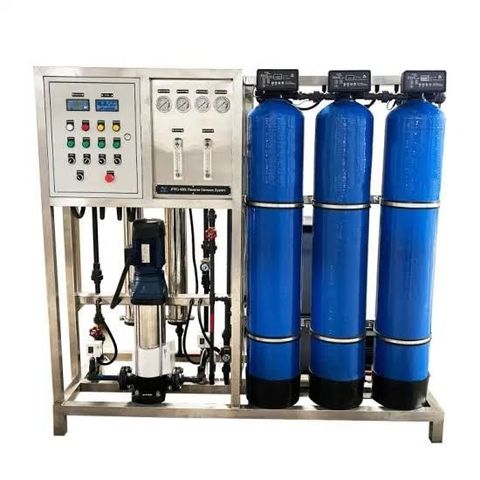
A pressure sand filter places filtration media inside a closed vessel through which water is moved under pressure. This arrangement is widely used where a compact treatment process is needed and can be integrated with pumps and other treatment equipment.
A commercial sand filter system may use one or more vessels depending on the required flow and operating arrangement. Larger installations can include multiple filter units so that one unit can undergo cleaning while another remains available for filtration.
| Filter Type | Typical Purpose | Main Characteristic |
|---|---|---|
| Pressure sand filter | Water pretreatment and suspended-solid removal | Closed pressurized vessel |
| Industrial pressure sand filter | Industrial water treatment | Designed for larger process flows |
| Multimedia sand filtration system | Enhanced particle filtration | Uses multiple media layers |
| Automatic sand filter system | Repeated filtration cycles | Uses automated valves or controls |
| Wastewater sand filtration systems | Secondary or tertiary treatment | Used for selected wastewater streams |
Importance
Water quality affects households, agriculture, manufacturing, commercial buildings, and public infrastructure. Suspended solids and turbidity can interfere with downstream treatment equipment and can affect the appearance and usability of water.
Water sand filtration equipment can act as one stage within a broader treatment process. In industrial settings, industrial water filtration equipment may be installed before membrane systems, disinfection units, cooling systems, or other treatment stages.
Protecting Downstream Equipment
Particles carried in untreated water can accumulate in pipes, tanks, valves, heat-transfer equipment, and other components. Filtration can reduce the amount of suspended material reaching these downstream systems.
A high capacity sand filtration system may be used when a facility needs to process substantial water volumes. The actual capacity depends on factors such as filter diameter, media depth, filtration rate, water quality, and operating pressure.
Applications Across Different Sectors
Industrial water filter systems are used in various environments where suspended particles need to be reduced. Examples include:
- Manufacturing process water.
- Municipal and institutional water treatment.
- Cooling-water pretreatment.
- Irrigation water preparation.
- Swimming pool filtration.
- Selected wastewater treatment processes.
- Pretreatment before membrane filtration.
Commercial water filtration equipment can also be used in hotels, buildings, recreational facilities, food-related operations, and other environments where water treatment requirements are larger than those of a typical household installation.
Limitations of Sand Filtration
Sand filtration is primarily a physical separation process. It should not automatically be considered a complete purification method because dissolved contaminants and certain microorganisms may require different treatment technologies.
An industrial water purification system may therefore combine several stages. Depending on the water source and treatment objective, these can include coagulation, sedimentation, activated carbon treatment, membrane filtration, disinfection, or other processes.
Recent Updates
From 2024 through 2026, sand filtration has continued to develop alongside broader improvements in water treatment automation, monitoring, and resource management. The general direction has been toward systems that provide greater visibility into filter performance while reducing unnecessary manual intervention.
Automation and Monitoring
An automatic sand filter system can use valves, timers, pressure sensors, flow meters, and programmable controllers to manage filtration and backwashing cycles. These components can help coordinate routine operating steps according to predefined conditions.
Automated industrial sand filtration systems may also monitor pressure differences across the filter. A rising pressure difference can indicate that particles are accumulating in the media and that cleaning may be required.
Multimedia Filtration
A multimedia sand filtration system uses different types or grades of media arranged in layers. The differences in media size and density can support particle removal through a greater portion of the filter bed.
The design and media combination vary according to water characteristics and treatment objectives. Multimedia filtration does not replace every other form of water treatment, but it can form part of a multi-stage treatment arrangement.
Integration With Digital Water Systems
Advanced sand filtration equipment is increasingly being integrated with digital monitoring systems. Sensors can provide information about flow, pressure, valve status, and other operating conditions.
Advanced industrial water filtration systems may combine this information with control software to record operating conditions and identify changes over time. Such systems can also be connected with broader industrial monitoring platforms where appropriate.
Water Efficiency Considerations
Backwashing is an important part of sand filter operation. During backwashing, water is directed through the media in the opposite direction to loosen and remove accumulated particles.
Current system design increasingly considers water use during cleaning cycles. Complete industrial sand filtration systems may therefore incorporate controls that initiate cleaning based on operating conditions rather than relying only on fixed schedules.
Tools and Resources
Several tools can help users understand, design, monitor, or maintain filtration processes. The appropriate resource depends on whether the goal is basic learning, process planning, equipment sizing, or operational monitoring.
Filter Sizing Resources
Filter sizing generally considers parameters such as flow rate, filtration area, media depth, loading rate, and water quality. Basic engineering calculators can help convert flow units and estimate filtration area, although final system design involves additional technical considerations.
Useful resources include:
- Flow-rate conversion calculators.
- Pressure and head-loss calculators.
- Filter-area calculation worksheets.
- Media-depth planning templates.
- Water-quality testing records.
- Backwash scheduling worksheets.
Water Treatment References
Organizations such as the U.S. Environmental Protection Agency and the American Water Works Association publish educational and technical information related to water treatment. Manufacturer documentation for filtration media, valves, pumps, and control equipment can also explain operating requirements and maintenance procedures.
Water treatment professionals may use laboratory analysis to determine turbidity, suspended solids, pH, and other characteristics before selecting a treatment configuration. The treatment approach should correspond to the characteristics of the incoming water and the intended use of the treated water.
Maintenance and Monitoring Records
A simple operating log can record flow rate, inlet and outlet pressure, pressure difference, backwash activity, and observations about water quality. These records can help identify changes in filter performance over time.
For automated systems, digital monitoring platforms can collect operational data from sensors and controllers. Regular inspection remains relevant even when routine functions are automated.
FAQs
What is a sand filter machine?
A sand filter machine is a filtration device that passes water through granular media to capture suspended particles. It is commonly used as one stage of water treatment.
How does an industrial sand filter work?
An industrial sand filter directs water through a bed of filtration media inside a suitable vessel. Suspended particles are retained within the media while filtered water exits through the collection system.
What is a pressure sand filter used for?
A pressure sand filter is used for removing suspended solids and reducing turbidity in various water treatment applications. It operates inside a closed vessel with water moved through the media under pressure.
What is an automatic sand filter system?
An automatic sand filter system uses controls, valves, sensors, or programmed sequences to manage activities such as filtration and backwashing. The level of automation varies between system designs.
Are wastewater sand filtration systems suitable for every contaminant?
No. Wastewater sand filtration systems primarily address suspended particles and related physical impurities. Dissolved substances, specific microorganisms, and other contaminants may require additional treatment processes.
Conclusion
A sand filter machine uses granular media to remove suspended particles from water and is commonly used as part of a broader treatment system. Industrial sand filtration systems can be configured for different flow requirements, water qualities, and operating conditions. Recent developments have emphasized automation, monitoring, multimedia filtration, and more controlled backwashing processes. Understanding the filtration principle, system types, applications, and limitations provides a foundation for understanding modern water treatment systems.