Refrigeration Compressors Insights: Understanding Performance, Design, and Cooling Functions
Refrigeration compressors are a central part of systems that remove heat from an enclosed space and transfer it to another location.
They are used in household refrigerators, commercial cooling equipment, industrial refrigeration plants, transport refrigeration units, air-conditioning systems, and other temperature-control applications. Understanding refrigeration compressors helps explain how cooling systems maintain the temperatures required for food, medicines, materials, buildings, and industrial processes.
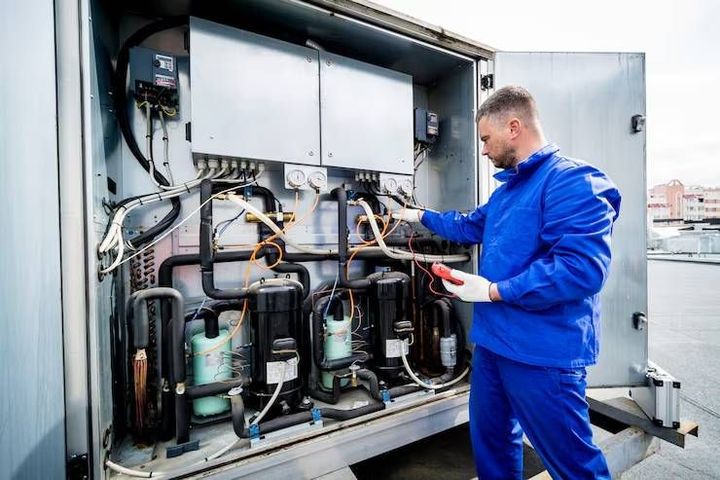
A refrigeration compressor works by circulating refrigerant through a closed system. It receives refrigerant vapor from the evaporator, increases its pressure, and sends the compressed vapor toward the condenser. The condenser then releases heat, allowing the refrigerant to change state and continue through the cooling cycle.
How Refrigeration Compressors Work
The basic refrigeration cycle involves four main stages: compression, condensation, expansion, and evaporation. During compression, the compressor raises the refrigerant vapor pressure and temperature. The high-pressure vapor moves to the condenser, where heat is transferred away from the refrigerant.
After condensation, the refrigerant passes through an expansion device that reduces its pressure. The resulting low-pressure refrigerant enters the evaporator, absorbs heat from the surrounding area, and becomes vapor again. This vapor returns to the compressor, completing the cycle.
Common Compressor Designs
Different refrigeration applications require different compressor arrangements. Common designs include reciprocating, scroll, screw, and centrifugal compressors.
Reciprocating compressors use pistons moving inside cylinders to compress refrigerant vapor. Scroll compressors use two spiral-shaped elements, with one moving around the other to compress the refrigerant. Screw compressors use rotating screw-shaped components, while centrifugal compressors use high-speed rotating impellers to increase refrigerant pressure.
Importance
Refrigeration compressors matter because temperature control is connected to many parts of everyday life and industrial activity. Refrigerated food depends on controlled temperatures during storage and transportation, while commercial buildings use cooling equipment to maintain indoor conditions.
In industrial environments, refrigeration can support processes involving food production, chemical processing, cold storage, manufacturing, and temperature-sensitive materials. The compressor influences how effectively the refrigeration system responds to its intended cooling load.
Factors That Affect Performance
Compressor performance depends on several operating conditions rather than one specification. Refrigerant type, suction pressure, discharge pressure, operating temperature, compressor capacity, motor characteristics, and system design can all influence operation.
Heat transfer conditions are also important. A condenser that cannot release heat effectively may cause discharge pressure to rise, while restricted airflow or poor evaporator conditions can affect the amount of heat absorbed from the cooled space.
Regular monitoring can help identify changes such as unusual operating temperatures, pressure variations, vibration, or abnormal electrical behavior. These observations can indicate that a refrigeration system requires technical inspection.
Comparing Compressor Types
The following table provides a general overview of common refrigeration compressor designs:
| Compressor type | Typical characteristics | Common applications |
|---|---|---|
| Reciprocating | Piston-based compression | Refrigerators, cold rooms, commercial systems |
| Scroll | Spiral compression mechanism | Air conditioning, commercial cooling |
| Screw | Rotary screw compression | Industrial refrigeration, large cooling systems |
| Centrifugal | High-speed impeller operation | Large-scale cooling installations |
Selection depends on the required cooling capacity, operating conditions, refrigerant characteristics, system configuration, and expected operating pattern. A compressor designed for one application may not be appropriate for another.
Recent Updates
Refrigeration technology has continued to change as manufacturers and system designers respond to energy-efficiency requirements, refrigerant regulations, digital monitoring, and changing environmental considerations. From 2024 through 2026, these trends have remained important across residential, commercial, and industrial refrigeration.
Refrigerant Transition
Refrigerant selection has received increasing attention because different refrigerants have different environmental characteristics, operating pressures, safety considerations, and compatibility requirements. Regulations in several regions are encouraging transitions toward refrigerants with lower environmental impact.
The transition is not simply a matter of replacing one refrigerant with another. Compressor materials, lubricants, pressure ratings, controls, heat exchangers, and other system components may need to be compatible with the selected refrigerant.
Variable-Speed Operation
Variable-speed compressor technology has become more common in applications where cooling demand changes throughout the operating cycle. Instead of operating continuously at one fixed speed, an electronically controlled compressor can adjust its operating speed according to system requirements.
This approach can help systems respond to changing cooling loads and maintain more consistent temperature conditions. Actual results depend on system design, control settings, ambient conditions, and operating patterns.
Digital Monitoring
Sensors and connected controls are also becoming more common in refrigeration systems. Temperature, pressure, electrical measurements, vibration, and other operating data can be monitored through electronic control platforms.
Data monitoring can help technicians identify changes in operating conditions and examine system behavior over time. It also supports condition-based maintenance approaches, where equipment condition and operating data are considered alongside routine inspection schedules.
Improved System Controls
Modern refrigeration systems increasingly use electronic expansion controls, variable-speed drives, digital controllers, and integrated monitoring systems. These technologies allow several components to work together according to changing thermal loads.
The broader trend is toward refrigeration systems that can adjust operation more precisely rather than relying only on fixed operating conditions. This development is particularly relevant in facilities where cooling demand varies throughout the day or across different seasons.
Tools and Resources
Several resources can help readers understand refrigeration compressors and related cooling systems. Manufacturer technical manuals can provide compressor specifications, operating envelopes, refrigerant compatibility information, and installation requirements for particular equipment.
Refrigeration calculators can help users examine relationships between pressure, temperature, superheat, subcooling, cooling capacity, and other system parameters. These tools are useful for learning how changes in one part of the refrigeration cycle can affect other components.
Industry reference platforms and technical organizations also publish information about refrigerants, refrigeration cycles, efficiency concepts, safety practices, and equipment standards. Educational diagrams of vapor-compression cycles can be particularly useful for people learning the subject for the first time.
Useful resources may include:
- Refrigerant pressure-temperature charts for understanding refrigerant behavior.
- Compressor performance tables for comparing operating conditions.
- Energy and capacity calculators for examining system requirements.
- Technical manuals for specific compressor models.
- Refrigeration cycle diagrams for understanding component relationships.
- Digital monitoring platforms for reviewing operating data.
When interpreting technical measurements, the specifications and operating limits associated with the particular equipment should be considered. Refrigeration systems involve pressurized components and electrical equipment, so technical inspection and adjustment should be handled by appropriately qualified personnel.
FAQs
What are refrigeration compressors used for?
Refrigeration compressors circulate refrigerant through a cooling system by compressing refrigerant vapor. They are used in refrigerators, cold-storage systems, commercial refrigeration equipment, air-conditioning systems, and industrial cooling applications.
How do refrigeration compressors affect cooling performance?
Refrigeration compressors influence refrigerant circulation, pressure, temperature, and cooling capacity. Their performance works together with the evaporator, condenser, expansion device, controls, and refrigerant characteristics.
What are the main types of refrigeration compressors?
The main types include reciprocating, scroll, screw, and centrifugal compressors. Each design uses a different compression mechanism and is associated with different capacity ranges and application conditions.
What is a variable-speed refrigeration compressor?
A variable-speed refrigeration compressor can change its operating speed in response to cooling demand. This allows the refrigeration system to adjust its output as the thermal load changes.
Why is refrigerant selection important for compressor operation?
Refrigerant selection affects pressure, temperature, lubrication, material compatibility, safety requirements, and system performance. A compressor must be designed or approved for the refrigerant and operating conditions used in the refrigeration system.
Conclusion
Refrigeration compressors are essential components in vapor-compression cooling systems, moving refrigerant through the cycle so heat can be transferred away from the cooled space. Reciprocating, scroll, screw, and centrifugal designs provide different approaches to refrigerant compression for varied applications. Recent developments have focused on refrigerant transitions, variable-speed operation, digital monitoring, and more responsive system controls. Understanding compressor design and operating conditions provides useful context for understanding how modern refrigeration systems function.