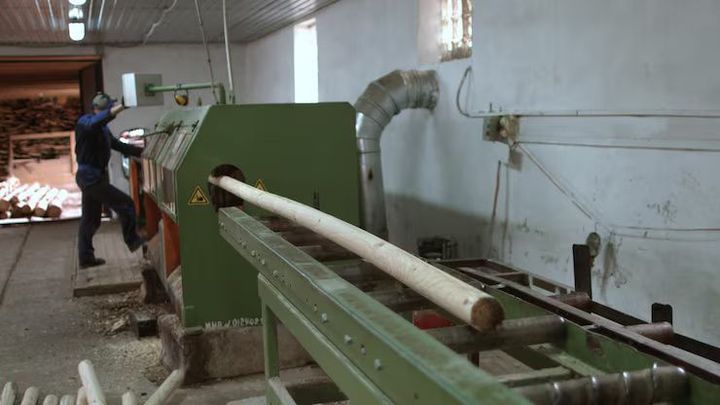
PVC Pipe Belling Machines: Insights Into Pipe End Forming and Applications
PVC Pipe Belling Machines are specialized equipment used to form a socket, or bell-shaped end, on a PVC pipe.
This enlarged pipe end allows another pipe section to fit into it, creating a connection that can be used with different joining methods. The process is also known as pipe end forming or socketing.
PVC, or polyvinyl chloride, is widely used for water distribution, drainage, irrigation, sewerage, and other piping applications. During normal pipe extrusion, the pipe generally has a uniform cylindrical shape. A belling machine changes the shape of one end without changing the basic structure of the pipe.
The forming process normally involves heating a selected section of the pipe until the material becomes sufficiently flexible. The softened end is then shaped around a forming mandrel or tool. After forming, the pipe is cooled so that the socket retains its required dimensions.
How the Forming Process Works
A typical PVC pipe belling process can involve several stages:
- Pipe positioning places the pipe at the correct location inside the machine.
- Heating raises the temperature of the selected pipe end to make it suitable for forming.
- Forming shapes the softened section around a specified mandrel.
- Cooling stabilizes the newly formed socket.
- Ejection removes the finished pipe from the forming area.
Temperature, heating time, forming pressure, cooling conditions, and tooling dimensions can influence the resulting socket. These factors need to correspond with the pipe material, diameter, wall thickness, and intended joining method.
Types of Pipe Ends
PVC pipes can use different socket profiles depending on their intended application. Some systems use sockets designed for solvent-cement joints, while others are shaped for elastomeric sealing rings. The appropriate geometry depends on the pipe specification and joining system.
ASTM D2241-24 notes that PVC pressure-rated pipe is often belled for line-pipe applications and references separate specifications for solvent-cement and elastomeric joints.
Importance
Why Pipe End Forming Matters
Pipe end forming is important because the dimensions of a socket influence how pipe sections connect. A socket that is not formed consistently may create difficulties during assembly or affect the intended fit between components.
For general users, the importance of PVC Pipe Belling Machines may not be immediately visible because the equipment is part of the manufacturing process. However, properly formed pipe ends can contribute to predictable connections in systems used for water movement, drainage, irrigation, and related applications.
Applications Across Piping Systems
PVC pipes with formed ends are used in several areas. Common applications include:
- Water distribution systems
- Drainage and sewerage networks
- Irrigation pipelines
- Building plumbing systems
- Underground piping
- Industrial fluid-handling systems where PVC is suitable
ASTM D3034-24, for example, addresses PVC sewer pipe and fittings and includes requirements relating to socket diameter, socket depth, wall thickness, joint tightness, and other characteristics.
The exact pipe design depends on its intended application. A socket used for a drainage pipe may have different dimensional requirements from one used for a pressure-rated water pipe.
Factors That Affect Forming Quality
Several factors can influence the final pipe end. Important considerations include:
| Factor | Role in Pipe Belling |
|---|---|
| Heating temperature | Softens the pipe end for forming |
| Heating duration | Determines how evenly the material becomes flexible |
| Mandrel shape | Establishes the internal socket geometry |
| Cooling method | Helps stabilize the formed section |
| Pipe dimensions | Influence tooling and forming requirements |
| Material formulation | Can affect processing behavior |
Controlling these factors helps maintain consistent dimensions throughout production. Excessive heating or uneven temperature distribution can change the material's behavior, while insufficient heating can make forming more difficult.
Recent Updates
Developments From 2024 to 2026
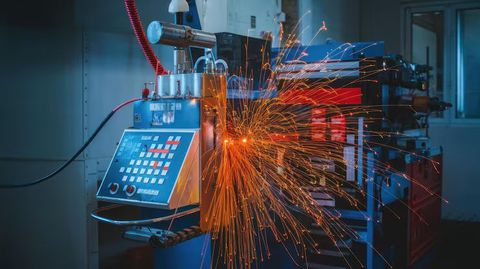
Recent developments in PVC pipe manufacturing have placed greater attention on dimensional consistency, process monitoring, automation, and compatibility with different pipe sizes. Modern belling equipment can incorporate programmable controls, temperature monitoring, automated movement, and controlled cooling to reduce variations between production cycles.
A current example of this direction is the increasing use of automated systems that combine heating, forming, cooling, and pipe handling into a coordinated process. Equipment specifications in the current market commonly describe PLC-based controls, temperature sensors, automated ejection, and controlled heating and cooling.
Standards have also continued to develop during this period. ASTM D2241-24 specifies requirements for PVC pressure-rated pipe, including dimensions, workmanship, pressure performance, and extrusion quality. ASTM D3034-24 covers PVC sewer pipe and fittings and includes requirements for socket-related dimensions and joint characteristics.
Greater Attention to Material-Specific Processing
Another development is greater attention to differences between PVC formulations and pipe types. PVC-O, for example, has its own international requirements. ISO 16422-1:2024 covers oriented unplasticized PVC pipe used in applications including water supply, drainage, sewerage, and irrigation under pressure.
This means a belling process cannot be treated as identical for every pipe. Tooling, heating conditions, socket design, and quality checks may need to correspond with the specific material and applicable standard.
Automation and Process Monitoring
Automation is also becoming more visible in pipe-end forming. Current machine designs can combine programmable controls with digital temperature monitoring and automated forming sequences. These features can help operators maintain repeatable process conditions, although the actual results still depend on appropriate machine setup and pipe specifications.
The general direction from 2024 through 2026 is toward more controlled and integrated pipe manufacturing processes rather than relying entirely on manual adjustments.
Tools and Resources
Standards and Technical References
Industry standards are useful resources for understanding pipe dimensions, joining systems, testing requirements, and material characteristics. ASTM documents such as D2241 and D3034 provide technical references for specific PVC pipe categories.
ISO publications can also help readers understand international requirements for particular PVC materials and piping applications. The relevant standard should always match the pipe type and intended application.
Machine Documentation
Machine manuals, tooling drawings, temperature-control documentation, and maintenance instructions are useful for understanding how a particular PVC Pipe Belling Machine operates. These documents normally explain forming sequences, tooling changes, operating parameters, safety procedures, and inspection requirements.
Measurement and Inspection Tools
Common inspection resources include digital calipers, dimensional gauges, temperature sensors, measuring tapes, and socket-depth gauges. These tools can help verify dimensions during manufacturing and quality checks.
Production planners may also use spreadsheets or process calculators to record pipe diameter, wall thickness, heating conditions, cooling times, and inspection results. Such records can make it easier to identify variations between production batches.
FAQs
What are PVC Pipe Belling Machines used for?
PVC Pipe Belling Machines form a socket or bell-shaped section at the end of a PVC pipe. The formed end allows another pipe or fitting to connect according to the intended joining system.
How does a PVC Pipe Belling Machine work?
The machine generally heats a selected pipe end, forms it around a mandrel or shaping tool, cools the material, and then removes the pipe. The exact sequence depends on the machine design and pipe specification.
Why is heating important in PVC pipe belling?
Heating makes the selected PVC section sufficiently flexible for forming. Temperature and heating duration need to be controlled because uneven or inappropriate heating can affect the resulting socket dimensions.
What applications use belled PVC pipes?
Belled PVC pipes are used in applications such as water distribution, drainage, sewerage, irrigation, and other piping systems where PVC is suitable. The exact application depends on the pipe specification and joining method.
What should be checked after pipe end forming?
Important checks can include socket diameter, depth, wall thickness, shape, surface condition, and joint fit. Applicable standards and manufacturer documentation determine which measurements and tests are appropriate.
Conclusion
PVC Pipe Belling Machines are used to transform a straight PVC pipe end into a shaped socket for pipe joining. The process generally combines controlled heating, mechanical forming, cooling, and dimensional inspection. Developments from 2024 through 2026 have included greater use of automation, process monitoring, and standards-based dimensional control. Understanding the relationship between pipe material, socket geometry, forming conditions, and joining methods provides useful context for understanding modern PVC pipe production.