Pharmaceutical Conveyors: Guide to Design, Operation, and Practical Insights
Pharmaceutical Conveyors are material-handling systems designed to move pharmaceutical products, containers, packaging components, or manufacturing materials between different stages of a production or packaging process. They can be used for tablets, capsules, bottles, vials, cartons, trays, containers, and other materials depending on the manufacturing environment.
Unlike general industrial conveyors, pharmaceutical applications place strong emphasis on hygiene, contamination control, material compatibility, cleaning, traceability, and controlled movement. Equipment design must therefore consider both mechanical performance and the requirements of pharmaceutical manufacturing.
Pharmaceutical Conveyors can appear in production areas, packaging lines, inspection areas, warehouses, and connections between different pieces of processing equipment. The exact design depends on the material being transported, production sequence, environmental conditions, and required level of containment.
How Pharmaceutical Conveyors Work
A conveyor generally uses a continuous belt, chain, roller arrangement, or other conveying mechanism to move materials from one location to another.
A typical operation includes several stages:
Loading: Products or containers enter the conveyor at a defined point.
Transport: A motor and drive system move the conveying surface or carriers.
Guiding: Rails or guides maintain the position of products.
Detection: Sensors can detect product presence, spacing, or movement.
Transfer: Products move to another conveyor or connected machine.
Inspection: Cameras, scanners, or other equipment can check selected characteristics.
Discharge: Products leave the conveyor and enter the next production or packaging stage.
The movement speed and conveyor configuration depend on product characteristics and the requirements of the connected equipment.
Main Types
Belt conveyors use a continuous belt and are commonly used for containers, cartons, packages, and selected pharmaceutical materials.
Modular belt conveyors use interlocking plastic segments that can be configured for particular layouts and cleaning requirements.
Chain conveyors use chains or carriers to move containers or other items along a defined path.
Roller conveyors use rotating rollers to transport suitable products, cartons, trays, or containers.
Cleated conveyors include raised sections on the belt to help maintain product position when the conveyor is inclined.
Vacuum or enclosed conveying systems can be used for selected powders or other materials where containment and controlled transfer are important.
Vertical conveyors move materials between different elevations, helping connect production or packaging areas with limited floor space.
Importance
Supporting Controlled Material Movement
Pharmaceutical manufacturing involves multiple connected stages. Materials may move from filling equipment to inspection, from inspection to labeling, or from packaging equipment to case handling.
A properly designed conveyor helps maintain a predictable movement path between these stages and can reduce unnecessary manual handling.
Contamination Control
Contamination control is a major consideration in pharmaceutical manufacturing. WHO states that GMP covers production activities ranging from starting materials and premises to equipment and personnel practices, with the objective of reducing risks that cannot be eliminated through final-product testing.
For this reason, conveyor design may emphasize smooth surfaces, appropriate materials, accessible components, controlled product flow, and cleaning procedures.
Reducing Product Mix-Ups
Pharmaceutical production may involve multiple products, strengths, packaging formats, or batches. Equipment layout and material flow therefore need to reduce opportunities for mix-ups.
European GMP guidance states that production areas should be arranged in a logical sequence and that workspace should minimize confusion between different medicinal products or components and reduce cross-contamination risks.
Connecting Production Equipment
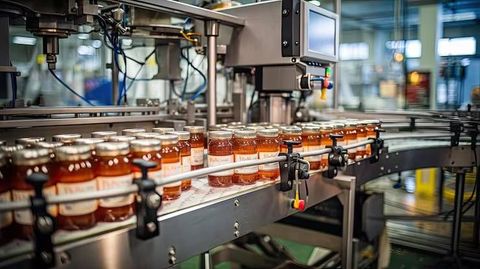
Conveyors can connect machines that perform different operations. For example, a bottle may move from filling to capping, then to labeling, inspection, and packaging.
This creates a continuous material path and allows different machines to operate as part of a coordinated production line.
Key Design Characteristics
| Design Element | Main Purpose | Typical Consideration |
|---|---|---|
| Conveyor belt | Moves products | Material compatibility |
| Motor and drive | Provides movement | Speed and load |
| Guides | Maintains alignment | Container dimensions |
| Sensors | Detects products | Position and spacing |
| Frame | Supports equipment | Hygiene and stability |
| Controls | Manages operation | Line coordination |
| Guarding | Protects moving parts | Operator safety |
| Transfer points | Connects equipment | Smooth product movement |
Recent Updates
Greater Focus on Hygienic Equipment Design
Current pharmaceutical manufacturing increasingly emphasizes equipment that can be cleaned effectively and maintained without creating unnecessary contamination risks.
FDA guidance states that pharmaceutical manufacturing equipment should have appropriate design, size, and location for its intended use, cleaning, and maintenance. Product-contact surfaces should also be constructed from materials that do not adversely affect product quality.
For conveyors, this can influence frame construction, belt selection, joints, supports, product-contact surfaces, and access to areas that require cleaning.
Automation and Integrated Controls
Modern Pharmaceutical Conveyors can be integrated with sensors, programmable controllers, machine vision, barcode readers, and other automated equipment.
Sensors can detect missing containers, spacing problems, blockages, or accumulation. Control systems can then coordinate conveyor movement with connected machines.
Machine Vision
Machine vision is increasingly used in pharmaceutical packaging environments. Cameras can inspect labels, codes, container positions, closures, package appearance, and other defined characteristics.
A conveyor provides a consistent movement path that can help position products for camera-based inspection.
Track-and-Trace Integration
Pharmaceutical packaging increasingly uses identification and traceability technologies. Depending on the jurisdiction and product, packaging lines may incorporate barcode readers, serialization systems, aggregation systems, and related software.
Conveyor systems can provide controlled movement between printing, scanning, verification, and packaging stages.
Improved Cleaning and Maintenance Access
Equipment manufacturers increasingly consider access to belts, rollers, bearings, sensors, frames, and other components during design.
FDA guidance emphasizes appropriate cleaning and maintenance procedures and notes that equipment should be designed and located to facilitate these activities.
Digital Monitoring
Connected conveyor systems can collect information such as operating speed, motor condition, product counts, stoppages, sensor activity, and selected machine parameters.
This information can help production teams identify recurring interruptions and evaluate equipment performance.
Laws or Policies
Global GMP Principles
There is no single worldwide pharmaceutical manufacturing law. Pharmaceutical facilities generally need to follow the requirements of the jurisdiction in which they operate and, where relevant, the requirements of markets into which their products are supplied.
WHO GMP provides an internationally recognized framework covering premises, equipment, personnel, production, quality control, documentation, and related activities. WHO's 2024 GMP compendium includes guidance covering equipment validation and broader pharmaceutical quality systems.
United States FDA Requirements
In the United States, pharmaceutical equipment falls within the Current Good Manufacturing Practice framework. FDA identifies requirements concerning equipment design, construction, cleaning, maintenance, and automated or electronic equipment under 21 CFR Part 211.
FDA guidance also explains that manufacturers are responsible for selecting equipment appropriate for their intended processes and ensuring that it can meet applicable CGMP requirements.
European Union GMP
The European Union uses EudraLex Volume 4 for GMP guidance covering medicinal products for human and veterinary use. Its current framework includes specific annexes for areas such as sterile medicinal products.
EU GMP guidance concerning premises and equipment emphasizes logical production flow, cleanable surfaces, contamination prevention, suitable ventilation, and appropriate workspace arrangements.
Equipment Qualification and Validation
Pharmaceutical equipment may require documented qualification and validation activities depending on its role and risk.
For a conveyor, this can involve demonstrating that the equipment has been installed correctly, operates within defined parameters, performs its intended function, and can be cleaned according to established procedures.
The precise qualification approach depends on the equipment's impact on product quality and the applicable quality system.
Cleaning and Maintenance
Cleaning requirements are particularly important when conveyors contact pharmaceutical materials or operate in controlled production areas.
FDA guidance explains that equipment must be cleaned and maintained at appropriate intervals to prevent contamination or malfunction that could affect pharmaceutical quality.
Tools and Resources
Conveyor Design Software
Computer-aided design tools can represent conveyor layouts, equipment locations, transfer points, elevations, and available workspace.
These models can help engineers examine material flow before physical installation.
Sensors and Control Systems
Photoelectric sensors, proximity sensors, encoders, barcode readers, and programmable controllers can monitor and coordinate conveyor movement.
Different sensor types are selected according to the product, speed, environment, and required detection accuracy.
Machine Vision Systems
Vision systems can inspect containers, labels, codes, caps, and package positioning. Their configuration depends on lighting, camera position, product characteristics, and inspection requirements.
Cleaning Documentation
Cleaning procedures can define which conveyor components require cleaning, the cleaning method, frequency, responsible personnel, and verification requirements.
Documentation is particularly important in regulated pharmaceutical environments because GMP relies on written procedures and evidence that defined processes are followed consistently.
Maintenance Records
Maintenance records can document inspections, component replacement, lubrication where appropriate, adjustments, calibration activities, and equipment problems.
These records can help establish the operating history of a conveyor and support planned maintenance activities.
Regulatory Resources
International manufacturers can refer to resources from organizations such as WHO, FDA, the European Commission, and national medicines regulators.
WHO's pharmaceutical GMP resources provide international guidance, while FDA provides detailed information concerning US CGMP requirements for pharmaceutical equipment.
FAQs
What are Pharmaceutical Conveyors?
Pharmaceutical Conveyors are material-handling systems used to move pharmaceutical products, containers, packaging materials, or other production materials between different stages of manufacturing and packaging.
How do Pharmaceutical Conveyors work?
Pharmaceutical Conveyors use belts, chains, rollers, carriers, or specialized conveying mechanisms to move materials along a controlled path. Sensors and control systems can coordinate movement with connected equipment.
Why is hygienic design important for Pharmaceutical Conveyors?
Hygienic design helps make equipment easier to clean and maintain while reducing opportunities for contamination and product mix-ups. Equipment design is an important part of pharmaceutical GMP.
What materials are commonly considered for pharmaceutical conveyors?
Material selection depends on the application and product-contact requirements. Stainless steel is widely associated with pharmaceutical equipment because of its durability and cleanable surfaces, while specific belt and polymer materials may be selected according to product compatibility and process conditions.
Where are Pharmaceutical Conveyors used?
They can be used in tablet and capsule handling, bottle filling lines, vial and container movement, inspection, labeling, cartoning, secondary packaging, and warehouse material flow.
Conclusion
Pharmaceutical Conveyors provide controlled movement between manufacturing, inspection, and packaging stages. Their design must consider product characteristics, hygiene, cleaning, maintenance, material compatibility, automation, and contamination control. International GMP frameworks from organizations and regulators such as WHO, FDA, and the European Commission provide important principles for pharmaceutical equipment and facility design. As pharmaceutical production becomes more automated and digitally connected, conveyors are increasingly integrated with sensors, machine vision, identification systems, and computerized controls.