Pasta Processing Machines: Guide to Production Equipment and Key Details
Pasta Processing Machines are industrial food-processing systems used to transform flour, semolina, water, and selected ingredients into different pasta shapes and formats. Depending on the production line, machines can handle mixing, dough preparation, extrusion, shaping, cutting, drying, cooling, inspection, and packaging.
Pasta production ranges from small-scale operations using individual machines to large automated plants where several processing stages are connected into one continuous line. The equipment selected depends on the pasta type, ingredients, production volume, moisture level, shape, and final packaging format.
Pasta can be produced as fresh, dried, pre-cooked, or other specialized formats. Codex classifies fresh pasta and dried pasta separately, with dried pasta defined as pasta that has been dehydrated.
How Pasta Processing Works
A typical dry-pasta production line follows several stages.
Ingredient preparation: Flour or semolina is received, inspected, and prepared for processing.
Mixing: Dry ingredients are combined with water to create a dough.
Kneading: The mixture is worked to develop a consistent dough structure.
Extrusion: Dough is pushed through a die that determines the pasta shape.
Cutting: Long or short pasta is cut according to the required dimensions.
Pre-drying: Moisture is gradually reduced under controlled conditions.
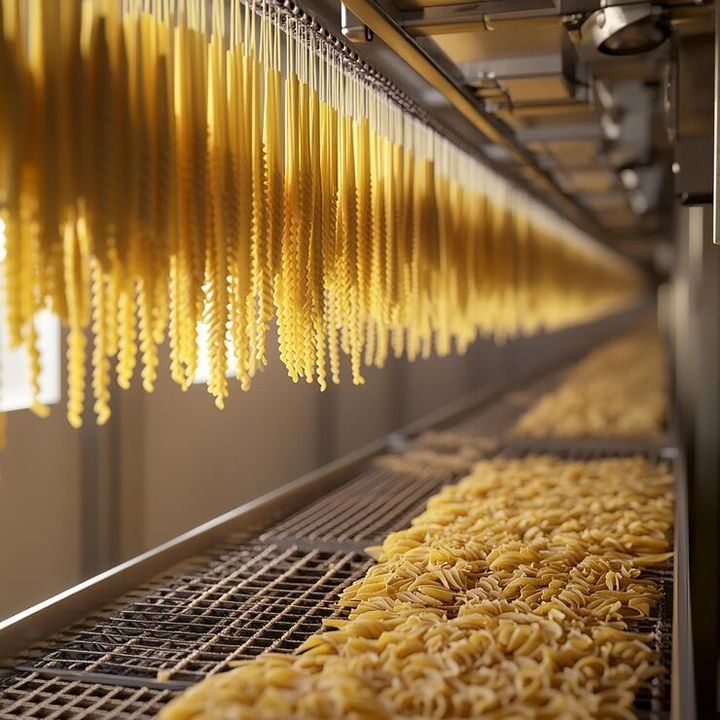
Drying: The pasta undergoes controlled temperature and humidity conditions to reach the required moisture level.
Cooling: Dried pasta is brought toward suitable handling conditions.
Inspection: Pasta can be checked for shape, color, size, foreign material, and other quality characteristics.
Packaging: Finished pasta is weighed, packed, sealed, coded, and prepared for distribution.
Fresh pasta follows a different process because it generally retains more moisture and may not undergo the same dehydration stage as dried pasta.
Main Types of Pasta Processing Machines
Flour and semolina handling equipment moves and prepares raw materials before mixing. Systems may include storage units, sifters, conveyors, and dosing equipment.
Pasta mixers combine flour or semolina with water and other permitted ingredients. Mixing parameters influence dough consistency and downstream processing.
Dough kneaders provide controlled mechanical action to create a more uniform dough structure.
Pasta extruders compress and shape dough through specially designed dies. Changing the die can produce different pasta profiles.
Pasta dies determine the cross-sectional shape of the product. They are available for formats such as spaghetti, macaroni, tubes, ribbons, and other shapes.
Pasta cutters divide extruded pasta into selected lengths. Cutting arrangements vary according to the product format.
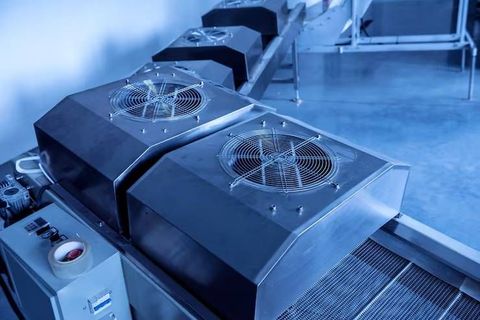
Drying systems remove moisture under controlled temperature and humidity conditions. Drying is one of the most important stages for shelf-stable dried pasta.
Cooling systems reduce product temperature after drying and help prepare pasta for inspection and packaging.
Packaging machines weigh or portion pasta, form or handle packages, seal them, apply coding information, and prepare finished packs for further handling.
Importance
Consistent Pasta Production
Pasta Processing Machines help manufacturers maintain controlled production parameters across repeated batches. Automated systems can regulate mixing, extrusion, cutting, temperature, humidity, and other variables.
Consistency is particularly important when producing pasta with the same shape, dimensions, moisture characteristics, and cooking behavior across many production runs.
Supporting Different Pasta Shapes
Different dies, cutters, forming systems, and handling equipment allow one production environment to make multiple pasta formats.
Common examples include:
Spaghetti
Macaroni
Penne
Fusilli
Rigatoni
Tagliatelle
Linguine
Lasagne sheets
Shell-shaped pasta
Filled pasta formats
The equipment required varies considerably between long, short, sheeted, and filled pasta.
Moisture Control
Moisture management is central to dried pasta production. Too much or too little moisture at different stages can influence processing behavior and the characteristics of the finished product.
Drying systems therefore control environmental conditions over a defined processing sequence rather than simply applying heat for a short period.
Food Hygiene
Food-processing equipment must be designed and operated in ways that support hygienic production. Surfaces that contact food, equipment joints, cleaning procedures, drainage arrangements, and material selection can all affect hygiene management.
The Codex Committee on Food Hygiene identifies the General Principles of Food Hygiene and the HACCP approach as key references for food hygiene systems.
Production Equipment Overview
| Machine or System | Main Function | Typical Pasta Stage |
|---|---|---|
| Sifter | Removes unwanted particles and separates flour or semolina | Raw material preparation |
| Mixer | Combines ingredients | Dough preparation |
| Kneader | Develops dough consistency | Dough preparation |
| Extruder | Shapes dough through a die | Forming |
| Die | Determines product profile | Extrusion |
| Cutter | Produces selected lengths | Forming |
| Dryer | Removes moisture | Drying |
| Cooler | Reduces product temperature | Post-drying |
| Inspection system | Checks selected product characteristics | Quality control |
| Packaging machine | Portions and seals product | Final packaging |
Recent Updates
Greater Automation
Modern pasta production lines increasingly connect individual processing stages through automated controls. Sensors and programmable control systems can monitor variables such as temperature, pressure, humidity, production speed, and equipment status.
Connected equipment can also provide production information to operators through centralized control interfaces.
Digital Monitoring
Digital monitoring allows operators to observe equipment conditions and production parameters from centralized systems. Data can be collected from mixers, extruders, dryers, conveyors, and packaging equipment.
This information can support process analysis and help identify changes that require inspection.
Machine Vision
Camera-based inspection is increasingly relevant to automated food production. Machine vision can examine selected characteristics such as pasta shape, color variation, dimensions, surface appearance, package position, and labeling.
The exact capabilities depend on the camera, lighting arrangement, image-processing software, and product characteristics.
Flexible Production
Pasta manufacturers may need equipment that can accommodate multiple shapes and recipes. Modern lines can use interchangeable dies, adjustable cutters, recipe-based controls, and configurable production parameters.
This approach allows equipment configurations to change between different product formats while maintaining controlled processing conditions.
Energy and Resource Management
Drying is an energy-intensive stage in many dried-pasta production systems. Equipment development therefore includes greater attention to heat management, insulation, airflow, humidity control, heat recovery, and monitoring.
Resource efficiency also involves water use, compressed air, electricity, steam where applicable, and material losses.
Specialized Pasta Formats
Equipment manufacturers continue to develop systems for gluten-free pasta, whole-grain products, pulse-based pasta, fortified products, filled pasta, fresh pasta, and other formulations.
Alternative ingredients can behave differently from durum wheat semolina, which may require changes to mixing, extrusion, forming, and drying parameters.
Improved Food-Information Systems
Digital technologies are also influencing food information and traceability. Codex has developed guidance concerning food information for products presented through e-commerce and the use of technology for providing food information in labeling.
For pasta manufacturers, digital records can complement conventional production and packaging information, depending on the regulatory environment in the target market.
Laws or Policies
Codex Alimentarius
For a worldwide audience, the Codex Alimentarius provides an important international reference point. Codex materials cover food hygiene, additives, contaminants, labeling, sampling, and other food-related requirements.
Codex standards are not automatically national law. Countries establish their own legislation and administrative requirements, so manufacturers must follow the rules applicable in each market.
Food Hygiene and HACCP
Food hygiene programs commonly address contamination prevention, cleaning, personnel practices, equipment hygiene, process controls, and hazard management.
The Codex General Principles of Food Hygiene incorporates guidance on Hazard Analysis and Critical Control Points, commonly known as HACCP.
A pasta production facility can apply HACCP principles by identifying hazards at stages such as ingredient reception, mixing, extrusion, drying, handling, and packaging.
Food Additives
Additives used in pasta products are subject to applicable national requirements and, where relevant, international Codex provisions.
Codex categorizes fresh pasta and dried pasta separately within food category 06.4. Its General Standard for Food Additives provides provisions for selected substances and product categories.
The permitted substances and limits can differ according to the product, formulation, and country.
Food Labeling
Packaged pasta generally falls under food-labeling requirements in the market where it is placed. Requirements may address product identity, ingredient information, allergen declarations, net quantity, date information, storage instructions, nutrition information, and manufacturer or importer details.
Wheat-containing pasta can also require allergen information under applicable national rules.
Equipment Hygiene
Pasta equipment that comes into contact with food should be designed and maintained to support hygienic operation. Materials, cleanability, equipment geometry, drainage, inspection access, and cleaning procedures can all be relevant.
Specific requirements vary by jurisdiction and facility type, so manufacturers should consult the applicable national food authority and machinery requirements.
International Trade
Companies producing pasta for multiple markets may need to manage different labeling, ingredient, additive, packaging, documentation, and import requirements.
Codex provides an international reference framework, but its standards do not replace the laws of individual countries.
Tools and Resources
Production Control Systems
Programmable control systems can monitor and regulate equipment parameters across a pasta line. Operators may use centralized interfaces to view production conditions and adjust approved process settings.
Moisture Measurement
Moisture analyzers can measure water content in ingredients or finished pasta. Moisture data can be useful for monitoring drying and storage characteristics.
Temperature and Humidity Sensors
Drying environments require controlled temperature and humidity measurements. Sensors provide information that can be used by automated control systems to maintain defined processing conditions.
Machine Vision Systems
Vision equipment can inspect pasta shapes, colors, dimensions, foreign material, and packaging characteristics. These systems are particularly useful where manual inspection alone would be difficult to apply consistently.
Metal Detection and X-Ray Inspection
Food-production lines may use metal detectors or X-ray systems to identify selected foreign materials. The appropriate technology depends on the product, packaging, hazard assessment, and regulatory requirements.
Weighing Systems
Automated weighing equipment can measure product portions before packaging. Accurate weighing helps maintain consistent package quantities and supports production records.
Traceability Software
Digital traceability systems can connect raw-material records, production batches, inspection information, packaging data, and distribution records.
Such systems can make it easier to follow the movement of a particular batch through different production stages.
Codex Resources
The Codex Alimentarius website provides international food standards, hygiene guidance, additive information, labeling references, and related documents. Its standards database is regularly updated, including revisions made through recent Codex sessions.
FAQs
What are Pasta Processing Machines?
Pasta Processing Machines are food-processing machines used to prepare, mix, shape, dry, cool, inspect, and package pasta products. Equipment selection depends on the type and production method.
How does a pasta extrusion machine work?
A pasta extruder uses mechanical pressure to move prepared dough through a shaped die. The die determines the profile of the pasta, while downstream equipment can cut, dry, or otherwise handle the formed product.
What machines are used to make dried pasta?
A typical dried-pasta line can include ingredient handling equipment, mixers, kneaders, extruders, dies, cutters, pre-dryers, dryers, cooling systems, inspection equipment, conveyors, and packaging machines.
What is the role of a pasta drying machine?
A pasta drying machine gradually removes moisture under controlled environmental conditions. Proper drying helps produce the required characteristics for dried pasta and supports stable storage.
What food-safety rules apply to pasta production worldwide?
Requirements vary by country. Internationally, Codex provides references for food hygiene, additives, contaminants, and labeling, while each country establishes its own enforceable food legislation and regulatory procedures.
Conclusion
Pasta Processing Machines form an interconnected production system covering ingredient preparation, dough formation, extrusion, cutting, drying, cooling, inspection, and packaging. Modern equipment increasingly incorporates automation, sensors, machine vision, digital monitoring, and flexible controls for different pasta formats. Food hygiene, HACCP principles, labeling, additives, and national regulatory requirements are important considerations for pasta production in different markets. Understanding the function of each machine helps explain how raw ingredients are transformed into consistent pasta products at different production scales.