Nanofiltration Equipment: Guide to Membranes, Systems, and Practical Insights
Nanofiltration Equipment refers to membrane-based systems that separate selected dissolved substances from water and other liquid streams. Nanofiltration, commonly abbreviated as NF, operates between ultrafiltration and reverse osmosis in terms of membrane separation characteristics.
The process uses pressure to push water through a semipermeable membrane. Depending on membrane characteristics and operating conditions, certain dissolved salts, organic compounds, hardness-forming ions, color compounds, and other substances are retained while water passes through. The treated stream is generally called permeate, while the concentrated stream is called concentrate or reject.
Nanofiltration membranes commonly have separation characteristics between those of reverse osmosis and ultrafiltration. The World Health Organization describes typical NF membrane pore sizes as approximately 0.001–0.01 micrometres, although actual separation behavior depends on membrane chemistry, structure, pressure, water composition, and operating conditions.
How Nanofiltration Works
A typical nanofiltration system follows several stages:
Feed preparation: Incoming water is screened or filtered to remove larger particles that could interfere with membrane operation.
Pre-treatment: Additional filtration or chemical conditioning may be used depending on feed-water characteristics.
Pressure generation: A pump raises the feed pressure to the level required by the membrane system.
Membrane separation: Pressurized water passes through membrane elements while selected substances are retained.
Permeate collection: Water passing through the membrane is collected as the treated stream.
Concentrate management: The retained substances remain in a smaller-volume concentrate stream that requires appropriate handling.
Monitoring: Pressure, flow, conductivity, temperature, and other parameters can be monitored during operation.
The exact arrangement varies according to whether the equipment is being used for drinking-water treatment, industrial water processing, wastewater treatment, or water reuse.
Main Components
A complete nanofiltration installation can contain several connected components.
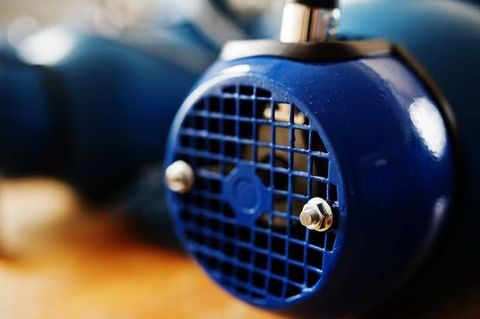
Feed pumps provide the pressure needed to move water through the membrane system.
Pre-filters remove suspended particles and larger contaminants before water reaches the NF membranes.
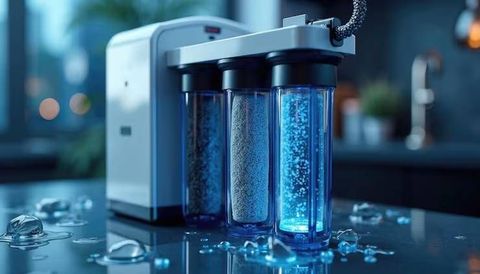
Membrane pressure vessels contain membrane elements and direct the feed stream through the separation modules.
Membrane elements perform the primary separation. Spiral-wound configurations are widely used in pressure-driven membrane systems.
Valves and flow controls regulate water movement through different sections of the system.
Instrumentation can measure pressure, flow, conductivity, temperature, and other operating parameters.
Control systems can automatically monitor operating conditions and trigger alarms or shutdowns when selected limits are reached.
Importance
Selective Water Treatment
One of the main characteristics of nanofiltration is selective separation. Unlike a system designed to remove nearly all dissolved salts, NF can be configured for applications where partial salt removal and targeted separation are desired.
The U.S. Environmental Protection Agency identifies NF as useful for reducing hardness, color and odor compounds, synthetic organic chemicals, and some disinfection by-product precursors.
Hardness Reduction
Hard water contains dissolved minerals, particularly calcium and magnesium. Nanofiltration membranes can retain a significant proportion of divalent ions while allowing some smaller or monovalent ions to pass, depending on membrane characteristics.
This makes NF relevant to selected water-softening and water-conditioning applications.
Industrial Water Treatment
Nanofiltration Equipment can be used in industries where water composition affects production processes. Applications may involve process-water preparation, separation of organic compounds, partial demineralization, and treatment of specific liquid streams.
The appropriate membrane depends heavily on the feed composition and the substances that need to be retained.
Water Reuse
Membrane filtration is increasingly incorporated into water-reuse systems. ISO 20468-5 provides guidance for evaluating membrane filtration technologies used in water reclamation systems, including treated-water quality and environmental and economic performance considerations.
NF may therefore form one stage within a larger treatment train rather than functioning as the only treatment step.
Comparison With Other Membranes
| Technology | General Separation Level | Typical Role |
|---|---|---|
| Microfiltration | Larger suspended particles | Particle removal |
| Ultrafiltration | Fine particles and larger molecules | Colloid and macromolecule removal |
| Nanofiltration | Selected dissolved ions and organic compounds | Selective separation |
| Reverse osmosis | Broad dissolved-solids removal | Desalination and high-purity water |
These categories are general. Actual performance depends on membrane design, feed-water chemistry, operating pressure, temperature, and system configuration.
Recent Updates
New International Test Standard
A notable 2026 development is ISO 25175:2026, published in June 2026. The international standard provides test methods for determining air tightness and separation performance of reverse osmosis and nanofiltration membrane elements, including permeation and salt rejection.
Standardized testing can help manufacturers, engineers, and system operators compare membrane performance using defined test methods.
Growing Interest in Water Reuse
Water reuse has become an important area for membrane technology because communities and industries are examining ways to manage water resources more efficiently.
ISO 20468 provides a framework for evaluating treatment technologies used in water-reuse systems. Its membrane-filtration section addresses treated-water quality and performance evaluation.
Antifouling Research
Membrane fouling occurs when materials accumulate on or within a membrane and interfere with water flow or separation performance. Researchers continue to investigate methods for reducing this problem.
ISO 20304-4:2026 addresses a test method for evaluating the antifouling effect of fine bubbles in crossflow membrane filtration. The method applies to membrane systems including nanofiltration, ultrafiltration, and reverse osmosis.
Digital Monitoring
Modern membrane installations increasingly use digital instrumentation to monitor pressure, flow, conductivity, temperature, and other parameters.
Data analysis can help operators identify changes in membrane performance. A gradual increase in pressure requirements or change in permeate quality may indicate fouling, scaling, membrane damage, or changes in feed-water conditions.
Membrane-Based High-Purity Water
Membrane technology is also used in specialized water applications. ISO 22519:2023 provides a framework for membrane-based generation of water for injection and covers design, construction, operation, maintenance, and control parameters for such systems.
This demonstrates that membrane systems can be engineered for applications requiring closely controlled water quality, although NF alone may not provide the complete treatment sequence for every high-purity application.
Laws or Policies
Global Drinking-Water Frameworks
Nanofiltration equipment used for drinking water must be evaluated against the drinking-water requirements of the relevant country or region. There is no single worldwide regulation governing every NF installation.
The World Health Organization's updated Guidelines for Drinking-water Quality, incorporating its third addenda, were published in 2026. The guidance provides a framework for health-based targets, risk management, and surveillance of drinking-water quality.
United States
In the United States, drinking-water treatment is regulated through federal and state frameworks. The U.S. Environmental Protection Agency recognizes reverse osmosis and nanofiltration as membrane treatment processes capable of removing selected contaminants from water.
The required treatment approach depends on the contaminants present, applicable drinking-water standards, source-water characteristics, and the specific treatment objective.
European Union
The European Union's Drinking Water Directive 2020/2184 is the primary EU framework for protecting drinking-water quality. It uses a risk-based approach and includes requirements addressing water quality, monitoring, and emerging contaminants.
An NF system used for drinking-water production therefore needs to be evaluated within the broader regulatory and water-safety framework of the applicable member state.
Water Reuse
Water-reuse projects can be governed by national, regional, or local requirements. Treatment targets may differ according to whether reclaimed water is intended for industrial applications, irrigation, environmental purposes, or other uses.
ISO 20468-1 provides general guidance for evaluating treatment technologies used in water-reuse systems, while ISO 20468-5 focuses specifically on membrane filtration.
System Validation
Regulatory compliance is not determined simply by selecting an NF membrane. The complete treatment system may need appropriate monitoring, validation, water-quality testing, operational controls, and documentation.
The membrane, pre-treatment equipment, pressure system, concentrate handling, instrumentation, and downstream treatment stages should therefore be considered together.
Tools and Resources
Membrane Performance Data
Membrane technical data sheets can provide information about operating pressure, water permeability, salt rejection, pH range, temperature limits, and recommended feed-water conditions.
These figures should be interpreted under the test conditions specified by the manufacturer because actual field performance can differ.
Water-Quality Testing
Laboratory analysis of feed water is an important planning tool. Parameters can include:
Total dissolved solids
Hardness
Electrical conductivity
pH
Turbidity
Organic matter
Sulfate and chloride
Iron and manganese
Microbiological indicators
The relevant parameters depend on the intended treatment objective.
Monitoring Instruments
Pressure gauges, flow meters, conductivity meters, temperature sensors, and automated controllers can provide continuous information about system operation.
Comparing current readings with historical operating data can help identify changes in membrane performance.
Pretreatment Equipment
Pretreatment can include cartridge filters, multimedia filtration, activated carbon, chemical dosing, softening, or other processes depending on the incoming water.
Proper pretreatment is important because suspended solids, scaling compounds, and organic matter can contribute to membrane fouling.
Membrane Cleaning Resources
Membrane cleaning procedures depend on membrane material, contaminant type, water chemistry, and manufacturer requirements. Cleaning may involve carefully selected chemical solutions and controlled operating procedures.
Incorrect cleaning conditions can damage membrane materials, so the membrane manufacturer's technical documentation should be followed.
International Standards
ISO standards provide useful references for membrane performance testing, water reuse, and specialized membrane applications. The 2026 ISO 25175 standard is particularly relevant to testing the performance of NF and RO membrane elements.
FAQs
What is Nanofiltration Equipment?
Nanofiltration Equipment is a pressure-driven membrane system used to selectively separate dissolved substances from water and other liquid streams.
How do nanofiltration membranes work?
Nanofiltration membranes allow water to pass through under pressure while retaining selected ions, organic compounds, and other substances according to membrane structure and water chemistry.
What does nanofiltration remove?
Nanofiltration can reduce hardness, color-forming compounds, selected organic substances, and certain dissolved ions. Actual removal depends on the membrane, contaminant, operating conditions, and feed-water composition.
What is the difference between nanofiltration and reverse osmosis?
Nanofiltration generally provides more selective separation and can allow some smaller or monovalent ions to pass, while reverse osmosis provides broader dissolved-solids removal. The appropriate technology depends on the required water quality.
Where is Nanofiltration Equipment used?
Nanofiltration Equipment is used in drinking-water treatment, industrial water processing, water reuse, hardness reduction, selected wastewater applications, and specialized separation processes.
Conclusion
Nanofiltration Equipment uses pressure-driven membranes to selectively separate dissolved substances from water and other liquid streams. Its position between ultrafiltration and reverse osmosis makes it useful for applications involving hardness, selected organic compounds, color, and partial dissolved-ion removal. Recent developments include standardized membrane-performance testing, antifouling research, digital monitoring, and expanded interest in water reuse. International guidance and regional regulations should be considered when designing, operating, or evaluating an NF system for a specific application.