Modular Jewelry Designs: Guide to Styles, Components, and Practical Insights
Modular jewelry designs are jewelry pieces created from separate components that can be connected, removed, rearranged, or replaced to create different configurations. Instead of treating a necklace, bracelet, ring, or pair of earrings as one fixed structure, modular jewelry uses interchangeable parts to provide multiple design possibilities.
A modular piece may contain a central element, connecting links, charms, chains, clasps, gemstones, decorative panels, or other detachable components. The individual parts are designed to work together through compatible connection points.
How Modular Jewelry Developed
The concept of interchangeable jewelry has historical roots in detachable ornaments, convertible brooches, removable pendants, and pieces that could be worn in different arrangements. Contemporary modular jewelry has developed further through advances in precision manufacturing, digital design, and small-scale connection systems.
Modern designers can create collections in which one central component works with several complementary elements. This approach changes jewelry from a single fixed configuration into a system of related designs.
How Modular Jewelry Works
The basic principle is straightforward. A jewelry piece contains components that connect through mechanisms such as clasps, hooks, threaded fittings, magnets, pins, hinges, or specialized interlocking structures.
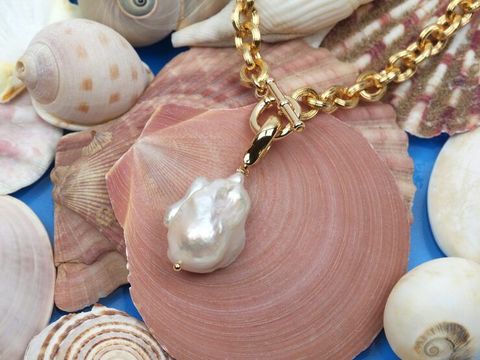
For example, a modular necklace might have one base chain with several interchangeable pendants. The same chain could be configured with a geometric pendant for one occasion and a gemstone element for another.
Main Types of Modular Jewelry Designs
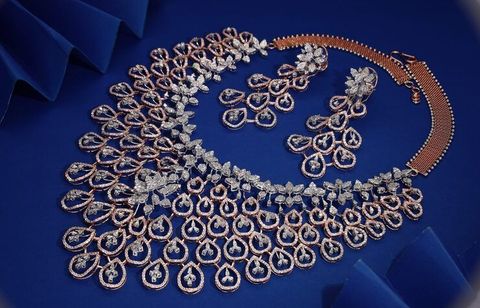
Modular necklaces: These can use interchangeable pendants, chains, connectors, or decorative sections.
Modular bracelets: Links, charms, panels, or central elements may be changed or rearranged.
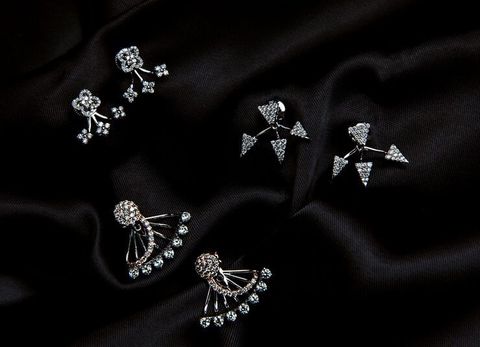
Modular earrings: Detachable drops, hoops, studs, and decorative components can create multiple configurations.
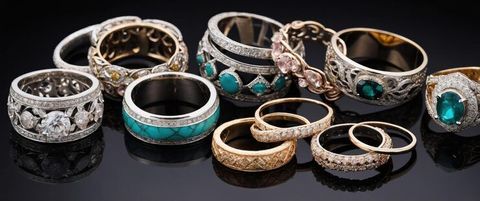
Modular rings: Some designs use interchangeable bands, center elements, or stackable components.
Modular brooches: Detachable sections can change the shape or arrangement of the decorative piece.
Convertible sets: Several coordinated components can be combined into necklaces, bracelets, earrings, or other arrangements.
Common Components
Important components include base structures, connectors, clasps, hinges, pins, decorative elements, gemstones, chains, and fastening mechanisms. The connection system is particularly important because it determines how easily components can be changed while maintaining stability.
Materials can include gold, silver, platinum, stainless steel, titanium, gemstones, enamel, ceramics, and various modern jewelry materials. Material selection depends on the design, weight, durability requirements, and connection mechanism.
Importance
Why Modular Jewelry Designs Matter
Modular jewelry designs provide flexibility by allowing one jewelry structure to have multiple configurations. This can be useful for people who prefer adaptable designs rather than maintaining many separate fixed pieces.
The approach also gives designers a way to create coordinated collections. A common connection standard can allow multiple decorative components to work with the same base structure.
Design Applications
Modular concepts can be applied to many jewelry categories:
Everyday jewelry: A simple base structure can be configured with relatively understated components.
Occasion jewelry: Decorative elements can be added to create a more elaborate arrangement.
Layered jewelry: Interchangeable chains and pendants can create different lengths and combinations.
Personalized designs: Initials, symbols, colors, gemstones, or decorative shapes can become interchangeable elements.
Collection-based designs: Multiple components can be developed around a common connection system.
Design Considerations
A modular jewelry system needs more than attractive individual components. Each part must work correctly with the others.
Important considerations include:
Connection strength: Components need secure attachment points.
Dimensional compatibility: Parts must have suitable sizes and connection dimensions.
Weight distribution: Heavy components can affect comfort and balance.
Material compatibility: Different metals can interact differently over time.
Ease of assembly: Components should be practical to attach and remove.
Visual coordination: Interchangeable parts should maintain a coherent design language.
Wear resistance: Repeated connection and removal can gradually affect small mechanisms.
Comparison of Modular Jewelry Components
| Component | Main Function | Common Materials | Key Design Consideration |
|---|---|---|---|
| Connector | Joins separate elements | Gold, silver, steel | Strength and fit |
| Clasp | Opens and secures jewelry | Gold, silver, steel | Reliable closure |
| Pendant | Provides central decoration | Metals, gemstones, enamel | Weight and balance |
| Chain | Forms the supporting structure | Gold, silver, platinum | Link durability |
| Hinge | Allows controlled movement | Precious or base metals | Alignment |
| Pin | Connects removable parts | Steel, gold, titanium | Diameter and retention |
| Charm | Adds interchangeable decoration | Metals, enamel, gemstones | Attachment compatibility |
Common Challenges
Modular jewelry can involve more mechanical components than conventional fixed designs. Small connectors and moving parts may experience wear when they are repeatedly handled.
Loose connections, incompatible components, excessive weight, or poorly aligned fittings can affect comfort and security. Maintenance is therefore an important part of long-term use, particularly for pieces with frequently changed components.
Recent Updates
Digital Jewelry Design
Between 2024 and 2026, digital jewelry design has continued to develop through CAD software, 3D modeling, digital rendering, and additive manufacturing. These technologies allow designers to test component dimensions and connection arrangements before physical production.
Computer-aided design can also help examine how separate pieces fit together. Digital models can be modified more easily than physical prototypes, which is useful when developing interchangeable systems.
3D Printing and Prototyping
Additive manufacturing, commonly called 3D printing, can be used to create prototypes of jewelry components. Designers can test the shape, size, connection mechanism, and overall appearance before producing the final piece.
Some jewelry production workflows use resin or wax-like printed models for casting, while other systems can produce metal components directly. The appropriate process depends on material, geometry, production requirements, and equipment.
Precision Manufacturing
Modern manufacturing technologies can produce small components with controlled dimensions. CNC machining, precision casting, laser technology, and advanced finishing methods can support the production of connectors and detailed jewelry parts.
For modular jewelry, dimensional consistency is particularly important because a small variation in a connector can affect whether interchangeable parts fit correctly.
Sustainability Considerations
Jewelry designers and manufacturers are increasingly examining material sourcing, production waste, durability, repair, and reuse. Modular construction can support repair or component replacement because an entire piece does not necessarily need to be discarded when one part becomes damaged.
However, modular construction does not automatically make a product environmentally sustainable. The overall impact depends on material sourcing, manufacturing methods, product lifespan, packaging, transportation, and how components are eventually reused or recycled.
Laws or Policies
Jewelry Material Requirements
There is no single worldwide law covering every modular jewelry design. Requirements can vary according to the country where jewelry is manufactured, imported, sold, or marketed.
Precious-metal jewelry may be subject to rules concerning metal purity, hallmarking, product descriptions, and consumer information. Requirements differ between jurisdictions, so manufacturers and retailers need to follow the regulations applicable to their market.
Gemstone and Material Documentation
Jewelry containing gemstones or precious materials can also be affected by international trade controls and documentation requirements. The Kimberley Process, for example, establishes an international certification system for rough diamonds intended to help prevent the trade in conflict diamonds.
Other materials may have separate environmental, wildlife, mining, or import requirements depending on their origin and type.
Chemical and Product Safety Rules
Jewelry can also fall under chemical or product-safety requirements. In the European Union, REACH regulates chemicals and can affect articles containing substances subject to specific restrictions.
In the United States, applicable federal and state requirements can vary depending on the product, materials, labeling, and intended market. Other countries maintain their own consumer-product and chemical-safety frameworks.
For international production, compliance therefore requires checking the specific destination market rather than assuming that one standard applies globally.
Tools and Resources
CAD Jewelry Software
Computer-aided design software allows jewelry designers to create accurate digital models of rings, chains, pendants, connectors, and other components. It can also help examine dimensions before manufacturing.
3D Modeling and Rendering
3D modeling tools can create digital representations of modular jewelry configurations. Rendering can help visualize different combinations, finishes, gemstone arrangements, and proportions.
Prototyping Equipment
3D printers, resin printers, wax-model systems, CNC equipment, and precision casting workflows can support prototype development. Prototypes can reveal fitting or balance issues that may not be obvious from a digital model.
Measurement Tools
Calipers, gauges, microscopes, magnification tools, and precision measuring instruments can help check small jewelry components. Accurate measurement is especially important when interchangeable parts need to maintain consistent dimensions.
Standards and Regulatory Resources
Organizations such as ISO, ASTM International, national standards bodies, customs authorities, and government product-safety agencies provide technical or regulatory information relevant to particular materials and markets.
Jewelry professionals can also consult official hallmarking authorities and international trade resources when working with precious metals or gemstones.
FAQs
What are modular jewelry designs?
Modular jewelry designs are pieces made from separate components that can be connected, removed, rearranged, or replaced. They allow different configurations to be created from compatible parts.
How do modular jewelry designs work?
Modular jewelry designs use connection mechanisms such as clasps, pins, hooks, hinges, magnets, threaded fittings, or interlocking structures. These mechanisms allow individual components to be attached to or removed from a base structure.
What materials are used in modular jewelry designs?
Common materials include gold, silver, platinum, stainless steel, titanium, gemstones, enamel, and ceramics. Material selection depends on appearance, weight, durability, connection requirements, and intended use.
Are modular jewelry designs durable?
Durability depends on the materials, construction, connection mechanism, and frequency of component changes. Small connectors can experience wear through repeated handling, so regular inspection and appropriate maintenance can be important.
Can 3D printing be used for modular jewelry designs?
Yes. 3D printing can be used for prototypes and, depending on the technology and material, some final jewelry components. It can help designers test shapes, dimensions, connection systems, and configurations before production.
Conclusion
Modular jewelry designs use interchangeable components to create flexible configurations across necklaces, bracelets, rings, earrings, and other jewelry forms. Their design depends on compatible dimensions, secure connection mechanisms, appropriate materials, and balanced construction. Digital CAD, 3D modeling, additive manufacturing, and precision production technologies are expanding the ways modular components can be designed and tested. Understanding materials, mechanical connections, maintenance requirements, and applicable regulations is important when developing or using these jewelry systems.