Learn About Firewalls: Types, Uses and How They Work
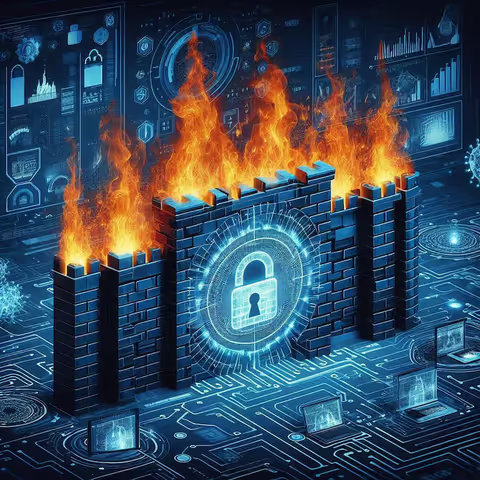
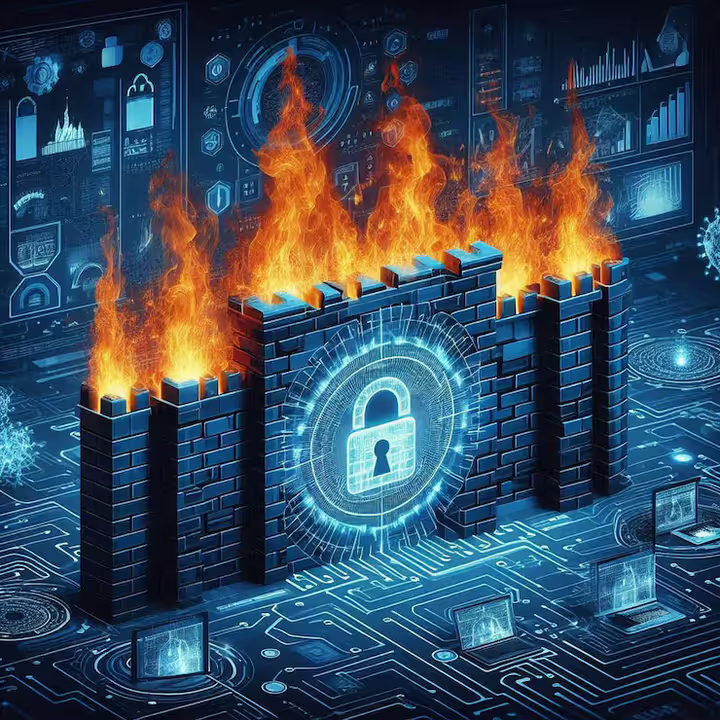
A firewall is a security system that monitors and controls network traffic between a trusted environment and an untrusted network. It helps determine which connections should be allowed and which should be blocked according to defined security rules.
Firewalls are commonly used on computers, smartphones, business networks, servers, cloud environments, and network infrastructure. Their main purpose is to create a controlled boundary around a device or network so that unwanted network communication can be restricted.
The basic idea is straightforward: when data attempts to enter or leave a protected environment, the firewall examines the traffic and compares it with its security rules. Depending on the configuration, the connection may be permitted, rejected, or inspected more closely.
Firewalls are an important part of network security, but they are not a complete security solution by themselves. Effective protection usually combines firewall controls with secure passwords, software updates, access management, endpoint protection, monitoring, and responsible user practices.
How Does a Firewall Work?
A firewall works by examining network traffic and applying predefined rules. These rules can consider information such as the source of the connection, destination, protocol, port, application, user, or network zone.
For example, an organization may allow employees to access approved websites while restricting certain types of incoming connections to internal systems. A firewall can enforce these rules automatically whenever network traffic passes through it.
Traditional firewalls often examine information contained in network packets. More advanced systems can inspect connections at a deeper level and identify applications or other characteristics of traffic.
A simple firewall process can be understood in four stages. First, network traffic reaches the firewall. Second, the firewall examines relevant traffic characteristics. Third, those characteristics are compared with configured security policies. Finally, the firewall allows, blocks, or otherwise handles the connection according to those policies.
This process happens continuously, allowing firewalls to provide a layer of protection without requiring users to manually evaluate every network connection.
Why Are Firewalls Important?
Modern devices and networks communicate with many other systems. Websites, cloud applications, software updates, remote services, email platforms, and business applications all depend on network connectivity. This connectivity is useful, but it also creates opportunities for unwanted communication.
A firewall provides a controlled point where network traffic can be evaluated. By restricting unnecessary connections, it can reduce the number of pathways available to potentially harmful or unauthorized activity.
For businesses, firewall protection can also help separate different parts of a network. For example, employee devices, servers, guest networks, and sensitive systems can be placed into different security zones. Rules can then determine what communication is permitted between those zones.
Firewalls can also support compliance and security policies by helping organizations control network access and maintain records of certain network activity.
Main Types of Firewalls
Firewalls come in several forms, and each type approaches traffic control differently.
Packet-Filtering Firewalls
Packet-filtering firewalls examine basic information in network packets, such as source and destination addresses, protocols, and ports. They compare this information with predefined rules.
They are relatively straightforward and can be effective for basic traffic control. However, they generally have less context about the actual application or purpose of a connection.
Stateful Firewalls
Stateful firewalls keep track of active network connections. Instead of evaluating each packet independently, they understand whether traffic belongs to an established and permitted connection.
This provides more context than basic packet filtering and allows the firewall to make more informed decisions about network traffic.
Proxy Firewalls
A proxy firewall acts as an intermediary between a user and an external resource. Instead of allowing a device to communicate directly with another system, the proxy can receive and process the request on the user's behalf.
This approach can provide additional inspection and control, although it may introduce more complexity depending on the environment.
Next-Generation Firewalls
Next-generation firewalls combine traditional traffic filtering with more advanced inspection and security capabilities. Depending on the product and configuration, these systems may identify applications, inspect traffic more deeply, integrate threat intelligence, and provide additional security controls.
They are commonly used in environments where organizations need more detailed visibility and control over network activity.
Host-Based Firewalls
A host-based firewall operates directly on an individual device, such as a computer or server. It controls network connections to and from that particular system.
Host-based protection is useful because different devices may have different security requirements. It can complement network-level firewall controls rather than replacing them.
Network Firewall vs. Personal Firewall
A network firewall typically protects multiple devices or network segments. It may be positioned between an internal network and the internet or between different areas of an organization's infrastructure.
A personal or host-based firewall operates on an individual device. It focuses on controlling connections involving that specific computer or system.
Using both approaches can provide layered protection. A network firewall can control broader traffic flows, while a host firewall can apply rules specific to an individual device.
What Can a Firewall Control?
Firewall policies can be designed around several characteristics of network communication. These can include IP addresses, ports, protocols, applications, connection states, and network locations.
For example, a firewall might allow a particular type of web traffic while blocking unnecessary inbound connections. In a business environment, it might permit employees to access approved services while preventing direct communication between network segments that do not need to communicate.
Modern firewall systems can provide considerably more detailed policy controls. However, greater complexity also means that firewall configurations need to be carefully planned and maintained.
Firewalls and Network Security
A firewall is one component of a broader cybersecurity strategy. It can help control network communication, but it cannot prevent every type of security problem.
For example, a firewall does not automatically make weak passwords secure, fix outdated software, or prevent a user from being tricked into revealing confidential information. Similarly, if an authorized account is misused, traditional network filtering may not be sufficient to identify the problem.
This is why organizations commonly combine firewalls with endpoint security, identity and access management, encryption, security monitoring, backups, vulnerability management, and user awareness.
The principle of layered security is important because different security controls address different risks.
Common Firewall Challenges
Firewall protection is highly dependent on configuration. A poorly designed rule set can create unnecessary exposure or interfere with legitimate communication.
One common challenge is having too many rules. As networks become more complicated, administrators may accumulate rules that are difficult to understand or maintain. Regular reviews can help identify outdated or unnecessary policies.
Another challenge is balancing security with usability. Blocking too much traffic can disrupt legitimate applications, while allowing excessive communication can weaken the security boundary.
Organizations also need to consider changing technologies. Cloud computing, remote work, mobile devices, connected applications, and distributed infrastructure have made network environments more dynamic than traditional office networks.
How to Use Firewalls Effectively
Effective firewall management starts with understanding what the network actually needs. Security rules should be based on legitimate communication requirements rather than simply allowing broad access.
Regular rule reviews are important because business systems and applications change over time. Unused rules, unnecessary open ports, and outdated access policies should be identified and addressed.
Monitoring is also valuable. Firewall logs can provide information about permitted and blocked connections and may help security teams investigate unusual network activity.
Updates should not be overlooked either. Firewall software, operating systems, and associated security components should be maintained according to appropriate security practices.
The Future of Firewall Technology
Firewall technology continues to evolve alongside network architecture. Traditional boundaries between internal and external networks have become less clear as organizations adopt cloud platforms, remote access, mobile devices, and distributed applications.
Modern security approaches increasingly focus on identity, application context, continuous verification, and segmentation rather than relying solely on a single network boundary.
This does not make traditional firewall technology irrelevant. Instead, firewalls are becoming part of broader security architectures designed to control access across increasingly complex environments.
Final Thoughts
Firewalls provide an important layer of network protection by monitoring and controlling communication according to security policies. From basic packet filtering to advanced application-aware systems, different firewall technologies are designed for different environments and requirements.
Understanding how firewalls work makes it easier to understand broader cybersecurity concepts such as network segmentation, access control, traffic monitoring, and layered security. While a firewall cannot eliminate every security risk, properly designed and maintained firewall controls can significantly improve the security of devices, networks, and digital environments.