Industrial Fiber-Reinforced Composite Machines: Explore Types and Applications
Industrial Fiber-Reinforced Composite Machines are specialized production systems used to manufacture components from fiber-reinforced composite materials. These materials combine reinforcing fibers, such as carbon fiber, glass fiber, or aramid fiber, with a polymer matrix that binds the fibers together.
The resulting composite can provide a combination of strength, stiffness, low weight, corrosion resistance, and design flexibility. These characteristics have made fiber-reinforced composites useful across aerospace, automotive, wind energy, marine, construction, sports equipment, electrical, and industrial applications.
Manufacturing composite components is different from producing conventional metal parts. The fibers need to be positioned correctly, combined with a resin or matrix, consolidated, shaped, and cured. Different machines are therefore designed for different stages of this process.
How Composite Manufacturing Works
A typical fiber-reinforced composite manufacturing process can include several stages:
Fiber preparation: Carbon, glass, aramid, or other fibers are supplied as fabrics, tapes, rovings, or preforms.
Material placement: Fibers are arranged according to the required orientation and component geometry.
Resin application: A polymer matrix is introduced into or around the reinforcing fibers.
Molding: The material is placed into a mold or formed into a required shape.
Consolidation: Pressure, vacuum, heat, or a combination of these methods removes unwanted voids and brings the layers together.
Curing: Heat, chemical reactions, or other processes solidify the matrix.
Finishing: The component may be trimmed, drilled, machined, coated, or inspected.
Quality inspection: Visual, dimensional, ultrasonic, or other inspection methods can identify manufacturing variations.
The exact sequence depends on the material system, component geometry, production volume, and required properties.
Main Machine Categories
Industrial composite production uses several machine types.
Automated Fiber Placement machines place narrow bands of fiber material onto a tool or mold according to programmed paths.
Automated Tape Laying machines place wider composite tapes across large surfaces. They are commonly associated with large structural components.
Filament Winding machines wrap continuous fibers around rotating molds or mandrels. This method is particularly suitable for cylindrical or rotational components.
Resin Transfer Molding equipment introduces resin into a dry fiber reinforcement placed inside a mold.
Compression molding systems use pressure and heat to form composite materials inside matched molds.
Pultrusion machines continuously pull reinforced fibers through resin and a heated forming die to produce constant-profile components.
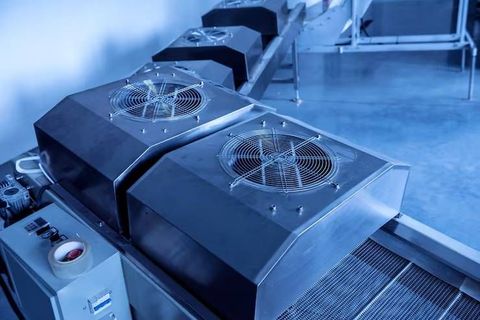
Composite curing ovens and autoclaves provide controlled temperature and, in some processes, pressure to consolidate and cure composite structures.
Importance
Lightweight Structural Components
One major reason for using fiber-reinforced composites is the combination of mechanical performance and relatively low density.
A lighter component can be useful in applications where weight influences energy consumption, payload, handling, or structural design. Aerospace and transportation industries therefore use composite materials for selected structural and non-structural components.
Controlled Fiber Orientation
The direction of reinforcing fibers has a major influence on composite behavior. Fibers can be arranged along directions where strength or stiffness is particularly important.
Machines such as automated fiber placement and automated tape laying systems can position material according to programmed paths. This provides greater control over the architecture of multilayer composite structures.
Complex Component Production
Composite manufacturing can produce shapes that would require multiple pieces or joining operations when manufactured from conventional materials.
Molding, automated placement, filament winding, and other techniques can create curved surfaces, hollow structures, panels, tubes, and other geometries.
Repeatable Production
Industrial machines can automate material placement, resin introduction, heating, pressure application, and other manufacturing stages.
Automation can help maintain consistent process parameters when the equipment is correctly configured and monitored. Human operators remain important for material preparation, machine setup, inspection, maintenance, and process control.
Major Applications
| Industry | Example Components | Common Composite Process |
|---|---|---|
| Aerospace | Wings, panels, structural parts | AFP, ATL, autoclave curing |
| Automotive | Body structures, panels | Compression molding, RTM |
| Wind energy | Rotor blades | Infusion, molding |
| Marine | Hulls, decks, structural parts | Infusion, molding |
| Energy | Pressure vessels, equipment | Filament winding |
| Construction | Reinforcement profiles | Pultrusion |
| Sports | Frames, shafts, equipment | Lay-up, molding, winding |
| Industrial | Pipes, tanks, covers | Winding, RTM, pultrusion |
Recent Updates
Greater Use of Automated Fiber Placement
Automated Fiber Placement continues to develop as manufacturers seek greater control over composite material placement. Modern systems can position multiple narrow fiber tapes simultaneously while following complex programmed paths.
These machines can also integrate heating systems, compaction mechanisms, material delivery systems, and digital controls.
Robotics in Composite Manufacturing
Robotic systems are increasingly used for material handling, trimming, drilling, inspection, surface preparation, and composite placement.
Robotic platforms can be configured for different tool heads and production tasks. Their flexibility is particularly relevant when component shapes vary or when manufacturing involves large structures.
Digital Process Monitoring
Composite production increasingly uses sensors and digital monitoring to track variables such as temperature, pressure, material position, resin flow, vacuum conditions, and curing conditions.
Recorded process information can support traceability and help identify deviations from defined manufacturing parameters.
Advanced Fiber Materials
Carbon fiber remains important for applications requiring high stiffness and low weight, while glass fiber continues to be widely used across industrial and transportation applications.
Researchers and manufacturers are also developing new combinations of fibers, resins, recycled materials, thermoplastic matrices, and hybrid composite structures.
Thermoplastic Composites
Thermoplastic composite materials are receiving increasing attention because they can be heated and reshaped under suitable processing conditions. Compared with many thermoset systems, selected thermoplastic processes can support shorter forming cycles and alternative joining methods.
Industrial equipment for thermoplastic composites can include automated tape placement systems, heating units, consolidation systems, forming presses, and specialized welding equipment.
Additive Manufacturing and Composite Materials
Composite additive manufacturing is another developing area. Some additive systems use polymer materials reinforced with short or continuous fibers.
This approach can combine digital part design with localized reinforcement. Applications include tooling, fixtures, prototypes, and selected structural components, depending on the material and production system.
Increased Interest in Recycling
Composite recycling remains a significant technical challenge because fibers and polymer matrices are strongly integrated.
Current research and industrial development includes mechanical processing, thermal recovery, chemical approaches, and methods for reusing recovered fibers or thermoplastic composite materials. The appropriate method depends on the composite type and intended secondary application.
Laws or Policies
Global Standards
Composite manufacturing is influenced by standards covering materials, testing, manufacturing processes, quality management, and workplace safety.
The International Organization for Standardization (ISO) and ASTM International publish standards relevant to composite materials and testing. Aerospace manufacturers may also work with additional aviation-specific requirements and qualification procedures.
Applicable standards vary by material, industry, country, and component function.
Aerospace Requirements
Aerospace composite components are subject to rigorous qualification and manufacturing controls. Aviation authorities such as the FAA and EASA establish regulatory frameworks governing aircraft design, production, and continued airworthiness.
Composite materials used in aircraft may therefore require extensive material characterization, process qualification, inspection, and documentation.
Workplace Safety
Composite manufacturing can involve resins, solvents, dust, heated equipment, pressure systems, cutting tools, and moving machinery.
Workplaces must follow applicable occupational safety requirements for chemical handling, ventilation, personal protective equipment, machine guarding, electrical systems, fire prevention, and worker training.
Requirements vary by jurisdiction. Examples include OSHA requirements in the United States and corresponding occupational safety frameworks in other countries.
Environmental Considerations
Composite manufacturing can generate resin waste, fiber offcuts, dust, emissions, and other industrial waste streams.
Environmental rules may address chemical emissions, waste handling, industrial discharge, energy use, and disposal. Manufacturers therefore need to consider the regulations applicable to their location and materials.
Quality Management
Industries such as aerospace, automotive, and energy often use formal quality-management systems. These can include documented procedures for material identification, process control, equipment calibration, inspection, traceability, and nonconforming material management.
Quality requirements can vary substantially between industries and applications.
Tools and Resources
Automated Fiber Placement Software
AFP software controls material paths, deposition patterns, machine movements, and process parameters. Engineers can create digital placement strategies based on the geometry and structural requirements of the component.
Composite Design Software
Specialized engineering software can model composite laminates, fiber orientations, loads, stresses, and component behavior.
Such tools help engineers analyze how different material configurations may respond to mechanical conditions.
Resin Flow Simulation
For processes such as resin transfer molding and liquid composite molding, simulation tools can model how resin moves through a fiber preform.
This can help identify potential filling problems and evaluate injection locations, flow paths, and processing conditions.
Non-Destructive Inspection
Composite components can be inspected without cutting them apart. Common techniques include:
Ultrasonic testing: Uses sound waves to identify internal variations.
Thermography: Uses temperature patterns to identify selected defects.
Radiography: Uses penetrating radiation to examine internal structures.
Visual inspection: Examines surfaces for visible imperfections.
Dimensional inspection: Checks component geometry against specified dimensions.
Curing and Process Monitoring
Thermocouples, pressure sensors, vacuum sensors, resin-flow sensors, and data-recording systems can monitor important manufacturing conditions.
These tools are particularly relevant when temperature or pressure needs to remain within defined process limits.
Digital Manufacturing Systems
Digital production platforms can connect machine data, material information, inspection records, and production parameters. This can support traceability and process analysis across complex composite manufacturing operations.
FAQs
What are Industrial Fiber-Reinforced Composite Machines?
Industrial Fiber-Reinforced Composite Machines are production systems used to place fibers, apply resin, form composite materials, cure components, trim parts, and inspect finished structures.
What materials are used in fiber-reinforced composites?
Common reinforcement materials include carbon fiber, glass fiber, and aramid fiber. These are combined with matrix materials such as epoxy, polyester, vinyl ester, or selected thermoplastic polymers.
What does an Automated Fiber Placement machine do?
An Automated Fiber Placement machine places narrow bands of fiber material onto a mold or tool according to programmed paths. It can control placement direction, position, and selected process parameters.
What is a filament winding machine used for?
A filament winding machine wraps continuous fibers around a rotating mandrel or mold. It is commonly used for cylindrical or rotational components such as pipes, tanks, and selected pressure vessels.
Why are composite manufacturing machines important?
Composite manufacturing machines help control fiber placement, resin application, molding, curing, and inspection. This allows manufacturers to produce components with defined material orientations and geometries for different industrial applications.
Conclusion
Industrial Fiber-Reinforced Composite Machines support the production of lightweight and structurally engineered components across aerospace, transportation, energy, marine, construction, and industrial applications. Machine categories include automated fiber placement systems, tape laying machines, filament winding equipment, molding systems, pultrusion lines, and curing equipment. Recent developments include robotics, digital monitoring, thermoplastic composites, automated manufacturing, additive processes, and recycling research. The appropriate machine and manufacturing method depend on material characteristics, component geometry, production requirements, quality controls, and applicable industry standards.