Industrial Fasteners: Guide to Types, Materials, and Practical Insights
Industrial fasteners are mechanical components used to join, secure, or hold two or more parts together. They are widely used in machinery, construction equipment, automotive systems, manufacturing plants, pipelines, electrical equipment, structural frameworks, and many other industrial applications.
Common examples include bolts, nuts, screws, washers, studs, rivets, anchors, and threaded rods. The appropriate fastener depends on factors such as load, material, temperature, vibration, corrosion exposure, installation method, and the type of joint being created.
Unlike permanent joining methods such as welding, many industrial fasteners allow components to be assembled, inspected, adjusted, or removed without destroying the connected parts.
How Industrial Fasteners Work
Most threaded fasteners work by creating a controlled clamping force between connected components. For example, when a bolt is tightened into a nut, the bolt stretches slightly and produces a force that holds the joined parts together.
A basic bolted connection normally consists of a bolt, nut, and sometimes one or more washers. The washer can distribute the load over a larger surface and help protect the connected material.
Different fasteners use different joining principles. Screws may form or engage with threads directly in the receiving material, while rivets are mechanically deformed to create a permanent connection.
Main Types of Industrial Fasteners
Bolts and Nuts
Bolts are threaded fasteners commonly used with nuts to create detachable joints. They are available in different head shapes, thread profiles, lengths, diameters, and strength classes.
Nuts are internally threaded components that work with compatible bolts, studs, or threaded rods.
Screws
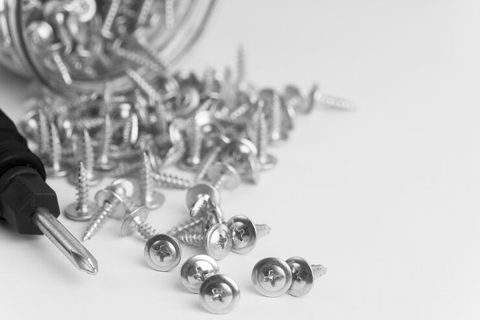
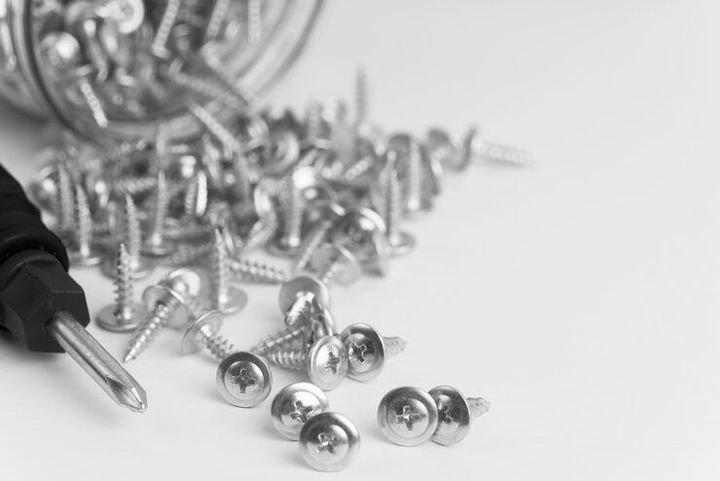
Industrial screws are used in metal, wood, plastic, machinery, electronics, and other applications. Their designs can include hexagonal heads, socket heads, countersunk heads, pan heads, and specialized configurations.
Washers
Washers are placed between fastener components and the connected surface. They can distribute clamping loads, protect surfaces, and support particular locking or spacing functions.
Studs and Threaded Rods
Studs are threaded components that can provide a fixed threaded connection between parts. Threaded rods have threads along much or all of their length and are used in structural assemblies, pipe supports, equipment mounting, and other applications.
Rivets
Rivets are generally used to create permanent mechanical joints. During installation, part of the rivet is deformed to hold the connected materials together.
Anchors
Anchors secure equipment or structural components to materials such as concrete, masonry, or other substrates. Their design varies according to load requirements and the base material.
A Simple Industrial Example
Consider a conveyor system in a manufacturing facility. The conveyor frame may contain steel sections joined using bolts, nuts, and washers. Different fastener sizes and grades may be selected for the frame, motor mounting points, guards, and support structures because each location can experience different loads and operating conditions.
Importance
Why Industrial Fasteners Matter
Industrial fasteners play an important role in mechanical assembly and structural construction. A fastener must maintain a secure connection while exposed to forces such as tension, shear, vibration, thermal expansion, and repeated loading.
Incorrect fastener selection can result in loosening, deformation, corrosion, joint movement, or premature failure. For this reason, engineers normally consider both the fastener and the materials being joined when designing a connection.
Manufacturing Applications
Industrial fasteners are used throughout manufacturing operations. Machinery frames, machine guards, motors, pumps, gearboxes, conveyors, production equipment, and maintenance assemblies commonly contain mechanical fasteners.
The ability to remove a bolted component can also simplify inspection and maintenance. This is particularly useful for machinery containing parts that need periodic adjustment or replacement.
Construction and Structural Applications
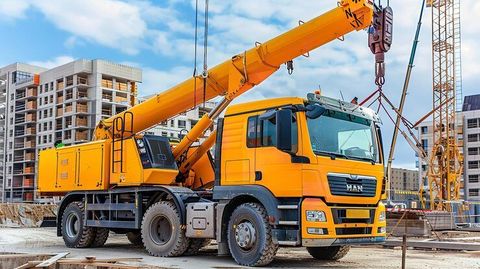
Construction projects use fasteners for structural steel, equipment mounting, roofing systems, mechanical installations, electrical supports, and other assemblies.
Structural connections can require specifically classified bolts and controlled installation procedures. The requirements depend on the structure, loading conditions, applicable building codes, and project specifications.
Automotive and Transportation Applications
Cars, trucks, buses, agricultural machinery, railway equipment, ships, and aircraft use many specialized fasteners.
Automotive fasteners can be exposed to vibration, temperature changes, moisture, road contaminants, and repeated mechanical loads. Material selection and corrosion protection are therefore important considerations.
Main Fastener Types and Applications
| Fastener Type | Typical Material | Common Applications | Joint Type |
|---|---|---|---|
| Hex bolt | Carbon steel or stainless steel | Machinery, structures, equipment | Detachable |
| Nut | Steel or stainless steel | Bolted connections | Detachable |
| Machine screw | Steel, stainless steel | Machinery and equipment | Detachable |
| Washer | Steel, stainless steel | Load distribution | Supporting component |
| Stud | Steel or alloy steel | Flanges and equipment | Detachable |
| Threaded rod | Steel or stainless steel | Supports and mounting | Detachable |
| Rivet | Aluminum, steel, copper alloys | Sheet-metal assemblies | Generally permanent |
| Anchor | Steel or specialized alloys | Concrete and masonry | Fixed connection |
Materials Used for Industrial Fasteners
Carbon Steel
Carbon steel is widely used because it provides a combination of mechanical strength, availability, and manufacturing flexibility. Different grades can provide different strength levels.
Stainless Steel
Stainless steel fasteners provide increased resistance to corrosion compared with ordinary carbon steel. They are frequently used in food processing, chemical environments, outdoor equipment, marine applications, and other areas where moisture or corrosive substances are present.
Alloy Steel
Alloy steel can be engineered for higher strength and demanding mechanical applications. High-strength bolts are used where substantial loads or structural requirements exist.
Aluminum
Aluminum fasteners are lightweight and provide useful corrosion resistance in suitable environments. They are used where reducing weight is important and the mechanical requirements are compatible with aluminum's properties.
Titanium
Titanium fasteners are used in specialized applications where low weight, corrosion resistance, and high mechanical performance are important. They are more common in aerospace and specialized engineering than in general-purpose applications.
Common Challenges
Industrial fasteners can experience several forms of failure or performance problems.
- Corrosion: Moisture, chemicals, salt, and other environmental factors can degrade fasteners.
- Loosening: Vibration and repeated loading can reduce clamping force.
- Over-tightening: Excessive torque can stretch or damage a fastener.
- Under-tightening: Insufficient clamping force can allow joint movement.
- Galling: Certain metal combinations can experience surface damage during tightening.
- Fatigue: Repeated loading can eventually cause cracks in susceptible fasteners.
- Incorrect specification: An unsuitable diameter, material, thread, or strength grade can compromise the joint.
Recent Updates
Higher-Performance Fastener Materials
Fastener manufacturing continues to develop materials and coatings designed for demanding environments. Modern applications increasingly require combinations of strength, corrosion resistance, temperature tolerance, and reduced weight.
Specialized alloys and engineered surface treatments are used where conventional materials cannot meet the operating requirements.
Digital Fastener Identification
Digital manufacturing systems are increasingly being used to track components, specifications, batch information, and quality records. Digital identification can support traceability across manufacturing and maintenance processes.
For large industrial operations, linking fastener specifications with maintenance databases can help identify the correct replacement component during equipment maintenance.
Automated Installation
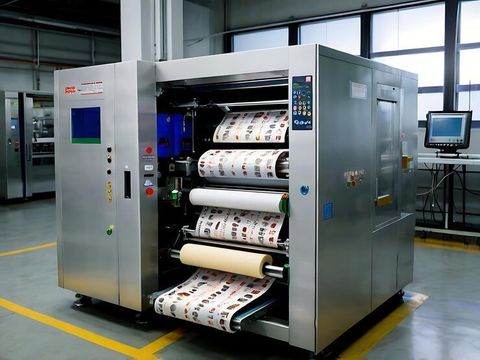
Automation is becoming more common in industrial assembly. Robotic systems and automated fastening equipment can position components and apply controlled tightening sequences.
Torque-controlled and electronically monitored fastening tools can record installation information. This can help manufacturers monitor whether fasteners were installed according to defined assembly requirements.
Lightweight Engineering
Transportation industries continue to investigate lightweight materials and joining methods to reduce vehicle mass. Fasteners must therefore be compatible with materials such as aluminum, advanced steels, composites, and mixed-material assemblies.
These applications can require specialized fastener designs to prevent galvanic corrosion, joint damage, or differences in thermal expansion.
Sustainable Manufacturing
Manufacturers are also paying greater attention to material efficiency, coating technologies, energy consumption, and recycling. Steel and aluminum fasteners can generally enter established metal-recycling streams when recovered appropriately.
The environmental profile of a fastener depends on its material, manufacturing process, coating, transportation, service life, and end-of-life handling.
Laws or Policies
International Standards
Industrial fasteners are manufactured and specified according to numerous international and national standards. Standards help define dimensions, mechanical properties, materials, thread specifications, testing methods, and marking requirements.
ISO standards are widely used for fastener dimensions, threads, mechanical properties, and terminology. ASTM standards are also widely used, particularly in North American industrial and construction applications.
ISO Fastener Standards
The ISO 898 series addresses mechanical and physical properties of certain carbon steel and alloy steel fasteners.
ISO 3506 covers mechanical properties of corrosion-resistant stainless-steel fasteners. Different parts of the standard address bolts, screws, studs, nuts, and related fasteners.
ISO metric threads are commonly specified using dimensions such as diameter and pitch. For example, an M10 × 1.5 designation indicates a nominal diameter of approximately 10 millimeters and a thread pitch of 1.5 millimeters.
ASTM and Regional Requirements
ASTM standards cover many fastener materials, dimensions, mechanical properties, and testing requirements. Specific standards vary according to the intended application.
In the United States, fasteners used in structural construction can also be subject to requirements from building codes and structural specifications. In Europe, EN standards are commonly used alongside relevant ISO standards.
Requirements can vary by country, industry, material, and application. Critical connections should therefore be specified according to the applicable engineering standard rather than relying only on a general fastener description.
Marking and Traceability
Industrial fasteners can include markings indicating manufacturer information, material grade, strength class, or other identification details.
Traceability becomes particularly important in safety-sensitive applications such as pressure equipment, structural construction, transportation, and aerospace manufacturing.
Tools and Resources
Torque Wrenches
Torque wrenches are used to apply a specified tightening torque. They are commonly used when manufacturers or engineering specifications define a required tightening value.
Tension Measurement Equipment
Some critical assemblies require direct or indirect measurement of bolt tension rather than relying only on torque. Specialized equipment can measure or verify the clamping force generated during installation.
Thread Gauges
Thread gauges help identify or verify thread dimensions. They can be useful when determining whether a bolt and nut have compatible thread specifications.
Fastener Catalogs and Databases
Manufacturer catalogs, engineering databases, and standards documents provide information about dimensions, material grades, strength classes, coatings, thread types, and application limitations.
Digital Design Software
Computer-aided design and engineering software can help designers select fastener locations, evaluate joint geometry, and check clearances.
Finite element analysis can also be used for complex assemblies where engineers need to examine stress distribution and deformation.
Installation Tools
Industrial assembly can involve:
- Manual torque wrenches
- Pneumatic fastening tools
- Electric torque tools
- Hydraulic tensioning equipment
- Impact tools
- Automated fastening systems
- Thread inspection gauges
The appropriate tool depends on fastener size, joint requirements, production volume, and required installation accuracy.
FAQs
What are industrial fasteners used for?
Industrial fasteners are used to join and secure mechanical, structural, electrical, automotive, construction, and manufacturing components. Common examples include bolts, nuts, screws, washers, studs, rivets, and anchors.
What materials are used for industrial fasteners?
Industrial fasteners can be manufactured from carbon steel, alloy steel, stainless steel, aluminum, titanium, brass, and other specialized materials. Selection depends on strength, corrosion resistance, temperature, weight, and application requirements.
How are industrial fasteners classified?
Fasteners can be classified by design, joining method, material, thread type, strength grade, head style, and application. Common groups include threaded fasteners, non-threaded fasteners, permanent fasteners, and anchoring systems.
What standards apply to industrial fasteners?
Common standards include ISO, ASTM, EN, and national standards. The applicable standard depends on the fastener type, material, application, and country. ISO 898 and ISO 3506 are examples of standards covering mechanical properties of specific steel and stainless-steel fasteners.
How should industrial fasteners be selected?
Selection should consider load, fastener diameter, thread type, material compatibility, strength grade, temperature, corrosion exposure, vibration, installation method, and applicable engineering standards. Critical connections may require detailed engineering calculations and controlled installation.
Conclusion
Industrial fasteners are essential mechanical components used to create secure connections across manufacturing, construction, transportation, machinery, and many other industries. Bolts, nuts, screws, washers, studs, rivets, and anchors are available in different materials, dimensions, strength classes, and configurations for specific applications. Recent developments include automated fastening, digital traceability, specialized materials, lightweight designs, and improved surface treatments. Proper selection should consider the joint design, operating environment, material compatibility, installation requirements, and applicable international or regional standards.