Hydraulic Press Machine Technology: Guide to Modern Manufacturing Processes
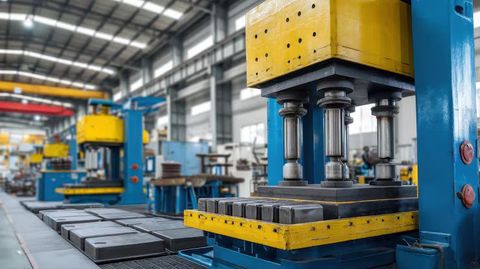
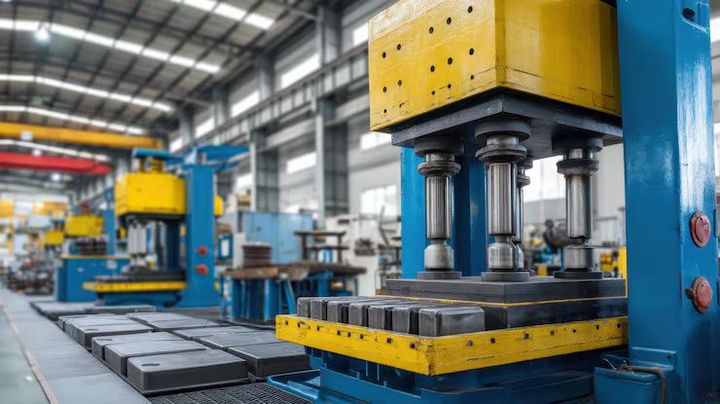
Hydraulic Press Machine Technology uses pressurized hydraulic fluid to generate controlled force for shaping, forming, compressing, bending, punching, and other manufacturing operations. Unlike a mechanical press that primarily uses a rotating crank or flywheel mechanism, a hydraulic press uses fluid pressure and hydraulic cylinders to move a ram.
A hydraulic press generally consists of a frame, hydraulic cylinder, pump, reservoir, valves, control system, ram, and working table. The hydraulic system sends pressurized fluid to the cylinder, creating force that moves the ram toward the workpiece.
The technology is used across metal forming, automotive manufacturing, plastics processing, rubber processing, fabrication, powder compaction, and other industrial applications.
How a Hydraulic Press Works
The operating cycle begins when a hydraulic pump draws fluid from a reservoir and sends it through the hydraulic circuit. Valves control the direction and flow of the fluid, allowing the cylinder to extend or retract.
When pressurized fluid enters the appropriate side of the cylinder, the piston moves and transfers force to the ram. The ram then applies pressure to the material or component positioned on the press table.
A typical process includes:
- Workpiece placement: The material is positioned on the working area.
- Tool alignment: A die, punch, mold, or forming tool is positioned correctly.
- Ram movement: Hydraulic pressure moves the ram toward the workpiece.
- Forming or compression: Controlled force changes the material or component.
- Pressure release: The hydraulic circuit reduces or redirects pressure.
- Ram return: The cylinder retracts and the finished component can be removed.
Main Types of Hydraulic Presses
Four-column presses use four vertical columns to guide the moving structure and distribute loads across the frame.
C-frame presses have an open front and can provide convenient access to the working area.
H-frame presses use a rigid frame arrangement and are commonly associated with heavy-duty pressing and fabrication activities.
Hydraulic forming presses are configured for operations such as bending, forming, deep drawing, and shaping sheet metal.
Hydraulic molding presses apply controlled pressure to materials placed inside molds, including selected plastics, rubber compounds, and composite materials.
Importance
Controlled Force
One major characteristic of hydraulic presses is their ability to generate and regulate substantial force through hydraulic pressure. Operators can control pressure, ram movement, and cycle parameters according to the machine design.
This makes hydraulic presses suitable for operations where controlled forming force is important.
Versatile Manufacturing Processes
A single hydraulic press platform can support different processes when appropriate tooling is installed. Depending on its configuration, it may perform bending, punching, forming, compression, drawing, straightening, or molding.
The tooling determines how the applied force interacts with the workpiece.
Consistent Forming
Controlled hydraulic movement can help maintain repeatable pressing conditions. Modern machines may use electronic controls, pressure sensors, position sensors, and programmable sequences to regulate different stages of the cycle.
Consistency still depends on material properties, tooling condition, machine setup, operator procedures, and inspection.
Applications Across Industries
Hydraulic press technology is used in many manufacturing environments.
- Automotive: Forming body panels, bushings, structural components, and selected composite parts.
- Metal fabrication: Bending, punching, forming, and straightening components.
- Appliance manufacturing: Shaping sheet-metal housings and structural parts.
- Plastic processing: Compression molding and selected forming operations.
- Rubber processing: Compression molding of suitable rubber components.
- Powder metallurgy: Compacting metal powders into predefined shapes.
- Maintenance workshops: Straightening shafts, bearings, plates, and other components.
Important Machine Parameters
| Parameter | Meaning | Manufacturing Role |
|---|---|---|
| Press force | Maximum force generated | Determines forming capability |
| Stroke | Ram travel distance | Defines movement range |
| Bed size | Working table dimensions | Determines workpiece area |
| Daylight | Space between tooling areas | Influences tool and workpiece setup |
| Pressure | Hydraulic system pressure | Controls cylinder force |
| Speed | Ram movement rate | Influences cycle conditions |
| Control system | Manages machine operation | Supports repeatable cycles |
| Tooling | Shapes or compresses material | Determines process result |
Recent Updates
More Advanced Electronic Controls
Modern hydraulic presses increasingly use programmable electronic controls to manage pressure, position, speed, and cycle sequences.
Sensors can provide information about ram position, hydraulic pressure, temperature, and other operating conditions. This information can support machine monitoring and process control.
Servo-Hydraulic Systems
Servo-hydraulic technology combines hydraulic force generation with electronic control. A control system can adjust hydraulic operation according to programmed requirements, potentially providing more precise movement and pressure management.
Such systems are particularly relevant where production requires controlled force profiles or multiple stages within a pressing cycle.
Energy Management
Hydraulic systems can consume substantial energy because pumps may continue operating even when full hydraulic output is not continuously required. Modern designs can incorporate variable-displacement pumps, improved valve arrangements, accumulator systems, and electronic controls to manage energy use more effectively.
Energy performance depends on machine configuration, operating cycle, hydraulic architecture, and workload.
Automation and Digital Monitoring
Hydraulic presses can be integrated with automated material handling, robotic loading, sensors, programmable controllers, and production monitoring systems.
A connected press may record operating information such as cycle time, pressure, temperature, ram position, and machine status. Such information can help production teams identify process variation and maintenance requirements.
Updated Indian Safety Standards
India's Bureau of Indian Standards maintains specific requirements for machine-press safety. IS 17277 (Part 3):2021 covers safety requirements for hydraulic presses and is identical to ISO 16092-3:2017. BIS records show that this standard was reviewed in 2025.
BIS also conducted a national seminar on machine-press safety in 2025, reflecting continued attention to safe operation and implementation of press-related standards.
Laws or Policies
Hydraulic Press Safety in India
Hydraulic press installations need to account for machinery safety requirements applicable to their design and operating environment. BIS identifies IS 17277 (Part 3):2021 as the Type C safety standard specifically covering hydraulic presses.
The standard addresses safety requirements associated with hydraulic press design and operation. The applicable regulatory framework can depend on the machine category, workplace, manufacturing activity, and current government requirements.
Risk Assessment
A hydraulic press risk assessment can examine hazards associated with crushing, shearing, unexpected movement, hydraulic pressure, tooling failure, workpiece movement, electrical equipment, maintenance, and access to the pressing area.
BIS machine-safety guidance emphasizes identifying hazards and applying appropriate risk-reduction measures. For presses, additional requirements from the relevant Type C standard need to be considered alongside general machinery-safety principles.
Hydraulic Fluid Power
Hydraulic systems also involve fluid-power components such as pumps, cylinders, valves, hoses, and fittings. Indian Standard IS 10481:2020, identical to ISO 4413:2010, addresses general rules and safety requirements for hydraulic fluid-power systems and components.
Proper inspection of hoses, connections, cylinders, pressure-control components, and fluid condition is therefore an important part of machine maintenance.
Machine Foundation
Large presses can generate substantial static and dynamic loads. Machine foundations therefore need appropriate engineering consideration.
BIS published a 2024 draft covering foundations for hammers and presses, including hydraulic and mechanical presses, illustrating the importance of structural planning for press installations.
Standards Verification
BIS provides the Know Your Standard platform, where users can search Indian Standards by standard number or keyword. The platform includes information such as amendments, notifications, testing information, and related documentation.
Because standards and regulatory requirements can change, technical teams should verify the current edition applicable to a particular machine and application.
Tools and Resources
Hydraulic Pressure Gauges
Pressure gauges display hydraulic-system pressure and can help operators monitor whether the system is operating within its intended range.
Pressure Sensors
Electronic pressure sensors can transmit pressure information to a machine controller or monitoring system. They can support automated process control and condition monitoring.
Position Sensors
Position sensors can track ram movement and help the control system manage stroke length, stopping positions, and programmed sequences.
Hydraulic Pumps
The pump is responsible for moving hydraulic fluid through the system. Different pump designs provide different flow characteristics and control possibilities.
Hydraulic Cylinders
The cylinder converts hydraulic pressure into mechanical movement. Cylinder diameter, stroke length, pressure rating, and construction influence the force and movement available.
Dies and Tooling
Dies, punches, molds, and fixtures determine how the press interacts with a workpiece. Tool geometry must correspond to the intended forming operation and material.
Programmable Controllers
Programmable logic controllers can coordinate machine sequences, sensors, valves, safety functions, and operator controls.
Maintenance Records
Maintenance records can document hydraulic-fluid checks, filter changes, hose inspections, seal replacement, pressure readings, tooling inspections, and unusual machine conditions.
These records can help identify recurring problems and establish maintenance intervals based on actual machine operation.
BIS Resources
BIS standards databases and machine-safety publications provide useful references for understanding applicable Indian requirements. The BIS standards platform also provides information about standards under review or related technical committees.
FAQs
What is Hydraulic Press Machine Technology?
Hydraulic Press Machine Technology uses pressurized hydraulic fluid and cylinders to generate controlled force for manufacturing operations such as forming, bending, compression, punching, and molding.
How does a hydraulic press work?
A hydraulic pump moves fluid through a controlled circuit. Pressurized fluid enters a cylinder and moves a piston, which transfers force to the ram and applies pressure to the workpiece.
What materials can hydraulic presses process?
Hydraulic presses can process materials such as steel, aluminum, copper, plastics, rubber, composites, and metal powders, depending on the machine, tooling, material characteristics, and manufacturing process.
What are hydraulic presses used for?
Hydraulic presses are used for forming, bending, punching, compression, deep drawing, straightening, molding, powder compaction, and other controlled pressing operations.
What safety standard applies to hydraulic presses in India?
IS 17277 (Part 3):2021 is the Indian Standard specifically covering safety requirements for hydraulic presses. BIS records indicate that it was reviewed in 2025.
Conclusion
Hydraulic Press Machine Technology uses controlled hydraulic pressure to generate force for a wide range of manufacturing processes. Modern systems increasingly combine hydraulic equipment with electronic controls, sensors, automation, programmable sequences, and digital monitoring. Safety depends on appropriate machine design, risk assessment, guarding, hydraulic-system controls, tooling, maintenance, and operator procedures. In India, BIS standards such as IS 17277 (Part 3):2021 provide an important reference for hydraulic-press safety.