Hidden Waterfall Retreats: Guide to Private Nature Escapes and Scenic Surroundings
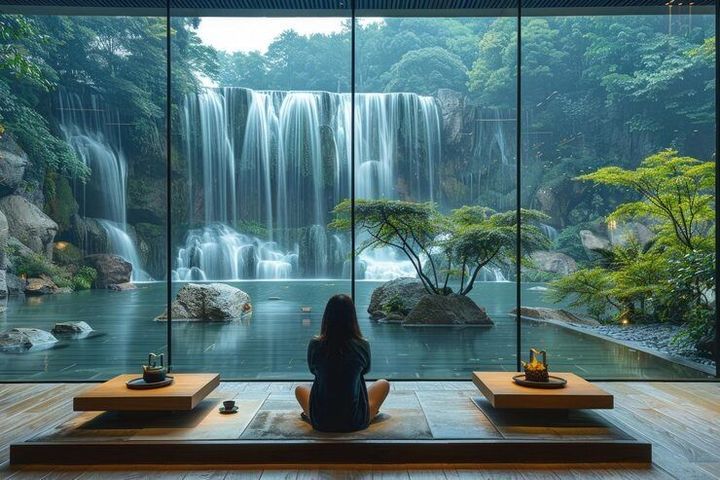
Hidden Waterfall Retreats are nature-focused places to stay or visit that are located near less prominent waterfalls, forest streams, rocky landscapes, or secluded natural settings. The word “hidden” generally refers to locations that receive less attention than heavily visited waterfall destinations rather than places that are completely unknown.
These retreats can include cottages, eco-lodges, forest accommodations, countryside stays, private cabins, or small properties positioned near natural scenery. Their appeal comes from the combination of accommodation and access to landscapes such as waterfalls, forests, hills, rivers, and valleys.
A waterfall retreat can range from a simple rural accommodation near a seasonal cascade to a carefully planned nature property surrounded by forest and mountain terrain. The experience therefore depends on geography, accessibility, weather, local rules, and the type of accommodation.
What Makes a Waterfall Retreat Different?
A conventional sightseeing trip may involve visiting a waterfall for a short period and then traveling to another location. A waterfall retreat places greater emphasis on spending time in the surrounding landscape.
The experience may include:
Walking along forest or countryside paths.
Viewing a waterfall from designated areas.
Photographing natural landscapes.
Listening to flowing water and surrounding wildlife.
Exploring nearby villages or cultural attractions.
Spending quiet time in an outdoor setting.
Combining waterfall visits with hiking or nature activities.
The waterfall itself may not be accessible throughout the year. Seasonal rainfall can significantly change its appearance, water volume, trail conditions, and accessibility.
Types of Hidden Waterfall Retreats
Forest retreats are located close to wooded landscapes and may provide access to trails, streams, and waterfalls.
Mountain retreats are situated in hilly or mountainous areas where waterfalls may form along steep slopes and seasonal streams.
Riverside retreats are positioned near rivers or streams and may include nearby cascades or smaller waterfalls.
Countryside retreats can be found in rural landscapes where waterfalls are connected with agricultural areas, villages, or natural valleys.
Eco-oriented retreats generally emphasize interaction with the surrounding environment, resource awareness, waste management, and lower-impact visitor practices.
Importance
Connection With Natural Surroundings
Hidden Waterfall Retreats can provide an opportunity to spend more time in natural environments rather than treating a waterfall as a brief sightseeing stop.
The surrounding landscape often contributes as much to the experience as the waterfall. Forest vegetation, rock formations, streams, hills, birds, and changing weather can create a broader nature-focused setting.
Supporting Rural Destinations
Some waterfall destinations are located away from major urban centers. Visitor activity can therefore contribute to accommodation, transportation, food, guiding, and other parts of the local tourism economy.
The effects depend on how tourism is planned and managed. High visitor numbers can also create pressure on water resources, waste systems, roads, wildlife, and local landscapes.
Encouraging Nature Awareness
A retreat near a natural attraction can help visitors understand the ecological importance of forests, streams, wetlands, and watersheds.
Responsible tourism practices can include staying on designated trails, carrying waste back, avoiding damage to vegetation, and respecting wildlife and local restrictions.
Seasonal Experiences
Waterfalls can change significantly with the seasons. During rainy periods, a previously small cascade may become a larger flow, while dry periods can reduce or completely stop some seasonal waterfalls.
This makes the same retreat different at different times of the year. Weather should therefore be considered when planning a visit.
Common Retreat Features
| Feature | Purpose | Typical Setting |
|---|---|---|
| Nature trail | Access to surrounding landscape | Forest or hills |
| Viewing area | Observe scenery | Near waterfall |
| Outdoor seating | Relaxation and landscape viewing | Garden or riverside |
| Local walking route | Explore nearby surroundings | Rural areas |
| Covered accommodation | Shelter and overnight stay | Forest or countryside |
| Maps and trail information | Navigation | Property or visitor center |
| Rainwater systems | Water management | Nature-focused properties |
Recent Updates
Growing Interest in Nature-Based Travel
Travel preferences have increasingly included outdoor experiences, rural landscapes, hiking, wellness-oriented stays, and nature exploration. Hidden waterfall destinations fit within this broader interest because they combine accommodation with natural surroundings.
Travelers are also increasingly using online maps, travel platforms, satellite imagery, and visitor-generated photographs to identify less prominent natural attractions.
Digital Discovery of Remote Places
Digital mapping has changed how travelers discover waterfalls and rural destinations. Satellite imagery and mapping applications can reveal roads, trails, streams, terrain, and nearby settlements before a journey begins.
However, information available online is not always current. A trail shown on a map may be closed, damaged, private, difficult to follow, or unsuitable during particular weather conditions.
Increased Attention to Responsible Tourism
Nature destinations are receiving greater attention regarding waste, water use, visitor capacity, habitat protection, and local community participation.
For a waterfall retreat, responsible planning can involve limiting disturbance to natural areas, managing wastewater, reducing disposable materials, and following local access rules.
Weather and Seasonal Planning
Weather information has become an increasingly important part of nature-trip planning. Heavy rainfall can affect roads, trails, bridges, streams, and waterfall access.
Conversely, dry periods can reduce water flow. Visitors therefore need current local information rather than relying solely on photographs from another season.
Nature Photography and Mobile Technology
Smartphones and compact cameras have made landscape photography a common part of waterfall trips. Location data, weather applications, trail maps, and photography tools can also help visitors plan outdoor activities.
Photography should not involve entering restricted areas, approaching unstable edges, climbing unsafe rocks, or disturbing wildlife for a particular viewpoint.
Laws or Policies
Forest and Protected Areas
In India, many waterfalls are located within or near forests, wildlife areas, national parks, wildlife sanctuaries, conservation areas, or other regulated landscapes.
The Wild Life (Protection) Act, 1972, along with subsequent amendments and related regulations, provides the legal framework for wildlife protection and protected areas in India. Access restrictions can vary according to the specific protected area.
Visitors should follow instructions from forest authorities and use only designated routes where required.
Environmental Protection
The Environment (Protection) Act, 1986 provides a broad legal framework for environmental protection in India. Additional rules and notifications can apply to specific environmental activities, locations, and developments.
A retreat located near a sensitive ecosystem may therefore be subject to environmental requirements depending on its location and development characteristics.
Water and Local Restrictions
Waterfalls are part of larger water systems involving streams, rivers, groundwater, and catchment areas. Activities around these areas may be affected by local regulations or restrictions.
Visitors should avoid entering restricted water bodies, particularly where authorities have identified risks involving strong currents, slippery rocks, flooding, or other hazards.
Construction and Land Use
Accommodation located near forests, protected areas, coastal zones, rivers, or other environmentally sensitive locations can be subject to land-use, building, environmental, or local-government requirements.
The exact requirements depend on the property's location and classification. A natural setting does not automatically mean that every type of construction or activity is permitted.
Safety Rules
Waterfalls can create hazards that are difficult to judge visually. Strong currents, slippery rocks, sudden water-level changes, falling rocks, and uneven trails can present risks.
Visitors should follow official warnings, barriers, signs, and instructions from local authorities or property operators.
Tools and Resources
Digital Maps
Mapping applications can help identify roads, nearby settlements, trails, streams, and geographic features. Offline maps can be useful in areas where mobile connectivity is limited.
Maps should be treated as planning aids rather than confirmation that every route is currently accessible.
Weather Applications
Weather platforms can provide rainfall forecasts, temperature information, storm warnings, and other conditions relevant to outdoor travel.
For waterfall destinations, rainfall information can be particularly useful because heavy rain may change water levels and trail conditions quickly.
Satellite Imagery
Satellite imagery can help travelers understand the terrain surrounding a waterfall. It may show forest cover, roads, agricultural areas, valleys, and nearby buildings.
Terrain information can provide additional context when planning a walking route.
Trail and Hiking Resources
Trail platforms can provide information about route length, elevation, difficulty, photographs, and visitor reports.
Recent reports are particularly useful because trails can change due to rainfall, landslides, construction, fallen trees, or seasonal closures.
Local Tourism Resources
State tourism departments, forest departments, protected-area authorities, and local visitor centers can provide information about opening conditions, permits, designated routes, seasonal restrictions, and local attractions.
These sources are generally more useful for access rules than old travel posts or undated photographs.
Basic Outdoor Equipment
Depending on the location and activity, useful items can include:
Water-resistant footwear: Helps on wet or uneven trails.
Rain protection: Useful during changing weather.
Reusable water container: Supports personal hydration.
Small first-aid kit: Useful for minor outdoor incidents.
Offline map: Helps when network coverage is limited.
Portable light: Useful around rural accommodation and trails.
Weather-resistant bag: Protects personal equipment.
Equipment requirements vary according to the destination and planned activities.
FAQs
What are Hidden Waterfall Retreats?
Hidden Waterfall Retreats are nature-focused accommodations or destinations located near less prominent waterfalls, forest streams, hills, or other scenic landscapes.
Where can Hidden Waterfall Retreats be found?
They can occur in forested, mountainous, rural, and countryside regions. In India, waterfall landscapes are found across several states and geographic zones, with conditions varying significantly by season.
What is the best time to visit a waterfall retreat?
There is no single suitable period for every waterfall. Seasonal waterfalls may have stronger flows during or after rainy periods, while access conditions can also become more difficult during heavy rainfall.
Are Hidden Waterfall Retreats suitable for families?
Suitability depends on the property, terrain, road access, trail conditions, water hazards, and available facilities. Families should check current local conditions and age-related activity restrictions before planning outdoor activities.
What should visitors consider before visiting a waterfall?
Visitors should check weather, road and trail conditions, access restrictions, water levels, local regulations, and available communication facilities. They should also follow signs and remain within designated areas.
Conclusion
Hidden Waterfall Retreats combine accommodation with access to quieter natural landscapes such as waterfalls, forests, hills, streams, and rural surroundings. Their appeal can change with seasons, rainfall, terrain, and local environmental conditions. Digital maps, weather information, trail resources, and official tourism or forest information can help travelers understand a destination before visiting. Responsible behavior and respect for local rules are important for protecting natural areas while allowing visitors to experience them.